| 0 comments ]

In Revolutionary Statement, Fidel Castro's Grandson Embraces "Capitalism With Sovereignty"

What is awkward for Democrats and their left-wing activist network of politicians and dark-money funded nonprofits is that the latest CNN interview with Fidel Castro's grandson shattered years of left-wing America's weird obsession with Cuban communism

Sandro Castro told CNN's Patrick Oppmann that he would welcome a deal with President Trump and said many on the island want "capitalism with sovereignty," a remarkable admission from deep inside the Castro family that Cuba's failed economic model is no longer the pathway for the Carribean island nation suffering from decades of economic collapse, and more recently, a completely collapsed power grid.

Oppmann asked Castro: "And what would your grandfather, Fidel Castro, say if he knew that you're more capitalist than communist?" 

Castro responded: "My grandfather was a person who had his principles like everyone else. But as well he respected others' opinions. That's my way of thinking." 

Oppmann asked: "But all the capitalists left Cuba." 

Castro responded: "There are many people in Cuba that think in a capitalistic way. There are many people who want to do capitalism with sovereignty. I think the majority of Cubans want to be capitalist, not communist." 

We have detailed at length that the Democratic Socialists of America politicians in Washington and left-wing NGOs funded by billionaire foundations have a weird obsession with defending communism and visiting Cuba. 

Just last week, the head of a U.S. left-wing nonprofit, reportedly linked to a Marxist propaganda network connected to a China-based billionaire, organized a trip of unhinged white liberals to the island to champion communism.

Yet even Fidel's own grandson is now embracing an economic transition from communism to capitalism, something the Trump administration is trying to orchestrate, while America's own Democratic Party and left-wing NGOs have yet to read the tea leaves around the world that far-left regimes and communism have fallen - just look at South America.

Meanwhile, Democrats last week in America at No Kings: Communism. 

Seems like Fidel's own grandson wants food, electricity, and internet. Only possible with capitalism. 

* * * 

ReadyWise Spring Sale - Ends April 10th

Tyler Durden Tue, 03/31/2026 - 15:05
https://ift.tt/xITC5LR
from ZeroHedge News https://ift.tt/xITC5LR
via IFTTT

In Revolutionary Statement, Fidel Castro's Grandson Embraces "Capitalism With Sovereignty" SocialTwist Tell-a-Friend
| 0 comments ]

Two Chinese Container Ships That Were Previously Turned Back By Iran, Now Allowed To Transit Hormuz Strait

On Friday we reported that there was a moment of surprise among vessel trackers, when Iran unexpectedly blocked two container ships owned by China's Cosco from transiting the Strait of Hormuz.

Two days later, this misunderstanding appears to have been resolved, and on Monday Bloomberg reported that the same two container ships linked to China’s state-owned Cosco Shipping exited the Persian Gulf through the Strait of Hormuz, the first such vessels operated by a major Beijing-backed company to navigate the waterway since the Middle East war broke out.

After aborting an initial transit attempt on Friday, COSCO’s ultra-large container vessels - CSCL Indian Ocean and CSCL Arctic Ocean - have successfully crossed the Strait of Hormuz after beginning their journey eastward from within the Persian Gulf on Monday morning, signalling a potential shift in conditions for commercial shipping.

The ships started their almost 12-hour-long journeys from waters off Dubai. They took a route near Iran’s Larak and Qeshm islands at the narrow opening of the strait, before sailing into waters of the Gulf of Oman.

The ships don’t appear to be carrying any cargo aside from empty container boxes, according to draft readings of how low they sit in the water. They are listed as part of Cosco Shipping Lines’ fleet, which is a subsidiary of Cosco Shipping Corp. Both vessels are currently bound for Port Klang, Malaysia, as they continue their voyage on COSCO’s MEX service, linking the Middle East with the Far East.

The global shipping market has been keenly watching the journeys of these two Cosco ships for signs of how China plans to extract its vessels from the gulf, as it seeks to stem a deepening energy crisis and a plunge in China-to-Middle East trade.  

The two vessels, each with the capacity to transport about 19,000 TEUs, were seen taking the same route on Monday. They have been stuck in the Persian Gulf for more than a month since the US and Israel launched the war against Iran.

The successful transit marks the first confirmed crossing by a major container carrier since the start of the conflict.

Cosco Shipping is one of the world’s largest shipowners, with massive containership and tanker fleets operated by its subsidies. Aside from the container ships, Cosco also has at least six crude tankers stuck inside the Gulf since the war began, according to ship-tracking data.

In an early sign of a resumption of Hormuz transits, Cosco Shipping Lines last week informed customers that it would be recommencing bookings for general cargo containers from east Asia to the Middle East, including some located in the gulf. The company owns and operates 453 container ships that have a total capacity of about 2.5 million twenty-foot equivalent containers, or TEUs, as at end January.

Tyler Durden Mon, 03/30/2026 - 16:50
https://ift.tt/PinYSbM
from ZeroHedge News https://ift.tt/PinYSbM
via IFTTT

Two Chinese Container Ships That Were Previously Turned Back By Iran, Now Allowed To Transit Hormuz Strait SocialTwist Tell-a-Friend
| 0 comments ]

Cory Booker Blasts Party, Says Democrats 'Failed This Moment', And Calls For New Leaders

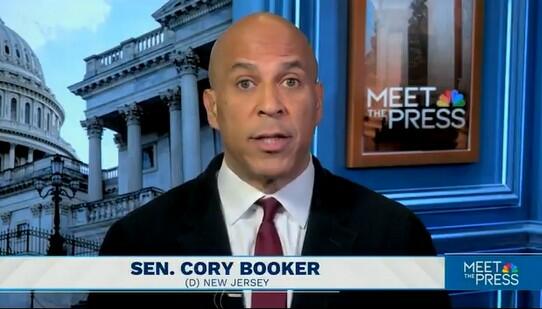
Sen. Cory Booker (D-N.J.) appeared on NBC's Meet the Press Sunday morning and delivered a scathing rebuke of his own party, saying it has “failed this moment.” 

Booker was on the show to promote his new book, and host Kristen Welker read a passage from it in which he argues that political coalitions can’t succeed if they exclude people based on “purity tests” or demand total agreement on every issue. 

In his book, he wrote, “We cannot cancel everyone who fails a purity test. We cannot exile those who don’t align with our every belief, however passionately we hold it. Coalitions that are only composed of the already converted cannot change the country. If everyone in your coalition agrees with you on everything, your coalition is too small, too small to make big change and too small for what our democracy demands.”

Welker then pressed him on whether Democrats are shrinking their coalition by doing exactly that. “Do you believe Democrats are making the mistake of shrinking their coalition with what you describe as purity tests, senator?”

“Look, I’m proud of so many things that my Democratic colleagues are doing, but as a whole, our party has failed this moment,” he replied. “It’s why I’ve called for new leadership in America. I’ve called for a generational renewal, because this left-right divide is killing our country, and our adversaries know it. They come onto our social media and try to whip up hate in America. That is one of our biggest crises. It is time for a new vision of our country that’s far more uniting, that brings people together, doesn’t deepen divides. I really believe this is a time where we need new leadership, new moral imagination to pull our country together, because the challenges on the horizon aren’t just this current crisis that Trump has caused.”

Booker even appeared to criticize the Democrats’ Trump obsession, telling Welker that Trump “shouldn’t be the main character of our narrative right now.”

“We have real challenges from new technologies like AI and robotics, new challenges, that we need more unity in our country, and a reminder that we are not each other’s enemies. In fact, our ability to find common ground has always been our greatest hope.”

Booker continued, "Americans want a new generation of leaders that show that they can lift the whole country up," he said. And then, in case anyone missed it: "It is time for a new vision of our country that is far more uniting that brings people together, doesn't deepen divides."

Booker’s comment reeks of irony. According to reports, Senate Democrats are quietly - and not so quietly - tearing each other apart over Senate Minority Leader Chuck Schumer. 

Sen. Chris Murphy (D-Conn.) recently met with progressive activists in Georgetown, where the discussion turned to whether Chuck Schumer could be pushed out of leadership. Murphy indicated that some lawmakers had been informally counting votes to gauge support for removing Schumer. Murphy is reportedly part of a group of senators quietly canvassing colleagues about dissatisfaction with Schumer. That group, dubbed “Fight Club,” is reportedly coordinating through a Signal chat to oppose Schumer’s preferred candidates in key 2026 races. The group believes Schumer has been putting his thumb on the scale for centrist candidates while an insurgent wave of progressive energy goes untapped. 

That sounds like a party that is still demanding ideological purity, not diversity. It would be foolish to think that Cory Booker is calling for the next generation of Democratic leaders to take over because they’ll bring ideological diversity to the party. Much of the anger against Chuck Schumer stems from his vote to fund the federal government in March of 2025 to avoid a shutdown. His approval ratings tanked because he was seen as capitulating to President Donald Trump, and Rep. Alexandria Ocasio-Cortez has been floated as a possible primary challenger, and polling even showed her with a double-digit lead over Schumer.

 Who does Booker think he’s fooling?

*  *  *

Tyler Durden Mon, 03/30/2026 - 15:20
https://ift.tt/4OxifBC
from ZeroHedge News https://ift.tt/4OxifBC
via IFTTT

Cory Booker Blasts Party, Says Democrats 'Failed This Moment', And Calls For New Leaders SocialTwist Tell-a-Friend
| 0 comments ]

"Green-Dot Sunday" Is Non-Negotiable: Oil Up, Stocks Down As War Begins 2nd Month

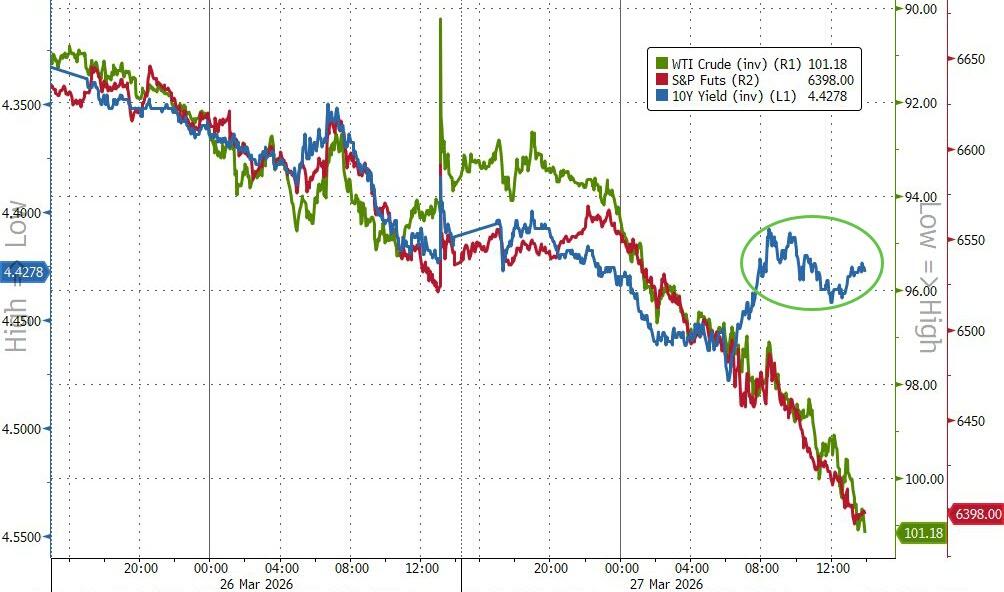
As last week wore on, it felt increasingly like the market was transitioning from pricing inflation risk (from a 'brief' energy supply shock) to weighing a demand-shock-driven growth scare (from a longer lasting disruption) as bonds rallied in the face of higher oil and lower stocks (stagflation).

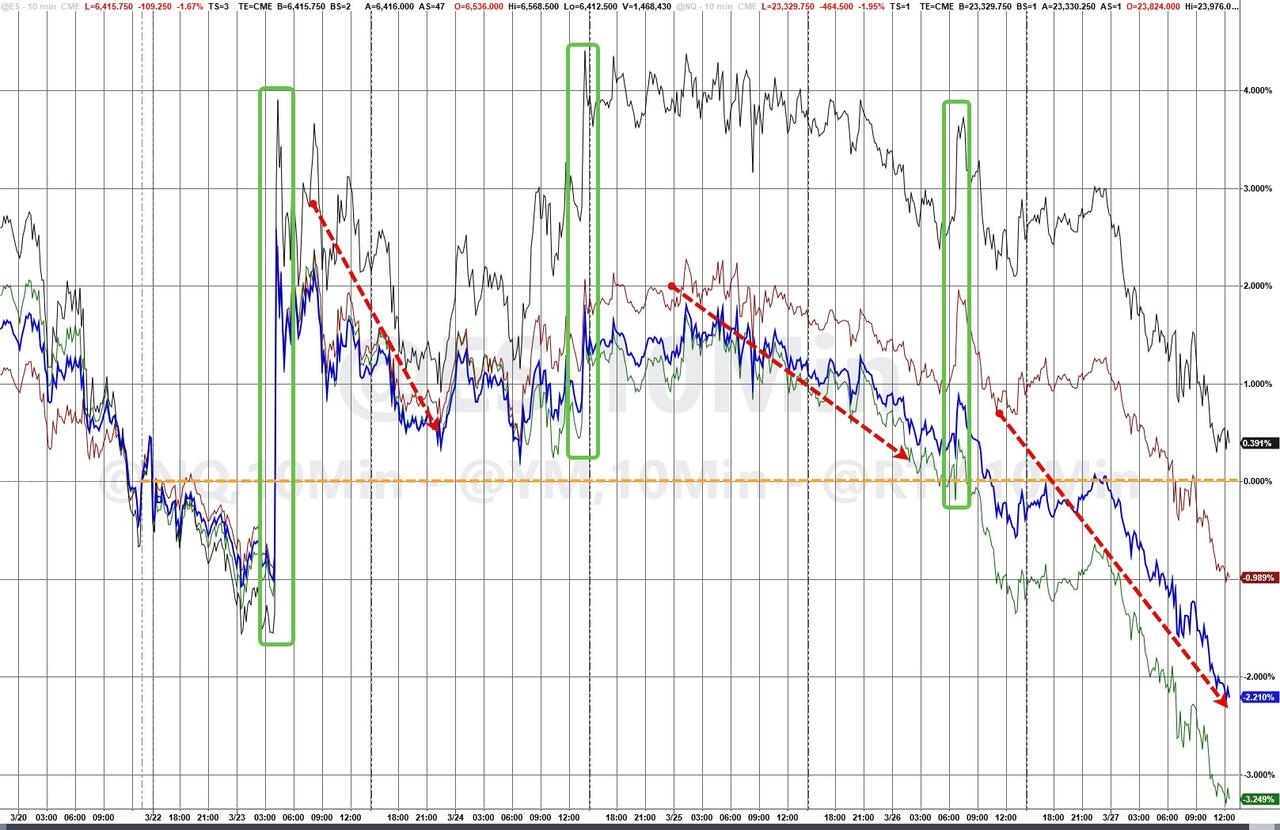
Last week saw three attempts at unilateral de-escalation (5-day delay, 'ceasefire' proposal, 10-day delay) met with even more supply as the apparent 'Trump Put' or 'TACO' trade is losing its power.

Simply put, as Goldman's Shreeti Kapa noted last week, the answer to everything depends on one binary variable: the duration of the war.

That in turn depends if there will be safe transit of oil vessels through the Strait of Hormuz.

Even if the strait is opened, would we be able to restore oil flows to pre-conflict levels?

What is the guarantee for safe passage?

Can any ceasefire be trusted?

For how long would that hold?  

This weekend gave us no answers to those questions but did suggest, as Goldman's head of equity execution, Brian Garrett, described: the situation is fluid.

  • Iran says electricity facilities were attacked in Tehran

  • IDF says currently striking Iran targets across Tehran

  • Foreign ministers of regional countries seeking peace & offramp in Pakistan meeting on Sunday.

  • Iran destroyed US AWACS jet at Saudi Airbase

  • Report says Pentagon has been weeks in preparing ground operations as initial Marines arrive in region (WaPo).

Fluid indeed...

Here's how Garrett started his "weekend" prep note: 

"the quotation marks around weekend are intentional...

...investors and traders have not had a break in months, with “Green Dot Sunday” turning from a one-off into a 2026 non-negotiable...

...the forthcoming three day “weekend” for US markets is almost unwelcome as the market holiday just means another news/headline session coupled with zero price discovery and zero liquidity."

The feedback from various market participants suggests that Brian hit the nail on the head - headline fatigue is real.

Here's a few things on Garrett's radar...

1/ CTAs have sold even more global equities...

They are quickly approaching max short levels … at a minimum that pressure is abating 

2/ Main Street is finally noticing...

The texts from college friends and family members is showing some panic... “bg, what did you do to the market” 

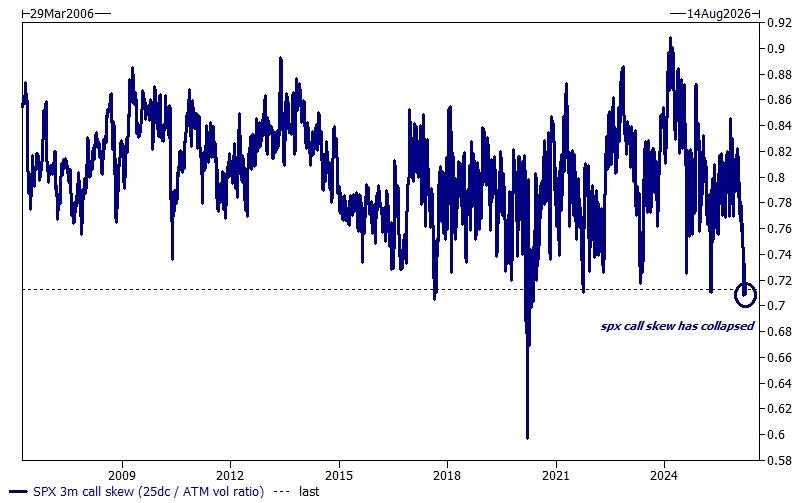
3/ SPX Call Skew is collapsing...

The hope for a quick rebound is diminishing... this is reflected in the cost of an OTM upside strike...

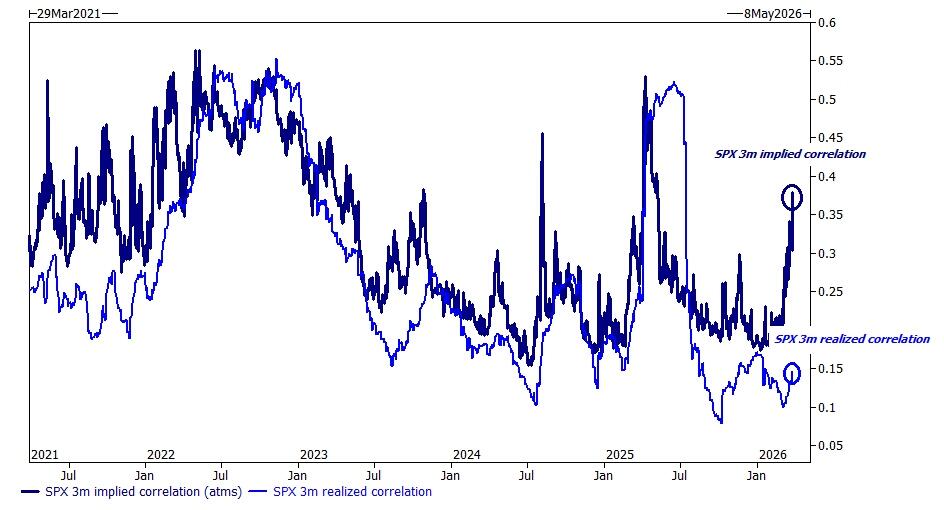
4/ SPX realized correlation remains extremely low for the size of this drawdown...

Desk continues to like sector ETFs or custom basket options for those looking to express trades in convexity 

And in case you needed to hear from another 'expert', here's Iran's de factor leader offering some day-trading advice:

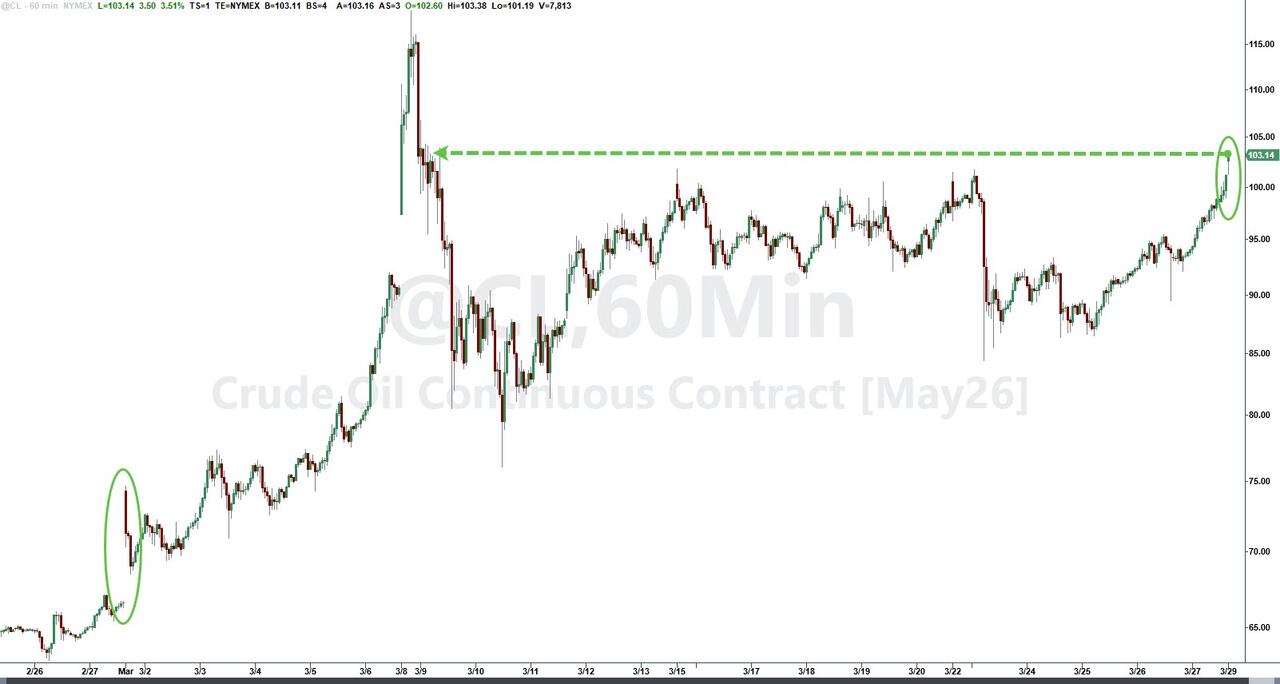
So, Sunday night, dots are green... and oil futures open higher with WTI testing up to $103...

Up to 3-week highs...

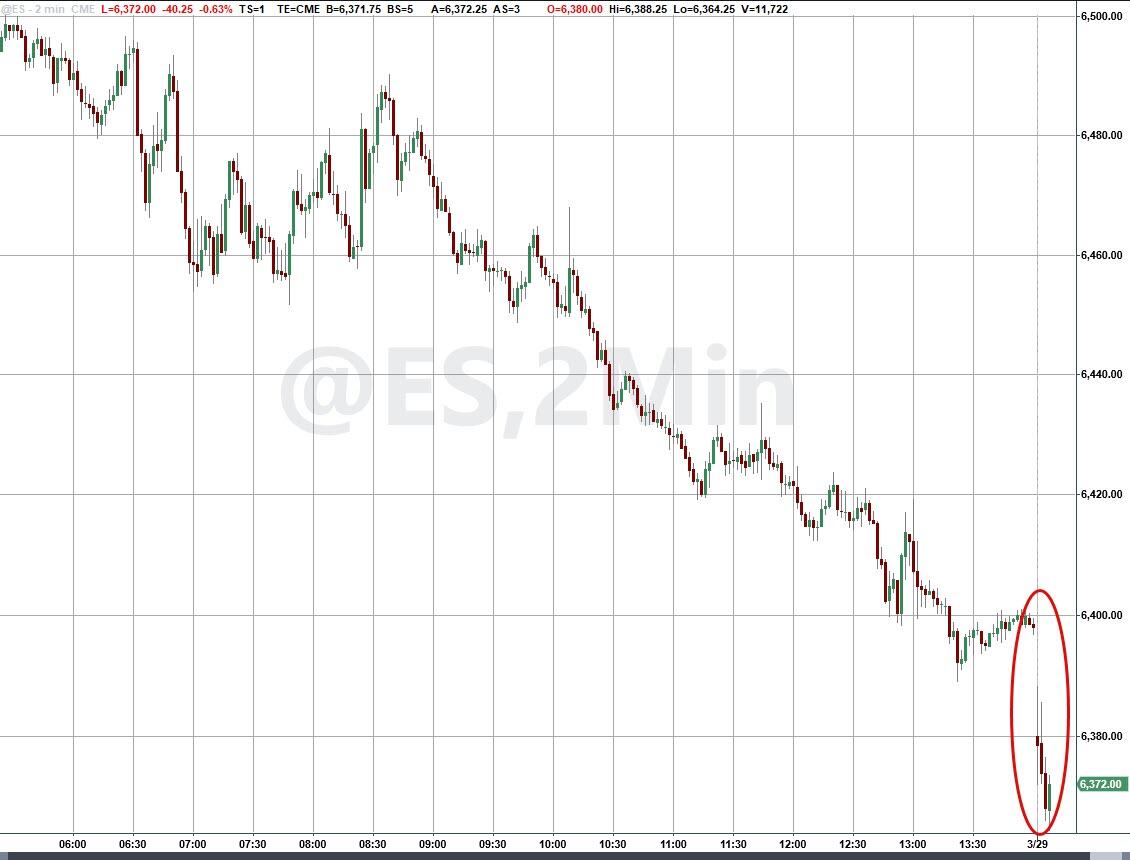
S&P futures are down almost 1%...

The dollar is lower (against the JPY) out of the gate and Gold is up modestly, bouncing from a lower open...

How long will this opening kneejerk hold?

Finally, we given the last words before another busy (if shortened) week to Goldman's Garrett: a silver lining?

What is good news is that prices are finally reflecting the issues at hand and the correction has at least started (h/t NDX officially -10% from the highs)... feels like we’re closer to an end than the beginning but also feels like we’re playing a game that doesn’t have “innings” in the classic sense (ie : no one can give you a timeline)... many parties need to want to de-escalate and that’s not evident (yet).

Here's the trades Garrett likes:

  • Continue to think receiver (or just simply lower yield) trades make sense

  • Long emerging market equities that benefit from higher commodity prices

  • Short credit (only asset yet to flinch)

  • SPX ratio call spreads, long the 2-3x (pitched last week, still like it and we got traction)

  • Long gold (this one is gaining followership)

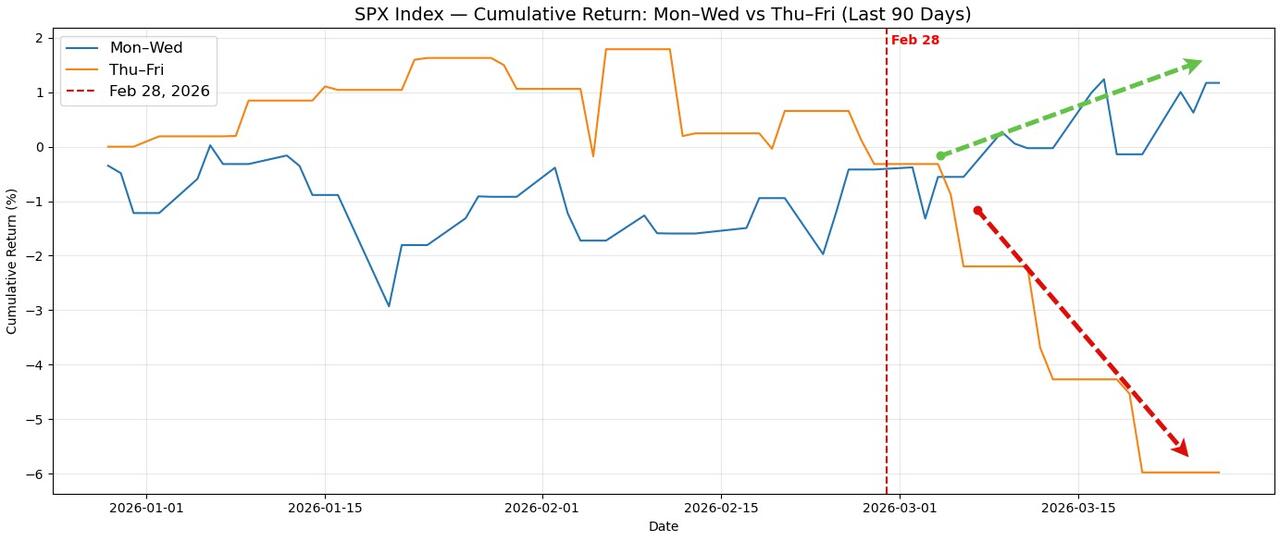
And don't forget: buy the Monday/Tuesday...

...sell the Thursday/Friday (or Weds/Thurs this week?)

Professional subscribers can read Brian Garrett's full "Weekend Prep" note here at our new Marketdesk.ai portal

Tyler Durden Sun, 03/29/2026 - 18:05
https://ift.tt/NwLxgjf
from ZeroHedge News https://ift.tt/NwLxgjf
via IFTTT

"Green-Dot Sunday" Is Non-Negotiable: Oil Up, Stocks Down As War Begins 2nd Month SocialTwist Tell-a-Friend
| 0 comments ]

Bigger Isn't Better: A Case For Downsizing The Federal Reserve

Authored by via Paul Mueller via the American Institute for Economic Research (AIER),

President Trump’s conflicts with Federal Reserve Chairman Jerome Powell and with Board of Governors member Lisa Cook have obscured real shortcomings at the Federal Reserve and brought little useful change. These conflicts tend to focus on whether the Fed’s target interest rate is too high or too low. Meanwhile, institutional problems at the Fed have been largely overlooked.

But there is an opportunity here with Trump’s nominee for Fed chair, Kevin Warsh. His first task will be navigating a hostile Senate. But should he be confirmed, Warsh’s time would be best spent cleaning up the Federal Reserve system: its personnel, spending, and data.

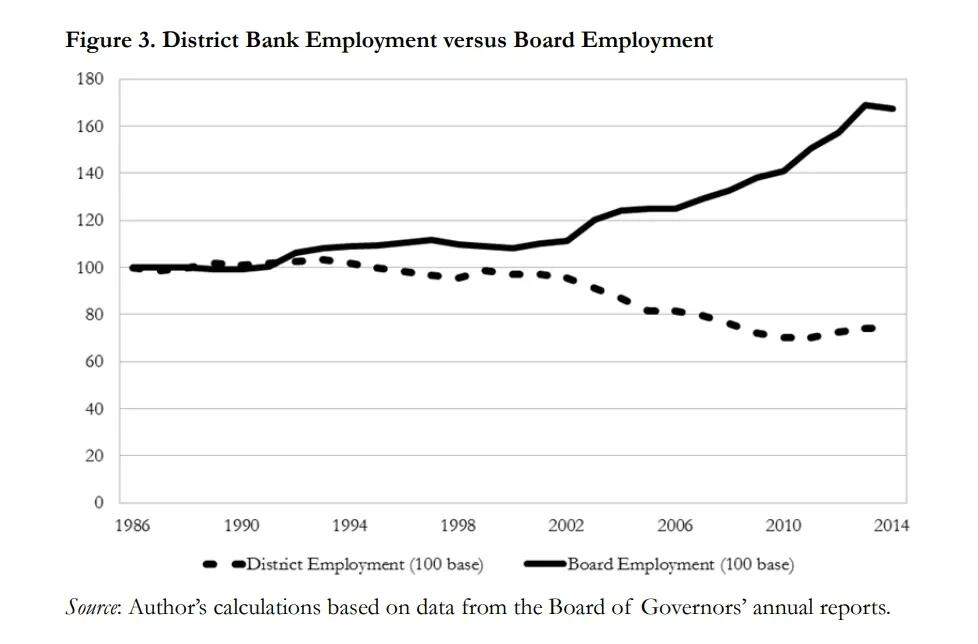
The Federal Reserve System employs 24,000 people. The Board of Governors has about 3,000 employees, while the 12 district banks employ the remaining 21,000. That figure includes 800 to 1,000 professional economists. While the Fed has recently announced plans to reduce its workforce by 10 percent, that would still leave it with more than 21,000 employees. But why shouldn’t the Fed cut headcount by 20 percent to 30 percent, or even more?

Does the Fed really need that many employees? After all, this isn’t the 1960s or 1970s when many things had to be done by hand. Not only have there been significant technological improvements and greater automation over the past 50 years, the development of artificial intelligence will also accelerate this trend. As such, the new Fed chair should reevaluate whether the Fed needs so many employees.

Besides being wasteful, the high number of economists employed by the Fed has likely influenced the profession to unduly favor the status quo. Those who criticize the Fed or question whether it should even exist find themselves in the wilderness of monetary economics. Employing fewer economists will reduce the Federal Reserve’s gravitational pull on the economics profession.

Along with reducing headcount through reorganization and consolidation, the Federal Reserve is ripe for an audit of its spending. Ron Paul popularized the idea of auditing the Fed in 2008. The Federal Reserve is unique in that it can literally create money, and in that it sets its budget independent of Congress. What would you expect the budget trend to be for a fully self-funding organization that can print money? If you said up and to the right, collect your prize.

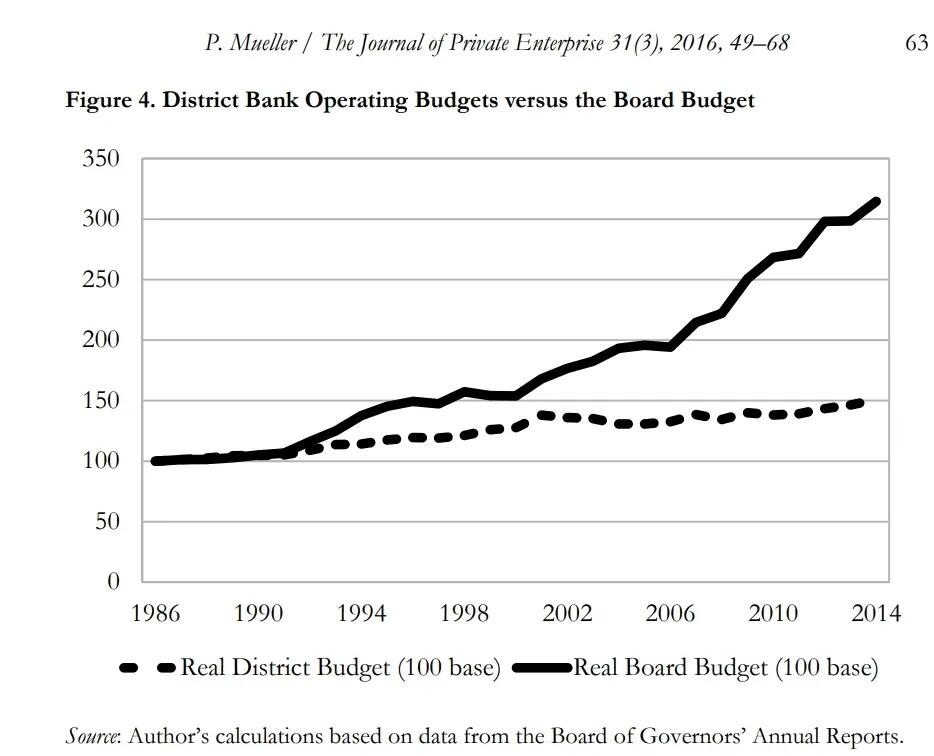
The budget of the Board of Governors of the Fed has grown more consistently than the Federal budget for decades. In fact, why would any office or department at the Fed ever voluntarily reduce its spending? As such, we don’t see examples of significant retrenchment or budget cuts across the Board of Governors.

District banks, on the other hand, operate with private-sector participation through their member-bank stockholders, yet they still suffer from bureaucratic bloat because of limited market competition.

By restructuring staff, streamlining operations, and auditing Fed spending, the new Fed chair can couch all of this change in terms of modernizing the institution. The Fed has largely failed to keep abreast of technological change when it comes to data, metrics, and execution. It still relies heavily on surveys and anecdotal conversations when it has access to millions of data points, nearly in real-time.

Consider the following key indicators that the Fed officials rely on:

They measure their key inflation target using the personal consumption expenditures price index, as well as the consumer price index and the producer price index. Yet these numbers come out only once a month. Rather than calling on business leaders to get a read on economic conditions, they could use real-time measures from sources such as the Adobe Digital Price Index or Truflation that use millions of transactions to assess economic activity.

Similarly, most of the key indicators that the Fed uses for assessing the strength of the labor market (the unemployment rate, nonfarm payrolls, labor force participation rate, and various measures of underemployment) tend to be released monthly as well.

The important measure of economic growth, the gross domestic product (GDP), comes out only quarterly—although there are frequent estimates. Furthermore, the measures of GDP tend to be revised often, too. The Atlanta Fed produces a “GDPNow” number—but it also relies primarily on estimates rather than real-time data. Indicators such as industrial production, retail sales, and business investment are not much better.

One area in which the Fed does make use of real-time data is in financial market conditions. Interest rates (e.g., federal funds rate, Treasury yields), credit spreads, and asset prices change in real time and can be used to assess financial stability and the effectiveness of monetary policy.

In addition to the delays, most of these core metrics, particularly GDP and the unemployment rate, are lagging indicators. They reflect past economic performance rather than provide real-time insights into current or future trends. In a rapidly evolving global economy, relying heavily on backward-looking data can lead to policy decisions that address emerging challenges too slowly or exacerbate existing ones.

The Federal Open Market Committee’s framework often emphasizes aggregate demand management, assuming that inflation is primarily a demand-side phenomenon. But recent economic shocks (supply chain disruptions, energy price spikes) highlight the critical role of supply-side factors. Over-reliance on demand-side metrics can lead to inappropriate policy responses.

In fact, many economists argue that the Fed should be less reactive in general. Economist Milton Friedman noted that there were “long and variable lags” between the implementation of monetary policy and its effects. Following predictable monetary rules will likely generate more stability and more growth in the long run.

Monetary policy (in terms of target interest rates) matters, but so does operational efficiency, utilization of technology, and access to good information. Institutional reform may also help the Fed rebuild public trust by reassuring people that its decisions reflect reality today rather than reality months ago—or not at all. Cleaning up the Federal Reserve will be a monumental task, but it will also be a legacy. Let’s hope that Warsh is up for the challenge.

Tyler Durden Sun, 03/29/2026 - 16:20
https://ift.tt/NVbTrEm
from ZeroHedge News https://ift.tt/NVbTrEm
via IFTTT

Bigger Isn't Better: A Case For Downsizing The Federal Reserve SocialTwist Tell-a-Friend
| 0 comments ]

Debbie Dupes Dallas: Porn Legends Clone Themselves With AI To Keep Raking It In Long After Retiring

Worn-out porn stars have found a fresh way to keep raking in the cash long after they've aged out of the business, according to a new report from WIRED.

Joi.com

OhChat, a British startup that lets adult creators clone themselves with AI, has inked deals with Lisa Ann and Cherie DeVille to license their likenesses on the platform, basically creating a digital version of them in every possible way that can churn out custom sex scenes for paying customers.

Despite leaving the business in 2019, Lisa Ann now charges $30 per month to give fans the ability to cook up X-rated scenarios of her using the bot.

This keeps my name alive,” said of her AI clone in an interview with WIRED. “She’s never going to age.”

“For guys that like to say good morning or good night, they now have that access. The fact that I'm not shooting scenes anymore also allows new scenes to be created,” she added.

Adult performer
Alix Lynx
 licensed her image to Joi.com

WIRED reports:

Other competitors in the space include My.Club, Joi AI and SinfulX AI, the platform that adult film actress Georgia Koneva partnered with this month, saying, in a press statement, that her avatar gave her a “new way to share my voice and personality with the people who follow me.” According to SinfulX AI, it also develops “original” synthetic characters using licensed source imagery from adult performers whose content it has the rights to use. In the same statement, the company said that those AI-generated “characters” are “designed not to replicate any single individual while still maintaining the realism for which its content is known.”

However, Ann concedes that human porn is still preferred by a majority of people.“Guys are always going to want real content. Men are always going to want to see new scenes. There will always be a need for all of it. But the fact that I’ve never been awake from 11 pm to 7 am, and now there’s a 24-hour clone that can chat for me—that alone is something. It allows me to keep my brand alive,” she said.

* * * IQ Male Enhancement will leave you virtually diamonds

Tyler Durden Sat, 03/28/2026 - 16:55
https://ift.tt/CGVjuns
from ZeroHedge News https://ift.tt/CGVjuns
via IFTTT

Debbie Dupes Dallas: Porn Legends Clone Themselves With AI To Keep Raking It In Long After Retiring SocialTwist Tell-a-Friend
| 0 comments ]

US 'Only Certain Of Having Destroyed A Third' Of Iran's Missiles

Via Middle East Eye

The US is only certain it has destroyed around a third of Iran's missiles, despite comments from President Donald Trump boasting of military success. According to five people familiar with the US intelligence who spoke to Reuters, the status of around another third is less clear. However, US-Israeli strikes have likely damaged, destroyed or buried those missiles in underground tunnels and bunkers. 

Iran's drone capability has also likely been reduced by a third, another source said. The assessment, which comes one month after the beginning of the US-Israeli assault on Iran, suggests Tehran still retains substantial missile capability and its ability to retaliate is far from eliminated. At a cabinet meeting on Thursday, Trump said - while discussing options to open the Straits of Hormuz - that 99 percent of Iran's missiles had been destroyed.

via Reuters

"The problem with the straits is this: let's say we do a great job. We say we got 99 percent [of its missiles]. 1 percent is unacceptable, because 1 percent is a missile going into the hull of a ship that cost a billion dollars," he said.

US Central Command has so far declined to specify how much of Iran's missile or drone capability has been destroyed in its attacks. According to Israeli military officials, Iran had 2,500 ballistic missiles capable of reaching Israel prior to the war.

So far, over 335 missile launchers have been "neutralized", representing 70 percent of Iran's launch capacity, a senior Israeli military official told Reuters.

Meanwhile, officials have warned that the US and Israel are "burning through" their supply of Tomahawk and interceptor missiles.

According to officials speaking to The Washington Post, the US has fired more than 850 Tomahawk cruise missiles in the four weeks of its war with Iran.

Only a few hundred of the cruise missiles are manufactured each year. While the Pentagon does not publicly disclose its stockpile, one official told the news outlet the number of Tomahawks left in the Middle East is “alarmingly low”.

Despite dwindling resources, a report by Axios on Thursday said the US Department of Defense was drafting plans for a “final blow” against Iran that includes ground troops and a massive bombing campaign. The first is invading or blockading Kharg Island, from which Iran exports roughly 90 percent of its oil. The US could also seize Larak, a small island next to Iran’s heavily fortified Qeshm Island. Iran has redirected vessels transiting the Strait of Hormuz to Larak, reportedly for security screening.

The US is also weighing the seizure of Abu Musa and two smaller islands. The former shah of Iran occupied Abu Musa in 1971, days before the establishment of the United Arab Emirates. Abu Dhabi stakes a claim to Abu Musa and two other islands close by: Greater Tunb and Lesser Tunb. In addition, the US has considered seizing ships exporting Iranian oil through the Strait of Hormuz.

*  *  *

Make sure your protein stack isn't a quagmire... Go with peptides. 

Tyler Durden Sat, 03/28/2026 - 15:10
https://ift.tt/OPHWZuC
from ZeroHedge News https://ift.tt/OPHWZuC
via IFTTT

US 'Only Certain Of Having Destroyed A Third' Of Iran's Missiles SocialTwist Tell-a-Friend
| 0 comments ]

Musk Targets Retail Investors For Up To 30% Of SpaceX's IPO Shares

Elon Musk is planning a highly unconventional IPO for SpaceX, aiming to make it one of the largest public offerings ever, with a target raise in the tens of billions, according to the Wall Street Journal.

Instead of relying solely on the standard investor roadshow, he is considering bringing investors directly to SpaceX sites, where they could tour facilities and potentially witness rocket launches—turning the pitch into an immersive experience designed to build excitement and demand.

A central part of the strategy is reshaping who gets access to shares. Musk wants to allocate a much larger share of the IPO to retail investors—possibly a third or more—far above the typical allocation. He is also exploring giving priority access to loyal supporters, such as Tesla shareholders and individuals who have backed his other ventures, reinforcing his pattern of rewarding his existing base.

The WSJ writes that at the same time, SpaceX may depart from traditional IPO rules around insider selling. Some early investors could be required to hold their shares longer than usual to help stabilize the stock, while others might face fewer restrictions and be allowed to sell earlier.

Bloomberg adds that SpaceX plans to begin more formal investor outreach in April through “testing-the-waters” meetings, where executives will share deeper financial and strategic details ahead of the IPO. These sessions are expected to clarify how the company justifies its massive valuation target.

The offering could aim for a valuation above $1.7 trillion, putting SpaceX among the largest companies in the world if achieved. Investor interest is especially focused on how newer initiatives—like its AI business (xAI), space-based data centers, and long-term lunar ambitions—factor into that valuation.

Financially, most of SpaceX’s revenue still comes from its launch services and Starlink satellite business, with projected revenue nearing $20 billion, while its AI division remains much smaller but strategically important.

The IPO is expected to be heavily supported by major Wall Street banks, with a large global syndicate coordinating investor demand across regions.

If completed at the expected scale, the listing would far surpass previous IPO records, reinforcing its position as a historic market debut.

Tyler Durden Fri, 03/27/2026 - 14:20
https://ift.tt/N4HVgdt
from ZeroHedge News https://ift.tt/N4HVgdt
via IFTTT

Musk Targets Retail Investors For Up To 30% Of SpaceX's IPO Shares SocialTwist Tell-a-Friend
| 0 comments ]

Can The Courts Delete Democracy?

Authored by Jeffrey Tucker via The Epoch Times,

Our forefathers had the idea of creating a government of, by, and for the people. The crucial tool to make this possible was the vote: The people would have their way, within law, and through their elected representatives.

The idea was rooted in the ancient idea of democracy but with a republican twist—it would not be mob rule.

There would be checks and balances. There would be inviolable rights.

Everyone on the planet Earth at the time said that this would never work—you need a king or a dictator or some other hereditary or ecclesiastical leader. It worked anyway. One hundred years later, the United States—its economy, culture, and freedoms—became the envy of the world.

We’ve drifted far from those ideals, but in 2024, voters on a national level delivered a clear mandate to the incoming Trump administration. It would clean up the vote, control immigration, root out fraud and waste, rebuild the country after five tumultuous years, restore the middle class, and recommit the nation to freedom and the Constitution.

It’s a compelling idea, and majorities agreed.

In the past year, we’ve seen many examples of how appointed federal judges have intervened to try to stop the voters from having their way.

The Supreme Court has had to intervene several times to make a simple point: The president is head of the executive branch.

There is no such thing as a fourth branch of permanent administrators.

Somehow, some federal judges have not yet gotten the message.

In the U.S. District Court for the District of Massachusetts, Judge Brian E. Murphy issued a preliminary injunction on March 16, blocking several crucial changes pushed by Health and Human Services Secretary Robert F. Kennedy Jr. to federal vaccine policy.

He did so on behalf of the American Academy of Pediatrics, a pharma-supported organization that advocates for childhood gender transitions and maximum vaccinations.

The ruling targeted Kennedy’s Advisory Committee on Immunization Practices (ACIP), the Centers for Disease Control and Prevention (CDC) panel that recommends vaccine schedules. Murphy found that Kennedy likely violated the Federal Advisory Committee Act by firing all prior members (it was a deeply conflicted panel that rubber-stamped new shots) and appointing new ones. The new ACIP revised the childhood schedule.

The judge stayed the new ACIP appointments and halted votes and decisions by the reformed committee, including revisions to the childhood vaccine schedule. The schedule on the CDC site now is reversed by one year. This effectively pauses efforts to overhaul immunization guidance.

So much for democracy. So much for good science. So much for the mandate for change.

Separately, in the U.S. District Court for the District of Oregon, Judge Mustafa T. Kasubhai ruled from the bench on March 19, in the case State of Oregon et al. v. Kennedy et al. He sided with a coalition of 21 Democratic-led states (including Oregon, California, and New York) challenging a December 2025 declaration by Kennedy.

Kennedy had said that gender-transition medical treatments for minors—such as puberty blockers, hormone therapy, and surgeries—were “neither safe nor effective” for treating gender dysphoria, did not meet “professionally recognized standards of care,” and “superseded” state or national standards.

Kasubhai vacated the declaration, finding that Kennedy overstepped his authority. The ruling blocked threats to exclude providers from Medicare and Medicaid, protecting access in states where mutilation remains legal.

These rulings make the point. Federal district judges are using procedural and statutory grounds to halt executive-branch initiatives on contested health issues.

In both cases, the judges did not directly rule on the scientific merits of vaccines or gender-affirming care but emphasized acquiescence to the administrative state and not the voters.

Is this judicial overreach? Certainly. The framers of the Constitution did worry that the judiciary would have too much power and did their best to contain it. The Supreme Court is doing the same now. But this still has not stopped rogue judges from generating wild opinions and judgments that seem to have the force of law.

We can speculate that the Department of Justice will appeal whatever the final decisions turn out to be. But that’s a waiting game. Meanwhile, the judges get their way. It would otherwise be quite the step for the administration simply to ignore the courts, as much as we might fantasize that they would.

The rest of us are getting an education in how the real world of government operations really works. The administrative state and its industrial backers are happy to let us have the illusion of democratic power so long as it never impinges on their profits and powers. But the minute it does, the pieces start coming together to build blockades to reform.

Consider the larger picture.

The mandate that Trump had in 2024 was an experiment without precedent. Not since the administrative state was built 100 years ago has any president and his appointees sought dramatic and fundamental change to the conduct of government, of what it consists, and how it is managed.

We aren’t talking small policy changes here and there—we’re talking a serious root canal for the bureaucracy and all its works. That’s never been tried before. It amounts to a hostile takeover of Washington. Is it any wonder that we are seeing dramatic pushback using surreptitious means but sneakily brutal tactics? We might have anticipated as much.

The use of judicial power like this really does represent a last resort of survival for a system that the public despises and Trump swore to upend. It’s not surprising that the goal was not achieved in one year, but not even one term is going to be enough. This effort could take a decade, provided the public has the patience and economic functioning survives.

All legal technicalities aside, never forget the big picture. What the vast majority of Americans want is the original promise of America: a government of the people, a guarantee of rights, a government limited in size, a thriving middle class pursuing happiness, and freedom above all else.

That’s easily said. Getting there—restoring the Founders’ vision—is the challenge of this generation.

No, the district courts cannot delete democracy. Now we await the Supreme Court to make that crystal clear.

Tyler Durden Thu, 03/26/2026 - 17:00
https://ift.tt/KlyuXYd
from ZeroHedge News https://ift.tt/KlyuXYd
via IFTTT

Can The Courts Delete Democracy? SocialTwist Tell-a-Friend
| 0 comments ]

Artificial Intelligence, Real Misallocation

Authored by Peter C. Earle, Ph.D,

Artificial intelligence may well be the most important technological development of the coming decade-and that is exactly why the current capital surge around it warrants skepticism. History is littered with transformative innovations that were nonetheless disastrously overbuilt and mispriced in their early phases. Austrian Business Cycle Theory was never a children’s story in which every boom ends with clowns, ashes, and worthless machinery; its real claim is subtler and nastier. When the price of time is falsified-when interest rates are pushed below their natural rate-often proxied, however imperfectly, by modern estimates of the neutral rate-entrepreneurs are encouraged to undertake projects that are more roundabout, more capital-intensive, and more time-sensitive than underlying saving and final demand can actually support. The neutral rate is a policy construct; the natural rate is an economic reality. Some of those projects may still embody genuine innovation.

The problem is not that AI must be fake; it is that a very real technological advance can be financed, priced, and physically built in ways that are wildly uneconomic.

That distinction matters because AI is about as roundabout as modern capitalism gets. This is not a boom in apps and slogans alone; it is a boom in data centers, power, cooling, transformers, specialized semiconductors, fiber, land, and the commodities and construction needed to house and feed all of it. Reuters reports that Alphabet, Amazon, Meta, and Microsoft are expected to spend more than $630 billion combined on AI-related infrastructure in 2026, up sharply from 2025, while separate Reuters reporting says Amazon alone projects roughly $200 billion of 2026 capex. Analysts also expect the hyperscalers’ debt issuance to keep climbing, with BofA lifting its 2026 forecast to $175 billion after Amazon’s jumbo deal and Reuters noting that these firms issued $121 billion in bonds in 2025 versus a 2020–2024 annual average of just $28 billion. In Austrian terms, this is not consumption drunkenness; it is higher-order production marching deep into the structure of capital with a flamethrower and an Excel model.

Now add the monetary backdrop. The Fed cut the federal funds target range to 0 to 0.25 percent in March 2020 and kept it there until liftoff began in March 2022. By contrast, the New York Fed’s r-star framework defines the natural rate as the real short-term rate consistent with full employment and stable inflation, and its recent research says global and U.S. r-star rose by about 1 percentage point after COVID; the New York Fed’s DSGE model in late 2025 put the short-run U.S. real natural rate around 2.0 percent for 2026. Today the policy rate sits at 3.5 to 3.75 percent, but that is after the incubation period. The relevant Austrian point is that the seedbed for this boom was years of money priced as if capital were infinite, patient, and nearly free: precisely the sort of signal that makes entrepreneurs think the economy has more real savings available for long-gestation projects than it actually does.

That does not prove AI is all, or even mostly, malinvestment. It does, however, establish favorable conditions for it. The most charitable case is that AI is a genuine general-purpose technology whose economics are merely messy in the early innings. OpenAI says ChatGPT had more than 900 million weekly users as of late February, and Bloomberg reports OpenAI’s annualized revenue topped $20 billion in 2025 while Anthropic is tracking near that level as well. There are also signs of real productivity gains in narrow use cases, especially coding and selected support tasks. But the bill is arriving much faster than the profits: Bain estimated the industry would need roughly $2 trillion in annual revenue by 2030 to support projected compute demand, yet expected a gap of about $800 billion. That is not a business model; that is a promissory note written in GPU ink.

The more worrying Austrian angle is not simply overvaluation in public equities, but miscoordination in the capital structure. If chips depreciate economically faster than accountants admit, if grid interconnections lag by years, if open models compress pricing power, and if customers love AI demos more than they love paying enterprise invoices, then the industry has a classic ABCT problem: complementary capital arrives in the wrong proportions and at the wrong times. And though not easily captured in formal models, technological history is clear: infrastructure-heavy systems rarely stay that way for long, and early capital often pays the price. The New York Fed warns that r-star is an estimate, not an oracle, but the larger point survives that caveat: if market rates were held too low relative to the economy’s true intertemporal balance, then the resulting investment pattern will look profitable only until bottlenecks, replacement cycles, and cost of capital reassert themselves. Bloomberg reports OpenAI has discussed infrastructure commitments above $1.4 trillion, while Anthropic has announced a $50 billion U.S. data-center push; meanwhile, the IEA has warned of grid-connection queues, transformer shortages, and permitting delays for the power build-out data centers require. A boom can survive many indignities, but not all of them at once.

So: does AI constitute malinvestment? The best answer is that AI almost certainly contains both real innovation and a large malinvestment component. The technology is plausibly important enough to reshape production (and possibly upend labor markets) but that does not mean that every dollar spent on it is wisely spent, that every hyperscaler moat is durable, or that every valuation can be rescued by the word “transformational.” Austrian theory would suggest that when cheap money meets prestige competition, fear of missing out, and the intoxicating moral cover of “the future,” capital does not merely flow-it stampedes. AI may yet justify a great deal of what is being built. But prices, debt, and capex have very likely run ahead of demonstrated end-user value, which means the eventual disappointment-if and when it comes-will not prove AI was imaginary. It will merely prove that even a brilliant technology can be overcapitalized, overpromised, and purchased at a monetary hallucination.

Tyler Durden Wed, 03/25/2026 - 16:20
https://ift.tt/PvjgqTA
from ZeroHedge News https://ift.tt/PvjgqTA
via IFTTT

Artificial Intelligence, Real Misallocation SocialTwist Tell-a-Friend
| 0 comments ]

Two Republicans Currently Lead California Governor's Race And Could Lock Out Dems In General Election

Authored by Debra Heine via American Greatness,

Two Republicans currently lead in the California governor’s race according to recent polls, making a Democrat lockout in the November general election a distinct possibility.

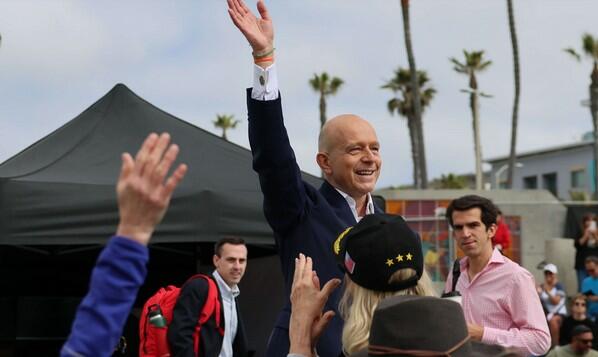
Photo: Huntington Beach, CA - April 22: Conservative commentator and Silicon Valley entrepreneur Steve Hilton, greets supporters as he announces his campaign for California governor at the Pier Plaza in Huntington Beach Tuesday, April 22, 2025. (Allen J. Schaben / Los Angeles Times via Getty Images)

California’s top-two primary system allows the two highest vote-getters to advance, regardless of party, and Republicans Steve Hilton and Sheriff Chad Bianco have emerged as the top contenders in the race. Unless one of the Democrat candidates break out, the two Republicans could face each other in the final runoff in November.

Hilton, 56, is a conservative commentator who formerly served as a political advisor in Great Britain. Bianco, 58, is a “law and order” sheriff and coroner of Riverside County.

Polls have consistently showed the two Republicans leading the pack.

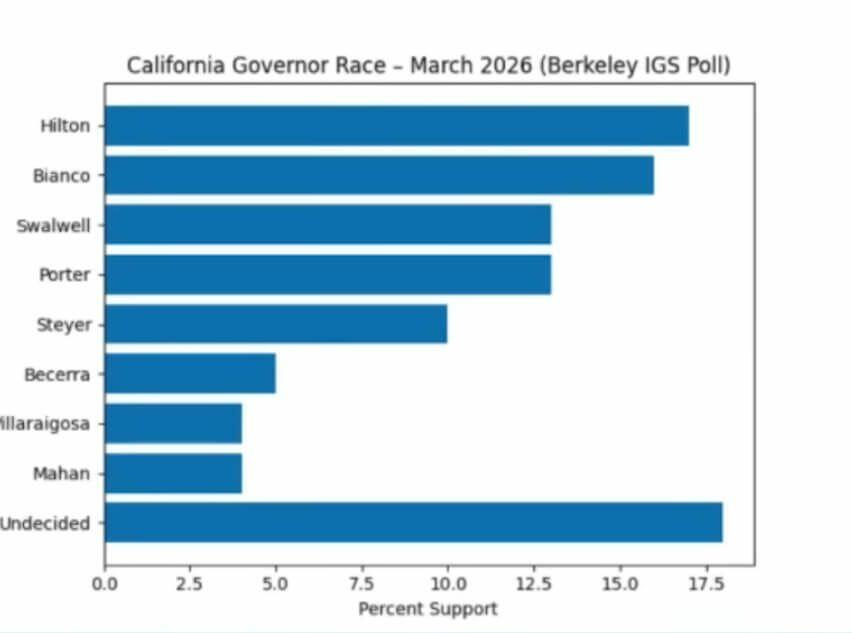
The most recent Berkeley IGS Poll, conducted March 9–15, 2026,  showed Hilton leading with 17 percent support among likely voters, followed closely by  Bianco at 16 percent. Among Democrats, the deeply unpopular and controversial Rep. Eric Swalwell and former Rep. Katie Porter were tied at 13 percent, with left-wing billionaire Tom Steyer lagging at 10 percent.

 (Carlin Stiehl / Los Angeles Times via Getty Images)

A full 16 percent of likely voters were undecided or backing other candidates.

Poll director Mark DiCamillo said that voters are “largely unenthusiastic,” and pointed out that nearly all the Democrat candidates have higher unfavorable than favorable ratings. Porter and Steyer had the highest unfavorable ratings at 37 percent.

California hasn’t elected a Republican to a statewide office since Arnold Schwarzenegger left the governors’ office in 2008. However, voter dissatisfaction with current leadership, high costs of living, and a desire for outsiders in politics are reportedly contributing to the competitive landscape.

With 16 percent of voters still undecided and the possibility of some Democrats dropping out, the race remains fluid ahead of the June primary.

Nevertheless, political commentator Mark Halperin recently opined that the California Democrats are “flailing.”

“The Democrats are in real danger of not getting a candidate in the final two,” Halperin noted on his video platform Two-Way, last week. He added that Democrat strategists have admitted to him privately that their “field is not great.”

There’s no one people are excited about, no one that people see as breaking away from the pack,” he said. “They’re all weak and they’re all susceptible to opposition research.”

Halperin predicted that the Dem candidates will eventually “start hitting each other,” and it will be “very brutal.”

Tyler Durden Tue, 03/24/2026 - 15:45
https://ift.tt/bUV6D49
from ZeroHedge News https://ift.tt/bUV6D49
via IFTTT

Two Republicans Currently Lead California Governor's Race And Could Lock Out Dems In General Election SocialTwist Tell-a-Friend
| 0 comments ]

FBI Misled Court To Spy On Second Trump Campaign Adviser

Authored by Paul Sperry via RealClearInvestigations,

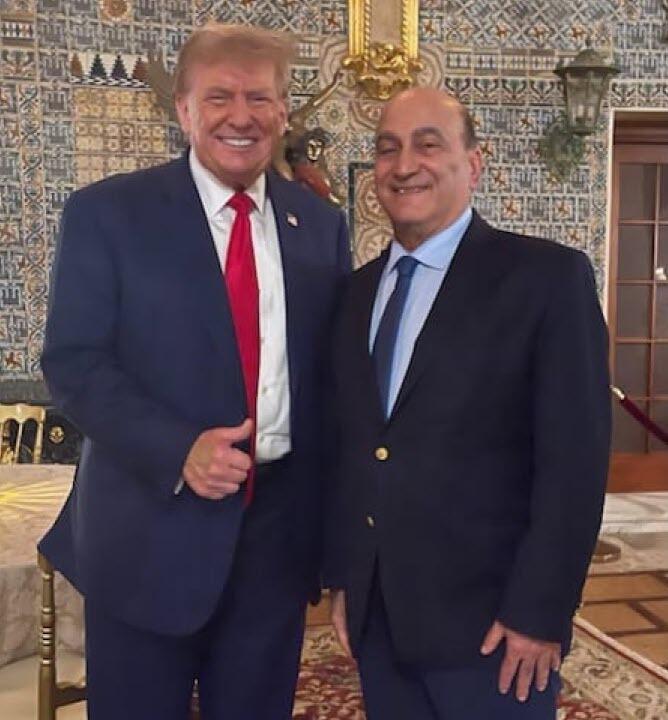
Carter Page wasn’t the only adviser from Trump’s first campaign wiretapped by the FBI. Walid Phares was electronically monitored for a 12-month period between 2017 and 2018, according to the Washington-based FBI agent who was assigned to investigate him as part of Special Counsel Robert Mueller’s Russia collusion probe.
As in Page’s case, the bureau withheld evidence exonerating Phares from the court to secure surveillance authorization, according to newly declassified FBI documents.

“I had no idea any of this was happening,” Phares told RealClearInvestigations in an exclusive interview Wednesday night. “This is shocking because they told my lawyer that I was only a ‘witness’ and that they just needed some information.”

“But these were huge abuses that I can see now,” he added. Phares said he intends to sue the FBI and Justice Department for damages.

The 68-year-old Lebanese American scholar said case agents and prosecutors grilled him for months, questioned his employer, and even went after his bank records. As a result, he said he lost his job at a university, his livelihood, and even his bank accounts and credit card after Wells Fargo canceled them.

“It was like a disaster for me financially and physically,” he said. “I also lost my Fox News contract” as an expert on terrorism and the Middle East, which he had held since 2007.

Phares was not hired by the Trump administration, even though he had been expected to land a high-level foreign policy position. “They scared the agencies from me so I would have problems with [obtaining] a security clearance,” he said.

‘No Corroborating Facts’

Investigators could find “nothing” criminal on Phares during their probe, according to the lead case agent, and in fact, they concluded he was “honest.” Yet Mueller’s team continued to secretly spy on Phares—without providing the powerful federal spy court any of the exculpatory evidence that could clear Phares as required by law.

The agent told investigators in a separate 2020 internal FBI review that “there were no corroborating facts that tied Crosswind [the codename for Phares’s case] to certain facts that we thought were originally true,” according to a transcript of his testimony, released after more than five years of concealment.

He added that “nothing” collected from Phares’s communications under the Foreign Intelligence Surveillance Act (FISA) warrants, including phone messages and emails, “aided the investigation other than to prove the target was being honest with investigators,” who had interviewed him repeatedly.

Nonetheless, the FBI continued monitoring Phares as part of a Foreign Agents Registration Act (FARA) investigation. He was never charged with any violations of the act.

“There was a ‘let’s get him’ attitude among prosecutors on Mueller’s team,” the agent said, according to the new documents, noting that several prosecutors shared an anti-Trump bias and even tacked up negative cartoons of the president on the walls of their office.

The FBI agent, whose name is redacted in several pages of declassified FBI documents released by Senate Judiciary Committee Chairman Charles Grassley, added that “there was nothing confirming Crosswind [Phares] received a large money payment, and nothing confirming Crosswind had a meeting in another country for the purposes of the initial allegation.”

Misleading the Court

When Mueller’s team applied for the fourth and final warrant to secretly surveil Phares in 2018, the agent argued that the Foreign Intelligence Surveillance Court (FISC) needed to be alerted to how new information “had changed our understanding of our initial analysis” that Phares was a foreign agent. He suggested several corrections, but was rebuffed by an FBI lawyer.

“I pointed out these specific corrections to the application in numerous instances throughout the FISA process,” the agent said. “I sent these edits to Kevin Clinesmith, who said, ‘We can’t send this to DOJ.’”

A senior FBI attorney, Clinesmith had also been assigned to Mueller’s team, which agreed the corrections were unnecessary.

It wouldn’t be the first time Clinesmith, whose internal texts and emails show he had an intense anti-Trump bias, withheld exculpatory evidence from the FISA court.

Clinesmith later pleaded guilty to altering evidence used in an application to renew a FISA warrant to spy on another Trump adviser, Page, whom the FBI falsely accused of acting as a Russian agent. To secure the renewal, Clinesmith changed the wording in an intelligence email that exonerated Page, reversing its meaning.

DOJ Inspector General Michael Horowitz found the FBI based its warrants targeting Page largely on a Hillary Clinton campaign-funded dossier of false opposition research. The IG concluded the FBI abused its FISA authority while spying on Page, including failing to disclose exculpatory evidence to the surveillance court. Far from aiding Moscow, the former Naval officer had previously worked with the CIA and FBI to help catch Russian spies, as RCI first reported.

The FISA court subsequently invalidated some of the warrants against Page, who was never charged with a crime and is now suing the FBI and DOJ for $75 million for violating his constitutional rights against improper searches and seizures.

His case is currently before the U.S. Supreme Court, but the DOJ’s solicitor general has repeatedly delayed filing a response to his petition, claiming he has other “pressing” matters. The high bench has set the next filing deadline for April 22.

The year-long FISA eavesdropping on Phares appears to be missing from both Horowitz’s and Special Counsel John Durham’s reports investigating FBI abuses in the Russiagate scandal, raising fresh questions about the thoroughness of those investigations. It is still not clear if the three other Trump campaign officials subject to Russiagate investigations—Paul Manafort, Michael Flynn, and George Papadopoulos—were also wiretapped.

A $10 Million Bribe?

In an RCI interview, Phares said the false allegations against him originated with the CIA, which issued a report in 2016 alleging he had taken a $10 million bribe from the Egyptian government intended for the Trump campaign during a meeting in Cairo.

John Brennan, an Obama appointee, was the director of the CIA at the time. He is currently under federal grand jury investigation for his role in the Russiagate hoax.

DOJ is building a “grand conspiracy” case against former Obama and Biden officials for allegedly committing political espionage against Trump and his advisers by manufacturing criminal investigations and depriving them of their rights under color of law. It’s not immediately known if the investigation includes the Phares case. The FBI and DOJ did not respond to requests for comment.

Although the Mueller investigation’s primary mandate was to investigate ties between the Trump campaign and Russia, it veered into additional investigative areas, including probing campaign contacts with other foreign governments.

Phares had taken trips to Cairo during the 2016 campaign while advising Trump on the Middle East.

The investigating agent said the highly classified intelligence agency reports that Phares secretly worked with the Egyptian government to influence the incoming administration “were disproven.”

“Despite this, the [Mueller] team still went on with the third renewal of the FISA [against Phares],” he said.

The investigation was closed in 2019, and Phares was never charged with a crime. Mueller’s $30 million-plus investigation ultimately found no evidence of Trump campaign collusion with Russia or any foreign government.

Misconduct and Bias

Grassley said the FBI agent’s testimony “details substantial allegations of misconduct and political bias occurring within Special Counsel Mueller’s office during the investigation,” including “misleading the FISC,” or Foreign Intelligence Surveillance Court.

The Republican senator has requested DOJ provide his committee “all FISA applications, predication material, and related reporting” from the Crosswind probe to understand the full extent to which the FISA court was misled.

The identity of the FISA judges who approved the top-secret warrants is not yet known. But the presiding FISC judge at the time was Rosemary Collyer, a George W. Bush appointee who personally signed off on the wiretapping of Carter Page. Before resigning in 2020, Collyer issued an order stating that the FBI in its sworn affidavits had “provided false information and withheld material information detrimental to the FBI’s case [against Page].”

RCI first reported that Phares was the subject of a FARA investigation approved by former Obama DOJ official David Laufman, along with four other Trump campaign officials. But the revelation he was also put under FISA surveillance—the government’s most powerful investigative tool—had not been known until Grassley’s disclosures earlier this week.

Phares said he suspected he might be under some kind of surveillance but didn’t know for certain until this week’s release of the declassified FBI documents. He said he recently received notices from Hotmail and Yahoo that the DOJ had sought records from his email accounts through an unspecified legal process.

“They were fishing,” he told RCI.

Although agents working with Mueller initially asked Phares about Russia, they soon zeroed in on his dealings with Egypt. Mueller’s prosecutors later told him he was merely a witness, not a target.

Phares said he was first interviewed in September 2017 by Washington-based FBI agents working for Mueller.

“Two agents showed up at my door flashing badges and asked if we could speak,” he recalled. “I welcomed them in because I was a lead lecturer at the FBI (on counterterrorism), but they took four hours questioning me, and it made my wife very uncomfortable.”

Added Phares: “I made a huge mistake not lawyering up earlier.”

‘Rougher and Tougher’

He said their questions got “rougher and tougher” over the next few months of interviews, which he said later included Mueller prosecutor Zainab Ahmad, who was originally hired at Main Justice in the Spring of 2016 by Attorney General Loretta Lynch.

Ahmad was one of the key Mueller team members responsible for handling the controversial perjury case against former Trump National Security Adviser Michael Flynn, which was later thrown out. Like Flynn, Phares was an outspoken critic of Islamic terrorism, Obama’s Iranian nuclear deal, and the influence of the radical, pro-jihad Muslim Brotherhood in Egypt and America.

He said he believes the Obama administration—including Brennan’s CIA—was also monitoring him during the 2016 campaign.

Declassified briefing notes from a meeting shortly after Trump took office between former deputy FBI Director Andrew McCabe and Obama-appointed officials with DOJ’s national security division indicate that the FBI and DOJ were “working on a FISA application” targeting “Walid Phares” as early as March 2017.

“They knew they had nothing on Russia, so they went after me on Egypt. But the main target was President Trump,” Phares said. “They had to neutralize him and any of his associates who could carry out his agenda.”

Civil rights watchdogs have called the egregious spying violations against Carter Page the worst abuse of the Foreign Intelligence Surveillance Act since it was enacted more than 45 years ago. Now another U.S. citizen may have been subjected to even worse abuses.


Tyler Durden Mon, 03/23/2026 - 16:25
https://ift.tt/gKO4iTI
from ZeroHedge News https://ift.tt/gKO4iTI
via IFTTT

FBI Misled Court To Spy On Second Trump Campaign Adviser SocialTwist Tell-a-Friend