| 0 comments ]

Less Than Half Of Health Care Workers Received An Updated COVID-19 Vaccine: CDC

Authored by Zachary Stieber via The Epoch Times,

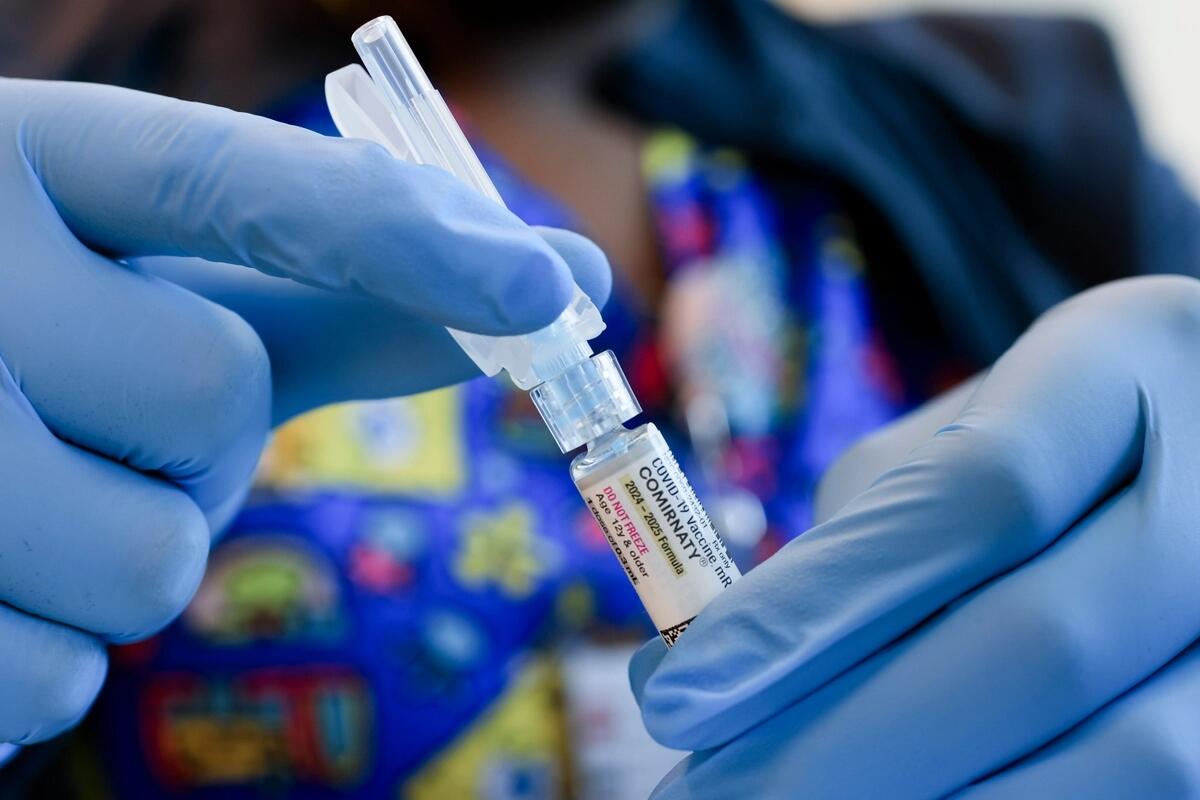
A minority of health care workers received an updated COVID-19 vaccine, according to a newly reported survey from the Centers for Disease Control and Prevention.

Just 40.2 percent of health care personnel who responded to the survey said they received a COVID-19 shot between the fall of 2024 and early 2025, CDC researchers said on April 2.

The rate of vaccination was higher, 76.3 percent, for influenza.

The survey was conducted online from March 26 to April 17 in 2025, following the 2024–2025 respiratory virus season. The season begins in the fall of each year and runs into the next year.

Some 2,650 health care workers responded to the survey.

At the time, the CDC recommended influenza and COVID-19 vaccination for virtually all Americans aged 6 months and older, regardless of the number of prior doses. The CDC more recently narrowed its recommendations for those shots, citing factors such as uncertain risk-benefit profiles.

A federal judge blocked the updates in March.

The percentage of workers who took a COVID-19 vaccine increased from the prior season, when the rate was 31.3 percent, according to the newly released survey. The percentage of workers who received a flu shot remained about the same, though it is down from years prior to the COVID-19 pandemic.

CDC researchers said the increase in COVID-19 vaccination coverage may be from the vaccine for the 2024–2025 season becoming available one month earlier than the preceding year.

Workers aged 18 to 29 were most likely to receive a COVID-19 vaccine. Personnel aged 60 and up were more likely to receive an influenza immunization.

According to survey data, nearly four in 10 employers required influenza vaccination, and about 14 in 100 mandated COVID-19 vaccination. People who worked for employers who required vaccination were far more likely to have received the vaccines. Some 83 percent of workers required to receive a COVID-19 vaccine had received one, compared to 46 percent whose employer recommended COVID-19 vaccination and just 19 percent whose employer did not require or recommend vaccination.

CDC researchers said that the data could “help guide the development and implementation of evidence-based strategies to encourage vaccination, increase coverage, reduce influenza incidence among [health care personnel] and their patients, and limit strain on the health care system.”

The researchers said the findings supported actively promoting vaccination in places of business to increase influenza vaccination coverage among health care workers.

Health care workers who decline vaccination have said in previous surveys that they were worried about vaccine side effects and expressed distrust in health authorities.

The CDC published the study in its quasi-journal, Morbidity and Mortality Weekly Report. The publication ensures reports align with CDC messaging and typically does not peer-review papers.

“Although most articles that appear in MMWR are not ‘peer-reviewed’ in the way that submissions to medical journals are, to ensure that the content of MMWR comports with CDC policy, every submission to MMWR undergoes a rigorous multilevel clearance process before publication,” the CDC said in a 2011 report. “By the time a report appears in MMWR, it reflects, or is consistent with, CDC policy.”

Limitations of the paper included the vaccination status being self-reported and unverified. Authors disclosed no potential conflicts of interest.

Tyler Durden Sat, 04/04/2026 - 18:05
https://ift.tt/k9PgUyx
from ZeroHedge News https://ift.tt/k9PgUyx
via IFTTT

Less Than Half Of Health Care Workers Received An Updated COVID-19 Vaccine: CDC SocialTwist Tell-a-Friend
| 0 comments ]

US Arrests & Boots Soleimani's Fashion Designer Niece From The Country

The Trump administration is rounding up family members of notable Iranian government figures, accusing them of spreading 'pro-Tehran propaganda'. And apparently this is even if the Iranian officials in question are deceased.

The State Department confirmed an unexpected development on Saturday, announcing that the niece of the late Iranian Maj. Gen. Qassem Soleimani is being booted from the country.

Hamideh Soleimani Afshar and her daughter were arrested Friday night, and their permanent residence status has been revoked - now in the custody of US Immigration and Customs Enforcement.

Maj. Gen. Soleimani was the former leader of the elite Quds force wing of the Islamic Revolutionary Guard Corps (IRGC) who was assassinated via drone strike as his convoy drove outside of Baghdad International Airport in 2020.

This was during the first Trump administration, and in many ways this brazen killing of someone many countries viewed as essentially a 'diplomat' (certainly Iraq and Russia did) set Tehran and Washington on a collision course. Washington long considered him a terrorist. His popularity inside Iran was immense.

According to more details of the arrest of Soleiman's niece and her daughter:

The State Department did not say where they were arrested. Secretary of State Marco Rubio said in a post on X that Soleimani Afshar and her daughter lived "lavishly" in the U.S. and are now in ICE custody “pending removal” from the U.S.

The State Department described Soleimani Afshar as “an outspoken supporter of the totalitarian, terrorist regime in Iran.” Her husband is also now not permitted to enter the U.S., the State Department said. Her uncle Maj. Gen. Soleimani, the former leader of the foreign wing of Iran’s Islamic Revolutionary Guard Corps, was killed in a U.S. airstrike in 2020.

Apparently her social media accounts have already been scrubbed and/or deleted, and there are reports saying that she did modeling and/or fashion design in the United States.

It's not entirely clear what exactly she posted that caught the attention of US authorities. She may have merely critiqued the US-Israeli bombing of her homeland - but some X accounts have accused her of positively praising Iranian leadership while opposing the anti-government and economic protests from last January. Laura Loomer is claiming credit for alerting the Trump administration, or playing some kind of role in Hamidea's apprehension and pending expulsion. 

According to more from the WSJ, "Rubio also ended legal status protections for Fatemeh Ardeshir-Larijani, the daughter of the late Ali Larijani, Iran’s former top national-security official, and her husband, the State Department said. The department said they are no longer in the U.S. and not permitted to enter in the future."

This means that likely other permanent residence holders who have family ties to the Islamic Republic leadership are being scrutinized by US federal authorities.

There could be a lot of Instagram, X, and Facebook scrubbing happening among the Iranian diaspora at this point.

Tyler Durden Sat, 04/04/2026 - 16:20
https://ift.tt/ZzmDWXi
from ZeroHedge News https://ift.tt/ZzmDWXi
via IFTTT

US Arrests & Boots Soleimani's Fashion Designer Niece From The Country SocialTwist Tell-a-Friend
| 0 comments ]

It's Past Time To Privatize The Post Office

Submitted by QTR's Fringe Finance

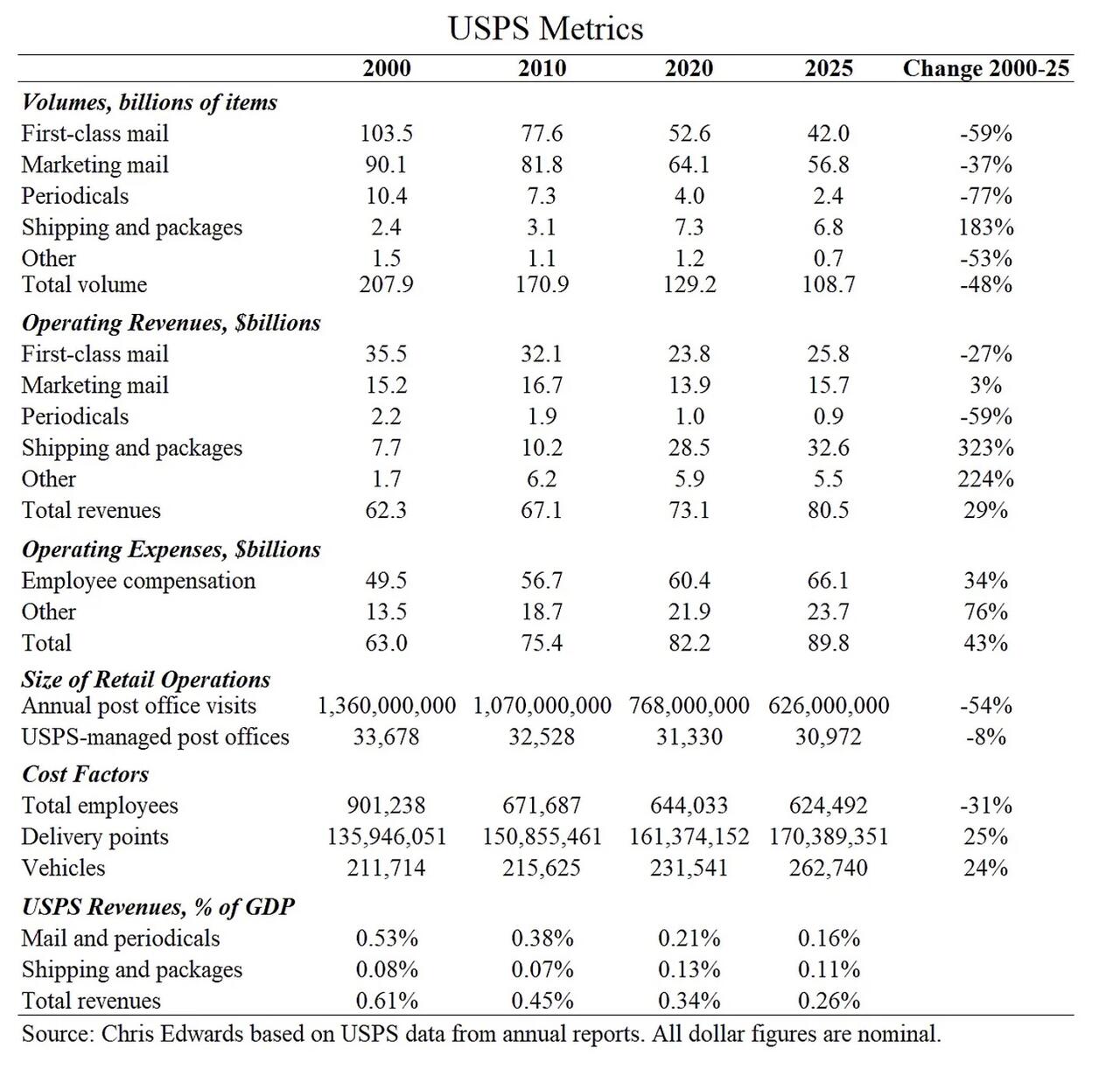
A new piece from the Cato Institute lays out how bad things have gotten at the post office, arguing that the United States Postal Service is facing a severe and worsening financial crisis. According to the article, USPS has been losing billions of dollars annually for well over a decade and is now at a point where it cannot realistically fix its problems without major structural changes. I could have told you this after the horror show I lived through at the post office back in September of 2025.

The USPS now is the predictable outcome of trying to run a massive logistics operation through a government bureaucracy that moves slowly, resists change, and answers more to politics than to performance. The piece makes clear that USPS was built for a world that no longer exists, yet it continues operating as if nothing has changed because, as usual, government institutions are the last to notice reality.
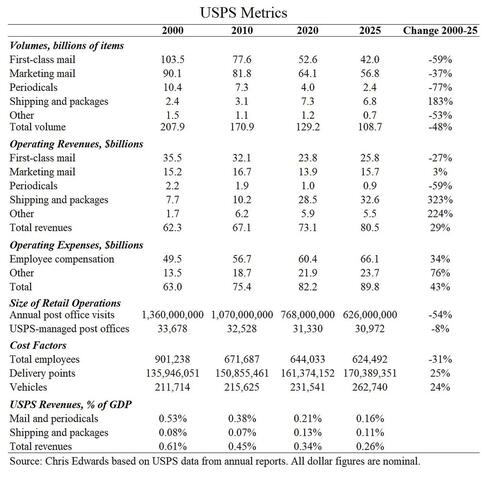
The problems outlined are extensive and, frankly, not surprising. Mail volumes have collapsed as Americans switched to faster, cheaper digital alternatives, yet USPS continues to behave like it’s still 1995. What mail remains is increasingly dominated by low-value marketing material, while the agency struggles to compete in package delivery against companies that actually specialize in logistics.

Even Amazon, a company that started as an online bookstore (what could be less efficient to ship than godd*mn books — bricks?), has figured out how to build a better delivery network. 

Meanwhile, visits to post offices have fallen off a cliff, but the system has barely shrunk its footprint. Labor costs remain enormous, productivity lags, and the workforce is structured in ways that prioritize stability over efficiency.

The result is exactly what you would expect when there is no real pressure to perform: bitchy apathetic staff, declining output, rising inefficiency, and billions in annual losses that just keep piling up. In the private sector, that kind of performance would trigger a full-scale overhaul or bankruptcy.

In government, it triggers a Congressional hearing and maybe a strongly worded memo, in addition to switching the Postmaster General and paying the new guy even more than the last guy got paid.

This is why privatization is not some radical idea but a logical response to a system that clearly is not working. A privatized USPS would finally be allowed to operate like a business instead of a political artifact. It could close unprofitable locations without needing a congressional debate, adjust delivery schedules based on actual demand, and invest in technology that improves service instead of maintaining outdated systems because “that’s how it’s always been done.”
Most importantly, it would have to make money (or at least stop losing it) which is a constraint that tends to focus the mind in ways government management never quite experiences. When survival depends on efficiency, organizations tend to discover it very quickly.

The contrast with private carriers like FedEx and UPS could not be clearer. These companies operate in a world where excuses don’t pay the bills. They optimize routes, invest in automation, analyze data, and constantly refine their operations because if they don’t, their competitors will. They have built systems that deliver packages faster, track them more precisely, and adapt to changing demand almost in real time. None of this happened because a committee approved it after years of debate. It happened because the profit motive demands results.

Meanwhile, USPS is stuck navigating layers of regulation and political oversight, where even obvious changes can take years to implement, if they happen at all.


🔥 50% OFF FOR LIFE: Using this coupon entitles you to 50% off an annual subscription to Fringe Finance for life: Get 50% off forever


There is also the small matter of accountability. Private companies cannot run losses indefinitely and expect someone else to quietly cover the gap. They either fix the problem or they go under. USPS, on the other hand, operates with the understanding that there will always be some form of backstop, explicit or not. That safety net removes urgency and allows inefficiencies to persist far longer than they would anywhere else. It is the classic government model: spend more, deliver less, and call it a “challenge” instead of a failure. Privatization would replace that dynamic with one where performance actually matters, where bad decisions have consequences, and where efficiency is not optional.

Of course, defenders of the status quo often argue that privatization would undermine public service, but that assumes the current system is delivering high-quality service to begin with. Other countries have already shown that it is possible to maintain universal delivery while still operating under private or semi-private models. Targeted subsidies can ensure rural access without requiring the entire system to function inefficiently. The difference is that those systems are designed around outcomes, not inertia.

At some point, it becomes difficult to ignore the obvious. Government agencies are notoriously bad at adapting, innovating, or even cutting costs, because they are not structured to do any of those things well. The USPS is not an exception; it is a textbook example. Continuing down the current path means more losses, more inefficiency, and more attempts to patch over structural problems with temporary fixes. Privatization, by contrast, offers a way to align incentives with reality, bringing the postal system into the same competitive, performance-driven environment that has already transformed the rest of the logistics industry. And if that means admitting that the government is not particularly good at running a nationwide delivery business, that is less a controversial statement than an overdue acknowledgment of what the evidence has been showing for years.

QTR’s Disclaimer: Please read my full legal disclaimer on my About page hereThis post represents my opinions only. In addition, please understand I am an idiot and often get things wrong and lose money. I may own or transact in any names mentioned in this piece at any time without warning. Contributor posts and aggregated posts have been hand selected by me, have not been fact checked and are the opinions of their authors. They are either submitted to QTR by their author, reprinted under a Creative Commons license with my best effort to uphold what the license asks, or with the permission of the author.

This is not a recommendation to buy or sell any stocks or securities, just my opinions. I often lose money on positions I trade/invest in. I may add any name mentioned in this article and sell any name mentioned in this piece at any time, without further warning. None of this is a solicitation to buy or sell securities. I may or may not own names I write about and are watching. Sometimes I’m bullish without owning things, sometimes I’m bearish and do own things. Just assume my positions could be exactly the opposite of what you think they are just in case. If I’m long I could quickly be short and vice versa. I won’t update my positions. All positions can change immediately as soon as I publish this, with or without notice and at any point I can be long, short or neutral on any position. You are on your own. Do not make decisions based on my blog. I exist on the fringe. If you see numbers and calculations of any sort, assume they are wrong and double check them. I failed Algebra in 8th grade and topped off my high school math accolades by getting a D- in remedial Calculus my senior year, before becoming an English major in college so I could bullshit my way through things easier.

The publisher does not guarantee the accuracy or completeness of the information provided in this page. These are not the opinions of any of my employers, partners, or associates. I did my best to be honest about my disclosures but can’t guarantee I am right; I write these posts after a couple beers sometimes. I edit after my posts are published because I’m impatient and lazy, so if you see a typo, check back in a half hour. Also, I just straight up get shit wrong a lot. I mention it twice because it’s that important.

Tyler Durden Fri, 04/03/2026 - 17:20
https://ift.tt/pNDhCqd
from ZeroHedge News https://ift.tt/pNDhCqd
via IFTTT

It's Past Time To Privatize The Post Office SocialTwist Tell-a-Friend
| 0 comments ]

Tiger Woods Flexes Call With Trump Before DUI Arrest; Pardon Odds Remain Low

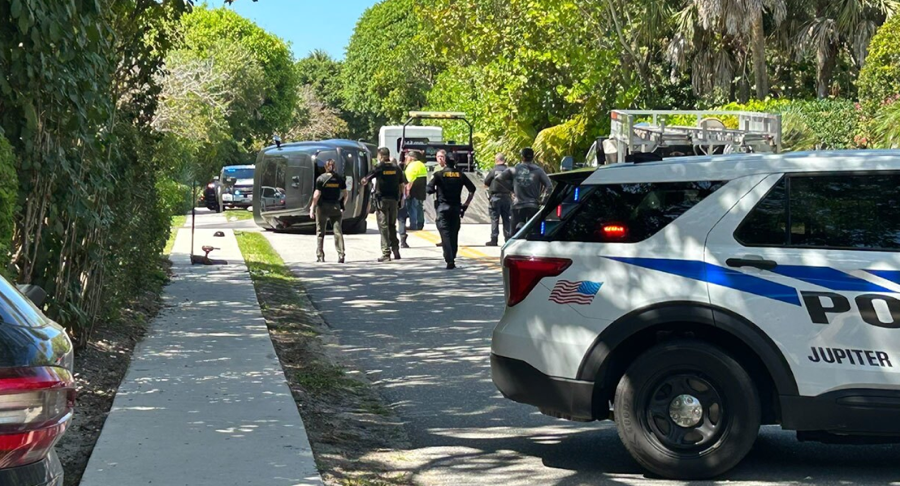
Bodycam footage shows Tiger Woods telling local authorities on Jupiter Island that he spoke with President Trump shortly after he flipped his Land Rover SUV and was arrested for DUI.

"You got it. Thank you, bye... I was just talking to the President," Woods told a local police officer seen in the bodycam footage. The officer was asking Woods to remain on the scene. Bodycam video was obtained by the New York Post.

Last Friday, Woods crashed his Land Rover into another vehicle, resulting in his $100,000-plus SUV turning onto its driver's side.

Unfortunately for Woods, he failed a on-scene sobriety test administered by police after what they say he showed "signs of impairment" and appeared "lethargic." Woods blew "triple-zeroes" on a breathalyzer but failed to submit a urine test.

Woods told officers he was "hoping to" play in the upcoming Masters Tournament, but in a statement posted on X on Tuesday, he told the golfing world that he would pause tournament play for the foreseeable future and "seek treatment."

"I know and understand the seriousness of the situation I find myself in today. I am stepping away for a period of time to seek treatment and focus on my health. This is necessary in order for me to prioritize my well-being and work toward lasting recovery," Woods stated (or perhaps his layer stated).

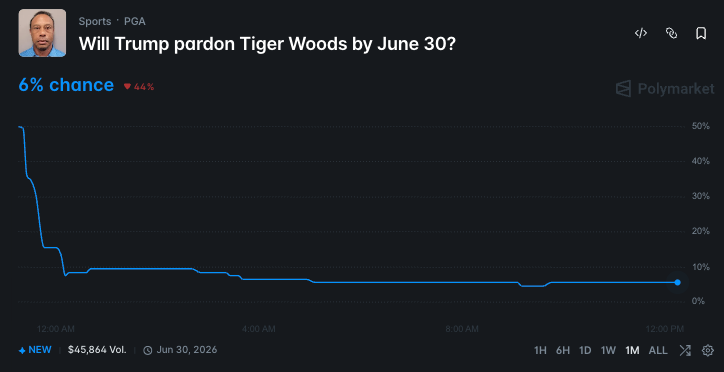
A new Polymarket bet, "Will Trump pardon Tiger Woods by June 30?" showed about a 6% chance as of Friday around lunchtime that the pro golfer would be pardoned by Trump.

Woods admitted he took "a few pills" before the crash. Officers also found hydrocodone pills at the crash scene.

This incident marks the second DUI in the Jupiter Island area over the last decade.

Will Trump pardon Tiger Woods? Polymarket is already taking bets...

Tyler Durden Fri, 04/03/2026 - 16:40
https://ift.tt/VuWe7t1
from ZeroHedge News https://ift.tt/VuWe7t1
via IFTTT

Tiger Woods Flexes Call With Trump Before DUI Arrest; Pardon Odds Remain Low SocialTwist Tell-a-Friend
| 0 comments ]

Three LNG Tankers Are First To Cross Strait Of Hormuz Since War Started

While a growing number of ships have been traversing the Strait of Hormuz, with Lloyd's List reporting a total of 142 vessels have transited since the start of March, but 67% of that traffic has a direct affiliation with Iran... and the figure rises to 90% when looking at traffic in recent days, as some ships have had to pay fees in yuan or cryptocurrencies before being escorted through the strait...

... one vessel class that has so far failed to make the key crossing are LNG-carrying VLCCs, which are critical to ease the Asian nat gas supply crunch because,  unlike oil, there are no Hormuz alternatives or bypass pipelines to bring LNG/nat gas to gas-starved Asian customers where demand destruction is now rampant. 

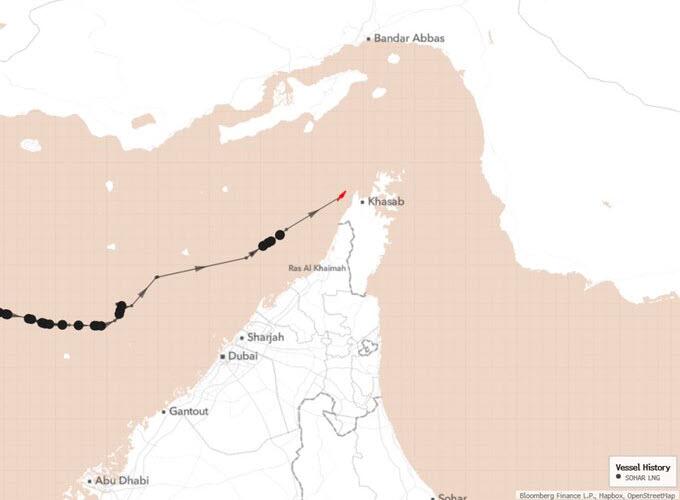
But that is about to change: according to Bloomberg, a liquefied natural gas tanker has entered the Strait of Hormuz, and if it successfully navigates the waterway would become the first such vessel to pass through the strait since the start of the war.

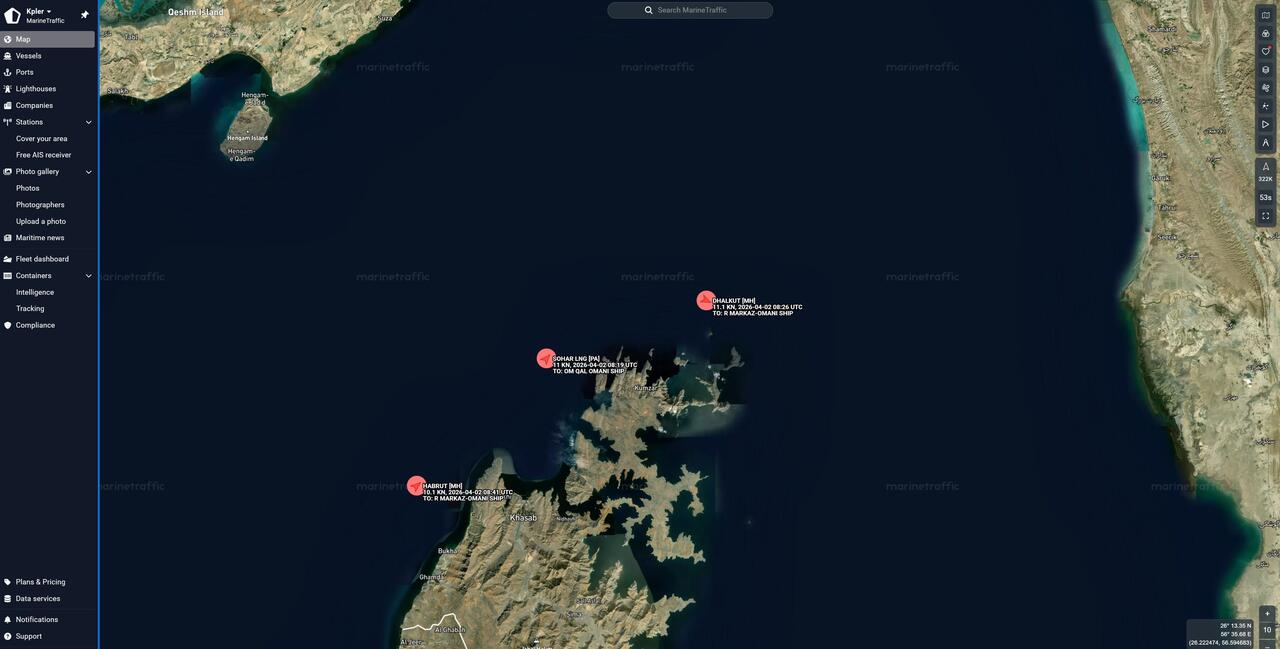
The Sohar LNG tanker, which appears not to be loaded with cargo, is moving eastward after changing its destination to the Qalhat LNG export terminal in Oman, according to ship-tracking data. The vessel, which is signaling that it’s an Omani ship, had been circling around the Persian Gulf over the past month, the data show.

LNG ships have avoided the strait since the conflict broke out on Feb. 28, disrupting about a fifth of the world’s supply of the fuel.

According to Bloomberg, which first reported about the crossing, the ship’s manager, recorded as Oman Ship Management on the Equasis database, didn’t immediately respond to calls or an email seeking comment. Its owner, Energy Spring LNG Carrier SA, shares the same contact details as its manager.

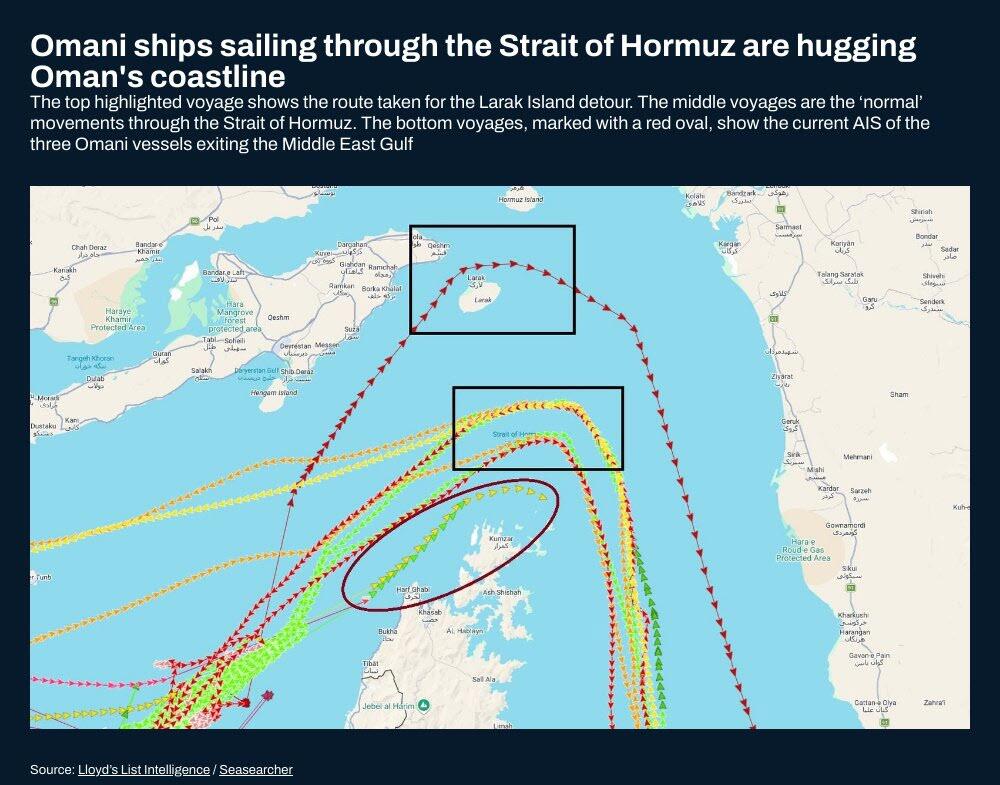
More importantly, the Sohar appears to be traversing the southern side of the strait which is unusual because ships have typically taken a northerly route at Tehran’s behest. In other words, it appears that the Omanese ship is making a run for it. 

While the Sohar vessel appears to be empty, the market is closely watching for LNG flows to resume and ease pressure on global prices, as the collapse in supply from the Persian Gulf  - with Qatar's huge Ras Laffan LNG facility damaged and shut-in indefinitely - compounded by outages at Australian facilities due to a cyclone last month, has sent consumers worldwide seeking alternative sources of energy. 

More importantly, the empty LNG tanker is not alone. According to data from Lloyd's List and Hormuz Letter, two other VLCCs, and these are laden with some 4 million barrels of Saudi and Emirati cargo unlike the empty Sohar, are sailing through the Strait of Hormuz, tracking close to the Omani coastline.

All three vessels are indicating they are heading to ports in Oman.

Why does this matter? Well, earlier today, Iran announced the "Oman protocol" which also includes tolls. And now ships are moving, although it wasn't clear if the ships had paid the toll demanded by Iran. 

As The Hormuz Letter notes, "The blockade isn't ending, but is being restructured. Iran is deciding who passes, under what terms, and at what price. This is what controlled access looks like."

Earlier today,  Kazem Gharibabadi, Iran’s deputy foreign minister of legal and international affairs, said the tanker traffic through the key oil-shipping route must be supervised and coordinated: “Of course, these requirements will not mean restrictions, but rather to facilitate and ensure safe passage and provide better services to ships that pass through this route.”

What he really meant is that going forward - all else equal - every ship will have to pay a toll in the millions, either in yuan or crypto. 

Tyler Durden Thu, 04/02/2026 - 14:00
https://ift.tt/eHLpDnk
from ZeroHedge News https://ift.tt/eHLpDnk
via IFTTT

Three LNG Tankers Are First To Cross Strait Of Hormuz Since War Started SocialTwist Tell-a-Friend
| 0 comments ]

Tankers Seized By US Carried 20 Million Barrels Of Iranian Crude To China

Nine tankers seized by the US since it began taking direct action against the so-called shadow fleet that transport illicit oil around the world have delivered more than 20 million barrels of Iranian crude to China since 2013, according to the WSJ. The figures form part of a new report that provides an insight into the level of support China has given Iran by buying its sanctioned oil.

Between 2013 and 2025, these nine vessels delivered 20.3 million barrels of Iranian crude to Chinese ports, the report said, citing data from Kpler. The vessels also carried 37.9 million barrels of Venezuelan crude and 11.1 million barrels of Russian crude to Chinese ports.

U.S. forces taking control of an oil tanker in the Indian Ocean

Altogether, that crude is worth at least $4 billion, according to the report, which is set to be released soon by Republicans on the House Select Committee on China, and seen by The Wall Street Journal.

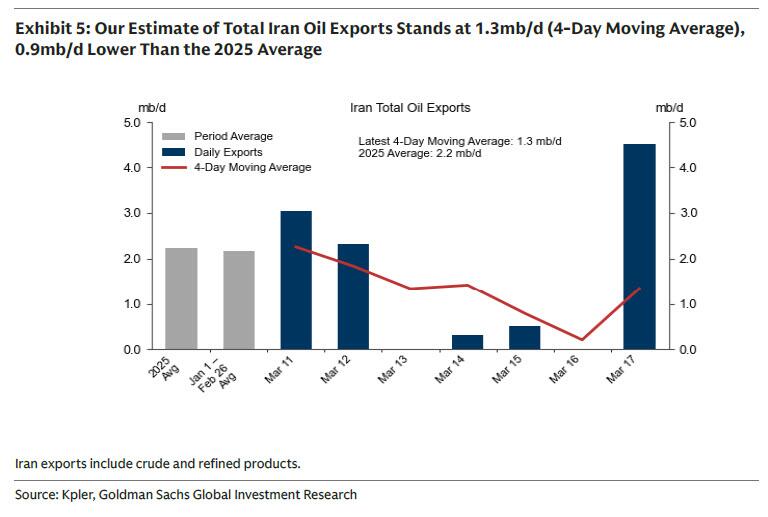
To be sure, the amount from the seized vessels represents just a small fraction of the oil China has imported from Iran, a process which has accelerated since the Iran was started, lifting Iran's output to the highest in years.

Still, it underscores how China has been a major user of the shadow fleet, bankrolling Iran, as well as Venezuela and Russia. In 2025, China received a third of the crude oil carried by shadow and sanctioned tankers and 10% of heavy refined products such as fuel oil and crude residuals, the report said, citing Kpler data.

Shadow fleet vessels carrying sanctioned cargo have also used China’s BeiDou satellite navigation in an effort to operate outside Western oversight, the report said. BeiDou is Beijing’s answer to the U.S. Global Positioning System, or GPS, and offers positioning, navigation and timing data globally. China’s Foreign Ministry didn’t respond to a request for comment.

Tyler Durden Wed, 04/01/2026 - 17:00
https://ift.tt/0Dd2Vf1
from ZeroHedge News https://ift.tt/0Dd2Vf1
via IFTTT

Tankers Seized By US Carried 20 Million Barrels Of Iranian Crude To China SocialTwist Tell-a-Friend
| 0 comments ]

US Firm Takes Control Of One Of The "World's Largest" Cobalt Producers

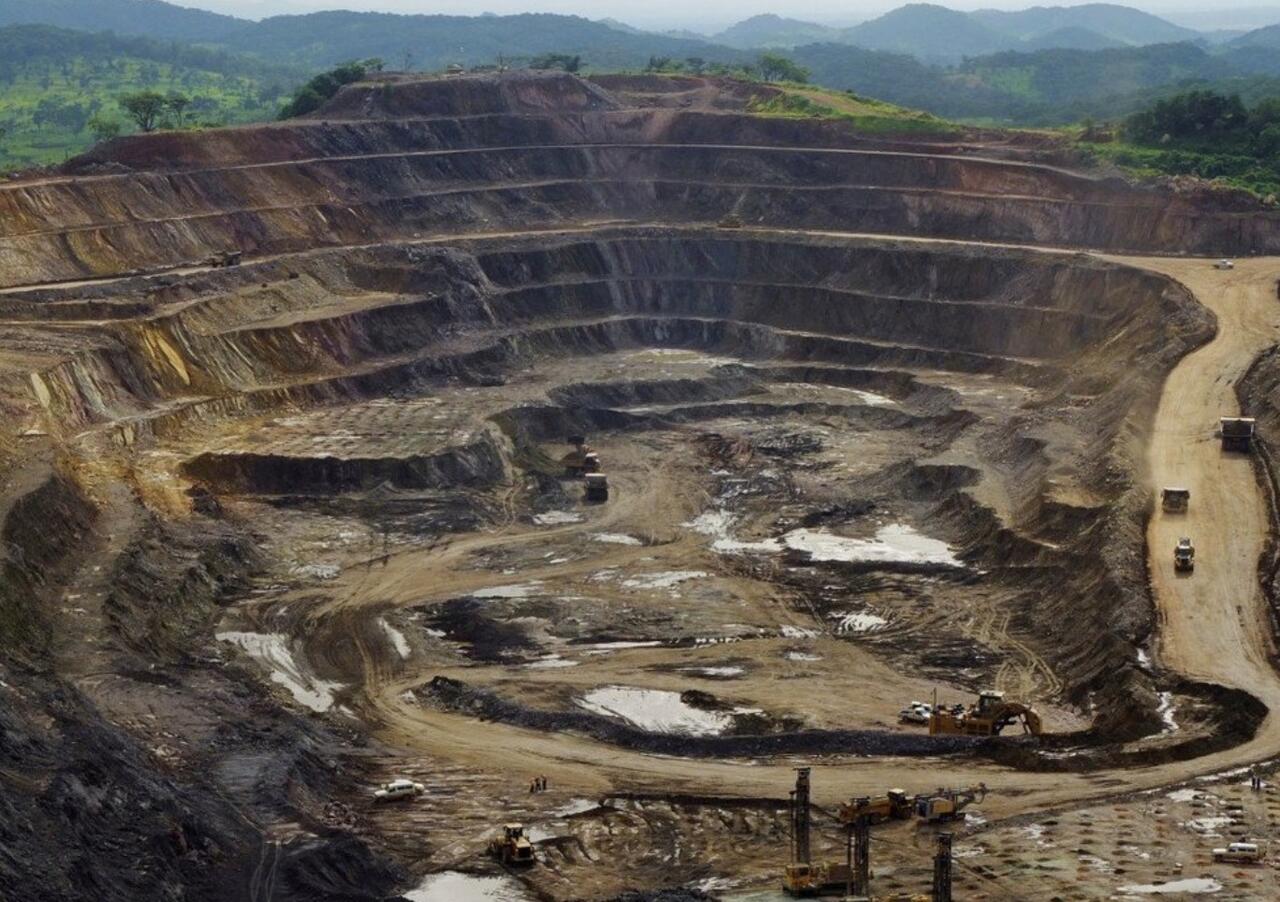
An American company has secured control of one of the largest cobalt producers outside Chinese ownership, delivering a strategic boost to U.S. efforts to compete with Beijing over critical minerals, according to the Wall Street Journal.

The buyer, Virtus Minerals, completed its acquisition of Congo-based Chemaf for $30 million, along with a pledge to invest roughly $720 million. The deal caps a years-long push, spanning both the Biden and Trump administrations, to ensure U.S. access to cobalt resources in the Democratic Republic of Congo.

Chemaf’s mines can supply about 5% of global cobalt output—a key material used in fighter jets, smartphones, and electric vehicle batteries. Virtus says future production will be directed toward American and allied buyers.

Despite its value, Chemaf proved difficult to sell. U.S. companies were wary of its heavy debt—around $1 billion—along with reputational concerns and the challenges of operating in Congo, including weak infrastructure, corruption risks, and labor issues.

The company has a controversial history. Its Mutoshi mine has faced repeated problems with unsafe working conditions and incursions by informal miners. In earlier years, child labor and bribery allegations also surfaced. Although some reforms were attempted, informal and hazardous mining has since returned.

WSJ writes that Virtus itself is a small, eight-person firm founded in 2022 by Phil Braun, a former Green Beret, and Andrew Powch, a Naval Academy and Harvard Business School graduate. Backed by U.S. government support, the company positions the deal as part of a broader national security effort to rebuild supply chains.

Financing for the acquisition includes $200 million from Virtus and its operating partner, India’s Lloyds Metals and Energy, along with $475 million from Orion Resource Partners and additional funding. The firm has also reached an agreement with Trafigura, Chemaf’s largest creditor.

Chemaf was put up for sale after cobalt prices fell sharply in 2023. Significant additional investment—estimated at up to $300 million—is still required to upgrade facilities and increase production capacity.

The deal faced competition from China. In 2024, Chemaf had agreed to sell to Norin Mining, a subsidiary of a Chinese state-owned defense company, for $920 million. That agreement collapsed after failing to gain approval from Congolese authorities, opening the door for Virtus.

The acquisition highlights the broader geopolitical contest over Congo’s vast mineral wealth. The country produces nearly three-quarters of the world’s cobalt, and Chinese firms have already invested heavily in its mining sector.

Still, questions remain about whether Virtus can successfully operate the assets. The company has a previous investment in Congo that remains stalled due to a legal dispute, and its partner’s experience is largely outside cobalt. Even so, Lloyds expects to begin work soon and complete upgrades within about a year.

*  *  * Only 2 more in stock

Tyler Durden Wed, 04/01/2026 - 15:25
https://ift.tt/k7tcef9
from ZeroHedge News https://ift.tt/k7tcef9
via IFTTT

US Firm Takes Control Of One Of The "World's Largest" Cobalt Producers SocialTwist Tell-a-Friend