| 0 comments ]

USA Rare Earth Shares Jump 15% After Trump Admin Extends Support To Companies Other Than MP

Shares of USA Rare Earth are rocketing higher this afternoon after it was reported that the Trump administration is moving to extend price support mechanisms for U.S. rare earth projects to other companies, broadening a policy that previously focused on MP Materials to include other mining, refining, and magnet production firms.

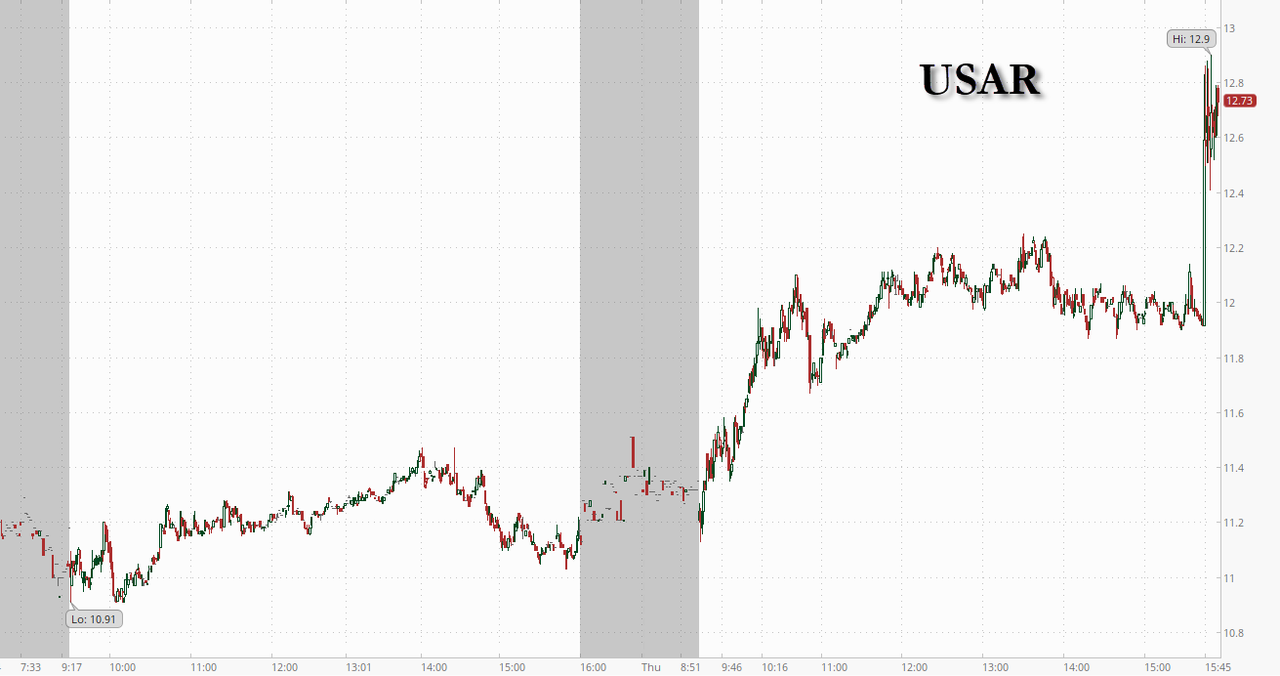
USA Rare Earth is the obvious #2 name in the U.S. that such an expansion may have an impact on. scale, government stake, and strategic timing. Shares quickly popped 15% on the news:

This expansion will provide guaranteed price floors for key rare earth elements, reducing the investment risk that has historically deterred private capital. The approach mirrors the strategy used to back MP Materials earlier this year, where government involvement transformed market confidence and secured long-term domestic supply.

Top White House officials have told rare earth companies that they are pursuing a pandemic-style strategy to strengthen U.S. critical minerals production and counter China’s market dominance by setting a guaranteed minimum price for their products, according to five sources familiar with the plan, per Reuters.

The previously unreported July 24 meeting, led by President Donald Trump’s trade advisor Peter Navarro and National Security Council supply chain official David Copley, included ten rare earth firms alongside major tech companies like Apple, Microsoft, and Corning—all of which depend on reliable supplies of critical minerals for electronics manufacturing.

The precedent for this move was set in July when the Pentagon made an unprecedented $400 million equity investment in MP Materials, the operator of the Mountain Pass rare earth mine in California. As part of that deal, the Department of Defense became MP’s largest shareholder and locked in a 10-year price floor for neodymium-praseodymium oxide at roughly $110 per kilogram—nearly double prevailing Chinese spot prices.

Alongside the equity, the Pentagon committed to purchasing MP’s entire magnet output for a decade, while private lenders like JPMorgan and Goldman Sachs provided over a billion dollars in commercial financing to scale production.

MP Materials’ stock reaction was swift and dramatic. On the day the Pentagon’s investment was announced, MP shares surged more than 50% as investors priced in the guaranteed revenue and government backing. In the days that followed, the stock rallied further after Apple revealed a $500 million supply deal with MP, ultimately pushing the company’s year-to-date gains to well over 200–250% by mid-July.

The market capitalization climbed toward $9.5 billion, marking one of the most significant single-year jumps for a U.S. resource company in recent memory.

Navarro and Copley emphasized that the price floor arrangement granted to MP Materials earlier this month as part of a multibillion-dollar Pentagon investment was “not a one-off” and that similar agreements were being developed for other companies. For years, U.S. critical minerals producers have argued that China’s market dominance deters investment in domestic mining projects, and they have pushed for federally backed price guarantees to reduce risk.

Rare earths—17 metals essential for manufacturing magnets that convert power into motion—are widely used in electronics, including smartphones and military hardware.

Tyler Durden Thu, 07/31/2025 - 16:10
https://ift.tt/pv2SjtZ
from ZeroHedge News https://ift.tt/pv2SjtZ
via IFTTT

USA Rare Earth Shares Jump 15% After Trump Admin Extends Support To Companies Other Than MP SocialTwist Tell-a-Friend
| 0 comments ]

Trump Closes Duty-Free De Minimis Loophole With Executive Order 

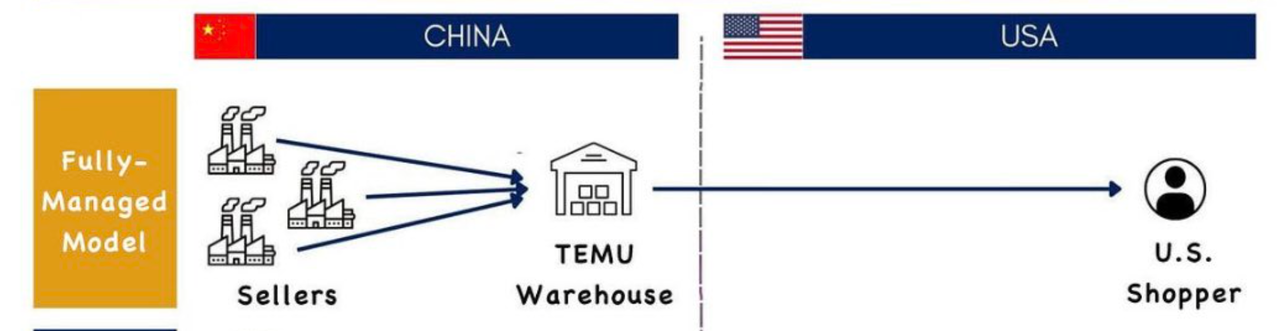
President Donald Trump signed an executive order Wednesday to shut down the de minimis loophole, a move aimed at protecting Americans from a surge of fentanyl, counterfeit goods, and economic sabotage. In effect, the Trump administration is cracking down on low-value shipments from Chinese e-commerce giants like Temu and Shein, which have flooded the U.S. market with literal junk. 

Effective August 29, the Trump administration will end de minimis exemptions for imported goods sent through the international postal network that are valued at or under $800. These items will be subject to full customs duties.

These imported goods will be subject to a new two-tier tariff structure, including a temporary flat-rate duty of $80 to $200 per item before transitioning to an ad valorem duty methodology based on country-specific tariff rates under the International Emergency Economic Powers Act (IEEPA).

The White House says the move is part of a broader campaign to combat what it has declared a series of national emergencies, including "closing the catastrophic loophole used to, among other things, evade tariffs and funnel deadly synthetic opioids as well as other unsafe or below-market products that harm American workers and businesses into the United States." 

"The de minimis exemption has been abused, with shippers sending illicit fentanyl and other synthetic opioids, precursors, and paraphernalia into the United States in reliance on the lower security measures applied to de minimis shipments, killing Americans," the White House stated. 

The bottom line is that Trump closing the de minimis loophole (order values under the $800 threshold) will be disastrous for Temu and Shein, who have exploited the loophole to ship millions of low-value packages directly to U.S. consumers without paying tariffs or undergoing rigorous inspections.

Related:

Tyler Durden Wed, 07/30/2025 - 15:00
https://ift.tt/YkLCcvg
from ZeroHedge News https://ift.tt/YkLCcvg
via IFTTT

Trump Closes Duty-Free De Minimis Loophole With Executive Order  SocialTwist Tell-a-Friend
| 0 comments ]

Federal Judge Blocks Big Beautiful Bill's Medicaid Cuts To Planned Parenthood

Authored by Jack Phillips via The Epoch Times (emphasis ours),

A federal judge on Monday blocked a provision in the One Big Beautiful Bill Act, saying it likely violates the Constitution.

Planned Parenthood signage outside a health care clinic in Inglewood, Calif., on May 16, 2023. Patrick T. Fallon/AFP via Getty Images

U.S. District Judge Indira Talwani issued a preliminary injunction blocking that section of the bill from being enforced, arguing in her order that the provision targeting Planned Parenthood is a form of punishment against the group and its members for providing abortions.

That provision of the bill, which was backed by Republicans and signed into law by President Donald Trump at the start of July, denied certain tax-exempt organizations and their affiliates from receiving Medicaid funds if they continue to provide abortions. That includes Planned Parenthood, which filed a lawsuit seeking an injunction against the provision.

Initially, Talwani granted a preliminary injunction that prevented the government from slashing Medicaid funds to Planned Parenthood members that didn’t provide abortion care or didn’t meet a threshold of at least $800,000 in Medicaid reimbursements in a given year. That order impacted 10 Planned Parenthood offices, while her latest order expands the injunction to all Planned Parenthood clinics.

Patients are likely to suffer adverse health consequences where care is disrupted or unavailable,” the judge wrote in her order on Monday. “In particular, restricting Members’ ability to provide healthcare services threatens an increase in unintended pregnancies and attendant complications because of reduced access to effective contraceptives, and an increase in undiagnosed and untreated STIs [sexually transmitted infections].”

Planned Parenthood Federation of America, a pro-abortion organization that doesn’t provide medical care, filed the lawsuit against Health Secretary Robert F. Kennedy Jr., Centers for Medicare and Medicaid Administrator Mehmet Oz, and the Department of Health and Human Services (HHS).

The judge’s order on Monday said that the court is not forcing “the federal government from regulating abortion and is not directing the federal government to fund elective abortions or any healthcare service not otherwise eligible for Medicaid coverage,” but is instead blocking the government from cutting off Medicaid reimbursements to Planned Parenthood if it has shown a likelihood in succeeding in its lawsuit.

A preliminary injunction maintains Planned Parenthood Members’ ability to seek Medicaid reimbursements—and maintain their status quo level of service to patients,” Talwani stated in the order.

In its lawsuit filed in mid-July, Planned Parenthood had argued that it would be at risk of closing nearly 200 clinics in 24 states if it were cut off from Medicaid funds, estimating this would result in more than 1 million patients losing care.

In a statement following Talwani’s order, Planned Parenthood’s chief executive, Alexis McGill Johnson, said that the organization “will keep fighting this cruel law so that everyone can get birth control, STI testing and treatment, cancer screenings, and other critical health care, no matter their insurance.”

The Trump administration responded to Planned Parenthood’s filing, writing in a 58-page motion submitted two weeks ago that the organization’s arguments are without merit.

The bill’s provision “neither targets nor punishes Planned Parenthood,” the court filing stated, adding that “it merely declines to fund entities (not limited to Planned Parenthood) that perform elective abortions.”

Lawyers for the government also disputed claims that the provision is retaliation against Planned Parenthood because of its pro-abortion stance.

“All three democratically elected components of the Federal Government collaborated to enact that provision consistent with their electoral mandates from the American people as to how they want their hard-earned taxpayer dollars spent,” the filing said, referring to the bill’s passage.

Planned Parenthood, it added, is attempting to place its own “policy preferences” above the legislation by filing the complaint.

The Associated Press contributed to this report.

Tyler Durden Tue, 07/29/2025 - 17:00
https://ift.tt/fTvUJOV
from ZeroHedge News https://ift.tt/fTvUJOV
via IFTTT

Federal Judge Blocks Big Beautiful Bill's Medicaid Cuts To Planned Parenthood SocialTwist Tell-a-Friend
| 0 comments ]

Billionaire Activist Reid Hoffman Admits Democratic Party Has 'Alienated' Silicon Valley

When he’s not bankrolling lawsuits against President Donald Trump, defending his connections to Jeffrey Epstein, or funding hoaxes against Republican candidates, Reid Hoffman is coming to grips with the fact that the millions he’s dumped into the Democratic Party might not have been his smartest investment.

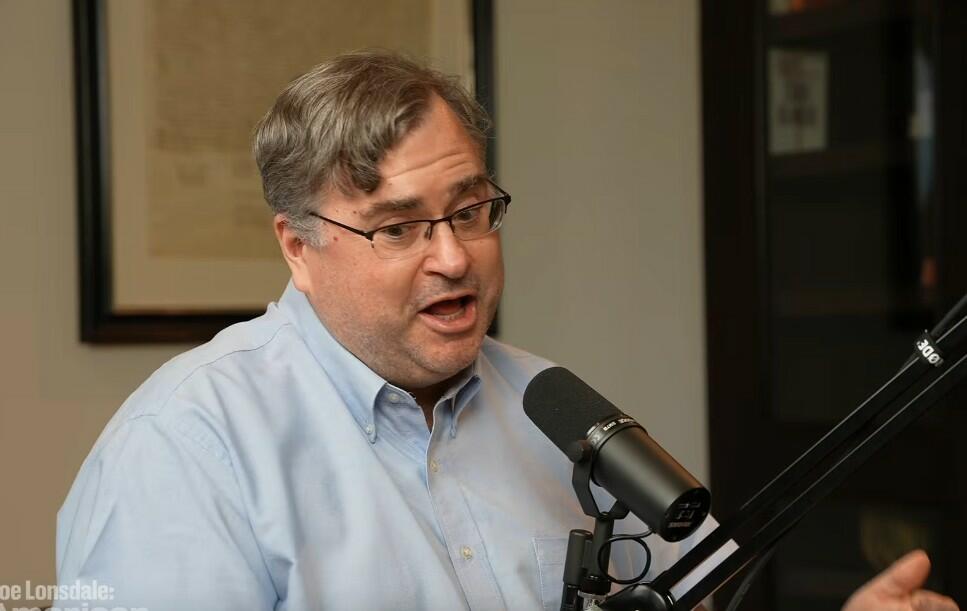
Hoffman, who founded the corporate cringe machine Linkedin, recently appeared on Palantir co-founder Joe Lonsdale’s podcast, American Optimist, where he waxed poetic from everything to the future of artificial intelligence from his unhappiness with politics.

"I regret this and wish it didn’t happen, but I think the Democratic Party really did alienate a section of Silicon Valley and the tech people,” Hoffman told Lonsdale. "Whether it was attacks on crypto or attacks on Big Tech.”

"One of these things Silicon Valley shares is this deep view that the way you make massive progress for humanity is creating scale technologies, and the principal way of creating scale technologies is companies,” the leftwing billionaire added. "If you’re attacking that and limiting it, then you have all kinds of problems.”

Hoffman then tried to play the both-sides card, decrying supposed extremists on both the left and right spectrum, but, in a surprising moment of self-reflection, called out the Democrats on prioritizing racist diversity, equality, and inclusion efforts over technological progress.

"You’ve got crazy people on both sides.  [ZH: oh?] You have crazy people saying, 'No, no, no, no, we shouldn’t allow any technological progress until you have exact proportionate of races and genders and everything else.' And it’s like, no, no, no, no, progress and technology—it's fundamental,” Hoffman said.

Hoffman reportedly visited Epstein’s private island, Little St. James, in 2014 for MIT fundraising with Joi Ito, the then-MIT Media Lab director, despite Epstein’s 2008 conviction as a sex offender, and was scheduled to stay at Epstein’s Manhattan townhouse that year. The billionaire later expressed regret for these associations.

Hoffman also funded E. Jean Carroll’s defamation and battery lawsuit against President Donald Trump through his nonprofit, American Future Republic, raising concerns about political motivations in the judicial process.

In the 2017 Alabama Senate election, Hoffman funded American Engagement Technologies (AET) which provided funds that were used for "Project Birmingham" a disinformation campaign that created fake Facebook pages to discourage Republican voters from supporting Judge Roy Moore for the U.S. Senate, for which he later apologized, claiming ignorance of the tactics.

Tyler Durden Tue, 07/29/2025 - 15:40
https://ift.tt/KICAp0t
from ZeroHedge News https://ift.tt/KICAp0t
via IFTTT

Billionaire Activist Reid Hoffman Admits Democratic Party Has 'Alienated' Silicon Valley SocialTwist Tell-a-Friend
| 0 comments ]

Euro Plunges On Fears US-EU Deal Will Hammer European Economy

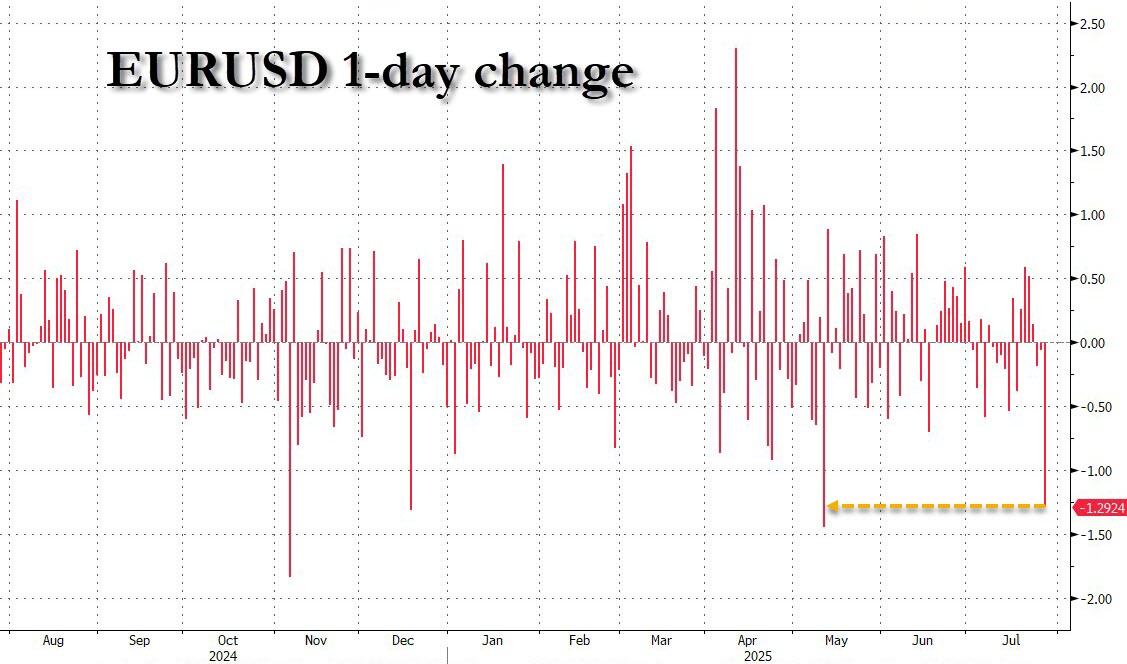
The announcement of a US-EU trade deal was supposed to send the euro soaring; instead the common currency suffered its steepest one-day drop against the dollar since May as Germany and France voiced fears that the long-awaited EU-US trade deal would hurt the European economy.

The euro was down more than 1% against the dollar and weakened by 0.8 per cent against the pound, following the announcement on Sunday that the US would impose 15% tariffs on most imports from the EU.

The agreement, hailed by European Commission president Ursula von der Leyen as “the biggest trade deal ever” and covering nearly 44% of global GDP, averted a possible transatlantic trade war. But as reported earlier, German Chancellor Friedrich Merz said on Monday that the tariffs would cause “considerable damage” to his country’s economy, Europe and the US itself.

“Not only will there be a higher inflation rate, but it will also affect transatlantic trade overall,” he said. “This result cannot satisfy us. But it was the best result achievable in a given situation.”

French Prime Minister François Bayrou was even more dramatic, and said the trade deal marked a “dark day”, adding that the EU had “resigned itself into submission”. 

European stocks relinquished earlier gains as the initial relief that a deal had been struck was replaced by concern over its impact on the Eurozone economy.

Germany’s Dax closed 1.1% lower while France’s Cac 40 gave up 0.4%. Tariff-exposed car industry stocks on the region-wide Stoxx Europe 600 fell 1.8 per cent, having risen by a similar amount at the opening of trade on Monday.

That said, the euro still has a long way to fall: the currency remains 12% higher against the dollar for the year, boosted by Germany’s defence spending plans as well as broader investor hopes that President Donald Trump’s America First policies will encourage a wave of economic stimulus in the Eurozone.

Sunday’s deal secured a lower tariff rate for the EU than the 30% that the US president had threatened to impose from August 1. 

But the duties still mark a threefold increase from the average tariffs imposed on the bloc by the US before Trump’s “liberation day” announcements in April. The industry body for EU steel producers said a 15% American tariff on most imports from the bloc would add a “huge burden” on its members.

Meanwhile on the other side of the Atlantic, the US Chamber of Commerce welcomed the deal, saying that it “provides relief” to businesses. But it added that the 15% tariff rate “still marks a significant increase in the cost of trading” and that more sectors should be included in the agreement’s zero-for-zero tariff list.

The White House said the deal “achieves historic structural reforms and strategic commitments that will benefit American industry, workers, and national security for generations”.

As Europe’s leaders reacted to the agreement, Spain’s socialist Prime Minister Pedro Sánchez said he supported it “but without any enthusiasm”. 

Conservative parties in France and Germany were more vocal, and argued that the deal exposed the weakness of the bloc. Alice Weidel, co-leader of Germany’s Alternative for Germany party, posted on X that it was “not an agreement, but a slap in the face to European consumers and producers!

Elsewhere, speaking in Scotland on Monday, Trump said he planned to set a tariff rate of up to 20 per cent “for essentially the rest of the world”, referring to countries that do not strike specific trade agreements with the US. He added that he planned to announce pharmaceutical tariffs “in the near future”.


Tyler Durden Mon, 07/28/2025 - 15:20
https://ift.tt/q7EaygS
from ZeroHedge News https://ift.tt/q7EaygS
via IFTTT

Euro Plunges On Fears US-EU Deal Will Hammer European Economy SocialTwist Tell-a-Friend
| 0 comments ]

Bezos Dumps $5.7 Billion In Amazon Stock. Now CNBC Buyout Rumors Swirl

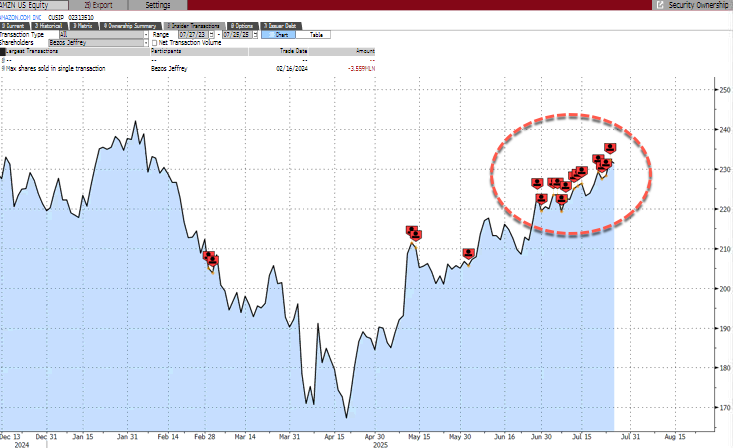
Jeff Bezos has generated billions of dollars in Amazon stock sales since late June under a 10b5-1 plan. The divestitures coincide with a new report suggesting he's mulling over a potential acquisition of CNBC. 

According to Bloomberg data, Bezos has been on a selling spree since late June, capitalizing on Amazon's stock rebound from its April lows. So far, the sales have generated $5.7 billion for the billionaire.

Here's more from the Bloomberg report: 

The sales, which began when Bezos unloaded $737 million around his weekend nuptials in Venice, were part of a trading plan for up to 25 million shares that he adopted earlier this year. He sold the last of the 25 million on Wednesday and Thursday, divesting about 4.2 million shares for $954 million, according to a Securities and Exchange Commission filing on Friday.

Amid Bezos' dumping of stock under the 10b5-1 plan, a new report emerged last week from The New York Post about the billionaire mulling a potential acquisition of CNBC.

More details from NYPost's source:

The 61-year-old e-commerce magnate has signaled interest to business associates in buying the cable network — home to "Squawk Box" and "Mad Money with Jim Cramer" — after it is spun off by NBCUniversal parent Comcast later this year, according to a person familiar with Bezos' thinking.

CNBC would "align well with his interests," said another source close to Bezos, who noted that the network could serve as a credible "neutral voice" in his media portfolio — a major plus following Bezos's headaches as owner of the left-leaning Washington Post.

. . . 

Sources close to Comcast told The Post that Bezos has not approached the cable giant headed by CEO Brian Roberts.

First, he sells off billions in Amazon stock, now rumors of a CNBC takeover... what's Bezos plotting next?

Tyler Durden Sun, 07/27/2025 - 16:55
https://ift.tt/mf2UHtN
from ZeroHedge News https://ift.tt/mf2UHtN
via IFTTT

Bezos Dumps $5.7 Billion In Amazon Stock. Now CNBC Buyout Rumors Swirl SocialTwist Tell-a-Friend
| 0 comments ]

EU Slashes $1.7BN In Aid To Ukraine Over Corruption Concerns: 'Exasperation From Biggest Donors'

Have we reached the beginning of the end for Zelensky? Does this spell game-over and victory for Putin and Russia? The following is a very rare admission from the hard news pages of The New York Times:

James Wasserstrom, an American anticorruption expert, said in an interview that “the luster is definitely coming off” Mr. Zelensky’s wartime leadership among governments providing financial assistance. He added, “There is exasperation at Zelensky in the donor community.”

Early last week, there were unexpected images coming from Kiev of the largest demonstrations against the Ukrainian government since Russia invaded more than three years ago, as more than 2,000 people gathered near the president's office, shouting "shame" and "veto the law," after President Zelensky signed a law gutting the country's anti-corruption agency.

AFP/Getty Images

This was enough to get the attention of Kiev's biggest donors, and days later on Friday the European Union announced it would suspend part of a €4.5 billion fund tied to good governance standards, with the NY Times reporting that the bloc has frozen €1.5 billion (about $1.7 billion) in financial aid to Ukraine over concerns about corruption and delays in key reforms.

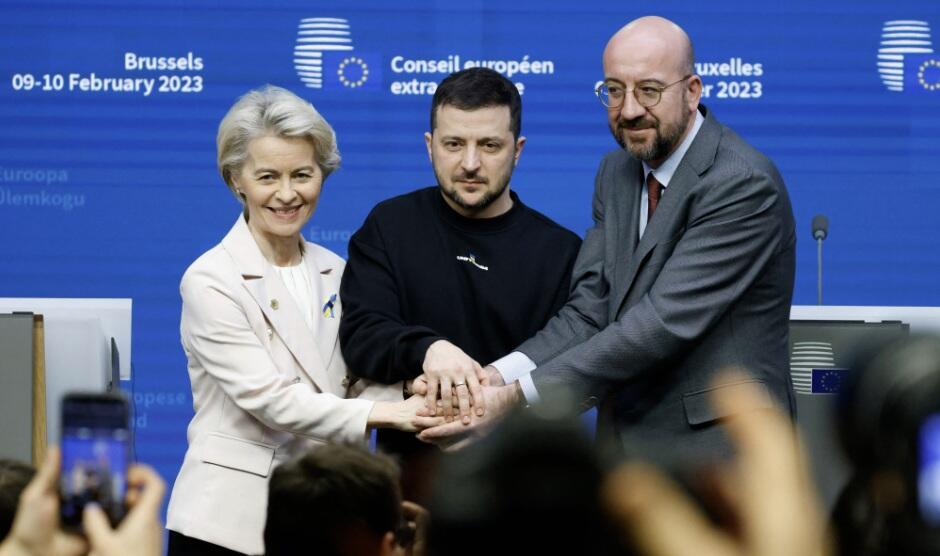
The decision is said to not be 'final' yet, and on Sunday President Zelensky held a crucial call with President of the European Commission Ursula von der Leyen. His office confirmed they discussed Ukraine's anti-corruption system (...or we should say lack thereof).

What is tantamount to EU sanctions being on the table would impact access to the funding, dependent on Ukraine meeting specific reform requirements known as "progress benchmarks."

One critical unmet benchmark is the appointment of judges to the High Anti-Corruption Court, which is supposed to be an independent judiciary apparatus given the power to spotlight and battle elite corruption.

The EU has also raised concerns about a lack of transparency and slow progress in the area of judicial reforms. This rare backlash from close allies with the deepest pocketbooks marks a huge blow to Zelensky - who has also kept himself in power way past his term mandate (citing the war with Russia) - after he pushed legislation through the Verkhovna Rada seen as greatly underminng the independence of two key anti-corruption bodies: the National Anti-Corruption Bureau of Ukraine (NABU) and the Specialized Anti-Corruption Prosecutor’s Office (SAPO).

Critics have increasingly highlighted that these actions have come in unison with other martial law policies during the war, including the silencing of journalists, civil society activists, the suppression of the Russian language, the persecution of the Orthodox Church, as well as the wholesale banning of opposition parties.

The New York Times comments as follows:

The two agencies — the National Anticorruption Bureau of Ukraine and the Specialized Anticorruption Prosecutor’s Office — had been investigating top ministers in the Zelensky government. The president’s decision to kneecap them, though reversed, prompted accusations of cronyism that jeopardized backing from civil society groups at home and Western nations bankrolling the war.

The European Union established this aid mechanism, the Ukraine Facility, last year and promised 50 billion euros over three years for repairing war damage and preparing the country for E.U. accession. The European Commission spokesman, Guillaume Mercier, told journalists in Brussels on Friday that Ukraine had requested a disbursement in June despite falling short on three of 16 benchmarks, including failing to make appointments to a specialized anticorruption court.

Further, the reported noted "That court tries cases brought by the two agencies whose independence Mr. Zelensky threatened this week."

Even British prime minister Kier Starmer has reportedly phoned Zelensky's office this past week to discuss his latest moves regarding corruption investigations. And when you've potentially lost the Brits and Europeans, your wartime star power has most definitely faded.

President Putin and Kremlin officials are sure to seize on the anti-Zelensky momentum diplomatically, as they engage Trump officials behind the scenes as part of ongoing bilateral talks. Trump has of course never been a close friend of "the world's greatest salesman" Zelensky - and could be ready to dump him especially if the mood turns drastically in Europe.

Tyler Durden Sun, 07/27/2025 - 15:45
https://ift.tt/5Fyh1g8
from ZeroHedge News https://ift.tt/5Fyh1g8
via IFTTT

EU Slashes $1.7BN In Aid To Ukraine Over Corruption Concerns: 'Exasperation From Biggest Donors' SocialTwist Tell-a-Friend
| 0 comments ]

Ghislaine Maxwell's Appeal Looms As Lawyer Says She Discussed '100 Different People' During Interview With DAG

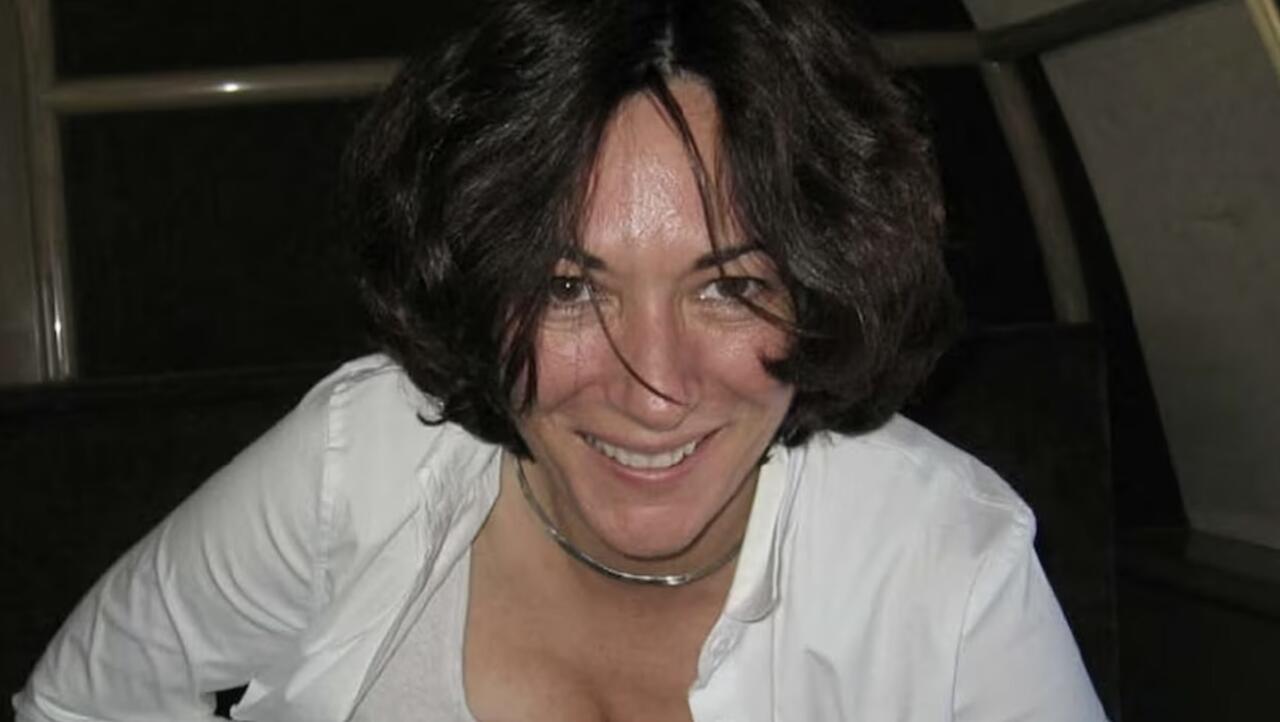
Amid steadily-boiling, bipartisan discontent over the Trump administration's failure to open up the Jeffrey Epstein investigative files to public scrutiny, another potential source of outrage is quietly lurking in the background: Epstein's sex-trafficking co-conspirator, Ghislaine Maxwell, may have her conviction and 20-year sentence thrown out by the Supreme Court next June. 

Maxwell's appeal centers on the shockingly generous plea deal that then-federal prosecutor Alex Acosta gave him in 2007. In exchange for pleading guilty to two state charges in Florida, Acosta not only dropped the slam-dunk federal case against Epstein, but added a provision to his non-prosecution agreement stipulating that "the United States also agrees that it will not institute any criminal charges against any potential co-conspirators of Epstein." (emphasis ours)

Ghislaine Maxwell is serving her 20-year term at a low-security women's prison in Tallahassee, Florida (via US Attorney's Office SDNY)

Maxwell's first major hurdle is persuading the Supreme Court to hear her appeal. She'll have stiff competition, as the high court typically entertains some 4,000 appeal applications per year, hearing only 70 of them; it takes four of the nine justices to agree on taking a case. Their decision on whether to hear Maxwell's appeal is expected in late September. 

In Maxwell's favor, her appeal gives the court the opportunity to address a disagreement among the various regional federal appeals courts, also known as circuit courts. "The question of whether a plea agreement from one U.S. Attorney's Office binds other federal prosecution as a whole is a serious issue that has split the circuits," former federal prosecutor Mitchell Epner told Reuters. Epstein's agreement was furnished by the Southern District of Florida, while Maxwell was convicted in the Southern District of New York.  

Maxwell answered questions from Justice Department officials about “100 different people” linked to late pedophile Jeffrey Epstein, Maxwell's lawyer David Markus said. 

"If the government can promise one thing and deliver another -- and courts let it happen -- that erodes the integrity of the justice system," Markus added.

"This isn't just about Ghislaine Maxwell. It's about whether the government is held to its word." The National Association of Criminal Defense Lawyers has filed an amicus brief urging the court to take the case, asserting that the Epstein non-prosecution agreement's lack of a geographic boundary means "no part of the Department of Justice may institute criminal charges against any co-conspirator in any district." 

Working against Maxwell's quest for a Supreme Court hearing is the fact that her appeal centers on the provision protecting "any potential co-conspirators" of Epstein, a stipulation so extraordinary that a Supreme Court ruling on the case may not fully resolve the circuit court controversy. 

Finally, there's a factor in the Supreme Court's calculus that no justice will ever admit to. Keeping in mind these are ultimately just nine politicians in robes, the justices may want no part of a case that could end with them springing loose one of the most notorious criminals of our era. 

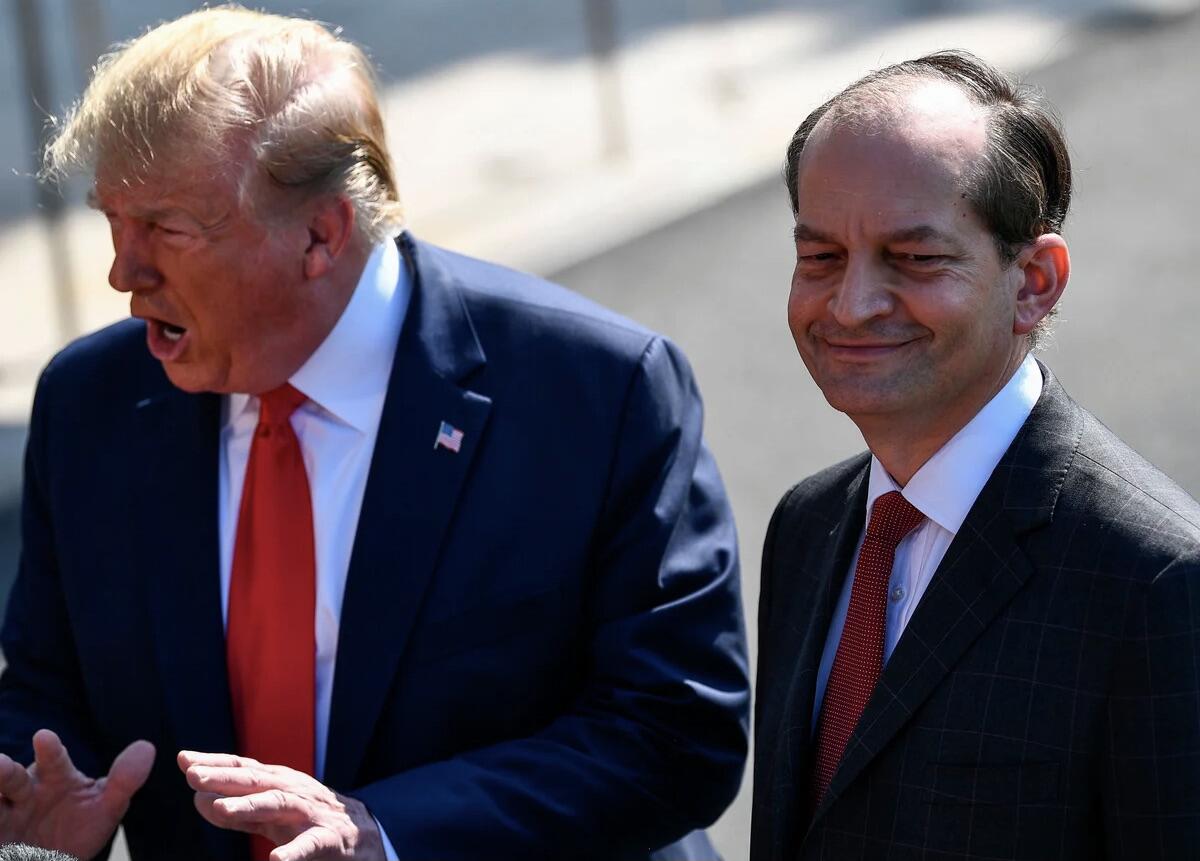
Former prosecutor Alex Acosta resigned as Labor secretary in 2019 amid a firestorm over the non-prosecution deal he gave to Epstein and "any potential co-conspirators" (via the
Guardian
)

When asked about the non-prosecution agreement as he was being vetted for serving as Trump's Secretary of Labor, Acosta reportedly said, "I was told Epstein 'belonged to intelligence' and to leave it alone." That quote has helped fueled widespread speculation that Epstein's alleged provision of minors to powerful people was part of a honeypot scheme that benefitted Israel's Mossad intelligence service.   

In his recent deep dive into the Epstein case on Tucker Carlson's podcast, Darryl Cooper underscored just how stunning was Acosta's decision not to pursue a federal conviction in a sensational, slam-dunk case with dozens of witnesses:

"A US attorney is pretty high up...This is a career case for a prosecutor like Acosta. I mean, you're going to be attorney general behind this case someday. You talking about a billionaire playboy -- putting him away for his entire life because he's sexually abusing underage girls for years and years. This makes your whole career. And so, to drop that -- there's only a couple people and a couple reasons that someone like him would agree to do that." 

The American people deserve to know what those reasons were. Though the House Oversight Committee has just subpoenaed Maxwell, we'd also like to see Acosta given a public grilling.

Tyler Durden Sat, 07/26/2025 - 18:05
https://ift.tt/nkpyYv5
from ZeroHedge News https://ift.tt/nkpyYv5
via IFTTT

Ghislaine Maxwell's Appeal Looms As Lawyer Says She Discussed '100 Different People' During Interview With DAG SocialTwist Tell-a-Friend
| 0 comments ]

Pelosi, Looking Tired And Rattled, Claims Trump Is "Not Of Sane Mind"

Authored by Luis Cornelio via Headline USA,

Former House Speaker Nancy Pelosi, during a Friday interview with The Associated Press, accused President Donald Trump of not being sane—while defending former President Joe Biden and appearing diminished herself. 

Her remarks came after an AP reporter asked if she had any regrets about pushing Biden off the 2024 ticket over concerns about his mental acuity. 

“I don’t have any second thoughts, but I do have a second thought about the Republicans,” She began:

“If they want to measure mental acuity or sanity, they’re to look to their own president because the president of the United States, who was asked one question and answers by saying President Obama is guilty of treason. He is not of sane mind.” 

Pelosi’s remarks were striking, given that she appeared visibly tired and aged during the interview.

At 85, Pelosi is much older than Trump. She has previously been seen struggling to walk outside Congress after undergoing hip replacement surgery. 

Despite this, she was one of the leading forces behind pressuring Biden off the 2024 ticket over fears American voters would reject his candidacy, given his age and cognitive decline. 

Asked if she has spoken with Biden since the 2024 election, she replied:

“No, we spoke both on Ethel Kennedy’s funeral. So that was one time when … we were together. But no, I have no second thoughts. I think that he was a great president.” 

Worse still, Pelosi compared Biden to Presidents Lyndon B. Johnson and Franklin Roosevelt. 

“He had accomplishments that were seen in the same light as LBJ and Franklin Roosevelt. He didn’t have as long a tenure as they did, but he had the quality of legislation make a difference in people’s lives. It’s unfortunate that it went down this path, but I think that history will treat him well because he did great things for our country, a super patriot, loved America, honored our Constitution. A big contrast to what we have now.”

Tyler Durden Sat, 07/26/2025 - 17:30
https://ift.tt/UxtqX7G
from ZeroHedge News https://ift.tt/UxtqX7G
via IFTTT

Pelosi, Looking Tired And Rattled, Claims Trump Is "Not Of Sane Mind" SocialTwist Tell-a-Friend
| 0 comments ]

Peter Hotez Panics After Heavily-Vaxxed Caller Reveals "Worst Experience Ever" Post-Booster

Via VigilantFox.com

Infamous vaccine pusher Dr. Peter Hotez recently had an uncomfortable moment during what started as a softball radio interview on Hello Houston.

Everything was going his way. The hosts praised Hotez for battling “disinformation” and hung on to his every word as if it were gospel.

But then, things went off the rails when a possibly vaccine-injured woman called into the show.

Carol, who says she keeps up with her boosters, asked Hotez over the phone why she suffered the “worst experience [she] ever had” just two days after her last COVID shot.

The moment felt like watching a train wreck in real time.

She described how she was so exhausted she was sleeping 16 hours a day, and had a “really bad cough with deep phlegm.”

At first, Hotez assumed she’d had a severe case of COVID. But to his shock, Carol told him she had NEVER had COVID.

Hotez scrambled for an explanation:

“So, what possibly could have happened is in between the time you got the booster and the immune response kicks in, you could have gotten some intercurrent viral infection, such as Covid or flu or a gazillion other things. So sometimes it’s hard to know what’s ascribed to a SIDE EFFECT of the vaccine versus some other intercurrent illness.”

Notice that in the last line, Hotez says the quiet part out loud: “side effect.”

He realizes: “Oh, sh*t, this could be a vaccine-injured person.”

But instead of acknowledging that possibility, he spins an explanation to confuse her into thinking the symptoms could have come from something else—just two days after the shot.

Just watch the clip. It’s never the jab with these people.

Tyler Durden Sat, 07/26/2025 - 16:20
https://ift.tt/dmjbkvV
from ZeroHedge News https://ift.tt/dmjbkvV
via IFTTT

Peter Hotez Panics After Heavily-Vaxxed Caller Reveals "Worst Experience Ever" Post-Booster SocialTwist Tell-a-Friend
| 0 comments ]

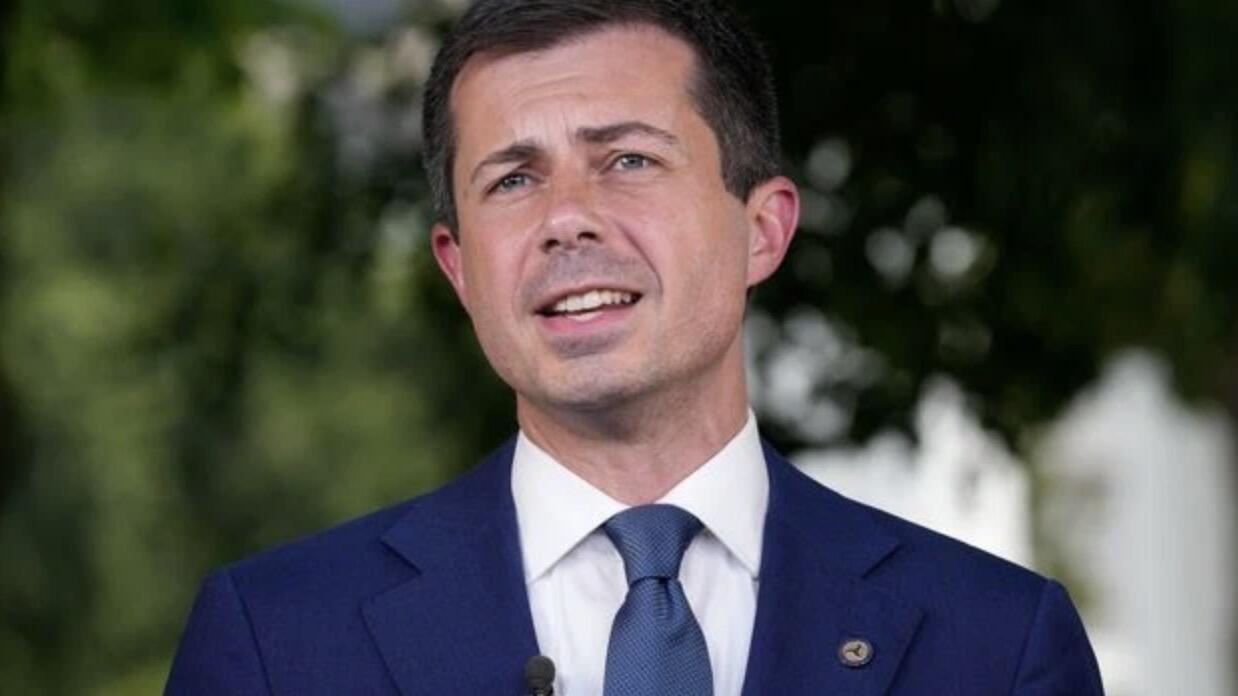
Buttigieg Spent $80 Billion On DEI, Half DOT's Budget, Instead Of Upgrading Air Traffic Control: Report

While the Trump administration has faced criticism for air traffic control outages and errors over the last year, recent developments suggest the current crisis may actually be rooted in the Biden administration (big surprise, we know...)

That's because under Transportation Secretary Pete Buttigieg, systemic issues with outdated infrastructure, controller shortages, and mounting flight delays worsened—even as the Department of Transportation (DOT) diverted massive resources toward diversity, equity, and inclusion (DEI) initiatives, according to a new report by the NY Post.

During his tenure, Buttigieg allegedly showed little interest in modernizing ATC systems. “He was definitely pushing an agenda,” said one industry official. “Little to no interest” was given to fixing the aging infrastructure, and “definitely zero action” was taken, they added.

In a meeting with airline executives, Buttigieg reportedly dismissed the need for upgrades, saying improvements would simply let them “fly more planes, and so why would that be in his interest?”

Instead, the Post exclusive notes that the DOT approved around 400 DEI-related grants between 2021 and 2024 totaling over $80 billion—more than half of the agency’s typical annual budget. By comparison, the previous administration approved just 60 such grants for only a few billion dollars.

Critics argue this redirection of priorities came at a cost. In January 2023, a major FAA system failure caused the first nationwide flight grounding since 9/11. Meanwhile, air traffic controller staffing has remained dangerously low. A 2024 industry letter warned it could take up to 90 years to meet staffing needs at key control centers at the current pace.

DOT spokesperson Chris Meagher defended Buttigieg’s record, calling it “absurd” to claim he neglected modernization. He cited increased hiring, improved flight routes, upgraded runway software, and $5 billion in infrastructure funds for towers and power systems. He also blamed congressional Republicans for blocking Biden’s FY2025 request for an additional $8 billion.

“Secretary Buttigieg’s focus was always on safety — not just in aviation, but also on roads and bridges,” Meagher said.

But industry officials counter that the FAA has operated with only 80% of its needed air traffic controllers since at least 2017. Retirements and high dropout rates persist, contributing to cascading delays. One official explained, “No matter what the original cause of the delay was, that always gets tagged to us as our fault.”

DOT data shows nearly 80% of flights were on time from 2021 to 2025, with just 10.6% of cancellations blamed on the national aviation system. Still, critics say Buttigieg spent more time on media appearances and blaming airlines than addressing the FAA’s core challenges.

Twelve days before the 2024 election, DOT announced a rule requiring airlines to compensate passengers up to $1,000 for delays and cancellations—a move some industry leaders called political theater.

Meagher defended the consumer focus, highlighting new refund requirements, protections for parents traveling with children, and $4 billion in refunds secured through investigations. He also argued the DEI spending didn’t affect the FAA, saying, “You can walk and chew gum at the same time.”

Still, Buttigieg’s critics argue his department failed to prioritize modernization. Former FAA official David Grizzle noted there were “no remarkable achievements in aviation” under his leadership but said it’s not unusual for transportation secretaries to focus more on roads than airspace.

Meanwhile, under Transportation Secretary Sean Duffy, the Trump administration secured $12.5 billion through its “Big Beautiful Bill” to overhaul the FAA's outdated systems.

“It’s not so much that prior administrations have been especially indifferent; he’s just been exceedingly attentive,” Grizzle said of Duffy. “He will stand out for decades as one of the most engaged secretaries we’ve had.”

Tyler Durden Fri, 07/25/2025 - 16:40
https://ift.tt/Lzt6ejl
from ZeroHedge News https://ift.tt/Lzt6ejl
via IFTTT

Buttigieg Spent $80 Billion On DEI, Half DOT's Budget, Instead Of Upgrading Air Traffic Control: Report SocialTwist Tell-a-Friend
| 0 comments ]

"Baseless?!"

Authored by James Howard Kunstler,

"If you can arrest a former president named Donald Trump, you can arrest a former president named Barack Obama."

- Peachy Keenan on "X"

Don’t you think it’s time for The New York Times to stop using the cliché “baseless” when referring to allegations — now, actually, official accusations— of the seditious conspiracy to run President Trump out of office after the 2016 election? Of all the fake “journalistic” blurts emanating from this bastion of degenerate sell-outs, “baseless” is the fakest, as if the word printed in a headline were so magically potent, the sheer assertion of it can make all your problems just — poof! — go away.

It’s the thought process of wicked children who fail to develop a sense of true or false, right or wrong, who grow into adults specially licensed, by some new perversion of the social contract, to get away with anything.

And those wicked children have become America’s managerial class, the elite who are supposed to do your thinking for you op-ed style, the credentialed experts, such as Tony Fauci, “economist” Paul Krugman, DEI avatar and NPR honcho Katherine Maher, Harvard law prof Lawrence Tribe. . . the list is interminable, but you get the picture.

This class is also the owner / operator of America’s political Deep State, which by 2016 had grown into a colossal racketeering operation, money-laundering gazillions of taxpayer dollars into NGOs dedicated to the country’s cultural and political destruction while it processed campaign donations into fantastic fortunes for people officially earning less than $200-K a year. The racket also managed to pay for the support of multitudes allergic to working for living, as long as they were available for riots and ballot-harvesting drives.

It was working at such a high pitch by the end of Barack Obama’s two terms, with the most stupendously privileged creature in the Boomer bestiary ready to take her “turn” in the Oval Office — after amassing a $300-million-plus fortune serving as US senator (salary, $174-K / year) and Secretary of State (salary $199,700 / year, then) — that you must imagine the mighty freak-out at the prospect of one Donald John Trump, outsider vulgarian extraordinaire, promising to step in and drain the whole massive, putrid, necrotic, parasitical nepo-infested quagmire of predatory grifters, leaving them gasping for their lives on the stinking Potomac mudbanks like so many grunions dying on the beach at Redondo.

Barack Obama, apparently, Darth Vadar-ized himself and was handed a light-saber (Hillary’s Steele dossier) by John Brennan, Grand Duke of Planet Intel. . . and the rest should have been history — but instead festered in the US body politic for more than ten years like an inflamed tuberculoma and is now bursting out of the Beltway’s peritoneal cavity in a spectacular spray of ordure, sticking to everyone and everything like a thousand tails pinned on the everlasting Democratic donkey. Alas, Babylon-on-the-Potomac. . . .

Also: “baseless,” my ass... The basis for all this mischief is in the process of having proof supplied by the one figure, DNI Gabbard, in a position to retrieve the evidence, in writing, from the various heavily ring-fenced agencies over which she is the ultimate overseer, which has not been done before, especially back in the crucial weeks of late 2020 when John Ratcliffe was in that position. The reason Tulsi succeeded this time where Ratcliffe did not is probably due to newly available A-I systems which make collation of cross-searches much easier through the countless servers of the many intel agencies. And so, now it pours forth day by day.

That’s where things stand and the dust has not even begun to settle, with former President Obama seemingly hoisted on the petard of his own making back in December of 2016. Whether or not all the declassified info can be crafted into prosecutable cases is not yet determined, but you might imagine it will come together soon enough, if at all possible. It may not add up to treason per se, but there are plenty of other serious charges generally proceeding from deprivation of rights under color of law (18 U.S.C. § 242), to seditious conspiracy, i.e., overthrow of the president (18 U.S.C. § 2384) to stuff a number of former officials into orange jumpsuits behind bars.

I doubt, though that we have reckoned the worst damage done by the perpetrators of RussiaGate and the serial crimes it entailed, which is how it drove half the population of our country plumb batshit crazy. Once RussiaGate was put over, any absurdity was force-fed to the increasingly delusional opposition to Donald Trump largely aggregated under the “Democratic Party” banner. You were suffered to believe such patent nonsense as men can become women, that riots with arson were mostly peaceful protests, that the US/Mexico border could not be controlled without vast new legislation, and that a demonstrably corrupt and obviously senile Joe Biden was an able, functioning chief executive.

The Covid-19 op was the coup de grâce for the Left’s mental health — while it was also a silver bullet to get rid of Mr. Trump in the 2020 election. There is even reason to believe that the mRNA vaccines, with their spike protein payloads, delivered physical brain injury by way of induced vascular disorder. Millions who took them may never recover their senses — but so far that is just hypothesis.

If cases are brought against those who acted in the long-running coup, and are proven in court via an honest and upright process, we’ll find out whether half the country can recover enough rationality to accept the outcome. The signs for now are discouraging, as they seem to veer deeper into delusion, nominating outright jihadi communists for important offices and continuing their lawfare campaign to disable all and any actions by Mr. Trump’s executive branch.

The ultimate goal, for those interested in continuing the project of this American republic, will be to see if it’s possible to restore a workable consensus about a common culture and the common good on principles that are anything but baseless: equal protection under the law, fair play, the rights of property, and respect for verifiable truth.

Tyler Durden Fri, 07/25/2025 - 16:20
https://ift.tt/dwActrp
from ZeroHedge News https://ift.tt/dwActrp
via IFTTT

"Baseless?!" SocialTwist Tell-a-Friend
| 0 comments ]

Is Private Equity A Wolf In Sheep's Clothing?

Authored by Lance Roberts via RealInvestmentAdvce.com,

In July 2007, just before the financial crisis erupted, Citigroup CEO Chuck Prince summed up Wall Street’s dangerous exuberance:

“When the music stops, in terms of liquidity, things will be complicated. But as long as the music is playing, you’ve got to get up and dance. We’re still dancing.”

Eighteen years later, Wall Street is dancing again, and the rhythm feels disturbingly familiar.

Private equity (PE), once a niche strategy reserved for sophisticated endowments and mega-pensions, is being aggressively marketed to everyday investors. It’s creeping into 401(k)s, target-date funds, and retirement accounts under the seductive promise of higher returns and diversification. But for investors who’ve forgotten history, or worse, were never taught it, the risks are mounting.

What Is Private Equit& How We Got Here

Private equity refers to investments in companies not publicly traded on a stock exchange. Instead of buying shares of companies like Apple or Microsoft, private equity firms purchase entire companies, or large stakes in them, using a mix of their own capital and large amounts of borrowed money (leverage).

Once they take control, they often restructure the company, cut costs, increase debt, and aim to “flip” it for a profit within a few years. This can be done by selling it to another company, a PE firm, or publicizing it via an IPO.

The pitch? Higher returns.

The reality? Higher risk and lower transparency.

PE’s ascent began after the 2008 financial crisis when near-zero interest rates pushed institutional investors out of traditional bonds and into “alternatives.” As I’ve written, institutional FOMO (fear of missing out) drove billions into private markets with questionable due diligence. So they turned to alternatives: private equity, private credit, hedge funds, and real estate.

In 2019, Ben Meng, then-CIO of CalPERS (California’s massive public pension fund), epitomized the mentality when he said, “We need private equity, we need more of it, and we need it now.”

And Wall Street delivered.

The results were predictable. With cheap credit abundant, deal volume exploded, topping $3.1 trillion globally in 2021. Valuations were detached from reality. According to McKinsey, buyout multiples surged from 6.5x EBITDA in 2009 to 12x in 2022, nearly doubling in just over a decade. But this boom was built on artificially low interest rates and easy liquidity.

That means PE firms paid twice as much for companies as a decade ago. The reason is simple: They could borrow more cheaply and charge investors higher fees.

However, with rates normalized and liquidity tightening, private equity’s structural weaknesses are surfacing. Therefore, as sophisticated investors become more risk-averse to the deals they take on, Wall Street is turning to a new source of capital: unsophisticated retail investors.

What Makes Private Equity Risky for You

Let’s break down some key concerns the average investor should understand before allocating capital—directly or indirectly—to private equity.

1. Illiquidity Is a Feature, Not a Bug

PE funds lock up investor capital for 7-10 years, sometimes longer, depending on extensions and follow-on investments. This means that investors lose the fundamental flexibility that public markets provide, namely, the ability to liquidate assets in response to life events, market downturns, or better opportunities. For example, if you invested in PE through the COVID-19 market shock, you couldn’t reallocate capital even as public markets sharply corrected and rebounded. This rigid illiquidity is especially dangerous for retirees or individuals who may require access to funds unexpectedly.

2. Opacity Masks Risk

In public markets, pricing is determined every second by the forces of supply and demand, providing price discovery and transparency. However, private equity relies on subjective valuation models that are updated quarterly or less frequently. This allows PE funds to “smooth returns,” creating the illusion of low volatility. For instance, during market sell-offs like 2022, many PE funds reported negligible markdowns while public equities fell double digits. This masks the true underlying risk, potentially misleading investors about the health of their portfolios and delaying the recognition of losses until forced asset sales or fund closures

3. Fees Are Devastatingly High

PE funds follow a “2 and 20” fee structure: a 2% annual management fee plus 20% of profits above a specific hurdle rate. Over a decade-long lock-up, even in mediocre-performing funds, fees can erode a substantial portion of gross returns. For example, on a hypothetical $100,000 investment, you could pay $20,000 in management fees over ten years, excluding performance fees. Compared to passive investment vehicles like S&P 500 ETFs costing 0.03%-0.10% annually, the fee drag in PE is enormous. Academic studies, such as those by Ludovic Phalippou at Oxford, have consistently shown that net returns after fees in PE barely exceed, and often underperform, simple public index strategies.

4. Leverage Amplifies Fragility

Leverage is a double-edged sword in private equity. While it can amplify returns in bull markets, it dramatically increases financial fragility during downturns. PE buyouts frequently involve debt levels of 5-7 times EBITDA, far exceeding leverage ratios typical of public companies. This dependence on cheap debt made sense in a zero-rate world, but is becoming a liability as borrowing costs rise. For instance, companies acquired at peak valuations in 2020-2021 face refinancing risks as interest coverage ratios deteriorate. Reports of loan covenant breaches and distressed sales are already emerging across sectors like healthcare, retail, and infrastructure, previously touted as “safe” plays in the PE world.

But while these issues are important, there are seven “red flags” that signal trouble ahead.

Seven Red Flags That Signal Trouble Ahead

The CFA Institute recently highlighted seven red flags signaling serious trouble brewing in private markets—risks magnified for retirement savers who lack the tools and resources to properly evaluate these risks. For retail investors, each of these red flags represents a significant warning that could impact long-term financial outcomes, especially when embedded within retirement plans like 401(k)s and target-date funds.

1. Declining Deal Quality

With record amounts of capital flowing into private equity, more money is chasing fewer high-quality investment opportunities. This leads to PE firms lowering their standards and investing in weaker companies or more speculative ventures. For retail investors, this means exposure to riskier businesses with less predictable cash flows. For example, during the 2021 SPAC boom, many companies that would have traditionally struggled to access public markets instead found their way into private portfolios, leading to high-profile failures post-acquisition.

The chart below from S&P Global shows the number of private transactions terminated between 2020-2023.

2. Inflated Valuations

PE managers often base valuations on future projections rather than tangible market transactions. As a result, portfolios can appear healthy on paper even when underlying fundamentals are deteriorating. For retail investors, this creates the illusion of stability, where portfolio statements show steady or appreciating values while the true market value could be significantly lower. A prime example occurred during 2022, when public tech stocks corrected sharply, but many PE tech holdings barely adjusted, delaying loss recognition and masking portfolio risk.

To that point, you should realize that most private equity investments (65%) either fail or return the initial investment at best.

Yes, private equity can be very lucrative. Depending on the deal you invest in, it can also be very harmful.

3. Fee Pressures = Riskier Deals

Institutional investors are increasingly pushing back on high fees, which puts pressure on PE firms to maintain profitability. This can lead to riskier behavior, such as over-leveraging or engaging in more aggressive cost-cutting at portfolio companies to boost short-term returns. For retail investors, this translates into an even worse alignment of interests: high fees remain in place, while portfolio risk quietly increases. Worse, retail channels often lack the negotiating power to secure fee reductions, leaving them exposed to premium costs for subpar investments.

4. Frozen Exit Markets

An essential part of private equity returns depends on the ability to sell portfolio companies at a profit. However, the current environment of rising interest rates and lower public market valuations has led to a sharp decline in IPOs and M&A activity. This creates a backlog of unsold assets, commonly referred to as an “exit overhang.” For retail investors, this means delayed distributions, longer-than-expected lock-up periods, and an increased likelihood of forced sales at discounted prices. Recent data from secondary market platforms show private equity interests trading at significant discounts, clear evidence of deteriorating liquidity.

5. Discounted Secondaries

When existing investors seek to exit PE investments early, they often turn to secondary markets. Today, these interests are commonly trading at 20-40% discounts to their stated net asset values (NAVs). This is a stark warning sign: even sophisticated investors are willing to accept steep losses to exit PE positions early. Retail investors, who often lack access to these secondary markets or the liquidity to exit early, are particularly vulnerable to being locked into declining assets with no realistic way out.

6. Rising Borrowing Costs

The foundation of many PE deals is built on cheap debt. With interest rates at multi-decade highs, borrowing costs have surged, eroding profitability across PE portfolios. Companies acquired during 2020-2021 at high multiples are now facing refinancing cliffs, where new debt comes at significantly higher rates. For retail investors, this increases the risk of portfolio companies defaulting or entering distressed restructurings, outcomes that can wipe out equity holders while still rewarding debt financiers higher in the capital structure.

7. Dry Powder FOMO

Private equity firms are sitting on record amounts of unallocated capital, or “dry powder.” While that may sound reassuring, it creates pressure to deploy capital quickly, often leading to questionable investment decisions and inflated deal pricing. For retail investors, this means being funneled into PE funds at the tail-end of a market cycle when managers are most desperate to deploy funds and least disciplined in underwriting. Historically, vintages raised during peak fundraising years, such as 2007 or 2021, have produced the worst returns.

When you see multiple red flags flashing across a sector, it’s time to reassess.

What the Average Investor Should Do

As discussed in “Why Am I So Lucky,” individuals hear tales of how high-net-worth investors (the smart money) own private equity in their allocations. As shown in the chart below from Long Angle, roughly 17% of their allocations are to private equities. These reports don’t generally tell you that their allocation to “private equity” often tends to be their personal businesses. Nonetheless, individual investors frequently see this type of analysis and think they should be replicating that process. But should they?

Before investing in private equity, significant differences must be considered between the vast majority of retail investors and high-net-worth individuals. The underlying risks of private equity investments can define these differences. However, with the right knowledge and proactive steps, investors can avoid the most common pitfalls and protect their long-term financial security.

1. Know What You Own

Start by reviewing your retirement plan allocations, especially if you are invested in a target-date fund or managed account solution. Many of these funds now include allocations to private equity or private credit, often buried deep within the prospectus. Request a detailed holdings report if necessary. For example, some widely used TDFs from major asset managers have added “private market” sleeves that investors are unaware of, effectively exposing them to higher fees and illiquidity.

2. Prioritize Liquidity

Liquidity provides optionality, especially during volatile markets or personal financial emergencies. If your retirement funds are locked up for years, you lose the ability to rebalance, take advantage of market dislocations, or fund unexpected needs. Favor investment options that allow for daily liquidity, such as low-cost index funds and ETFs. Remember, having access to your capital is a risk management tool in itself.

3. Focus on Transparency and Fees

Insist on clear, net-of-fee performance reporting. Avoid products with opaque valuation methodologies or excessive fee layers. As a rule of thumb, compare fees: if a private investment costs 2-3% annually versus 0.10% for an S&P 500 index fund, it must deliver dramatically higher returns to compensate, which few consistently achieve.

4. Stay Simple, Stay Diversified

Decades of evidence show that a well-diversified portfolio of simple, liquid public investments outperforms most complex alternatives after fees and taxes. Don’t be lured by “fancy” strategies with marketing sizzle but structural drawbacks.

Final Thoughts: Don’t Dance Just Because the Music Is Playing

Private equity may have its place in a diversified, institutional portfolio, but even then, it demands scrutiny. For the average investor, the risks are magnified by a lack of transparency, long lock-ups, and a fee structure that often benefits managers more than investors.

Wall Street has a long history of selling the newest shiny object to Main Street just as the trade begins to sour. If the music stops at this private equity party, you don’t want to be the last one still dancing.

When in doubt, stick to the core investing principles: transparency, liquidity, low costs, and discipline. Complex products are often designed to enrich the seller, not the buyer. Safeguard your financial future by keeping your portfolio simple, transparent, and aligned with your long-term goals.

For more in-depth analysis and actionable investment strategies, visit RealInvestmentAdvice.com. Stay ahead of the markets with expert insights tailored to help you achieve your financial goals.

Tyler Durden Fri, 07/25/2025 - 15:45
https://ift.tt/qzXZJk8
from ZeroHedge News https://ift.tt/qzXZJk8
via IFTTT

Is Private Equity A Wolf In Sheep's Clothing? SocialTwist Tell-a-Friend
| 0 comments ]

Epstein Vs. Russiagate

Authored by J. Peder Zane via RealClearPolitics,

It’s a tale of two stories.

The first concerns President Trump’s back-peddling on pledges to release government files connected to the long-dead pervert Jeffrey Epstein.

The second involves the growing evidence that President Obama and his top officials spread the false narrative casting Trump as a treasonous agent of Russia, one that hobbled his first term.

While the Epstein saga is a tawdry kerfuffle with no larger significance, the new revelations about the Russia hoax provide scorching detail on one of the biggest political scandals in American history.

Guess which one the legacy media is running with? Which one is it trying to bury?

The answer is obvious. If only stating that was enough, and we could just laugh away the legacy media’s predictable and partisan coverage. They are not serious people. Unfortunately, they are deadly serious in their continuing efforts to malign Trump while covering up their own malfeasance. The contrasting coverage of the Epstein and Russiagate stories is just the latest example of a media that has lost its way.

First, Epstein. During the last few weeks the legacy media has covered that story as if it were Watergate. The New York Times, for example, published more than 50 articles and opinion pieces on Epstein and Trump between July 16 and July 23.

Much of the rest of the legacy media has followed suit. Except for a salacious, if inconsequential, story spoon-fed to the Wall Street Journal – that Trump may have contributed a bawdy letter to a birthday book for Epstein 23 years ago – none of them broke news or advanced the story.

The last blockbuster article written about Epstein was Lee Fang’s May 21 piece for RealClearInvestigations revealing how officials in the U.S. Virgin Islands – including Democratic Rep. Stacey Plaskett – appear to have benefitted from and shielded Epstein, who brought young girls to a private island he owned there.

Yes, the Epstein saga is a legitimate story. Despite legacy media claims to the contrary, there was a cabal of wealthy and influential men who cavorted with Epstein – and almost certainly some of them had sex with young girls. But it is unlikely that proof of such criminal acts is detailed in material in the government’s possession. Nevertheless, the Trump administration should release what it has and let the chips fall where they may for these amoral folks who tied themselves to a disgusting person. Or Trump should forthrightly explain why that is a bad idea. A full account may be hard, given a Florida federal judge’s ruling yesterday that the law “does not permit” the release of secret Epstein grand jury testimony as requested by the DOJ. 

It is telling that the recent wall-to-wall coverage focuses so much on Trump. The irony is that he appears to be one of the few stand-up guys in the Epstein story. The two men were apparently friends at one time, – though probably not all that close given the lack of articles linking the two men before Trump ran for office. We do know that Trump was one of the few people who distanced himself from Epstein long before the financier pleaded guilty to sex crimes in 2008. Trump barred Epstein from Mar-a-Lago before his arrest, supposedly because of his creepy behavior toward a minor. There are also reports that Trump may have been the one who alerted the authorities to Epstein’s predations – not, perhaps, out of conscience but because of a real estate dispute.

While the legacy news organizations pile on to the Epstein story, they are downplaying the recent revelations detailing the Obama administration’s efforts to push the Trump/Russia hoax. In their telling, his administration declassified a batch of new documents to distract from the Epstein scandal and to seek retribution against his perceived enemies.

Whatever Trump’s motivations, the newly disclosed documents are significant. As Aaron Maté reported this week for RealClearInvestigations, they show that the official “confirmation” of the Russiagate hoax – the Intelligence Community Assessment completed in the January 2017 and reports by Special Counsel Robert Mueller and the Senate committee investigating the issue – “all excluded the intelligence community’s own secretly identified doubts and evidentiary gaps on the core allegation of Russian meddling.”

The intricate timeline of events Maté details makes this point abundantly clear: Suspicions that Russia interfered in the 2016 election were repackaged as purported facts after Trump’s stunning win.

We do know that emails stolen from the Democratic National Committee were published in the summer and fall of 2016 by Wikileaks. But, Maté notes, a September 2016 intelligence assessment reportedly “had no hard evidence that Putin ordered the theft of Democratic Party material as part of an influence campaign to help Trump.” Maté’s previous reporting for RCI has also shown that there is still no proof that Russia removed any emails from the DNC servers or passed them along to anyone else.

That assessment was ignored after Trump’s victory in November. It is also clear that President Obama was a key player in advancing the false narrative of Russian interference. Obama – who had been briefed that summer about Hillary Clinton’s plans to falsely cast Trump as a Kremlin stooge to deflect from her email scandal – requested a new intelligence assessment in December 2016. It was to be a rush job he wanted to get out before leaving office. That report, crafted largely by CIA Director John Brennan, suppressed FBI and NSA doubts about Russian interference.

Obama went further. On Jan. 5, 2017, he held an Oval Office meeting with various figures, including FBI Director James Comey. Two days later, Comey briefed President-elect Trump about the Steele dossier – a phony and sloppy bit of opposition research paid for by Clinton’s campaign that suggested Trump and his associates had been compromised by the Russians. That briefing became the news hook anti-Trump media needed to quickly report on the bogus dossier, launching the Russiagate probes.

Two points: First, Russia probably did try to interfere in the 2016 election. But the actual facts we know – that they purchased a handful of ads on social media, and that they probably hacked into the DNC servers, albeit without proof that they removed emails published by Wikileaks – do not support the Mueller Report’s famous claim regarding a “sweeping and systematic” effort.

More importantly, Democrats and the legacy media are trying to pretend that we spent three years debating Russian meddling. In fact, their efforts were aimed at painting Trump and his associates as treasonous allies of a foreign enemy. It was never about interference, but collusion.

I believe this was the worst scandal in American history because unlike Watergate – where wrongdoing was largely confined to the White House – Russiagate’s cancer metastasized from the White House to the CIA, the FBI, and the legacy media. The lack of accountability for these actions gave Democrats and their media allies a sense of impunity. It is why they felt free to lie so brazenly about other things, including Hunter Biden’s laptop and Joe Biden’s mental acuity.

Those forces are so invested in hiding their own duplicity that they can never admit the truth. While the Russiagate and Epstein stories are clearly of different orders, Democrats and the legacy media insistently push a mirror image of the news, claiming the new revelations about corruption at the highest reaches of the government are simply Trump’s effort to “deflect” from Epstein.

You can’t make this up – except they can.

Tyler Durden Thu, 07/24/2025 - 17:00
https://ift.tt/SlNywO8
from ZeroHedge News https://ift.tt/SlNywO8
via IFTTT

Epstein Vs. Russiagate SocialTwist Tell-a-Friend