Authored by Milan Adams via Preppgroup blog,
For a long time, I accepted the same framework most people in finance operate within—that the global economy is, at its core, a system governed by monetary policy, shaped by interest rates, and stabilized by central banks. It’s an appealing idea because it suggests control. If growth slows, you lower rates. If inflation rises, you tighten conditions. If markets panic, you inject liquidity. There is a sense that someone, somewhere, is ultimately in charge of the system. But the longer I watch what is unfolding now, the more that framework feels incomplete, almost like a simplified map that works in normal conditions but fails the moment reality becomes more physical than financial. What we are seeing today forces a different perspective—one that is much less comfortable—because it suggests that the economy is not primarily a financial construct, but an energy-dependent system, and that everything we consider “economic activity” is simply a byproduct of energy being converted into work, goods, and services.
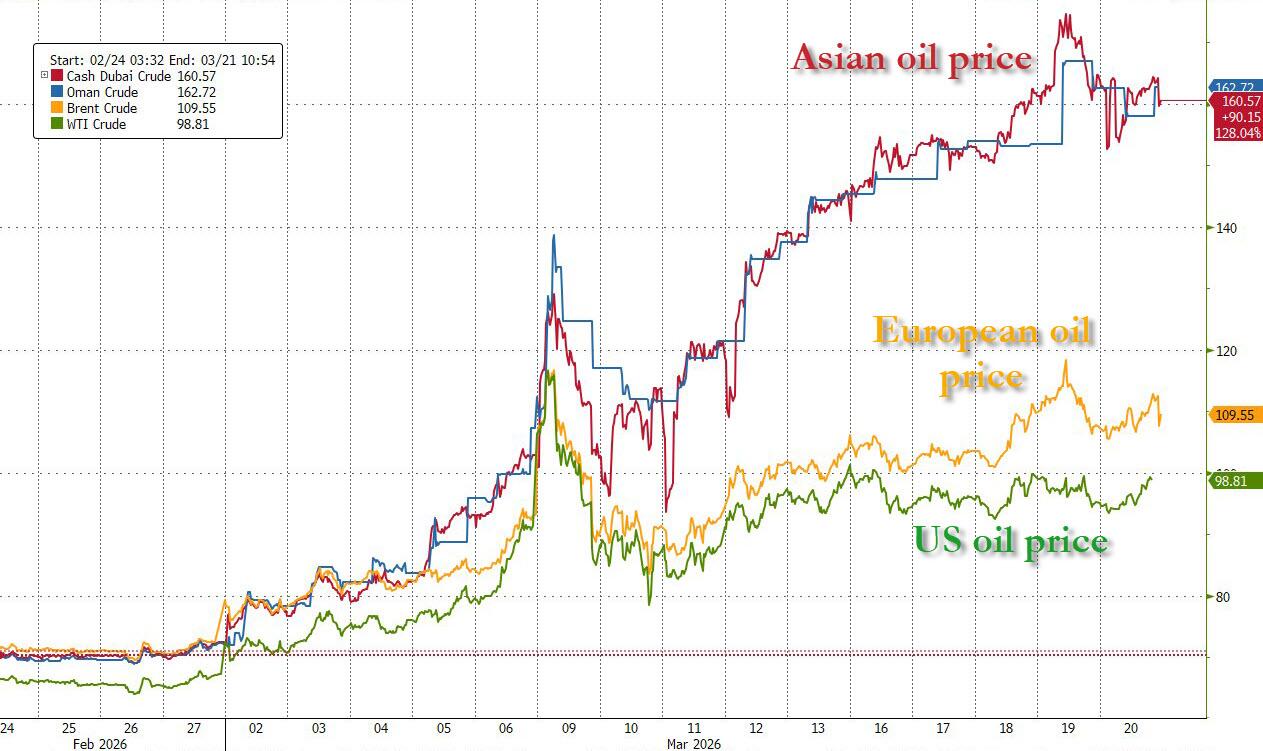
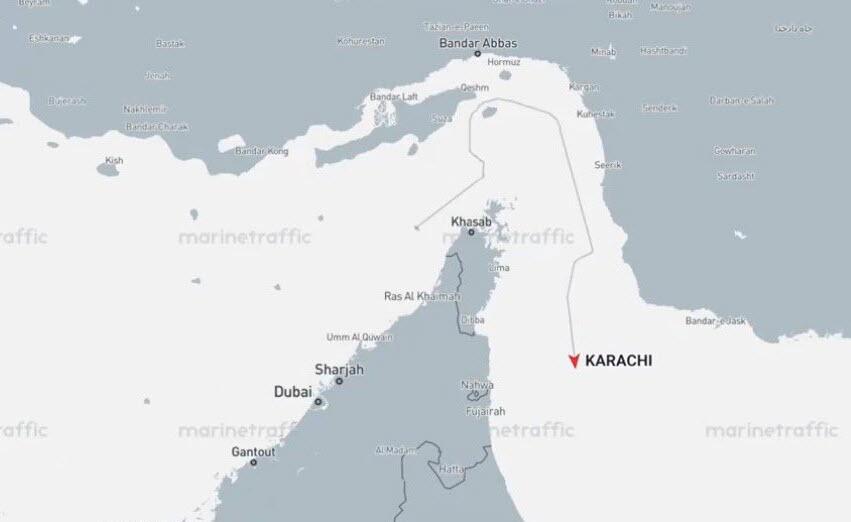
The disruption in the Strait of Hormuz, now stretching into multiple weeks, is not just another geopolitical event that can be neatly categorized and priced into markets. It is, in practical terms, a restriction on one of the most critical physical flows in the global system. A significant share of the world’s oil and natural gas moves through that corridor, and when that flow is constrained—even partially—the impact is not theoretical. It is immediate at the physical level, even if it is delayed in how it manifests economically. This is where the disconnect begins. Financial markets, by their nature, operate on expectations. They price what participants believe will happen—future resolutions, policy responses, geopolitical outcomes. But the physical world does not operate on expectations. It operates on what is available, here and now. If a portion of energy supply is removed from the system, that energy does not exist for consumption, regardless of how markets choose to price the future.
This distinction between financial perception and physical reality is critical, because it explains why, on the surface, everything can still appear relatively stable. Benchmark prices may not reflect the full severity of the situation, supply chains may continue to function with minor disruptions, and daily life may feel largely unchanged. But beneath that surface, constraints begin to build. Energy markets start to tighten in specific regions. Physical deliveries become more expensive or harder to secure. Refined products begin to diverge from crude benchmarks. None of these signals, on their own, create a sense of crisis. But together, they form a pattern that suggests the system is under strain. And unlike demand-driven shocks, where activity can be restarted once confidence returns, a supply-driven constraint introduces a different kind of pressure—one that cannot be resolved through financial means alone.
The reason this matters is because modern economic thinking is heavily biased toward demand-side explanations. When something goes wrong, the assumption is that consumption has weakened, that credit conditions have tightened, or that confidence has deteriorated. The solution, therefore, is to stimulate demand—lower rates, increase liquidity, encourage spending. This framework has worked repeatedly over the past decades, which reinforces the belief that it is universally applicable. However, it breaks down when the problem is not insufficient demand, but insufficient supply of critical inputs. In such cases, stimulating demand does not resolve the issue; it exacerbates it. If energy is scarce, increasing consumption only intensifies the competition for limited resources, pushing prices higher without increasing availability.
What makes the current situation particularly complex is that it places policymakers in a position where traditional tools become not just ineffective, but contradictory. Inflation driven by supply constraints would normally call for tighter monetary policy, yet slowing production and weakening economic activity would argue for easing conditions. This creates a structural dilemma often described as stagflation, but in practice it feels less like a defined economic state and more like a constraint with no clean exit. There is no policy lever that simultaneously restores growth and reduces inflation when the underlying issue is physical scarcity. This is the point where the limitations of a purely financial understanding of the economy become visible.
Beyond the immediate effects on energy markets, the implications extend into areas that are less visible in the short term but far more consequential over time. Modern industrial systems are deeply dependent on continuous energy input, and when that input becomes constrained, the effects propagate unevenly. High-energy industries are typically the first to adjust, either through reduced output or temporary shutdowns, as governments and operators prioritize essential consumption. This may appear manageable at first, but the system is interconnected in ways that amplify these adjustments. Reduced industrial output affects supply chains, which in turn impacts the availability of intermediate goods, and eventually filters down to consumer products. The process is gradual, which makes it easy to underestimate, but it is cumulative.
Perhaps the most underappreciated aspect of energy constraints is their relationship to food production. Modern agriculture is not simply a function of land and labor; it is an industrial process reliant on fertilizers, machinery, and transportation, all of which are energy-intensive. The production of nitrogen-based fertilizers, for instance, depends heavily on natural gas. When gas supply is disrupted, fertilizer production declines, and the effects are not immediate but delayed. Planting decisions are affected, yields are reduced, and the consequences emerge months later in the form of lower harvests and higher food prices. This lag creates a false sense of stability in the present, even as future constraints are effectively being locked in.
Another layer of complexity arises from the uneven distribution of both resources and vulnerabilities across different regions. Economies that are heavily dependent on imported energy are inherently more exposed to disruptions in global supply, while those with domestic production capacity and resource diversity have a relative advantage. However, this does not imply immunity. Even resource-rich economies operate within a global system, and disruptions elsewhere can feed back through trade, pricing, and financial channels. Moreover, access to resources is not determined solely by availability, but by policy decisions, infrastructure, and distribution mechanisms, all of which can introduce additional constraints.
As the duration of the disruption extends, time itself becomes a critical variable. Short-term interruptions can often be absorbed through inventories, strategic reserves, and temporary adjustments. But as those buffers are depleted, the system becomes increasingly sensitive to continued constraints. Restarting disrupted flows is not instantaneous. Maritime backlogs take time to clear, storage imbalances need to be resolved, and production that has been halted may require significant time and investment to restore. In some cases, the interruption itself causes lasting damage, reducing the efficiency or capacity of the system even after normal operations resume. This creates what could be described as a “lagging deficit,” where the effects of the disruption persist beyond its apparent resolution.
What makes this moment particularly difficult to interpret is that it does not present itself as a clear break from normality. There is no single indicator that signals a transition from stability to crisis. Instead, it unfolds as a gradual divergence between what appears stable and what is becoming constrained. Markets may continue to function, prices may not fully reflect underlying scarcity, and daily life may remain largely unchanged for a period of time. But beneath that surface, the system is adjusting in ways that are not immediately visible, and those adjustments tend to become apparent only after they reach a certain threshold.
The challenge, then, is not simply to predict specific outcomes, but to recognize the nature of the constraint itself. An economy that is limited by financial conditions behaves very differently from one that is limited by physical resources. In the former, policy intervention can often restore equilibrium. In the latter, equilibrium is redefined by what is physically possible. This distinction may seem subtle, but it has profound implications. It suggests that the range of potential outcomes is wider than what most models account for, and that the path back to stability—if it exists—is likely to be more complex and more prolonged than in previous cycles.
At a broader level, this situation forces a reconsideration of how we think about growth, stability, and resilience. For decades, the assumption has been that economic expansion can continue as long as financial conditions are managed effectively. But if growth is ultimately constrained by energy availability, then that assumption becomes conditional rather than absolute. The system can expand only within the limits imposed by its physical inputs, and when those inputs are disrupted, the adjustment is not just financial—it is structural.
None of this necessarily implies an immediate or inevitable collapse. There are still pathways through which the situation could stabilize, whether through geopolitical resolution, reallocation of supply, or demand adjustments. But it does suggest that the risks are asymmetrical. If the disruption is resolved quickly, the system may absorb the shock with manageable consequences. If it persists, the effects compound in ways that are difficult to reverse. And because those effects build gradually before becoming visible, there is a tendency to underestimate them in the early stages.
What stands out most, in the end, is not any single data point or scenario, but the shift in perspective that this moment demands. When the economy is viewed primarily as a financial system, stability appears to depend on policy and market behavior. When it is viewed as an energy-dependent system, stability depends on something more fundamental—the continuous availability of the physical inputs that sustain it. And when those inputs are constrained, even temporarily, the implications extend far beyond what traditional economic frameworks are designed to capture.
If we extend this line of thinking even slightly, it becomes clear that what matters most in the current situation is not just the existence of a disruption, but its duration and the way it interacts with the rigid structures of the global system. Modern supply chains, energy networks, and industrial processes are optimized for efficiency, not resilience. They are designed to function under the assumption of continuity, where inputs arrive on time, in predictable quantities, and at relatively stable prices. When that assumption holds, the system performs remarkably well. But when it breaks—even partially—the system does not adapt smoothly. Instead, it begins to reveal how little slack actually exists within it. Buffers that were assumed to be sufficient turn out to be temporary, and redundancies that were considered unnecessary suddenly become critical.
One of the most important aspects of this dynamic is that the system does not fail all at once. It degrades in layers. At first, the adjustments are subtle and often invisible outside of specific sectors. Energy-intensive industries begin to reduce output, not because demand has disappeared, but because input costs and availability make normal operations unsustainable. This reduction may even appear rational or contained at the macro level, as if the system is efficiently reallocating resources. However, these industries are not isolated. They form the foundation of broader supply chains, and when their output declines, the effects propagate outward. Intermediate goods become less available, production timelines extend, and costs begin to rise across multiple sectors simultaneously. The process is gradual, but it is cumulative, and once it reaches a certain threshold, it becomes self-reinforcing.
What complicates this further is the interaction between physical constraints and financial expectations. Markets tend to price in future normalization, especially in situations where past experience suggests that disruptions are temporary. This creates a scenario in which forward-looking indicators may imply stability even as current conditions deteriorate. The result is a divergence between what is expected and what is actually unfolding. This divergence can persist for some time, particularly if participants believe that policy intervention or geopolitical developments will resolve the issue. However, if those expectations prove overly optimistic, the adjustment in markets can be abrupt, as prices and valuations recalibrate to reflect a reality that has already been developing beneath the surface.
A useful way to understand this is to consider how dependent the global economy is on continuous energy throughput. In periods of steady growth, improvements in efficiency allow output to increase without a proportional rise in energy consumption. This creates the impression that the relationship between energy and growth is flexible. However, in periods of contraction driven by supply constraints, the relationship becomes far more rigid. Certain baseline functions—such as heating, transportation of essential goods, and basic food production—cannot be reduced beyond a certain point without causing systemic disruption. As a result, a relatively modest reduction in total energy supply can lead to disproportionately large effects in non-essential or marginal activities. These activities are not eliminated in a coordinated manner, but rather through a process of cascading adjustments that reflect both economic and physical limitations.
The implications of this become particularly significant when considering the role of time in amplifying these effects. In the early stages of a disruption, inventories and reserves provide a buffer that masks the severity of the underlying constraint. Strategic stockpiles, such as petroleum reserves, can temporarily offset reduced supply, and businesses may rely on existing inventories to maintain operations. However, these buffers are finite, and their depletion introduces a new phase of the adjustment process. As inventories decline, the system becomes increasingly sensitive to ongoing disruptions, and the margin for error narrows. At this point, even small additional constraints can have outsized effects, as there is less capacity to absorb them.
Another critical factor is the behavior of production systems under interruption. Unlike financial systems, which can often be restarted with relative speed once conditions stabilize, physical production systems are subject to more complex dynamics. In the energy sector, for example, shutting down production is not always reversible without cost. Wells that are taken offline may experience pressure changes, reduced flow rates, or mechanical issues that require time and investment to address. Similarly, industrial facilities that halt operations may face challenges in restarting processes, particularly if they depend on continuous input flows or specialized conditions. This means that even after a disruption is resolved, the recovery process may be slower and less complete than expected, creating a persistent gap between pre-disruption capacity and actual output.
When these dynamics are combined with geopolitical uncertainty, the range of potential outcomes expands significantly. The Strait of Hormuz is not merely a transit point; it is a chokepoint that concentrates a substantial portion of global energy flows within a narrow geographic corridor. This concentration introduces a form of systemic risk, as disruptions in that location have global implications. The longer the disruption persists, the more likely it is that secondary effects will emerge, including changes in trade patterns, shifts in pricing structures, and alterations in investment behavior. These effects may not be immediately visible, but they contribute to a gradual reconfiguration of the system.
At the same time, it is important to recognize that responses to scarcity are not purely economic. They are also political and strategic. In an environment where critical resources become constrained, the incentives for cooperation can weaken, particularly if domestic pressures intensify. Governments may prioritize internal stability over external commitments, leading to restrictions on exports, adjustments in allocation policies, or interventions in markets. These actions, while rational from a national perspective, can exacerbate global imbalances, as they reduce the overall availability of resources in international markets. This creates a feedback loop in which scarcity leads to protective measures, which in turn deepen scarcity.
The potential consequences of this dynamic become more pronounced when extended over longer timeframes. A disruption lasting a few weeks may be absorbed with limited structural impact, but one that extends into months begins to affect planning cycles across multiple sectors. In agriculture, for instance, decisions made during planting seasons are based on expectations of input availability and cost. If those expectations are disrupted, the effects are not confined to the present but extend into future harvests. Similarly, in industrial production, investment decisions may be delayed or altered in response to uncertainty, affecting capacity in subsequent periods. Over time, these adjustments accumulate, leading to a measurable impact on overall economic output.
Historical comparisons can provide some context, although they are not perfect analogues. The oil crisis of the 1970s, for example, demonstrated how supply constraints can lead to a combination of high inflation and low growth, fundamentally altering economic trajectories. However, the global system today is more complex, more interconnected, and in many ways more optimized for efficiency than it was at that time. This increased complexity amplifies both the benefits of normal operation and the risks associated with disruption. As a result, while past events can offer insight into potential dynamics, they may underestimate the speed and scale at which effects can propagate in the current environment.
From a financial perspective, this introduces a different kind of risk profile than what is typically encountered in demand-driven downturns. In those scenarios, asset prices often decline in response to reduced earnings and tighter financial conditions, but the underlying capacity of the system remains intact. In a supply-constrained environment, however, the challenge is not just reduced demand, but impaired production capacity. This affects margins, disrupts business models, and introduces uncertainty that is difficult to quantify. Assets that are valued based on long-term growth assumptions become particularly sensitive to changes in discount rates and input costs, while real assets linked to physical resources may perform differently.
At the individual level, the effects of these dynamics are likely to be experienced less through abstract indicators and more through changes in everyday conditions. Prices may rise, availability of certain goods may fluctuate, and services that were previously taken for granted may become less reliable. These changes are often gradual at first, which can make them easy to dismiss or rationalize. However, as they accumulate, they contribute to a broader shift in perception, as individuals adjust their expectations and behavior in response to a changing environment.
Ultimately, the defining characteristic of the current situation is not any single outcome, but the interaction between physical constraints, financial expectations, and human behavior over time. Each of these elements influences the others, creating a system that is dynamic but not necessarily stable. Understanding this interaction requires moving beyond a purely financial framework and recognizing the role of physical inputs in shaping economic possibilities. It also requires acknowledging that adjustments to constraints are rarely smooth or evenly distributed, and that the path from disruption to equilibrium—if such an equilibrium exists—may be more complex than anticipated.
What emerges from this perspective is not a definitive prediction, but a shift in how risk is understood. Instead of focusing solely on probabilities derived from past cycles, it becomes necessary to consider structural limits and the ways in which they can alter the range of possible outcomes. This does not mean that extreme scenarios are inevitable, but it does mean that they cannot be dismissed simply because they fall outside of familiar patterns. In a system that depends fundamentally on continuous energy flow, disruptions to that flow have the potential to reshape the environment in ways that extend beyond traditional economic analysis.
If we attempt to frame what lies ahead, the difficulty is not a lack of possible scenarios, but the fact that each of them depends on variables that are largely outside the scope of traditional economic analysis. Military timelines, geopolitical decisions, insurance constraints in maritime transport, and the simple physics of energy production all play a role in determining outcomes. This makes forecasting inherently uncertain, but it does not make it impossible to outline a range of plausible paths. What becomes clear, however, is that even the more optimistic scenarios involve a degree of disruption that is materially different from what has been experienced in recent economic cycles.
In the most favorable case, the disruption is resolved relatively quickly. A ceasefire is reached, transit through the Strait resumes, and confidence returns to markets. Even under these conditions, the recovery would not be immediate. Maritime traffic would need time to normalize, with vessels clearing backlogs and supply chains rebalancing. Storage imbalances, particularly in regions close to the disruption, would need to be resolved, and production that had been curtailed would require time to ramp back up. The key point here is that even a short interruption creates a lagging effect, where the consequences extend beyond the duration of the event itself. Economic activity might stabilize, but not without a temporary contraction in growth and a period of elevated prices as the system readjusts.
A more realistic scenario, however, involves a disruption lasting several months. In such a case, the effects begin to move beyond temporary dislocation and into structural adjustment. Strategic reserves, which initially provide a buffer, would start to decline meaningfully, reducing the system’s ability to absorb further shocks. Governments, particularly in energy-importing regions, would likely implement measures to manage consumption, ranging from incentives for reduced usage to more direct forms of rationing. Industrial output would be affected more visibly, as high-energy sectors become increasingly difficult to sustain under constrained supply conditions. At the same time, the delayed effects on agriculture would begin to take shape, setting the stage for tighter food markets in subsequent seasons.
From a macroeconomic perspective, this scenario aligns with a contraction in global growth, not driven by a collapse in demand, but by the inability of the system to sustain previous levels of production. This distinction is important, because it changes how the contraction unfolds. Instead of a sharp decline followed by a policy-driven recovery, the adjustment is more prolonged and uneven. Some sectors contract significantly, while others remain relatively stable, creating a fragmented economic landscape. Inflation remains elevated, not because of excess demand, but because of persistent supply constraints. This combination challenges both policymakers and market participants, as it does not fit neatly into the frameworks that have guided decision-making in recent decades.
Extending the timeframe further introduces a set of outcomes that are more difficult to model, but increasingly relevant if the disruption persists. A prolonged restriction on energy flows—measured in six months or more—would likely lead to a more pronounced contraction in global output, as the system adjusts to a lower level of available energy. This adjustment is not simply a matter of reducing consumption; it involves a reconfiguration of economic activity to align with physical limits. Activities that are less energy-efficient or less essential are gradually reduced, while critical functions are preserved as much as possible. However, this process is not centrally coordinated at a global level, and therefore it unfolds through a combination of market forces, policy decisions, and, in some cases, coercive measures.
In such an environment, financial markets would be forced to reprice risk in a more fundamental way. Equity valuations, particularly in sectors dependent on stable input costs and long-term growth assumptions, would come under pressure as margins compress and uncertainty increases. Fixed income markets would face a different challenge, as inflation erodes real returns while higher yields reflect both risk and policy responses. The traditional balance between asset classes, which has relied on predictable relationships between growth, inflation, and interest rates, may become less reliable. In contrast, assets tied more directly to physical resources or essential infrastructure could behave differently, as their value is linked to scarcity rather than purely financial metrics.
What makes this environment particularly challenging for investors and policymakers alike is the asymmetry of outcomes. The upside, in the case of rapid resolution, is a return to conditions that are already well understood and largely priced into expectations. The downside, however, involves a set of structural adjustments that are less familiar and potentially more disruptive. This imbalance creates a situation in which the perceived stability of the present may not fully reflect the range of possible future states. In other words, the system may appear stable not because risks are low, but because they have not yet been fully realized or acknowledged.
At a deeper level, this raises questions about the assumptions that underpin long-term economic thinking. For decades, the dominant narrative has been one of continuous growth, supported by technological progress and managed through financial policy. Energy, while recognized as important, has often been treated as a variable that can be adjusted through markets and innovation. However, when supply constraints become binding, this assumption is challenged. Growth is no longer simply a function of productivity and demand, but of available energy. This does not negate the role of innovation, but it places it within a framework defined by physical limits.
The implications of this shift extend beyond economics into broader considerations of stability and resilience. Systems that are optimized for efficiency tend to perform well under normal conditions, but they are less capable of absorbing shocks. Redundancy, which appears inefficient in stable environments, becomes valuable in times of disruption. The current situation highlights this trade-off in a very direct way. The global economy has been structured to maximize output and minimize cost, often at the expense of resilience. When a critical component of that system is disrupted, the lack of redundancy becomes evident.
At the individual level, these dynamics may not be immediately visible in their full complexity, but they manifest through changes in everyday experience. Prices fluctuate in ways that are not easily explained by familiar narratives, availability of certain goods becomes less predictable, and a general sense of uncertainty begins to influence decision-making. These changes are often gradual, but they contribute to a shift in perception, as individuals begin to question assumptions that previously seemed stable. Over time, this can lead to changes in behavior that reinforce broader economic trends, creating a feedback loop between perception and reality.
What ultimately defines this moment is not a single event or outcome, but the convergence of multiple layers of constraint. Physical limitations in energy supply interact with financial systems that are not designed to account for them, while human behavior responds to both in ways that are not always predictable. The result is a system that is still functioning, but under increasing pressure, with a range of possible trajectories that extend beyond what recent experience might suggest.
In this context, the most important shift may be conceptual rather than predictive. Understanding the economy as an energy-dependent system does not provide precise forecasts, but it changes the way risks are evaluated. It emphasizes the importance of physical flows, highlights the limitations of financial tools, and underscores the role of time in amplifying or mitigating disruptions. It also suggests that stability is not simply a function of policy or market behavior, but of the underlying conditions that make those behaviors possible.
Seen from this perspective, the current situation is less about a temporary disturbance and more about a test of how the system responds to constraint. Whether that test results in adaptation, disruption, or something in between will depend on factors that are still unfolding. But what is already clear is that the assumption of seamless continuity—the idea that the system can always adjust without fundamental change—is being challenged. And once that assumption is questioned, it becomes difficult to view the economy in the same way as before.