| 0 comments ]

Next-Level Spying: How China Read The West's Wiretaps For Years

Authored by Shanaka Anslem Perera via Substack,

The four trillion dollars in institutional capital positioned for stable UK-China relations rests on an assumption that died in a Chengdu server room sometime around 2019. The assumption is that espionage between major powers operates within understood boundaries, that telecommunications infrastructure is contested but not compromised, that the surveillance systems Western governments built to watch their citizens cannot be turned around to watch them. The assumption has been falsified. What follows is the complete mechanism of how China’s Ministry of State Security achieved persistent access to the private communications of three British Prime Ministers’ closest advisers, the phones of a US President-elect, and the wiretap systems that were supposed to catch them doing it. The positioning implications are immediate. The framework is permanent.
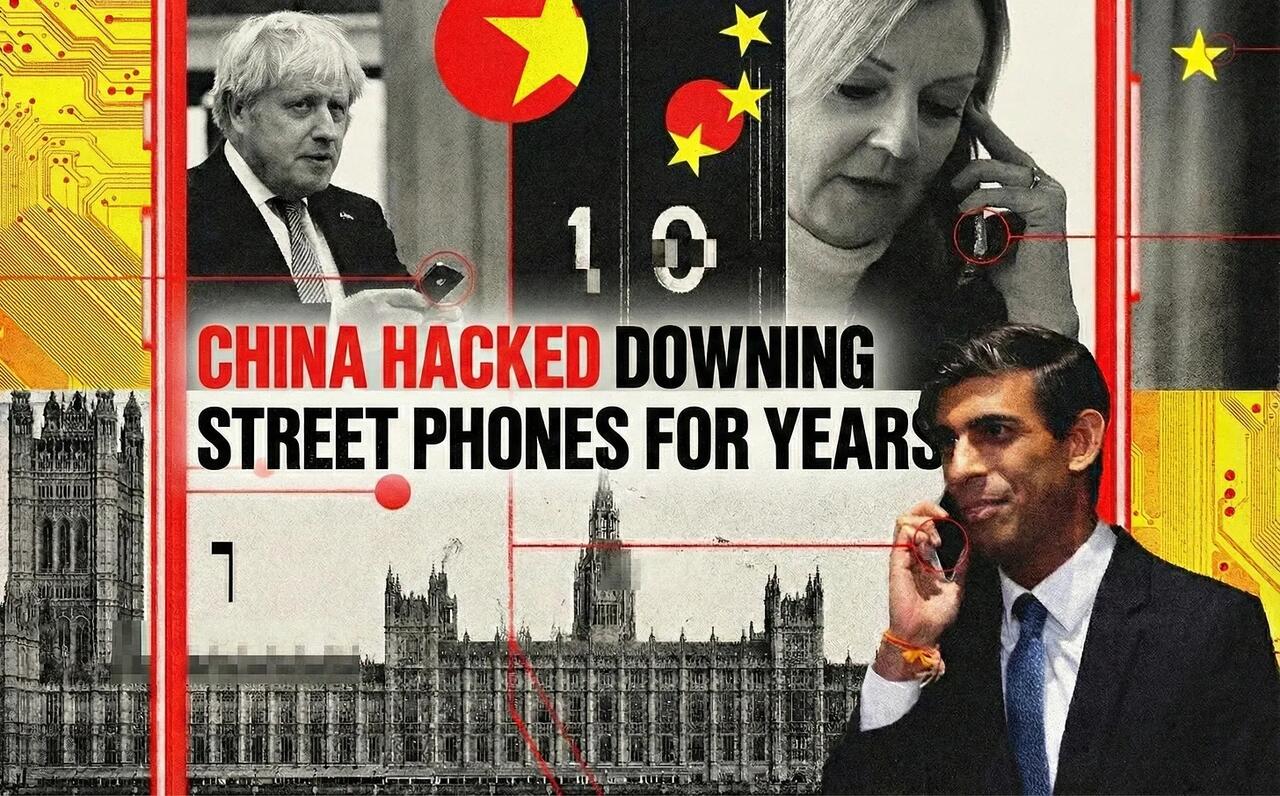
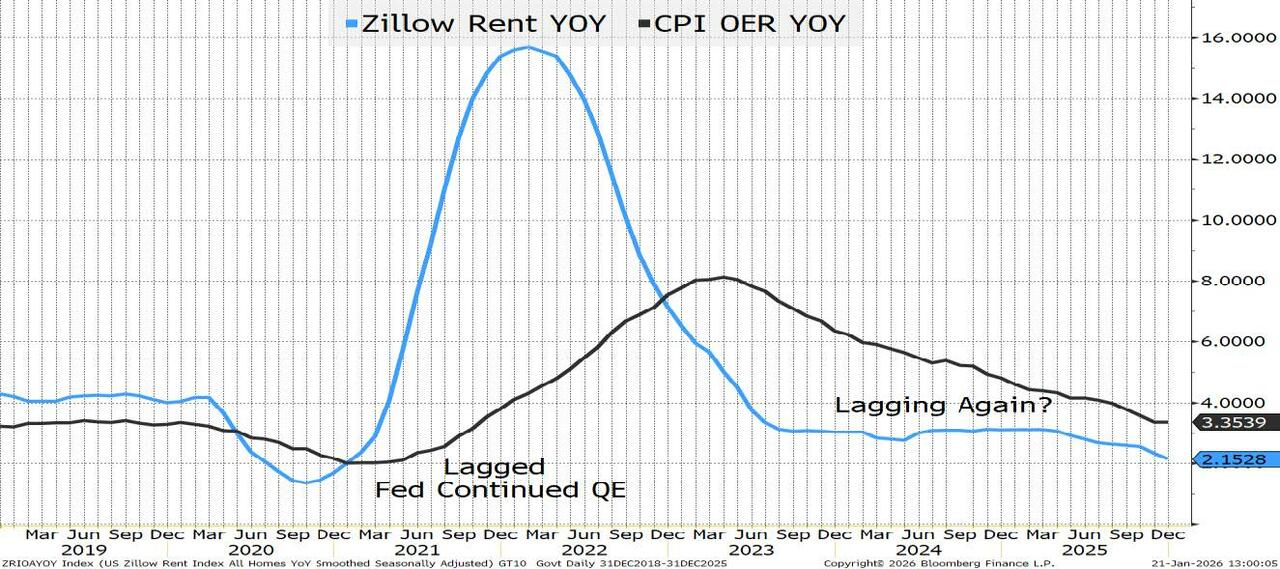
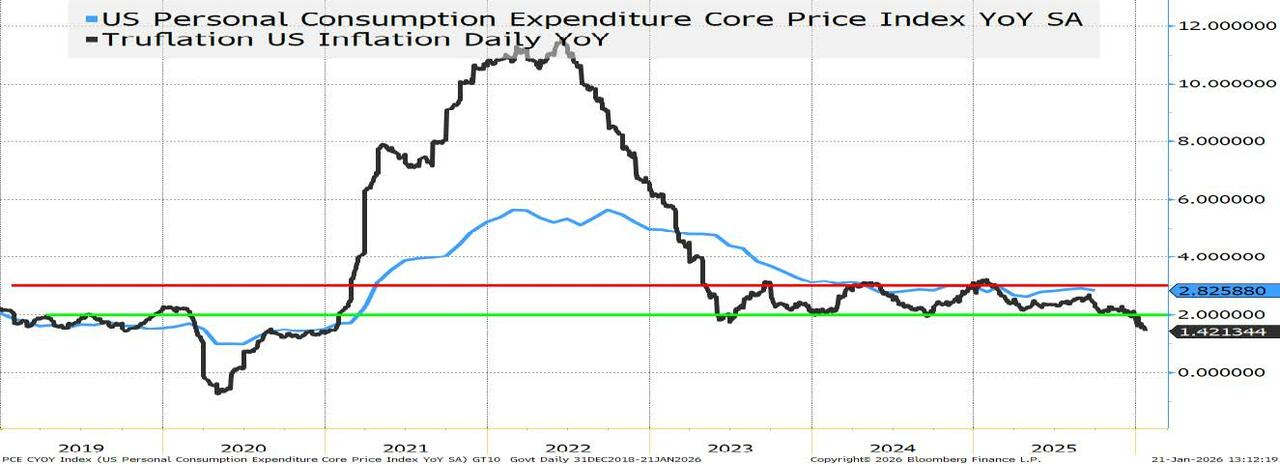
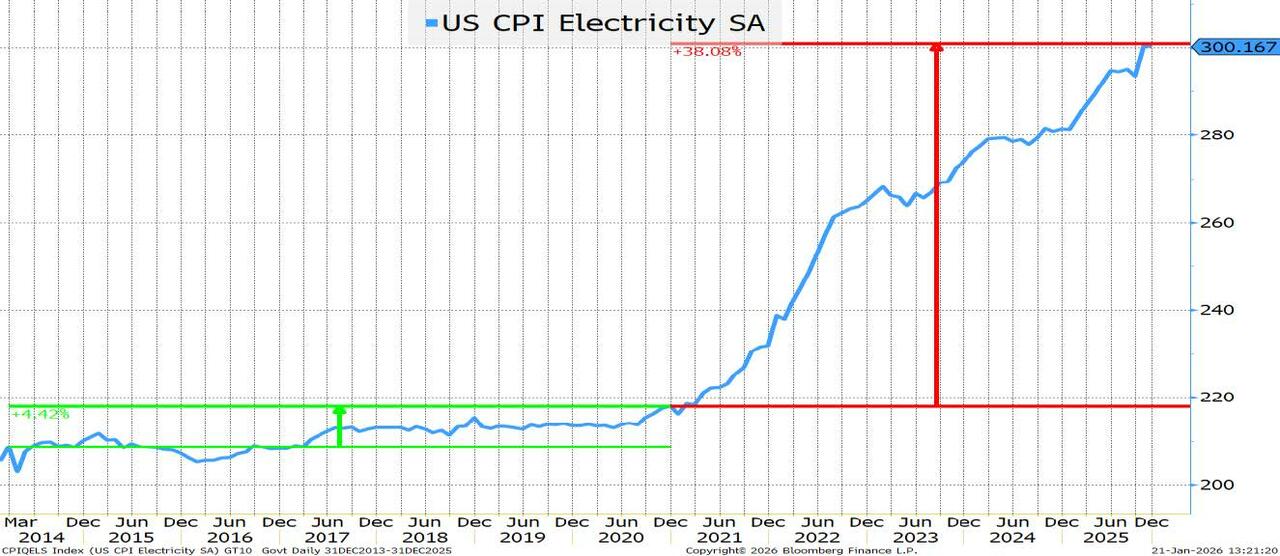
On January 26, 2026, The Telegraph disclosed that Chinese hackers had penetrated right into the heart of Downing Street, compromising mobile communications of senior officials across the Johnson, Truss, and Sunak administrations. The story was buried on page seven, treated as a technology curiosity. It was, in fact, a solvency event for the Western intelligence alliance. Not because phones were hacked, which happens, but because of how they were hacked: by weaponizing the very surveillance infrastructure that Western governments mandated for their own intelligence agencies. The Communications Assistance for Law Enforcement Act in the United States and the Investigatory Powers Act in the United Kingdom require telecommunications carriers to build backdoors into their networks for court-ordered wiretapping. Chinese state hackers found those backdoors. And walked through them.

The intelligence value is almost impossible to overstate. For approximately four years, operators linked to the MSS’s Chengdu bureau had the capability to see not just who British officials were calling, but whom the FBI was investigating, which Chinese operatives were under surveillance, what the United States knew about Beijing’s activities, and when counterintelligence was getting close. They could geolocate millions of individuals. They could record phone calls at will. They compromised the surveillance of their own surveillers, achieving the counterintelligence equivalent of reading the other side’s playbook while the game was in progress.

What follows is the institutional playbook. The positions are already being built.

The Backdoor That Swung Both Ways

The story of Salt Typhoon is not fundamentally a story about hacking. It is a story about architecture. Specifically, it is a story about what happens when governments mandate that their surveillance systems include single points of failure, then assume those points will only fail in their favor.

In 1994, the United States Congress passed the Communications Assistance for Law Enforcement Act, requiring telecommunications carriers to design their networks with built-in capabilities for government wiretapping. The law emerged from FBI concerns that digital switching technology would render traditional surveillance impossible. CALEA’s solution was elegant in its naivety: force every carrier to build a standardized interface through which law enforcement could access communications pursuant to court order. The interface would be secure because it would be secret, protected by access controls, audited by compliance regimes. No adversary would find it because no adversary would know to look.

Twenty-two years later, the United Kingdom enacted the Investigatory Powers Act 2016, colloquially known as the Snooper’s Charter. It went further than CALEA, mandating that technology companies retain communications data and provide access mechanisms for intelligence agencies. The architecture was the same: centralized access points designed for authorized users, protected by the assumption that authorized users would be the only ones using them.

Salt Typhoon was the adversarial audit that the system failed.

The Chinese operators did not need to hack individual phones, which would have been noisy and detectable. They did not need to intercept communications in transit, which would have required breaking encryption. They hacked the wiretap system itself. Once inside the CALEA infrastructure at AT&T, Verizon, and Lumen Technologies, they had access to everything the FBI had access to: call metadata showing who contacted whom and when, geolocation data derived from cell tower triangulation, the actual content of unencrypted calls and texts, and most devastatingly, the database of active surveillance requests. They could see whom the United States government was watching. They could see if they themselves were being watched.

The vulnerability was not a bug in the architecture. It was the architecture.

For decades, cryptographers and privacy advocates warned that there is no such thing as a backdoor only good guys can use. A vulnerability is a vulnerability. If it exists, a sufficiently motivated and resourced adversary will find it. The NSA and GCHQ and FBI dismissed these warnings as theoretical, academic, disconnected from operational reality. Law enforcement’s access needs are legitimate. But Salt Typhoon demonstrated empirically that the risks of mandated backdoors extend to everyone, including the governments that mandated them.

The irony approaches the unbearable. As Salt Typhoon was being discovered in late 2024, the UK government was pressuring Apple to weaken iMessage encryption under the Investigatory Powers Act. The argument was the same one that produced CALEA: law enforcement needs access, and carefully controlled access can be kept secure. Apple reportedly disabled certain features for UK users rather than comply. At precisely the same moment, as The Telegraph would later reveal, Chinese operators were reading communications from the heart of Downing Street through the access points the UK government had mandated.

The technical community has a name for this: the security paradox. Systems designed to enable surveillance become targets for adversary surveillance. The more access points you create for your own agencies, the more attack surface you expose to foreign agencies. The debate between security and privacy was always a false binary. The real tradeoff was between surveillability by your government and surveillability by everyone’s government.

Salt Typhoon collapsed that tradeoff into a single devastating data point.

The Kill Chain That Cannot Be Killed

Understanding what happened requires understanding how telecommunications networks actually function, not how they appear in policy documents.

A modern telecom network is not a monolithic system but a layered architecture spanning edge devices that connect to the public internet, core routing infrastructure that moves packets between networks, administrative systems that manage configurations and access, billing and customer data platforms, and lawful intercept systems that process surveillance requests. Each layer has its own attack surface. Salt Typhoon targeted the layer that matters most: the edge devices that control everything else.

The primary intrusion vector was a pair of vulnerabilities in Cisco IOS XE, the operating system running on millions of enterprise routers and switches worldwide. CVE-2023-20198, with a perfect 10.0 CVSS severity score, allowed an unauthenticated remote attacker to create an administrator account with Level 15 privileges, the highest access level on Cisco devices. CVE-2023-20273 enabled command injection that elevated those privileges to root access on the underlying Linux operating system. Chain them together and an attacker can create a god-mode account on any exposed Cisco device, then execute arbitrary code with full system control.

The vulnerabilities were disclosed in October 2023. Cisco issued patches. Many telecommunications operators delayed patching due to operational constraints that made rapid remediation nearly impossible.

This dynamic is not incompetence, though it resembles incompetence. Telecommunications infrastructure operates under pressures that create structural patch delays. These networks run 24 hours a day, 365 days a year. Downtime is measured in lost revenue and regulatory penalties. Patching a core router requires scheduling maintenance windows, testing updates in lab environments, coordinating with interconnected carriers, and accepting the risk that the patch itself introduces instability. For many operators, the calculation becomes: known theoretical vulnerability versus certain operational disruption. They chose the theoretical vulnerability. Salt Typhoon chose them.

Recorded Future’s Insikt Group documented the campaign exploiting over one thousand Cisco devices globally between December 2024 and January 2025. But the truly alarming finding was that attackers also exploited CVE-2018-0171, a vulnerability in Cisco Smart Install that had been patched seven years earlier. Some devices in critical telecommunications infrastructure had not been updated since 2018. The attack surface was not the frontier of zero-day exploitation. It was the accumulated technical debt of an industry that treated security as a cost center.

Once inside, Salt Typhoon deployed a sophisticated persistence mechanism designed to survive exactly the remediation attempts carriers would eventually undertake. The primary implant, documented by Trend Micro researchers under the name GhostSpider, operated entirely in memory without touching disk, evading traditional antivirus that scans for malicious files. It used DLL hijacking to execute within the context of legitimate processes, bypassing application whitelisting. Communications with command-and-control servers were encrypted and disguised as normal HTTPS traffic, blending with legitimate web activity.

The deeper persistence came from Demodex, a kernel-mode rootkit that modified the Windows operating system at its lowest level. Demodex hooked into system calls to hide its own processes, network connections, and registry entries from administrators running diagnostic commands. An operator investigating a compromised system would see nothing amiss because the rootkit was filtering what they could see. The malware achieved what the cybersecurity industry calls god-mode persistence: invisibility so complete that the only certain remediation is physical hardware replacement.

On Cisco devices specifically, the attackers exploited the Guest Shell, a Linux container environment designed for running legitimate management scripts. By injecting malicious code into this trusted container, they achieved persistence that survived standard reboots and even operating system reimaging. The infection lived below the level that normal administrators could access. It was not hiding in the house. It had become part of the foundation.

The operational sophistication extended to exfiltration. Salt Typhoon deployed a custom tool called JumbledPath that enabled packet capture across multiple network hops while simultaneously clearing logs and disabling logging along the capture path. They could intercept traffic without leaving forensic evidence of the interception. They modified Access Control Lists on compromised switches to explicitly permit their command-and-control IP addresses, ensuring their backdoors remained reachable even as security teams updated firewall rules. They created Generic Routing Encapsulation tunnels to route stolen data through compromised infrastructure, making the exfiltration appear as legitimate network traffic.

According to Cisco Talos analysis, the average dwell time before discovery was 393 days. One environment showed attackers maintaining presence for over three years. Three years of access to telecommunications infrastructure that carries the communications of governments, corporations, and private citizens. Three years of watching the watchers.

Inside the Chengdu Hacker-for-Hire Marketplace

Attribution in cyber operations is notoriously difficult. Attackers route through compromised infrastructure in multiple countries, use commodity malware available to any buyer, and deliberately plant false flags suggesting different national origins. The intelligence community has learned hard lessons about premature attribution.

Salt Typhoon attribution does not suffer these ambiguities. It is among the most thoroughly documented cases of state-sponsored cyber operations in the public record.

The US Treasury Department sanctioned Sichuan Juxinhe Network Technology Co., Ltd. on January 17, 2025, identifying it as a Chengdu-based cybersecurity company with direct involvement in the Salt Typhoon cyber group. The language was unusually specific for a sanctions designation, which typically uses more cautious phrasing. Treasury stated that the Ministry of State Security has maintained strong ties with multiple computer network exploitation companies, including Sichuan Juxinhe. The implication was unmistakable: this was not a rogue actor tangentially connected to Chinese intelligence. This was an MSS operation executed through contractor infrastructure.

Chengdu has emerged as the primary hub of China’s offensive cyber contractor ecosystem, a distinction it shares with no other Chinese city to the same degree. The reasons are structural. Sichuan University and Chengdu University of Information Technology produce a steady pipeline of computer science graduates with the technical skills offensive operations require. The provincial government offers tax incentives for high-tech enterprises that attract cybersecurity firms. The MSS’s Chengdu bureau has historically been aggressive in recruiting and contracting local talent. The result is a geographic concentration of capability that the intelligence community has tracked for over a decade.

Sichuan Juxinhe is not an isolated entity but part of an interconnected ecosystem. Treasury’s designation also referenced Beijing Huanyu Tianqiong Information Technology Co., Ltd. and Sichuan Zhixin Ruijie Network Technology Co., Ltd. as associated entities. These firms share corporate registration patterns, overlapping personnel, and technical infrastructure in ways that suggest coordinated rather than independent operation.

The ecosystem became dramatically more visible in February 2024, when over five hundred internal documents from i-SOON (Sichuan Anxun Information Technology Co., Ltd.) appeared on GitHub in one of the most significant leaks of Chinese cyber operations ever recorded. The documents revealed a hacker-for-hire marketplace where private firms bid on government contracts to compromise specific targets. Price lists showed costs for different levels of access. Marketing materials advertised tools for hacking Twitter, Gmail, WeChat, and Telegram. Target lists included governments in India, Thailand, Vietnam, South Korea, and NATO member states. The operational picture was unmistakable: China’s cyber espionage apparatus operates significantly through private contractors who compete for MSS and PLA business.

The i-SOON leak provided a Rosetta Stone for understanding how Salt Typhoon operates. Domain registration patterns used by i-SOON matched those observed in Salt Typhoon infrastructure. Malware families overlapped. The corporate relationship between i-SOON and other Chengdu firms explained how capabilities and targeting information might flow between ostensibly separate entities.

The UK government reached the same conclusion. On December 9, 2025, Foreign Secretary Yvette Cooper announced sanctions against Integrity Technology Group and Sichuan Anxun Information Technology (i-SOON) for activities against the UK and its allies that impact our collective security. The 13-nation joint advisory released in August 2025 explicitly attributed the campaign to MSS-linked private contractors, co-signed by agencies from the United States, United Kingdom, Australia, Canada, New Zealand, Germany, Japan, and five other nations.

The evidence supporting attribution is overwhelming: convergent technical indicators across multiple intelligence services, targeting patterns aligned with MSS priorities rather than financial motivation, sanctions from two G7 governments naming specific companies, a leaked document trove revealing operational details, and multi-national intelligence consensus among powers with no incentive to coordinate false attribution.

Chinese Foreign Ministry spokesperson Guo Jiakun dismissed the allegations as unfounded and irresponsible smears and slanders, claiming China stands against hacking and fights such activities in accordance with the law. Chinese state media advanced the counter-narrative that Salt Typhoon accusations represent US efforts to secure congressional appropriations rather than genuine intelligence findings. The Global Times characterized the accusations as a farce of US smear tactics against China.

These denials represent diplomatic necessities. They do not survive contact with the documented evidence.

The Crown Jewels: Three Prime Ministers’ Inner Circles Exposed

The targeting profile of Salt Typhoon reveals strategic intent far beyond conventional espionage.

In the United States, nine telecommunications carriers have been confirmed compromised: Verizon, AT&T, T-Mobile, Lumen Technologies, Spectrum (Charter Communications), Consolidated Communications, Windstream, Viasat, and at least one additional unnamed provider. Senator Mark Warner, chairman of the Senate Intelligence Committee, characterized it as the worst telecom hack in our nation’s history. The scope comparison is instructive. SolarWinds, the Russian supply chain compromise discovered in December 2020, affected approximately 18,000 organizations with deep penetration of roughly 100. Salt Typhoon compromised over 200 companies across 80 countries.

The data accessed falls into two categories with very different strategic implications.

The first category is bulk metadata: call detail records showing who contacted whom, when, and for how long, plus geolocation data derived from cell tower connections. Former Deputy National Security Advisor Anne Neuberger confirmed that attackers gained capabilities to geolocate millions of individuals. Metadata reveals patterns invisible in content alone. If a senior Treasury official calls a specific BP executive three times in one night before a North Sea oil announcement, Beijing knows the policy shift before the Cabinet does. Mapping communication networks reveals the actual decision-making structure of governments, which often differs substantially from organizational charts.

The second category is targeted content interception. Fewer than 100 individuals had actual call content and text messages directly compromised, but those individuals included Donald Trump, JD Vance, and senior staff from the Harris campaign during the 2024 presidential election. Congressional staff from the House China Committee, Foreign Affairs Committee, Armed Services Committee, and Intelligence Committee were accessed in breaches detected in December 2025, according to the Financial Times. The targeting was not random. It was surgical.

The United Kingdom penetration, disclosed by The Telegraph on January 26, 2026, reached right into the heart of Downing Street. The National Cyber Security Centre confirmed observing a cluster of activity targeting UK infrastructure since 2021. Aides to Prime Ministers Boris Johnson, Liz Truss, and Rishi Sunak had their communications compromised across a three-year period that included the COVID-19 pandemic response, the Ukraine war’s escalation, and critical UK-China trade negotiations.

Whether the Prime Ministers’ personal devices were directly compromised remains publicly unclear. The distinction may matter less than it appears. In a telecom network intrusion, attackers do not need to compromise individual devices. They compromise the network itself, intercepting communications as they transit carrier infrastructure. The Prime Minister’s phone may have been perfectly secure. The calls it made were not.

The strategic timing compounds the damage. The 2021-2024 window included decisions on Huawei’s role in UK 5G infrastructure, the AUKUS security pact formation, Hong Kong sanctions policy, and bilateral trade negotiations with Beijing. Chinese intelligence had real-time visibility into British decision-making during discussions where China’s interests were directly at stake. The information asymmetry is staggering.

Australia was similarly targeted. ASIO Director-General Mike Burgess confirmed in November 2025 that Salt Typhoon attempted to access Australia’s critical infrastructure, including telecommunications networks. Canada experienced confirmed breach of at least one unnamed telecom in February 2025. The campaign extended beyond the Five Eyes core: a South African provider was reportedly compromised via Cisco platforms, Southeast Asian telecoms detected new malware variants, and European telecommunications organizations identified intrusion attempts as late as October 2025.

The counterintelligence implications are the most damaging aspect, though the least publicly discussed.

By accessing CALEA systems, Salt Typhoon operators could see the database of active wiretap requests. They knew whom the FBI was investigating. If MSS operatives in the United States were under surveillance, Beijing could pull them out before arrests occurred. If FBI investigations were approaching sensitive Chinese assets, Beijing could warn them. If counterintelligence operations were building cases against Chinese technology companies or influence operations, Beijing could see the evidence accumulating.

This is the counterintelligence nightmare: your surveillance apparatus becomes the adversary’s intelligence source. The FBI was not just failing to catch Chinese spies. It was showing China exactly where to find its exposed spies before the FBI could catch them.

The Hidden Correlation That Risk Models Never Saw

Systems approaching critical transitions exhibit a distinctive signature that financial risk models systematically miss. Surface metrics remain stable while underlying pressure accumulates. Correlations appear benign precisely because the stress is building uniformly across connected components. Then the transition happens not gradually but all at once, in a cascade that propagates faster than response mechanisms can activate.

The physics of phase transitions describes the phenomenon with precision. Water remains liquid as it cools, molecules slowing gradually, temperature dropping predictably. Then at exactly zero degrees Celsius, the system reorganizes instantaneously into a crystalline structure. The transition is discontinuous. Nothing in the gradual cooling predicted the sudden restructuring.

Salt Typhoon’s propagation through global telecommunications followed this pattern. The Global Cyber Alliance documented 72 million attack attempts from China-origin IP addresses against telecommunications infrastructure worldwide between August 2023 and August 2025. The number is not the important part. The distribution is. Rather than concentrating on a few high-value targets, the campaign probed systematically across the entire internet-facing surface of telecom networks in 80 countries. When one vector failed, others succeeded. The attack percolated through the network of networks, finding paths of least resistance through unpatched devices, legacy systems, and accumulated technical debt.

The 80-country spread was not a bug or scope creep. It was the exploitation of network topology itself. Telecommunications providers interconnect through peering relationships, shared vendors, inherited trust, and common infrastructure. Compromising one provider creates pivot points into connected providers. The attackers did not need to breach 80 countries independently. They needed to breach enough nodes that cascade dynamics carried the compromise further.

Financial risk models trained on historical correlations would have seen nothing unusual in the period before disclosure. Telecom stocks moved with normal volatility. Cybersecurity spending followed typical budget cycles. The correlation stability that risk managers found reassuring was measuring the pressure building uniformly, not the probability of release.

The parallel to credit markets before 2008 is instructive though imprecise. Mortgage-backed securities showed stable correlations because they were all exposed to the same underlying risk. The stability was the warning, not the comfort. When housing prices turned, the correlation snapped to one and everything moved together. The diversification that looked protective turned out to be concentration disguised.

Salt Typhoon exposed a similar hidden correlation in critical infrastructure. The assumption was that a breach of Verizon had no implications for BT, that American vulnerabilities were American problems, that European telecoms operated in a separate risk regime. The assumption was wrong. The same Cisco devices run everywhere. The same CALEA architecture creates the same vulnerability everywhere its analogues exist. The same contractor ecosystem targets everyone with the same tooling. The diversification across carriers and jurisdictions was illusory. They were all one network.

Five Eyes Fractures Under Pressure

The Five Eyes intelligence alliance, comprising the United States, United Kingdom, Canada, Australia, and New Zealand, represents the deepest and most institutionalized intelligence-sharing arrangement among Western democracies. Its origins in World War II signals intelligence cooperation have evolved into comprehensive collaboration on technical collection, analysis, and counterintelligence. Salt Typhoon tested this architecture as nothing has since its formation.

The initial response demonstrated the alliance’s coordination capabilities. The December 2024 Enhanced Visibility and Hardening Guidance for Communications Infrastructure was the first joint Five Eyes response to the breach. The August 2025 advisory expanded to 13 nations, co-sealed by 22 agencies attributing the campaign to specific Chinese companies with unprecedented multinational consensus. The coordination was real and consequential.

But the fractures were also visible.

UK officials pointedly stated that had American regulations matched British standards, we would have found it faster, we would have contained it faster. The criticism was technically accurate. The UK’s Telecommunications Security Act 2021 imposed security obligations on carriers that exceed CALEA requirements. But the same UK government pursuing those regulations was simultaneously pressuring Apple to weaken encryption under the Investigatory Powers Act, replicating exactly the architectural vulnerability that Salt Typhoon exploited. The internal contradiction was not resolved so much as ignored.

The regulatory divergence reflects deeper philosophical disagreements that Salt Typhoon intensified without settling. The FBI and CISA’s December 2024 recommendation that Americans use end-to-end encrypted messaging applications represented an extraordinary acknowledgment that carrier networks cannot be trusted. Yet both agencies have historically sought encryption backdoors for law enforcement access. The cognitive dissonance remained unaddressed: advocating for encryption to protect against foreign adversaries while seeking to weaken encryption for domestic law enforcement.

The FCC’s regulatory response exemplified the policy incoherence. In January 2025, the Commission proposed mandatory cybersecurity requirements including role-based access controls, multi-factor authentication, and vulnerability patching for telecommunications carriers. Then-Chairwoman Jessica Rosenworcel stated: In light of the vulnerabilities exposed by Salt Typhoon, we need to take action. In November 2025, the reconstituted FCC voted 2-1 to revoke those rules. Chairman Brendan Carr argued for an agile and collaborative approach over regulatory mandates. Commissioner Anna Gomez dissented: This FCC today is leaving Americans less protected than they were the day this breach was discovered.

The Cyber Safety Review Board investigation, established to provide an authoritative post-mortem on Salt Typhoon, was terminated in January 2025 when the incoming administration dismissed all members before their investigation concluded. The official lessons learned process stopped before identifying lessons.

Intelligence sharing itself became contested. Reports emerged in 2025 that DNI Tulsi Gabbard barred sharing certain intelligence with Five Eyes partners. While some former officials characterized concerns as faux outrage, noting that withholding occurs routinely, others warned of a chilling effect on critical intelligence sharing at precisely the moment coordination mattered most.

From a Chinese perspective, as expressed by state media and diplomatic channels, the sanctions and coordinated Western response represent political escalation that unnecessarily heightens tensions and contradicts stated commitments to engagement. Beijing has consistently framed the accusations as evidence of anti-China bias in Western intelligence assessments rather than legitimate security concerns.

Salt Typhoon revealed that even the world’s most sophisticated intelligence alliance, facing the world’s most aggressive cyber adversary, operates with fundamental coordination failures, regulatory incoherence, and philosophical contradictions that compound rather than contain the damage.

Why Hardware Must Replace Software

The most alarming aspect of Salt Typhoon is not what happened but what continues to happen.

CISA Executive Assistant Director Jeff Greene stated plainly: We cannot say with certainty that the adversary has been evicted, because we still don’t know the scope of what they’re doing. Senator Maria Cantwell’s December 2025 assessment was equally stark: Telecom companies infiltrated in the attack have failed to prove the Chinese hackers have been eradicated from their networks.

AT&T and Verizon announced in January 2025 that they had successfully expelled the attackers from their networks, with Mandiant providing independent verification. The claims met immediate skepticism from government officials and security experts. The skepticism has not been resolved. When Senator Cantwell demanded documentation, the carriers could not provide evidence that Chinese hackers had been fully removed.

The technical reasons for persistent access are well understood.

Salt Typhoon’s persistence mechanisms, including GRE tunnels on network devices, Demodex kernel rootkits, and modified authentication server configurations, can survive standard remediation procedures. The attackers’ average dwell time of 393 days before detection, with some environments compromised for over three years, demonstrates operational security sufficient to reestablish access even after apparent eviction. If the attackers anticipated discovery, they likely created backup persistence mechanisms that remediation teams have not found.

Read the rest here and consider subscribing

Tyler Durden Sat, 01/31/2026 - 07:00
https://ift.tt/uYPq7tH
from ZeroHedge News https://ift.tt/uYPq7tH
via IFTTT

Next-Level Spying: How China Read The West's Wiretaps For Years SocialTwist Tell-a-Friend
| 0 comments ]

Tesla Shares Jump 5% After Musk Reportedly Mulls Merging SpaceX, xAI, Tesla Merger

Tesla shares jumped about 5% on Friday after reports suggested that Elon Musk is considering bringing his companies closer together through a possible merger involving SpaceX, Tesla, and artificial intelligence startup xAI. The news helped reverse losses from the previous session, when the stock slid following the company’s earnings report.

According to people familiar with the discussions, SpaceX has been evaluating different ways to combine parts of Musk’s business portfolio ahead of a potential public offering. One option involves a tie-up with Tesla, while another centers on xAI. These talks are still preliminary, and no agreement has been reached, but investors welcomed the possibility of deeper cooperation across the group.

The market reaction was swift. After falling to its lowest level in two months on Thursday, Tesla rebounded strongly in early Friday trading. The rally lifted the company’s valuation back toward $1.65 trillion, signaling renewed confidence in Musk’s long-term strategy despite recent financial pressures.

Much of that optimism reflects the potential overlap between the companies’ ambitions. Musk has repeatedly floated the idea of using SpaceX technology to support large-scale computing in orbit, which could benefit xAI’s push to expand its artificial intelligence systems. Tesla, meanwhile, could contribute through its battery, energy storage, and manufacturing operations, creating a tightly linked ecosystem spanning transportation, robotics, space, and AI.

Financial ties between the firms have already been growing. Tesla recently committed $2 billion to xAI, matching a similar investment made earlier by SpaceX. In a shareholder letter, Tesla said, “As set forth in Master Plan Part IV, Tesla is building products and services that bring AI into the physical world. Meanwhile, xAI is developing leading digital AI products and services, such as its large language model (Grok).”

Musk reinforced that view during the earnings call, arguing that collaboration is central to Tesla’s future. “But if there are things xAI can help accelerate our progress, then why should we not do that?” he said. “And that is the reason why we’ve gone ahead with such an investment. Because this is part of the strategic initiative.” The company has also highlighted links between AI development, its Optimus robots, and autonomous driving systems.

Still, significant uncertainty surrounds any potential deal. People close to the matter say the companies may ultimately decide against merging, and any transaction could complicate SpaceX’s plans for a major stock market debut later this year. That offering, if it moves forward as expected, could be one of the largest in history.

The surge in Tesla’s share price also comes as the company faces near-term challenges. Recent earnings showed weaker profitability, and management has warned that heavy spending is coming as it ramps up investments in autonomy and robotics.

Musk acknowledged the scale of those plans, saying, “This year for Tesla is the first major steps as we increase vehicle autonomy and begin to produce Optimus robots at scale — we’re making very, very big investments.” For now, investors appear to be focused less on short-term risks and more on the possibility that Musk’s interconnected vision could unlock new sources of growth.

Tyler Durden Fri, 01/30/2026 - 14:00
https://ift.tt/8LheQVU
from ZeroHedge News https://ift.tt/8LheQVU
via IFTTT

Tesla Shares Jump 5% After Musk Reportedly Mulls Merging SpaceX, xAI, Tesla Merger SocialTwist Tell-a-Friend
| 0 comments ]

Ghislaine Maxwell Cites Dozens Of Men In Alleged Epstein 'Secret Settlements'

Authored by Luis Cornelio via Headline USA,

Convicted felon Ghislaine Maxwell claimed in December that at least 25 men with ties to Jeffrey Epstein entered “secret settlements” to serve charges over their alleged role in the late sex offender’s crimes. 

Maxwell made the claim in a petition for a writ of habeas corpus filed on Dec. 17 in the U.S. Southern District of New York, according to Courthouse News

She is serving a 20-year sentence for her role in Jeffrey Epstein’s sex-trafficking operation and is seeking to void her conviction. 

Her filing comes amid renewed scrutiny surrounding the pending release of Epstein-related documents. 

The petition references four alleged “co-conspirators” and 25 additional men who were never indicted despite, according to Maxwell, being similarly implicated in the crimes. 

She said the government’s purported failure to charge those individuals showed she was selectively prosecuted. 

In the filing, Maxwell acknowledged that a defendant moving to dismiss for selective prosecution “bears the heavy burden of establishing” that others similarly situated were not prosecuted for the same conduct while she was singled out, and that the government’s decision was discriminatory or made in bad faith. 

“None of the 4 named co-conspirators or the 25 men with secret settlements were indicted,” Maxwell wrote. 

Maxwell claimed the existence of the 25 men emerged through government disclosures and civil litigation materials that were never provided to her defense. 

“New evidence reveals that there were 25 men with which the plaintiff lawyers reached secret settlements – that could equally be considered as coconspirators,” she added. “None of these men have been prosecuted and none has been revealed to Petitioner; she would have called them as witnesses had she known.” 

Maxwell further alleged that her indictment followed Epstein’s 2019 death in federal custody and was driven by political expediency. 

“New evidence reveals the reason why the Petitioner was indicted after having not been named and included in any of the earlier criminal indictments against Epstein or the Palm Beach Police Investigation, simply put it was for expediency and purely political motives following the death of Jeffrey Epstein in the care custody and control of the US Government,” she claimed. 

Tyler Durden Thu, 01/29/2026 - 17:00
https://ift.tt/Ii1y7Vx
from ZeroHedge News https://ift.tt/Ii1y7Vx
via IFTTT

Ghislaine Maxwell Cites Dozens Of Men In Alleged Epstein 'Secret Settlements' SocialTwist Tell-a-Friend
| 0 comments ]

Deranged Nurse Fired After Urging Poisoning & Paralyzing Of ICE Agents

Authored by Steve Watson via Modernity.news,

A nurse at Virginia Commonwealth University Health has been terminated after posting a series of videos urging sabotage against ICE agents, including injecting them with paralytic drugs and poisoning their food and drinks.

Yes, really.

The unhinged suggestions highlight the escalating threats faced by law enforcement amid leftist campaigns to obstruct deportations of criminal illegal aliens.

In videos exposed by Libs of TikTok, the nurse, identified as Melinda, detailed various “resistance tips” targeted at ICE personnel.

She advised medical providers to “grab some syringes with needles on the end have them full of saline or succinylcholine you know whatever,” adding that succinylcholine “is a temporary paralyzing agent. It will eventually wear off and there will be no way to detect it afterwards.”

“So, if you see them struggling to breathe, you can definitely inject that into one of their muscles or veins and walk away and there will be no way to prove it,” she stated.

In another clip, she suggested harvesting poison ivy or oak, mixing it with water, and using a water gun to fire it in the faces of agents.

For single women, she proposed going on dates via apps like Tinder or Hinge to “find these guys, they’re around,” and to bring poison with them on dates, then “put it in their drinks, get them sick.”

She claimed, “You know, nobody’s going to die, just enough to incapacitate them, get off the street for the next day,” calling the tactic “easily deniable.”

She also urged targeting agents’ food sources: “Let’s get them where they eat… Where’s the hotel where they eat? Who makes that breakfast? Let’s find them you know let’s make their lives fucking miserable.”

Additional ideas included making living conditions bad, such as hiding “dead fish somewhere in the room,” and to “just stay toxic.”

Following the videos going viral, VCU Health launched an investigation and confirmed in a statement: “Following an investigation, the individual involved in the social media videos is no longer employed by VCU Health. In addition, VCU Health has fulfilled its reporting requirements under Virginia state law.”

According to reports, the matter has been referred to authorities, with potential legal consequences for the former employee.

What kind of deranged lunatic has these ideas and then goes ahead and makes a video incriminating themselves? 

The development comes as ICE faces a surge in harassment from radical activists opposed to the Trump administration’s mass deportation efforts.

As we earlier highlighted, DHS recently released audio of deranged individuals leaving threatening voicemails wishing death on agents’ families. 


The culprits stole the personal data of agents by running number plates and then attempted to call them, before leaving the sickening recordings.

Again, this highlights how these mentally unwell morons don’t care about, or more likely haven’t even got the foresight to comprehend that they are incriminating themselves.

DHS has vowed to track down such agitators, with Border Czar Tom Homan establishing databases to expose harassers to their employers.

Your support is crucial in helping us defeat mass censorship. Please consider donating via Locals or check out our unique merch. Follow us on X @ModernityNews.

Tyler Durden Wed, 01/28/2026 - 16:25
https://ift.tt/rKt4XSh
from ZeroHedge News https://ift.tt/rKt4XSh
via IFTTT

Deranged Nurse Fired After Urging Poisoning & Paralyzing Of ICE Agents SocialTwist Tell-a-Friend
| 0 comments ]

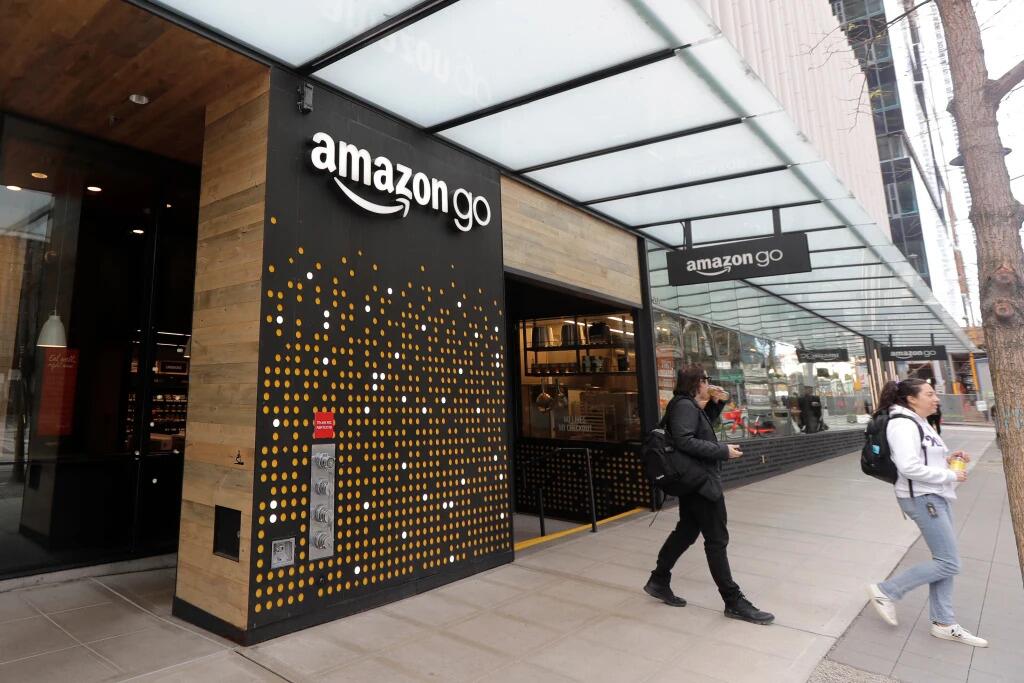
Amazon Exits Experimental Grocery Stores, Will Focus On Whole Foods, 'Supercenters'

Amazon is shutting down its Amazon Go and Amazon Fresh grocery stores, marking a significant retrenchment from its most ambitious efforts to reinvent brick-and-mortar food retail. The move reflects the company’s conclusion that, despite years of experimentation, it has not yet found a physical grocery model that can scale profitably under the Amazon brand.

Photo: Ted S. Warren, AP

According to the company, Amazon Go and Amazon Fresh locations will all be shuttered by Feb. 1, with the exception of California locations which will remain open longer to comply with state requirements. Some of the shuttered locations will be converted into Whole Foods Market stores, underscoring where Amazon now sees durable value in physical grocery retail.

In short, Amazon is closing physical stores, but you can still order Amazon Fresh online for same-day delivery if they serve your address. 

“While we’ve seen encouraging signals in our Amazon-branded physical grocery stores, we haven’t yet created a truly distinctive customer experience with the right economic model needed for large-scale expansion,” Amazon's PR zoomers vomited forth in a blog post announcing the decision.

At the time of the announcement, Amazon operated 57 Amazon Fresh stores and 15 Amazon Go locations. The closures mark a sharp contrast with the performance of Whole Foods Market, which Amazon acquired in 2017. Since the acquisition, Whole Foods has delivered more than 40% sales growth and expanded to over 550 locations. Amazon said it plans to open more than 100 additional Whole Foods stores in the coming years.

The retreat does not signal an exit from groceries. Instead, Amazon is consolidating around areas where it believes it holds a structural advantage; online ordering, rapid delivery, and logistics at scale. The company said customers will continue to be able to shop Amazon Fresh online, with grocery delivery now available in roughly 5,000 U.S. cities and towns, including thousands with same-day delivery of produce and perishables alongside household staples. Amazon said it plans to expand same-day fresh grocery delivery further this year, citing strong customer feedback.

Amazon’s physical grocery experiments were closely watched as a test of whether technology could meaningfully reshape a notoriously low-margin business. Amazon Go stores, which debuted in Seattle in 2018, eliminated traditional checkout lines by using cameras and sensors to automatically charge customers as they left the store. Amazon Fresh stores, launched in 2020, combined national brands, fresh food and technology-enabled shopping features in a more conventional supermarket format.

While customers responded positively to some of these innovations, Amazon acknowledged that the stores did not yet deliver a compelling economic model. Grocery retail remains highly sensitive to real estate costs, labor, pricing pressure and operational complexity - factors that even Amazon’s technology could not easily overcome.

Importantly, Amazon is not abandoning the technology developed for these stores. The company said its Amazon Go locations served as “innovation hubs” for its “just walk out” checkout system, which is now deployed in more than 360 third-party locations across five countries. Amazon is also expanding the technology internally, with more than 40 North American fulfillment centers using it in employee breakrooms to speed food purchases, with additional locations planned.

At the same time, Amazon said it will continue to test new physical formats. The company revealed plans for a “new supercenter” concept that would allow customers to shop fresh groceries, household essentials and general merchandise in a single location, though it did not provide details on timing or scale. It is also piloting a new “Amazon Grocery” format embedded within select Whole Foods stores, allowing customers to shop for Amazon household essentials alongside traditional grocery items.

h/t Capital.news

Tyler Durden Wed, 01/28/2026 - 15:45
https://ift.tt/NkTMOC2
from ZeroHedge News https://ift.tt/NkTMOC2
via IFTTT

Amazon Exits Experimental Grocery Stores, Will Focus On Whole Foods, 'Supercenters' SocialTwist Tell-a-Friend
| 0 comments ]

Waste Of The Day: "Zombie" Programs Live Again

Authored by Jeremy Portnoy via RealClearInvestigations,

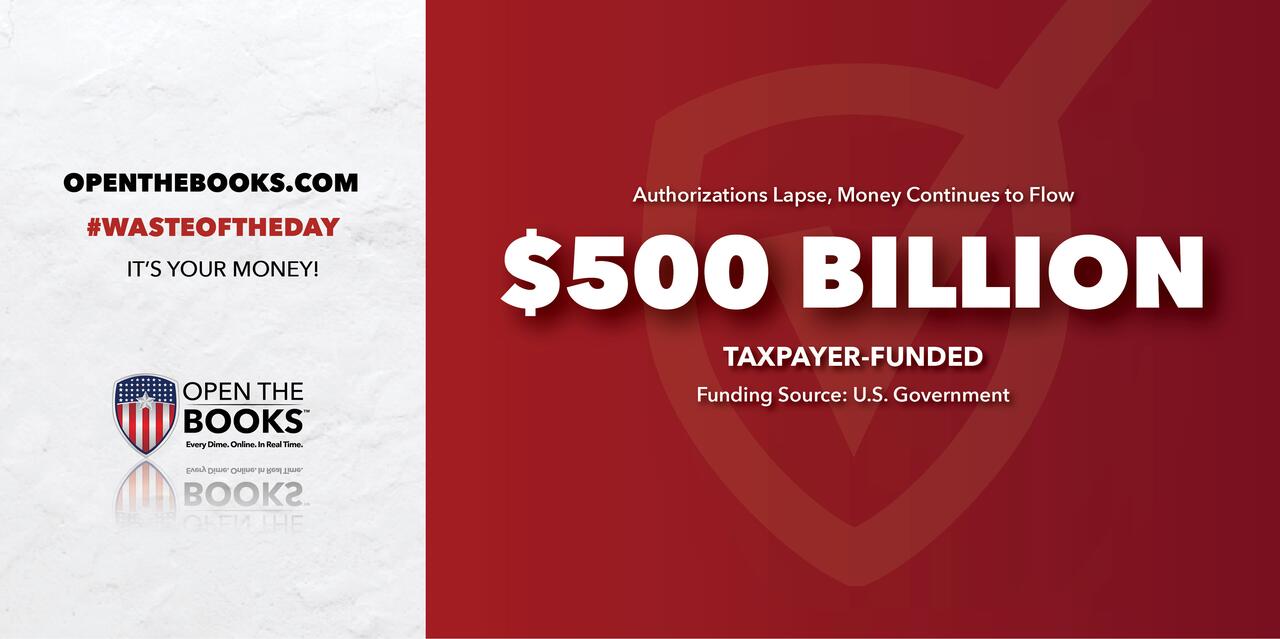
Topline: In fiscal year 2025, Congress funded 1,326 federal programs that had expired legal authorizations to receive taxpayer funding — the most since at least 2019, when the Congressional Budget Office began totaling the annual number.

Another 304 funded programs had authorizations that expired later in 2025.

These “zombie programs” cost taxpayers at least $500 billion in 2025, although CBO analysts were unable to determine how much money 869 of the programs actually received; the actual dollar total was far higher. 

Key facts: “Zombie programs” earn their nickname by living on for decades after their funding was legally scheduled to lapse. For example, the Federal Energy Regulatory Commission was created by a 1981 law that allowed Congress to fund it until 1984. But Congress has continued to send it money every year, without passing a law that makes such funding legal. 

Oftentimes, Congress is too busy to reauthorize federal programs. Sarah Binder, professor of political science at George Washington University, previously told RealClearInvestigations that “Congress doesn’t have the time to do good institutional housecleaning … They don’t have the capacity to keep tabs on the authorizations.”

Binder argued that, if a program is currently funded by Congress, it would be unconstitutional for the president to shut it down simply because its authorization is expired. Yet for many zombie programs, it has been years since Congress voted to decide if they are an efficient use of taxpayer money. Funding is instead tucked into larger spending packages with thousands of pages.

Zombie programs from 2025 included the controversial Corporation for Public Broadcasting, which voted this January to shut itself down. Its legal authorization to receive taxpayer funding expired in 1996.

There were 22 zombie programs that expired during the 1980s.

The House Committee on Energy and Commerce funded 363 zombie programs, more than any other committee.

It remains unknown how many zombie programs will receive funding in 2026, as Congress had still not passed a full 2026 federal budget when the latest CBO report was released on Jan. 15. The CBO said another report will be issued “later this year.” 

There are 157 federal programs that received funding in 2025 but will expire in 2026. Another 180 programs will expire in 2027.

Search all federal, state and local salaries and vendor spending with the world’s largest government spending database at OpenTheBooks.com

Summary: As the national debt continues to climb, federal programs that have not undergone a reauthorization vote in decades are prime candidates for potential cuts.

The #WasteOfTheDay is brought to you by the forensic auditors at OpenTheBooks.com

Tyler Durden Tue, 01/27/2026 - 17:00
https://ift.tt/g0zQ8vT
from ZeroHedge News https://ift.tt/g0zQ8vT
via IFTTT

Waste Of The Day: "Zombie" Programs Live Again SocialTwist Tell-a-Friend
| 0 comments ]

"Mother Nature Stops For No One": All Eyes On Next Winter Storm Threat For US East

A day or so after the historic winter blast buried much of the eastern half of the US in snow and ice and unleashed dangerously cold air that strained power grids from ERCOT to PJM, forecasters are now tracking another winter threat with potential impact on the Southeast, Mid-Atlantic, and Northeast later this weekend.

Meteorologist Ben Knoll published a note earlier today that warned of "high confidence that a powerful storm, packing blizzard conditions, will form near the East Coast. How close or far that storm is from the coast is less certain."

On X, Knoll wrote:

Another day, another weather update! The last week has been among the busiest I've had in my career so far.

Mother Nature stops for no one, so the forecasts must keep flowing. Compared to yesterday, there’s a little more clarity in the weekend forecast, but it isn’t set in stone.

Will this weekend's powerful storm be closer to the coast or farther offshore? That's the key question. For now, the highest chances for impacts are along the coast from North Carolina's Outer Banks to southeast New England.

He noted:

This storm's strongest snow signals are located in the Carolinas, coastal Mid-Atlantic and coastal New England. Of course, there's a chance things trend back west, so keep watching!

Other meteorologists and private weather forecasters are beginning to post model guidance showing a potential winter storm threat for the Mid-Atlantic this weekend.

Related:

Also this:

Winter is not over yet. We encourage readers to learn more about how fossil fuels are helping keep power grids from collapsing (read).

Tyler Durden Tue, 01/27/2026 - 15:40
https://ift.tt/rEqcoFB
from ZeroHedge News https://ift.tt/rEqcoFB
via IFTTT

"Mother Nature Stops For No One": All Eyes On Next Winter Storm Threat For US East SocialTwist Tell-a-Friend
| 0 comments ]

Transtifa 'Kyle' Says He's "On The Run" After Urging Comrades To "Get Your F**king Guns"

Update (Monday):

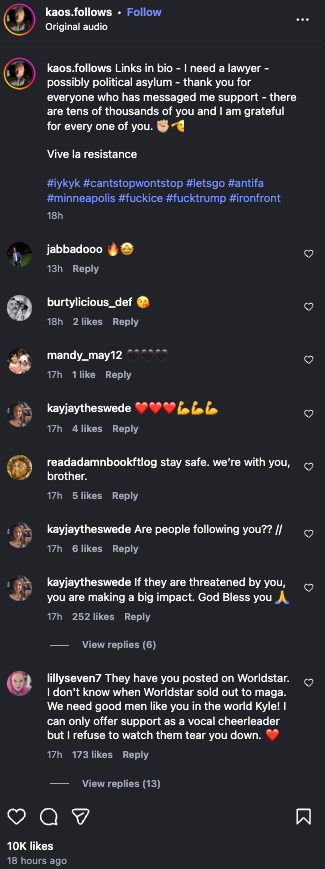
Transtifa "Kyle" said in a video posted on Instagram that he is "basically on the run" and has "safe places" and "evacuations planned out."

In recent days, Transtifa "Kyle" has incited violence on social media, stating, "Get your f—king guns and stop these f—king people."

Daily Wire's Brent Scher noted:

New videos from Antifa Kyle confirm that his Venmo account has been shut down. He says he needs a lawyer because his speech has been deemed "inciting violence," and claims he is now selling hoodies to raise money for the same cause.

"I am basically on the run now."

Comments from the Transtifa's original Instagram post:

Some people say the rebel could be a "fed"…

Whatever he is, whether Transtifa or something else according to the internet, the risk of social unrest across sanctuary cities as warmer weather approaches is certainly on the rise.

*   *   * 

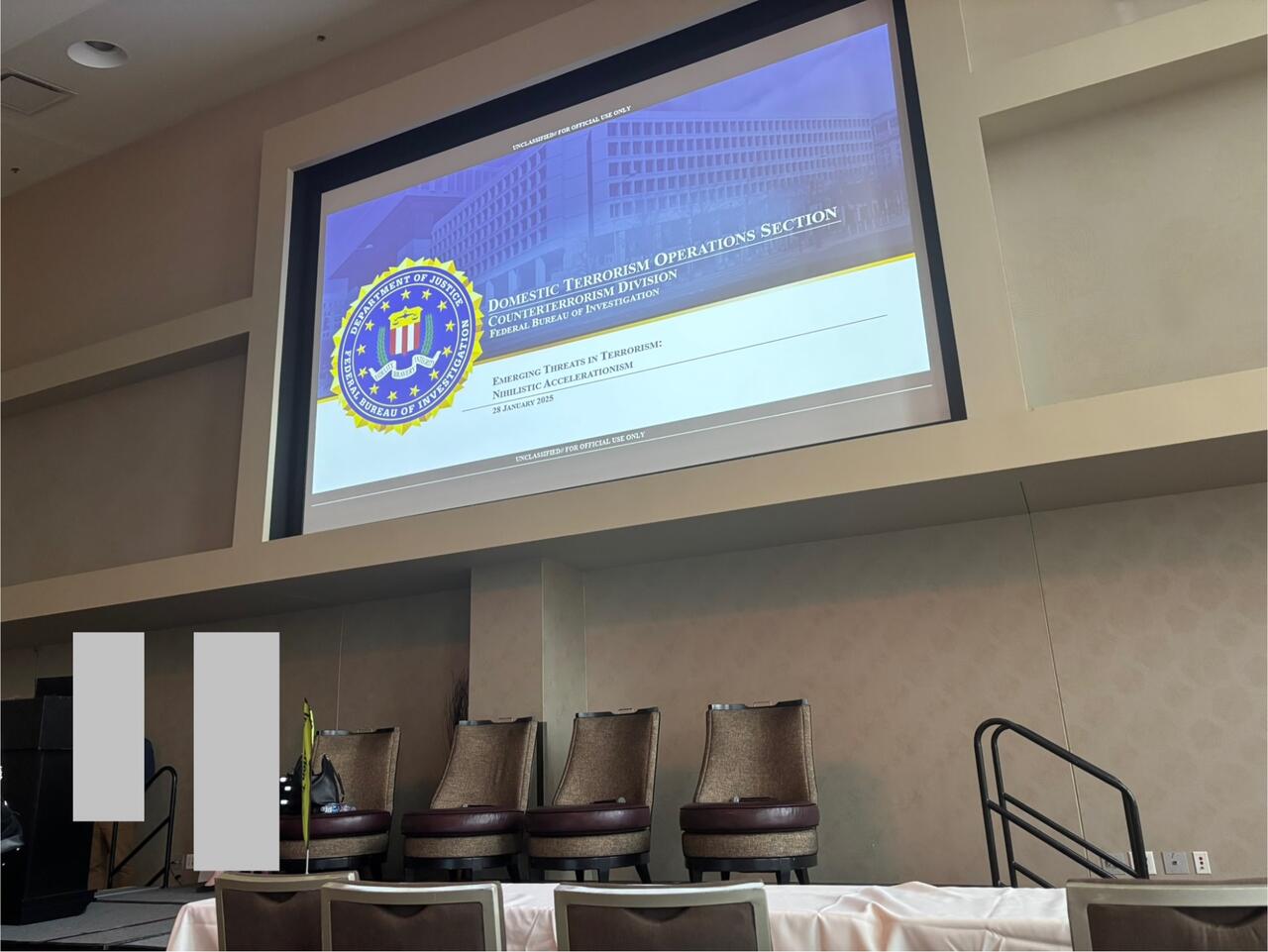
About one year ago, the Federal Bureau of Investigation Counterterrorism Division conducted an unclassified briefing warning of an emerging domestic threat vector described as "nihilistic accelerationism." The briefing was around the time of a series of attacks in which left-wing militants firebombed Tesla vehicles at showrooms. These attacks were largely in response to President Donald Trump and Elon Musk's crusade against the federal bureaucracy through DOGE-related initiatives.

By late summer, less than two weeks before Charlie Kirk was assassinated by a left-wing activist, we published an assessment titled "America Has a 'Transtifa' Problem." The report probably stunned most people, and they couldn't believe their eyes as the accelerating convergence of militant ideology and left-wing activism was beginning to unleash chaos.

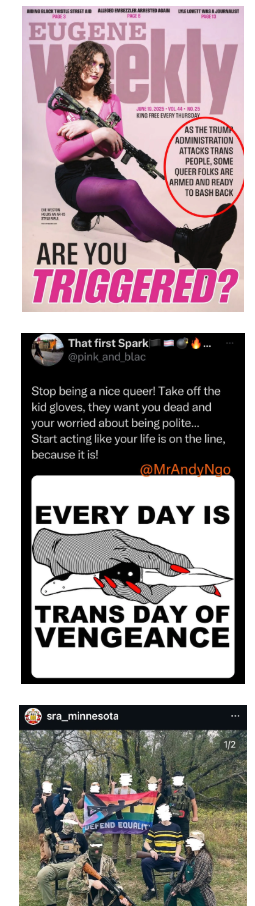
Weeks later, we penned another note, titled "Planning War Against Fascists" - Socialist Rifle Association Boasts 10,000 Members... In our opinion, the profiling of these left-wing activists, from the Tesla Takedown fueled by dark-money funded NGOs (permanent protest industrial complex) and the militant left to anti-ICE riots in Los Angeles, to the political assassination of Kirk, only suggested to us that left-wing chaos would accelerate into the new year.

The nation has entered a dangerous period, as the turmoil in Minneapolis could be replicated in other sanctuary cities when warmer weather arrives.

Left-wing activists are reported to be operating shadow police-style networks on Signal to target federal immigration agents, possibly in coordination with local police and with individuals linked to Gov. Walz, in efforts to impede federal deportation operations. The clashes between activists and federal agents have already resulted in multiple shootings, including two fatal ones. 

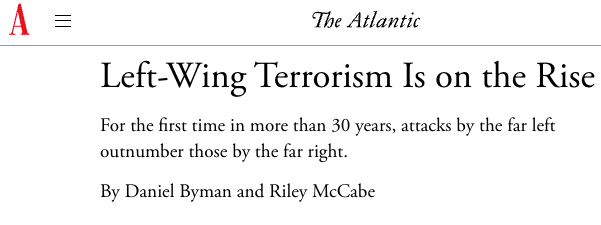
The chaos emanating from left-wing activists surprisingly and recently prompted deep state publication The Atlantic to pen a note titled, "Left-Wing Terrorism Is on the Rise."

Following the chaos on Saturday, in which another activist was shot and killed by federal agents after an altercation, X users are reporting that Minneapolis's "Antifa General," AKA Kyle Wagner, has urged his comrades: "Get your f—king guns and stop these f—king people"

Citizen journalist Andy Ngo reported:

"Get your f—king guns and stop these f—king people"

A Minnesota Antifa member-turned-social media influencer and online recruiter named Kyle Wagner is urging his comrades to take up arms to kill agents of the federal government. His recruitment videos are on @instagram , which has become popular for the far-left in organizing violence due to its reach with mainstream liberals.

Wagner has branded himself on the neck with the gang tattoo of the Antifa "Iron Front" logo, similar to how neo-Nazis brand themselves with fascist symbols.

The cross-dressing activist ...

Others report:

This has been a long time in the making. Our reporting from 2017:

Democrats spent a decade creating target profiles on Trump and all of MAGA. 

Trump White House staffers should probably take retired Lt. Gen. Michael Flynn's advice and run with it (read here).

Tyler Durden Mon, 01/26/2026 - 15:58
https://ift.tt/lOZxAYi
from ZeroHedge News https://ift.tt/lOZxAYi
via IFTTT

Transtifa 'Kyle' Says He's "On The Run" After Urging Comrades To "Get Your F**king Guns" SocialTwist Tell-a-Friend
| 0 comments ]

What The Left Doesn't Want You To Know About Alex Pretti, The Man That Border Patrol Shot

Mainstream media outlets rushed to paint Alex Pretti as a blameless ICU nurse gunned down by heartless Border Patrol agents in Minneapolis on Saturday. They highlighted his work caring for veterans and seized on video snippets showing him holding a phone. The New York Times ran with that angle, running the headline “Man Killed by Federal Agents in Minneapolis Was Holding a Phone, Not a Gun,” and claimed that footage captured Pretti only with his phone in hand, insisting that agents had no reason to believe he was armed during their encounter.

Media outlets are also quick to point out that Pretti held a valid Minnesota concealed carry permit and legally owned the gun, as if that absolved him for his actions against the Border Patrol agents.

Others point out that he had no criminal record, just traffic tickets.

This, they argue, proves he was an innocent victim, not an agitator. 

But what the mainstream media isn’t telling you is that Pretti wasn’t just some random bystander.

According to Jeanne Massey, a neighbor, Pretti was part of a “Signal ICE” group chat of volunteers who organized a sophisticated operation to track ICE activity in real time and alert each other when agents were in the area. 

These folks patrol streets, blow whistles, alert residents, and film operations to disrupt arrests.

That puts him not on the sidelines but plugged into the very network that coordinated responses to federal enforcement operations.

Mother Jones profiled the group just last week.

“A new activist twist on neighborhood watch is taking shape in Minneapolis and other cities under occupation by federal immigration agents: ICE Watch,” the outlet reported.

“As Immigration and Customs Enforcement personnel drive around these cities, they’re often tailed by people in the neighborhoods. The idea is to make sure witnesses are present for any immigration arrest, to catch incidents on video, and to protest—or at least get the detainee’s name.”

The article described the “ICE watchers” as “passionate, determined, and just about everywhere—and ICE is getting frustrated.”

Massey and Pretti were part of the Kingfield neighborhood ICE Watch.

Massey spoke on behalf of her neighbors, saying, “Let me be clear: we are horrified, we are furious, and we are not going to pretend this is anything but what it is — another senseless act of violence carried out by federal agents in our city.”

“This is the third time in just weeks that someone has been shot during these so-called enforcement operations, and it’s devastating to see another life taken while our community is trying to stand up for justice and safety.”

Massey explained that she was one of many Minneapolis locals who flocked to the scene where the man was shot dead this morning.

She said that she was there when the ICE agents stormed the crowd and tear gassed the bystanders.

“People here are terrified, but we are also angry — angry that federal agents continue to operate with impunity, with lethal force, with no accountability,” Massey claimed.

“Our city is under siege. No one here feels safe, and that is unacceptable.”

The mainstream media seems to be uninterested in reporting on Pretti’s involvement with his local ICE Watch group.

Similar gaslighting took place after the shooting of Renee Good after she attempted to run over an ICE agent with her car earlier this month. She was immediately portrayed as a scared “Minnesota mom” who had just dropped her son off at school and accidentally found herself in the middle of an active ICE operation.

In reality, she was a committed anti-ICE activist who deliberately sought to obstruct federal immigration enforcement, and was part of her local “ICE Watch” group as well, with which she received training on how to obstruct federal agents.

Finally, here's how Dana Loesch put it:

Yes, you absolutely can carry at a protest.

Anyone who tells you otherwise is an anti-2A statist. 

No, you absolutely cannot interrupt a federal op while armed and tussle with LEO.

That's how tragic things happen. 

This isn't rocket science.

Hard to argue with that.

Tyler Durden Sun, 01/25/2026 - 18:05
https://ift.tt/mKbrfAw
from ZeroHedge News https://ift.tt/mKbrfAw
via IFTTT

What The Left Doesn't Want You To Know About Alex Pretti, The Man That Border Patrol Shot SocialTwist Tell-a-Friend
| 0 comments ]

Maybe Truflation Is On To Something

By Peter Tchir of Academy Securities

The Fed

On the betting apps, it looks like Rick Rieder has become the odds on favorite to win. I like the idea of mixing things up at the Fed and think that having a market practitioner in charge would be an interesting change. If he gets the nomination, expect more of a focus across the yield curve (our view all along of how the Fed will operate in 2026). The balance sheet is less likely to be used as a blunt, lumbering tool (prescribed amounts for well-telegraphed time periods), but rather something to shape the curve to fit policy more frequently.

The Fed – Coordination Should Be Encouraged, Not Feared

I think coordination and cooperation between the Fed, Treasury, and the admin is good. It doesn’t defeat “independence” and has happened in the past – typically, in times of stress, with COVID being the most recent example. I continue to believe the announcement that the Fed would buy fixed income ETFs changed the trajectory of the corporate bond market overnight. For those of you following the T-Report, you know I strongly believe in the ETF Spiral™, where ETFs trading at a discount to NAV help create more selling pressure. It might seem counterintuitive, but that is a hill I will stand on and fight to the end (and have a few times). At the time, even VCSH (a short-dated corporate bond ETF) was trading at a large discount to NAV (more than 3% if I remember correctly). That ETF Spiral™ was adding to the problems at the front-end of the corporate bond market. When the announcement came that the Fed would buy these ETFs, the problem corrected itself quite literally overnight, and the corporate bond market began to heal, rapidly.

I bring this up because:

  • The Federal Reserve did not have the mandate to buy corporate bond ETFs. They just didn’t.
  • The Federal Reserve did not have the “plumbing,” in any case, to buy ETFs. They weren’t set up to do it at all.

But…

  • The Treasury could take that risk, but didn’t have the funds to buy a lot.
  • The solution was a “CLO” type of structure, where Treasury provided the “equity” capital. They would take the losses. The Fed could leverage that money, something within their repertoire.
  • Voila – the ability to buy corporate bond ETFs was created through a clever interaction of the Treasury and the Fed, both using tools in their toolkit. (I am sure I have overly simplified this, but the gist of the story remains the same).
    • They still didn’t have the “plumbing” and I think it took a month before any corporate bond ETFs were purchased, but that didn’t matter, as the problem resolved itself overnight. That shows the power of the balance sheet on markets (which we witnessed recently again, when the agencies announced greater purchases of mortgage-backed bonds and spreads collapsed even before the first additional bond was purchased).

The morals of the story are:

  • Coordination should be welcomed and does not eliminate the independence of the Fed.
  • The balance sheet is an incredibly powerful tool, and taking a new approach to its usage, could unlock some interesting new ways to shape the curve.

The Fed Won’t Cut, But They Should

The bond market is pricing in a 0.03% chance of a cut in January (which is also, sadly, the realistic probability of the Bills ever winning a Super Bowl). So, we will not get a cut this week. We are also unlikely to see a cut slated for the meeting in March.

I think the case that the “Neutral Rate” is lower than where the Fed seems to think it is, is a strong one. Miran surprised me with that argument, but I actually like it and agree.

January jobs could be strong. We continue to believe the data overstates jobs in Jan/Feb and understates jobs in the summer, as the seasonal adjustments no longer reflect seasonal reality. Construction has shifted from Northeast-centric to Southern-centric. The “gig” economy has shifted how “seasonal” workers are hired, which along with the earlier start of shopping (especially on-line, where “Black Friday” sales start before Thanksgiving) means the BLS adds too many jobs back in January. In any case, I will admit, I expect a strong jobs report for January, but it will be “adjustment” driven more than reality driven, and my case for cutting depends on other arguments.

The ”crowd-sourced” data doesn’t paint a pretty picture.

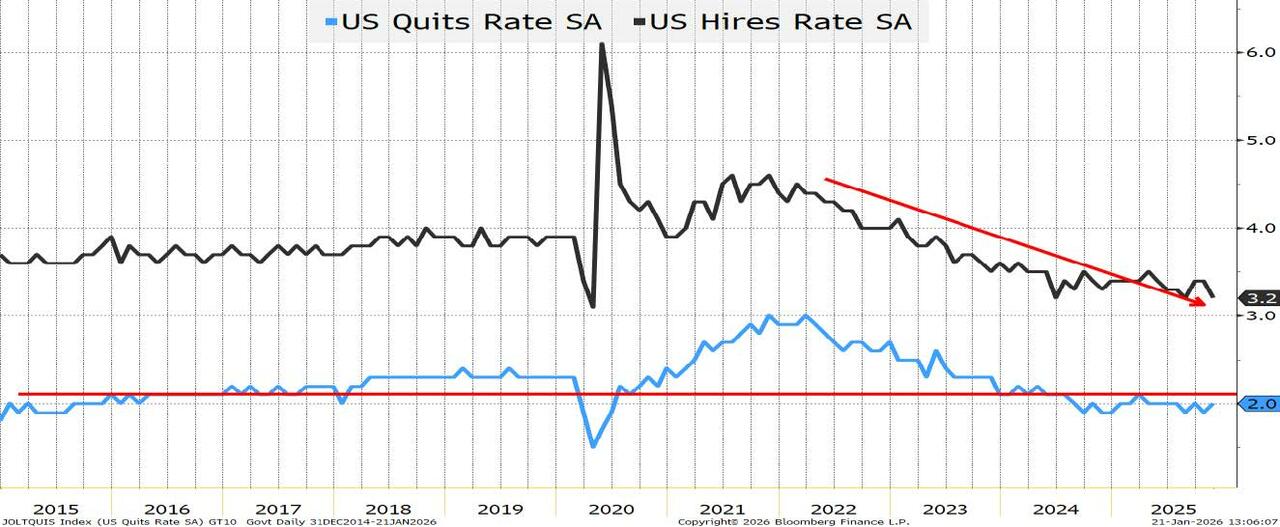
The QUITS rate in the JOLTS data remains weak. It has improved a smidge and has been affected by the government shutdown (in terms of preparation of the data), but is still below the average of the past decade. This just tells me that people with the sorts of jobs that can say “take this job and shove it” aren’t saying that. They are keeping their head down and keeping their job because they know how difficult it is to find another job.

While I think the jobs data warrants attention and gives the Fed the ammunition they need to at least look for cuts, I think they are stuck in some mythical world of higher inflation.

Again, many of these committee members were in camp “transitory” which turned out not to be transitory. Many of the people on this Fed were still doing QE when they were already talking about hiking rates. QE does not need to be well telegraphed. For the life of me, I cannot understand why we would be doing QE when hikes are on the table.

Finally, for those who manage risk, you often have “stop losses” because when something goes wrong on a view, it is difficult to change your mind. You don’t necessarily think well. So, stop losses force change. Corporations tend to see “heads roll” if a major strategic blunder occurs. I still do not think anyone from “team transitory” lost their job.

So, we are stuck, I believe, with a Fed that is fighting their own past mistakes. They are too worried about being wrong to act.

Why does OER still exist?

Had the Fed just looked at Zillow Rent, we would have cut off QE much sooner and probably started hiking sooner. Maybe, with the shutdown, and being forced to look at alternative data, the Fed will be more wholistic in their choice of data to be dependent on? OER is fraught with issues. (Only a portion of the market is evaluated each month, and the premise that most rentals are single family homes, is now ludicrous). Even the Cleveland Fed has developed a real-time rent estimate. Why not rely more heavily on that? Housing in CPI is currently overstated and will certainly come down in the next few quarters (just math). So cut now, rather than waiting for this particularly bad data set to conform to reality.

Maybe Truflation is on to something?

Truflation only attempts to capture part of the inflation story. But wow, it is telling a very different story than core PCE (the Fed’s preferred measure). I wouldn’t pay attention, except Truflation showed more inflation, sooner than CPI did back during time “transitory.” Again, had the Fed given this data set some serious consideration, we would have stopped QE earlier and hiked sooner.

The Fed should cut, but they won’t.

Electricity Inflation

If you want to get a room with a hundred or more people engaged and focused on one topic, this is the chart to use (as I learned in Baltimore on Friday).

It has slowed of late (kind of, I guess), but is and will be one of the biggest issues politicians face in coming elections. Enough on that for now, but that is why our ProSec™ theme focuses on power generation, from solar, to coal, to gas, to fission, to fusion (I don’t see wind getting traction under this admin).

Does the EU Need Change?

The German Chancellor said that the EU was the “world champion of overregulation.” If you haven’t seen the Venn diagrams of who leads what between China, the U.S., and the EU, they are funny. There is overlap between the U.S. and China while the EU stands alone on “regulation.”

Hungary blocked the EU from sending a “joint statement” to the U.S. in response to Greenland. Sure, sticks and stones may break my bones, but joint statements will never hurt me, so it was likely to be an ineffective tactic to begin with. But sometimes ineffective is better than nothing. Hungary, at $220 billon of GDP, got to determine EU policy? I get inclusion, but this is going to be difficult if the “weakest” link has control, thereby elevating it to the “strongest” link.

You know that I felt Europe had “one job” in regards to Russia. Their job was to seize the frozen assets and come to the U.S. with “oodles” of money to spend on weapons for Ukraine (with no need to fund the purchases, etc.) Belgium said no. Maybe Hungary and Slovakia did too (can’t tell from AI or from memory).

Not saying that “might is right,” but if Germany and France and others are aligned, doesn’t that mean something?

No idea how Europe will react to so much of what is going on, though I think Europe is going to adopt ProSec™ far sooner than I had expected.

ProSec For Housing Affordability

We could do a whole section on housing affordability and we will. But today it is too cold and the report is already getting too long (though I somehow find myself in Palm Beach this weekend, so guess I should stop writing about the cold). So far, the evidence is largely anecdotal, but I’ve had several really encouraging discussion on this subject.

Production for Security has the potential to create jobs in areas that currently are not overly crowded and very expensive.

Some areas have a high cost of land. That makes it difficult to create affordable housing. While construction costs (especially the materials) don’t vary as much region to region, they do vary (especially labor).

If we can create pockets of new jobs in new areas, it could reduce the average cost of home prices in the U.S. without causing existing home prices to drop much.

That is the key – building new homes in areas that are less expensive to build in makes the average go down, without hurting existing home prices too much (there will be some drag as people move out of some expensive areas).

Just starting to explore this idea, but look at the housing boom that occurred in conjunction with the shale boom. 1Could we be at the early stages of a self-correcting housing affordability solution? New jobs in new areas?

Something to ponder (in a positive way).

ProSec Is Going Global After Davos

During the President’s speech/lecture/admonishment/address/whatever you want to call it, he did specifically say something to the effect of:

  • The earths and minerals are NOT rare, it is the processed earths and minerals that are rare.
  • This is the point we have been trying to make, and it seems like it is finally being addressed properly. The real bottleneck is in the processed and refined versions. See last weekend’s Production, Security, and Resilience for more on that.

For what it is worth, I think there is more to the Greenland and Venezuela story on rare earths and critical minerals. I think the “surprise” will be not just extracting more from these two countries, but also processing and refining more there. It fits the theme of keeping production of “things” we need in the Western Hemisphere where the U.S. has a renewed focus.

Bottom Line

Stay warm. The Fed won’t cut, but they should

January has been a long month already, only 11 more months to go until 2027.

Tyler Durden Sun, 01/25/2026 - 17:30
https://ift.tt/mTyltYo
from ZeroHedge News https://ift.tt/mTyltYo
via IFTTT

Maybe Truflation Is On To Something SocialTwist Tell-a-Friend