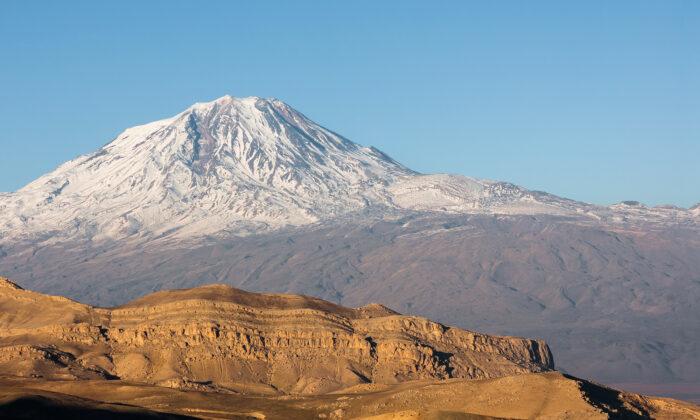
The search for one of the most legendary boats of human history has made a potential breakthrough as multiple teams of scientists have zeroed in on a curious ship-shaped rise on Mt. Ararat in Turkey. The story of Noah’s Ark and the great flood that covered the earth, echoed in the Sumerian Epic of Gilgamesh, has long fascinated archaeologists who have wondered if remnants of the boat are still to be found.
Satellite images, radiocarbon dating, and most recently, 3D scans of the site known as Durupınar have all given hope to researchers that solid evidence of the Ark may soon be found. “It’s a man-made object and it’s a ship form,” computer engineer and biblical researcher Andrew Jones told WZTV,
As per the description of Genesis 8:4, “And the ark rested in the seventh month, on the seventeenth day of the month, upon the mountains of Ararat,” researchers have investigated the site, which lies around 2,000 meters (6,560 feet) above sea level and was first identified by a Turkish cartographer in 1959.
The location of the real Noah's Ark may have been confirmed by relic-hunters in a remote mountain range in eastern Turkey, with experts claiming images "show the entire ship buried underground."
The Durupınar formation is about 18 miles (29 kilometers) south of the summit of Mt. Ararat, which reaches up to 16,854 feet. After its discovery was announced in 1959, it generated enthusiasm among ark seekers around the world, including Tennessee biblical researcher Ron Wyatt. Today, the site is labeled Nuhun Gemisi (Noah’s Ship) by mapmakers and continues to generate interest.
“We’re not going to find a sign that says, ‘made by Noah and sons,’ but what other ship would it be on the side of a hill at 6,500-foot elevation in the mountains of Ararat?” Andrew Jones told WZTV. In the Bible, God tells Noah very specifically how to build the Ark and these details have aided researchers in their quest.
Genesis 6:15 states, “This is how you are to build it: The ark is to be three hundred cubits long, fifty cubits wide and thirty cubits high.” These dimensions, as per the best guesses archaeologists have made about the length of a “cubit,” would yield a ship that was 540 feet long, 37.5 feet high, and 75 feet wide.
This size corresponds to the strange, seemingly buried object found in the rise at Durupınar, according to ark hunters. While in previous attempts to find evidence they produced wooden samples from the site that were dated to 4,800 years old with radiocarbon dating, they are now trying to produce an image of what’s buried inside the mound.
Using a technique called “electrical resistivity,” Jones and others on his team have been trying to produce a quality 3-D image to counter skeptics.
“If you shoot an electrical current below the ground and it hits a pocket of air, that has a different type of conductivity versus something like water or rock,” Jones explains. “So, the software can interpret the signals coming back and create a 3-D image.”
Besides the dimensions, which appear to correspond to the ark specifications, Jones claims to have seen other details that match the design. As Genesis 6:16 says, “Make a roof for it, leaving below the roof an opening one cubit high all around. Put a door in the side of the ark and make lower, middle and upper decks.
Jones claims that images have shown just this. They have seen “[a] perfectly preserved hull below the ground. Petrified, solid, hull of a ship and three different layers, just like The Bible says.” The next step would be to get authorization from Turkish authorities to start excavations.
Besides the evidence of the Ark itself, researchers seeking to prove that Noah’s story has basis in archaeological evidence have also looked at the flood itself. A group of researchers led by British archaeologist Chris Turney found solid evidence for a flood that covered the land between the Black Sea and the Mediterranean over 8,300 years ago.
“We looked at all the earliest data on farming in Europe and we found a little bit of farming in Greece and the Balkans just before the flood,” Turney explained to Reuters.
“When the flood happened, farming seemed to stop but it was re-established a generation later across Europe.”
The findings seem to indicate a large number of people displaced from their homes by the waters.
For those that lived in this part of the Fertile Crescent, “it would have seemed like the whole world had flooded,” Turney said.
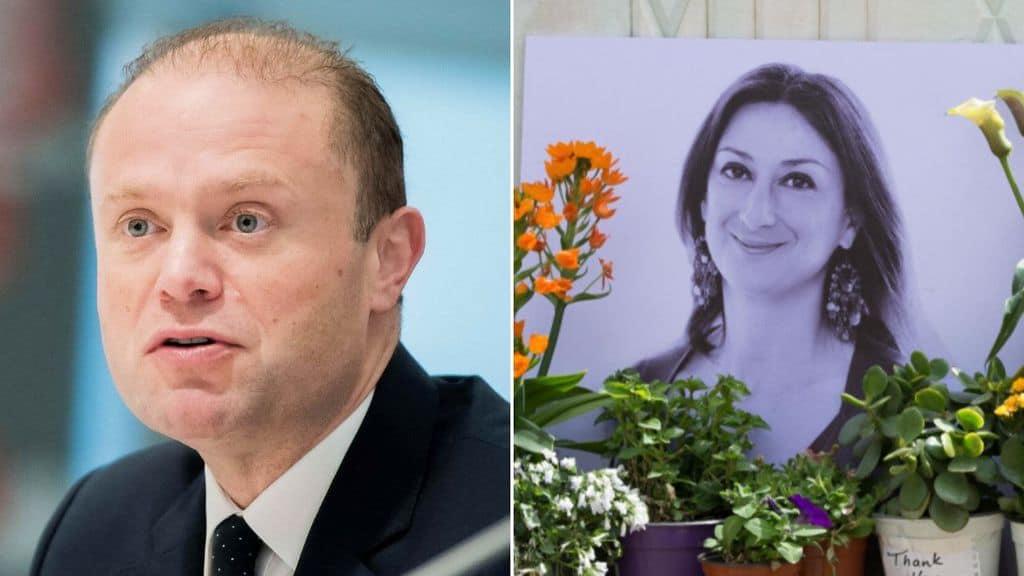
Malta PM To Step Down Related To Car Bombing Of Journalist Dubbed "One-Woman WikiLeaks"
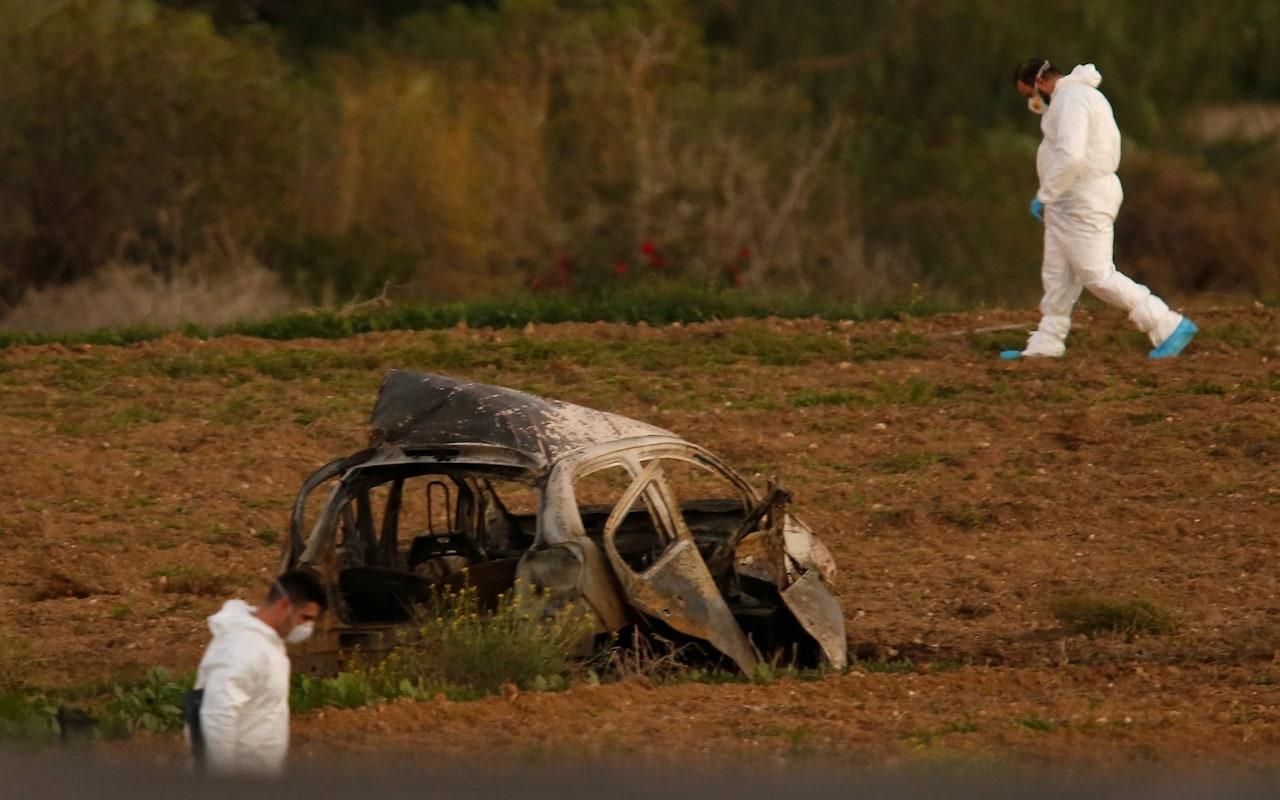
She had been mysteriously assassinated on Oct. 16, 2017 via car bomb in Malta's most high profile crime in recent history. The 53-year old mother of three who led the Panama papers revelations and whose blog posts regularly had more readers than the combined circulation of the country’s newspapers, Daphne Caruana Galizia, had been commonly described as a “one-woman WikiLeaks” for being“a thorn in the side of both the establishment and underworld figures” in the EU's smallest member state.
And now her case and prior prolific reporting has brought down Malta's prime minister and top officials within his cabinet, as the AFP reports "Joseph Muscat will step down on January 18, party sources told AFP Saturday, following mounting criticism of his response to the murder of journalist Daphne Caruana Galizia."
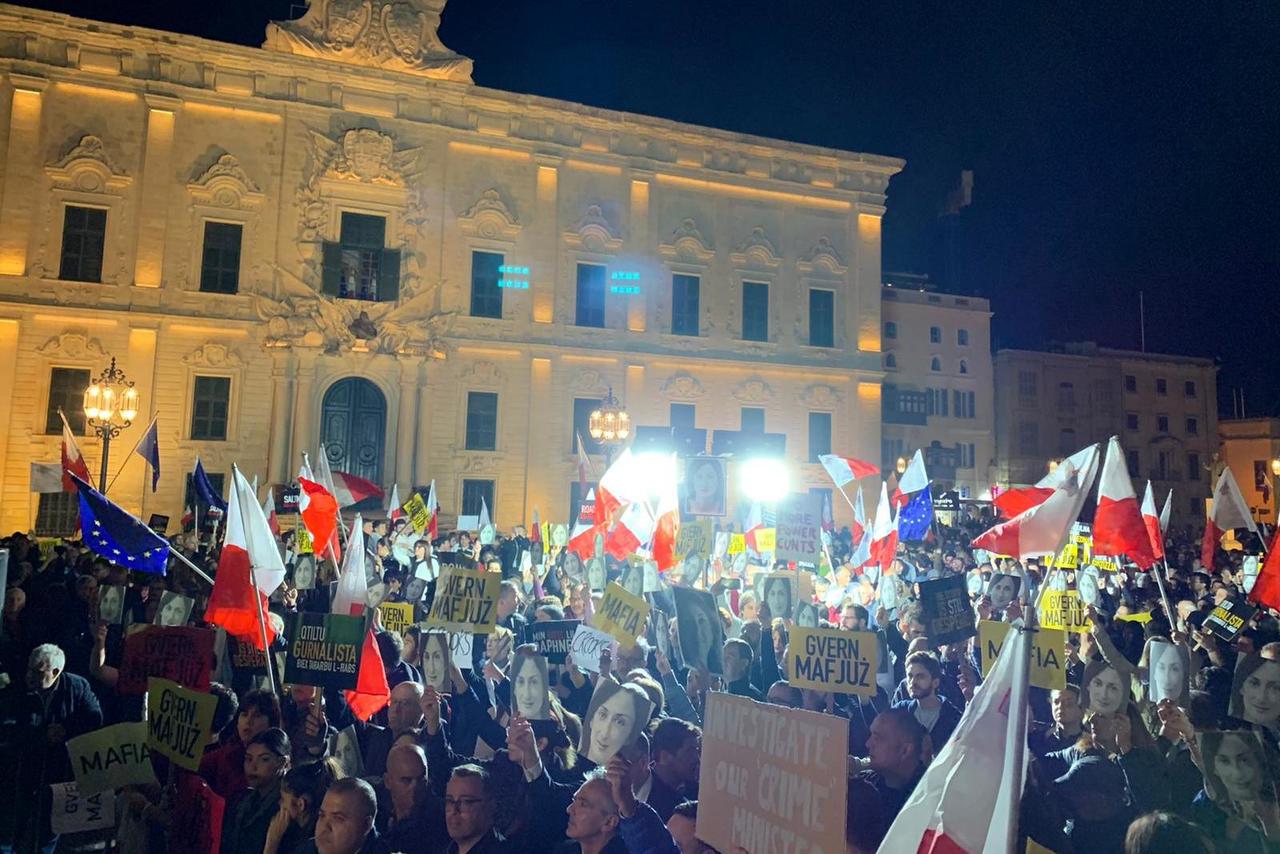
The slain journalist's family had accused Muscat of playing "judge, jury, and executioner in an assassination investigation that so far implicates three of his closest colleagues." Recent protests have rocked the small island Mediterranean nation and kept the case in international headlines as authorities have made progress in unraveling the murder, in a shocking Hollywood-scenario crime that increasingly points straight to the prime minister's inner circle and business connections.
She made many powerful enemies and was subject of death threats over the years, also after she directly accused Prime Minister Muscat himself of corruption, when she revealed a string of secret Panama-based companies tied to Maltese politicians that served as fronts for various illegal schemes on her blog, Running Commentary, which had been frequently featured and amplified by WikiLeaks.
The circumstances of her death immediately invoked popular anger at top Maltese officials accused of being complicit given that personal police protection had been suspiciously pulled just before her death. As CNN describes:
Caruana Galizia died on October 16, 2017, when her rented Peugeot 108 was detonated by a remote control device on a country lane near her home in Bidnija, Malta. Her son Matthew Caruana Galizia, told CNN that she was driving a rental car at the time, out of fear that someone might target her car in an attempt to kill her.
Saturday's announcement that Muscat will step down follows his chief of staff, Keith Schembri, along with two top ministers resigning their posts amid accusations they were involved in the killing.
Schembri was arrested Tuesday but subsequently released Thursday after another alleged conspirator in Caruana Galizia's assassination, energy and tourism tycoon Yorgen Fenech, identified the chief of staff as the mastermind behind the killing, per the AFP:
Fenech has identified Schembri as the mastermind behind Caruana Galizia's 2017 car bomb killing, according to sources.
Schembri was arrested on Tuesday, but his release on Thursday sparked accusations of a cover-up.
Muscat, who has vowed to resign if links were found between himself and the murder, said Friday he would remain in power, telling reporters he wanted "this case to be closed under my watch".
Part of the 'cover-up' accusations center on the prime minister's refusal to give Fenech immunity in return for his testimony, who's thought to have crucial information that would expose all involved.
The victim's family believes Muscat's long-time chief of staff is being protected from such potentially damning testimony, also in a bid to save Muscat himself from incrimination.
Muscat came to power in 2013 after securing the biggest majority in 60 years and pressure for him to step down has been intense over the past week, but even with the latest announcement of his planned departure, whether it will ultimately happen is anything but certain.
Last week I went through just some of the highlights as to why Russia is becoming a destination for global capital.
For years it’s been a little lonely out here banging on about how well the Russian state headed by Vladimir Putin has navigated an immense campaign by the West to marginalize and/or isolate Russia from the world economy.
But that is changing rapidly. And 2020 will likely be the year the New Cold War begins to end. And it starts with Europe. In recent weeks there have been a number of moves made on both sides to end the economic isolation of Russia by Europe.
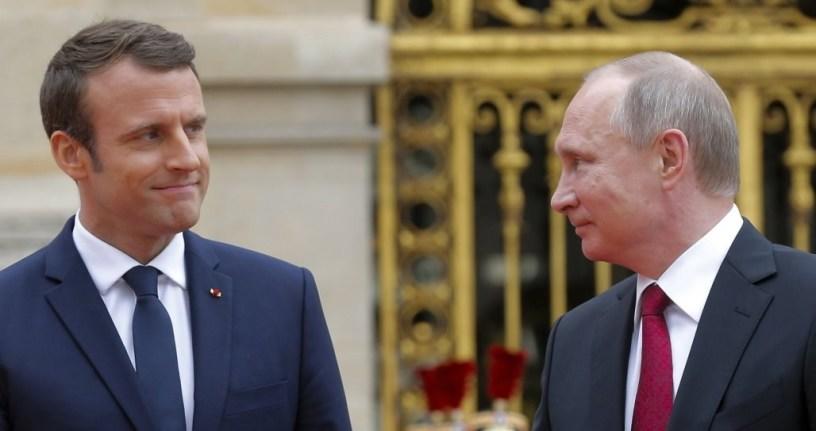
As always, however, it begins politically. French President Emmanuel Macron speaking at a press conference before 70th Anniversary NATO Summit in London no less, made it clear that he no longer wants the EU positioning itself as an adversary of Russia or China.
Standing next to NATO Secretary General Jens Stoltenberg Macron put a further down payment that he is looking to replace German Chancellor Angela Merkel as the person setting the tone for European Foreign Policy.
“NATO is a collective defense organization, but against what or against who? Who is our common enemy? We need to clarify that. And it is a very strategic question,” he told reporters at a press conference in Paris on Nov. 28.
“Sometimes I hear some saying that it is Russia or China, our enemy. Is it the purpose of the Atlantic Alliance to identify one or the other as our enemies? I don’t think so. Our joint enemy, clearly within the Alliance, is terrorism that’s struck our countries.”
Macron said that NATO needs “a common definition of terrorism, of who the terrorist groups are and how to act in coordination against them.” He said that “the absence of dialogue with Russia” did not make the European continent safer and that he wants to “clarify our relationship with Russia.”
“We want a lucid, robust, and demanding dialogue with Russia, with neither naivety nor complacency,” he said.
The big shift here is Macron signaling out that NATO needs to shift its focus away from Russia and China and focus on threat of terrorism. There are at least two reasons for him doing this.
First, this aligns Macron with Putin on where the focus of security concerns should be. Putin has been banging this drum for years, certainly since his game-changing speech at the 2015 U.N. General Assembly two days before he sent Russian troops into Syria.
These words more than the others are music to Putin’s ears and a complete needle-scratch for the foreign policy orthodoxy on K Street and in Vauxhall. As they have been the architects of this new Cold War with Russia which has altered the landscape of EU economic progress for the past five years.
At some point the ‘frozen conflicts’ that Macron mentions in his remarks have to thaw because, as he rightly points out, it has been Europe that has been made less safe by U.S. foreign policy imperatives — ending the INF Treaty, freezing all diplomacy with Russia, etc.
So, Macron is prepping the table for his upcoming Normandy format talks with Germany, Russia and Ukraine on how to end the conflict in Ukraine.
Reality has seen in that Crimea is now off the table for NATO and so are the eastern breakaway provinces of the Donbass. I’ve maintained for years that Russia was always playing the game of attrition in Ukraine, winning by waiting for the EU and Ukrainians to tire of the war and eventually sue for peace.
Moreover, the economic defense of Russia that Putin mounted supported this policy. By doing the unthinkable in 2014, floating the ruble and allowing it to fall, he laid the foundation for today’s victory.
Make no mistake, this speech by Macron is a victory for Russia and, by extension, the world. Because Macron, Merkel and Putin have all the tools in their grasp to now push Ukrainian President Volodymyr Zelensky to fully implement Ukraine’s responsibilities under the Minsk agreements.
This would never happen under former President Petro Poroshenko, who is a long-standing U.S. asset and who openly bankrupted Ukraine during his tenure even more than his predecessor Viktor Yanukovich, no mean feat that.
Secondly, Macron’s comments underscore his desire to raise a transnational EU army and his comments are a direct statement that he wants the two security infrastructures to have separate mandates. It’s clear Macron doesn’t want Europe’s security to depend on the U.S. any longer.
And I’m sure that this idea gets a sympathetic ear from President Trump. The problem, of course, is that that idea isn’t popular with anyone else in the U.S. Deep State. Hence the push to create a chimeric impeachment process to remove him from power, or, at least, neuter him completely.
On the latter point they’ve nearly succeeded.
To Macron, NATO should deal with terrorism, downgrading its importance and paving the way for ending it in the future, while the EU army is under the control of the European Commission, which to a globalist like Macron is the epitome of ‘sovereignty.’
Macron, with these remarks as a prologue of what he will argue for at the NATO Summit, is telling the world Europe is done paying the price for the U.S.’s Cold War with Russia.
He’s also letting everyone know that 2020 will see the end of the sanctions in exchange for ending the conflict in Ukraine and re-opening the floodgates of European investment into Russia.
This puts paid everything I talked about in last week’s blog and which was also picked up by Alexander Mercouris at The Duran who is one of the very few analysts who understood Russia’s strategy and what the end-game would look like.
This is welcome news in Germany who absolutely want the sanctions lifted which will put Merkel under even more pressure to lift them. Putin has already made the moves necessary for Merkel to save face here — offering a new gas transit contract for Ukraine, handing back the ships seized in the Kerch Strait incident, prisoner exchange, etc.
A lot will ride on Putin’s upcoming meeting with Zelensky. There is so much coming together for the first half of December that by year-end we could be staring a very different geopolitical landscape in Europe.
* * *
Join my Patreon if you want unvarnished analysis of European Politics. Install the Brave Browser if you want to continue speaking freely about it outside of Google’s prying eyes.
Sunday marks World AIDS Day, which aims to promote awareness of the disease and mourn those who have died from it. The event came into existence in 1988 and it has been widely observed by health officials, governments and non-governmental organizations since then.
The good news is that the number of deaths from the HIV/AIDS pandemic has fallen. In 2018, there were 770,000 AIDS-related deaths, down from 1.7 million in 2005.
According to new data from the European Centre for Disease Prevention and Control and World Health Organization, there were 71 new HIV diagnoses per 100,000 people in Russia last year. Ukraine came a distant second with 37 while third-placed Belarus had 26. The lowest rates of new diagnoses per 100,000 people were recorded in Bosnia and Herzegovina (0.3), Slovakia (1.3) and Slovenia (1.9).
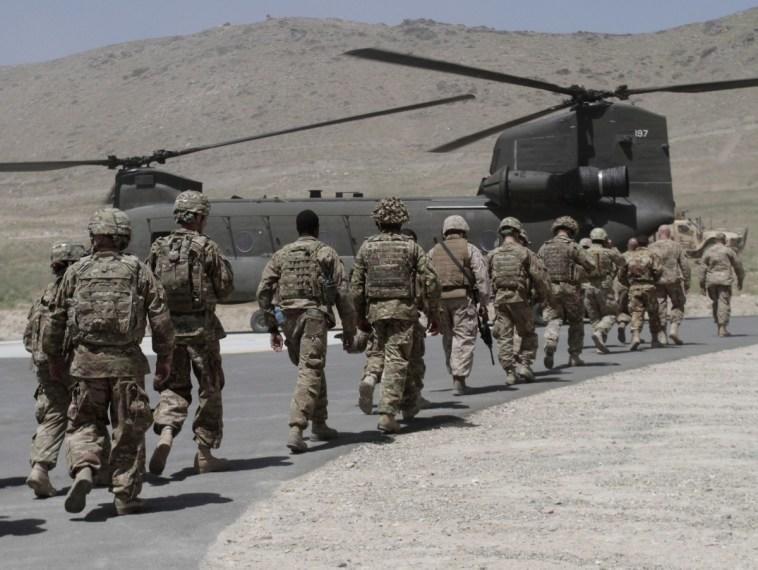
The US and NATO operate the largest military infrastructure in Africa with thirty-four bases (some secret) and thirty new US military or NATO construction projects underway in Africa spanning four countries...
The Warsaw Pact may no longer exist, but by contrast the North Atlantic Treaty Organization is expanding its perceived role – the enforcement of western interest – especially in resource-rich Africa.
NATO’s expansion in Africa is intended to assert western corporate influence, where Macron’s France apparently wishes to usurp Germany as the major influential European power.
But corporate interest is not the only driver for NATO’s war in Africa since the Russian Federation has significant ambitions there too. Russian non-governmental private military contractors or ‘Chastnaya Voennaya Kompaniya’ include:
The list above may seem impressive but does not compare with the list of western private military contractors operating in the Middle East and Afghanistan, which have existed far longer, are larger and better funded, and in many instances directly employed by the states they serve — including and especially the United States. By contrast, these Russian contractors operate on a small scale, are flexible, and employ a wide range of nationalities and skills.
Russian Chastnaya Voennaya Kompaniya (Private Military Contractors, or PMC) are correctly called ‘mercenaries’ because they may not, by law, act on behalf of the Russian Federation’s government. It is clear too that these PMC groups are mainly employed by corporate interests where those corporate interests may conflict with Western corporate interests.
Regardless, the Neoliberal Clinton-backed magazine Foreign Policy has already pronounced the demise of PMC Wagner and related Russian military contractor groups in Hauer’s hit piece The Rise and Fall of a Russian Mercenary Army.
Foreign Policy’s article appeared on October 6th, 2019, precisely the same day that Mozambique announced Exxon’s success in obtaining a liquid natural gas contract in Cabo Del Gado province worth $30Bn USD. No doubt Foreign Policy’s inspiration to publish Hauer’s troubled view of private Russian military contractors was based on the outcome of Exxon’s battle with Russian gas giant Gazprom for the contract.
And trouble it is. Mozambique nearly crushed mining giant Rio Tinto with its Riversdale coal scandal when Mozambique refused to allow coal transport down the Zambezi. And Rio Tinto is not the only corporate giant to come to grief in Mozambique. Mozambique has a major IMF debt problem too with widespread poverty and insurrection in parts of the country, where one of the most troubled regions is Cabo del Gado — source of Mozambique’s liquified natural gas.
Back when Gazprom was still barely in the running for the Cabo del Gado liquid natural gas contract, Mozambique’s government decided that drug-fueled takfiri terrorists roaming the province needed to go, and opted for the lowest-bid security contractor to clean up there.
The Mozambique security service bid resulted in the hire of PMC Wagner which quickly found their police action mired in exceedingly difficult terrain, opposed by anarcho-psychotics far more dangerous and characteristic of drug-crazed homicidal maniacs than of ISIL Jihadi terrorists.
Then by November of this year Wagner’s Cabo del Gado contract turned to tragedy when the Moscow Times reported the death of seven Russian mercenaries there. According to one source PMC Wagner is no longer operating in the province.
Russian Chastnaya Voennaya Kompaniya contractors have been active in the Central African Republic (CAR) as well, alleged to be protecting diamond mines there while negotiating with rebels in control of the Ndassima gold fields.
Three Russian filmmakers were tragically killed near there while investigating Wagner’s activities in the CAR at the time, provoking a western conspiracy theory that the reporters were killed based on their investigatory work. The truth however is far more mundane, that the reporters crossed a bridge too far in rebel territory without adequate armed protection.
One further but unconfirmed report claims that a Russian PMC contractor is missing in action in Somalia while two hundred PMC contractors have recently arrived in Libya. Meanwhile more than 1,100 Wagner Group contractors are operating in both Cyrenaica and Tripolitania. That is pursuant to Wagner and related PMC groups expanding in Libya, Cameroon, Uganda, Angola, and the Sahel… all to the great consternation of the US military of course.
Whether or not the above reports are exaggerated is irrelevant. The overall picture is certain to be misunderstood in the west. Russia’s intent in Africa – whatever it may be – is certainly as misunderstood now as it was leading up to the Suez crisis of 1956. That crisis led to a dangerous and pre-emptive invasion and occupation of Nasser’s Egypt hatched in a crackpot conspiracy involving Israel, France, and Britain.
The potential parallel to Suez in 1956 re NATO versus Russia in Africa today is not altogether preposterous. Because there is another side to the coin in what appears to be a nascent Russian Federation attempt at taming Africa for its own — and perhaps China’s! — corporate interests, being the toxic effect of AFRICOM/ NATO and its abject mismanagement of resources and subversion of the African right to progressive state self-determination.
That’s because the United States and NATO operate the largest military infrastructure in Africa with thirty-four bases (some secret) and thirty new US military or NATO construction projects underway in Africa spanning four countries.
The US military has more sites in Niger – five, including Niamey, Ouallam, Arlit, Maradi, and a secret base in Dirkou – than all other countries combined in Western Africa.
Chebelley drone base in Djibouti is the largest drone base in the world where the US can strike any target in the Sahel or for that matter Iran. And AFRICOM is building a larger base, Niger Air Base 201 in Agadez, capable of striking Algeria or any location in the Sahel region while the US operates a secret drone base in Tunisia (Sidi Ahmed) now opposed by president Qays Sayed (Kais Saied).
There are five more bases in Somalia including secret bases supporting AFRICOM’s ‘Lightning Brigade’ also known as the Danab Advanced Infantry Brigade. Now guess who is training the Danab? Private US military contractors of course, Bancroft Global Development.
Kenya sports four more US military bases including Manda Bay and Mombasa, where the Manda bay base has consistently launched US drone strikes against Somalia, Yemen, and Iraq. There are three more secret US/NATO base locations located along the Libyan coast to carry out drone strikes as far-ranging as Pakistan.
Then there is Camp Lemonnier in Djibouti where approximately 4,000 US and NATO personnel are stationed. Camp Lemonnier is claimed to be the ‘only permanent US base in Africa’ – perhaps because so many new US/NATO bases are under construction while many of the rest are secret or simply addressed by some arcane acronym known only to the military.
Cameroon, Mali, and Chad also host what the US military calls ‘contingency locations’ no doubt leveraged by NATO in its rather lame attempt to control the Sahel. They include Garoua drone base, Douala, and Salak … bases which train private military contractors and track US drone strikes versus the immortal and indestructible Boko Haram terrorists, of course.
Another secret US base in Chad is the historic site of Faya Largeau. The present operational status of Faya Largeau is of course officially unknown. Gabon’s Libreville location exists to allow US military or NATO quick access for a rapid influx of US forces analogous to the base in Dakar, Senegal, which serves the same strategic purpose.
The list of NATO and US bases in Africa (whether secret or not) might continue on, however hopefully the point has been made that the mighty US/NATO presence in Africa extends far beyond the imagination of even the most devoted follower of military affairs.
That such a behemoth of an operation as represented by the US/NATO military presence in Africa could be seriously undermined by an influx of a small number of lightly armed and under-resourced Russian military contractors is not only laughable, but patently absurd.
To the contrary, what every citizen of the world should truly be concerned about is the bloated, dangerous, deadly, expensive, and destructive influence of NATO and the US military and its Surveillance State in Africa. That’s because the US military is essentially fighting itself – like Shiva the destroyer – the creator of terror.
Algeria, now a progressive forward-looking democracy with a presidential election eminent coming December 12th, 2019, is certainly aware of that. Algeria has deep understanding of western Neo-colonialism and its rule, and has avoided the western-inspired morass of IMF debt.
Algeria presently exports more oil to the rest of the world than Iran. Algeria has a stable economy and low inflation compared to other African nation, and potentially faces a bright future devoid of western meddling. Hence Algeria’s concern that it is surrounded on all sides by the tools of the US hegemon and its interventionism.
In a sense, Algeria provides an example to the rest of Northern Africa where Algeria is pursuing its right to self-determination. Most other nations in Africa cannot because they have already been subverted by the wars-for-resources and profit so favoured by corporate Washington.
The counter to this is of course Russia regardless of how feeble its efforts may seem, and how misunderstood Russia’s goals in Africa may be. But the Russian counter to US/NATO destruction and corruption in Africa may not be as straightforward as the reader imagines.
That’s because our source informs us that Russia is paving the way for China in Africa – a supposition that makes perfect sense. China is not now and has never been a Neo-colonial power. China is only too aware of the destruction wrought by loss of the people’s right to self-determination when China itself was colonized by western interests.
That Russia and China should cooperate in Africa is just as inevitable as Washington’s inability to maintain its self-bloated and expanding militarist behemoth in Africa in perpetuity.
This is the realization to be proved by time and by Washington’s continuing failure to comprehend the grievous and tragic mistakes of its hegemonic past – mistakes that the US is now only building on, exemplified only in part by the rabid anti-Russia hysteria now consuming it. And for the future of Africa… we can only hope.