| 0 comments ]

What Are Americans Most Worried About?

Statista’s Consumer Insights survey has been tracking which issues adults in the United States consider to be the most important in the country right now, and how they have shifted over time.

The following chart, via Statista's Anna Fleck, provides just a snapshot of these, listing the eight most cited concerns out of a possible 20 options, in the most recent survey wave as well as in the survey wave at the start of the pandemic.

Infographic: What the U.S. Is Most Worried About | Statista

You will find more infographics at Statista

Where health and social security came first in the earlier iteration, likely in reference to Covid-19, it had dropped by eight percentage points by 2025/26.

In the meantime, inflation and the cost of living has risen from third position to first position (+9 p.p).

Other notable changes include a drop in the share of people citing immigration in the latest wave and an increase in the share of people picking housing (previously in rank 14 at 22 percent).

Six of the eight most recent most pressing issues are social, with the sole environmental topic of climate change having dropped off the list, coming in 14th position with 23 percent of respondents picking it, following issues such as education (rank nine), corruption (rank 10) and food and water security (rank 11).

As this chart shows, poverty is now on the minds of more U.S. adults, at least more imminently, than before.

Where it had previously tied in 9th position with education in 2019/20 with a 32 percent share of respondents picking it as one the most important issues facing the country at that time, the share had risen to 33 percent in the latest survey wave.

Tyler Durden Sun, 05/31/2026 - 16:55
https://ift.tt/4NSkVUF
from ZeroHedge News https://ift.tt/4NSkVUF
via IFTTT

What Are Americans Most Worried About? SocialTwist Tell-a-Friend
| 0 comments ]

Trump Toughens Terms Of Iran Deal Framework, As Bessent Pinpoints Tehran's 'Big Mistake'

Summary

  • NYT on Sunday: President Trump has toughened the terms of a potential framework for a deal to end the war in Iran.
  • Washington seeks to ratchet pressure, but Tehran still not budging on issue of remaining nuclear material.
  • Bessent describes the "big mistake" Iran made to Fox - attacking its neighbors & losing friends; also says of the Iranians "they're going to have to start taking down the wells."
  • Israeli PM Netanyahu says he has "instructed the Israeli military to expand the maneuver in Lebanon" after the occupation of the strategic Beaufort Castle, which he says marks "a dramatic change" in Israel’s operations.
US x Iran permanent peace deal by June 30, 2026?
Yes 30% · No 70%
View full market & trade on Polymarket

*  *  *

Trump Toughens the Terms of Potential Deal

Fresh Sunday reporting in the NY Times says President Trump has responded to Iran's refusal to budge on giving up its nuclear material by tightening US conditions as part of a Memorandum of Understanding to get back to the peace negotiating table.

"President Donald Trump has toughened the terms of a potential framework for a deal to end the war in Iran, and has sent those proposed changes back to Iran for consideration, according to three officials," NY Times writes, but didn't disclose what the precise changes are.

The report then speculates on where these changes likely focus: "Trump has been concerned about parts of the potential deal that would include unfreezing funds for the Iranians, two officials said."

Citing frustration at the slow pace of Iran's response to the proposals, it adds, "He has been harshly critical of President Barack Obama for doing the same in the more than decade-old agreement that was signed to curtail Iran’s nuclear program."

Tightening the proposals is meant to ratchet up the pressure and 'force' the Islamic Republic to respond quicker and agree to a deal. However, the Iranians have time and again rejected being 'dictated to' by Washington, as its top negotiator Ghalibaf spelled out days ago.

Meanwhile there's been a recent change in tone when talking about Iran's military, from Trump himself:

Iran Still Not Budging on Nuclear File

This also comes after a two-hour Friday Situation Room meeting Friday wherein it became clear there was no deal yet to be finalized. According to more from the Times:

The official added that Trump’s changes — a new, tougher proposal — were potentially intended to speed up the process by putting pressure on Iran to accept the framework already sent to Iran’s supreme leader, Mojtaba Khamenei, for approval.

Reaching the supreme leader has been difficult, so any changes to the document, known as the memorandum of understanding, could mean additional delays.

But for pressure to work, there has to be signs Iranian leaders are getting nervous or desperate - and so far they've not urged Washington or Pakistani mediators for some kind of grand compromise. Instead they've repeatedly sworn that Iran's highly enriched uranium will never be transferred to the possession of the United States.

Iran Decries Constant False 'Speculation'

The Sunday latest from Iran's Foreign Ministry:

Iran’s Foreign Minister, Abbas Araghchi, says “dialogue and an exchange of messages are ongoing” with the United States amid stalled negotiations.

He told Iranian news agency IRNA that “it is not possible to judge until a clear conclusion is reached; everything that is being said now is speculation and should not be taken seriously until it is certain”.

Bessent: Iran's 'Big Mistake'

Still, US Treasury Secretary Scott Bessent is busy on the Sunday news shows talking tough. He told Fox in a new interview that Iran made a "big mistake" by attacking its neighbors in the Persian Gulf, within the past week. A US base in Kuwait was also reportedly just attacked by a ballistic missile, which was reportedly intercepted - but falling debris injured five US personnel.

"We had many very good allies who maybe weren't completely transparent with us on the money — Iranian money that was in their banking systems — all of a sudden became very compliant in terms of being willing to turn over accounts or help us freeze block accounts," Bessent told Fox News.

"And then the third part was the incredible blockade. I really think it's the economic blockade of funds and the physical blockade of the ships not going in or out of the Iranian ports," he added. "Kharg Island is shut down. That's their big oil loading facilities, and that means that they're going to have to start taking down the wells," Bessent said. And yet, there's nothing officially disclosed to show this is actually happening - though the Iranians have no incentive to publicize it. But time will tell.

IDF Plunges Deep into Lebanon, Captures Crusader Castle

Some Lebanon war latest, via Al Jazeera, as ceasefire unravels:

  • Israeli Prime Minister Benjamin Netanyahu says he has “instructed the Israeli military to expand the maneuver in Lebanon” after the occupation of the strategic Beaufort Castle, which he says marks “a dramatic change” in Israel’s operations.
  • The Israeli military claims to have killed 900 Hezbollah “terrorists” since the start of the “ceasefire” on April 16. It added that the army had struck dozens of Hezbollah sites since this morning.

  • Lebanese Prime Minister Nawaf Salam has accused Israel of pursuing a “scorched-earth policy” as Israeli forces expand their ground invasion.
Tyler Durden Sun, 05/31/2026 - 15:10
https://ift.tt/oaftcvz
from ZeroHedge News https://ift.tt/oaftcvz
via IFTTT

Trump Toughens Terms Of Iran Deal Framework, As Bessent Pinpoints Tehran's 'Big Mistake' SocialTwist Tell-a-Friend
| 0 comments ]

Caught On Tape: Washington Nationals Official Admits To Discriminating Against Religious Player

Authored by Bryan Hyde via American Greatness,

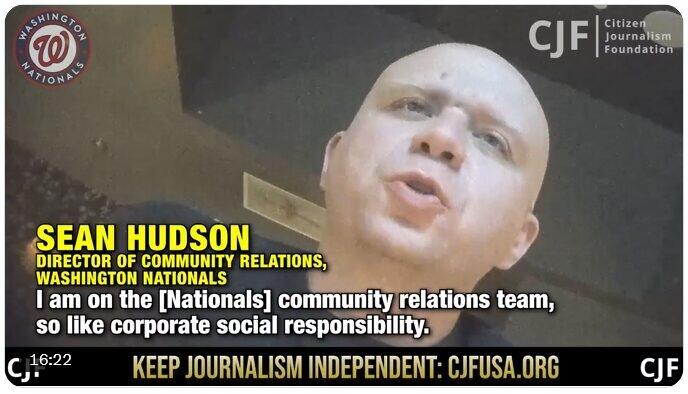
Washington Nationals Director of Community Relations Sean Hudson has been caught on camera admitting that he discriminates against starting pitcher Trevor Williams because of his Catholic faith.

The Daily Caller reports that O’Keefe Media Group has released a new undercover report where Hudson admits that the team avoids featuring starting pitcher Trevor Williams on social media because of his 2023 criticism of the Dodgers’ Pride Night.

That particular event honored a drag group dressed as nuns and performing on a crucifix that Williams called a mockery of Catholicism.

According to Fox News, in a 2025 interview with Bishop Robert Barron, Williams explained why he spoke out, saying, “Baseball stadiums should be a place where everyone feels welcomed, like 100%. We should all feel welcomed there. But that was clearly against one certain religion. If you don’t draw the line in the sand, who’s gonna do it?

Hudson described Williams as “super Christian-Catholic” with religious tattoos, and confessed that even lighthearted social media posts—for example, ones asking “Is a hot dog a sandwich?”—avoid including Williams because he spoke out.

Hudson also admitted on hidden camera to digitally surveilling fans who attend Nationals Park, saying, “If you ever come to a Nats game, there is someone on our team who’s responsible for figuring out everything about you, given your purchasing habits, what teams you come to when the Nats play, like what teams you come, and assigning you into a bucket of people and then catering content to you.”

The Daily Caller reports that Hudson told the undercover reporter that if a team supporter accepts online cookies “we’re getting your, a plethora of your Google history.”

In the video, the Nationals executive also described himself as “very far-left leaning” and admitted that he has a “Join the Communist Party” poster in his kitchen.

After the video came to light, Hudson deleted his X account, changed his Instagram, and denied the comments when confronted.

Hudson has since been removed from the team’s front office page amid online calls for boycotts and claims of religious discrimination.

Tyler Durden Sat, 05/30/2026 - 17:30
https://ift.tt/RI2UVrt
from ZeroHedge News https://ift.tt/RI2UVrt
via IFTTT

Caught On Tape: Washington Nationals Official Admits To Discriminating Against Religious Player SocialTwist Tell-a-Friend
| 0 comments ]

Missiles Rain Down On Northern Israel In Large Hezbollah 'Revenge' Operation

Northern Israel has come under heavy attack from Hezbollah on Saturday, after this past week a full-scale war has resumed in southern Lebanon, which even saw the resumption of Israeli airstrikes on Beirut's southern suburbs, much further to the north.

Even while Tel Aviv maintains the illusion of a ceasefire with Lebanon (as in, its government and national army), there is no ceasefire with Iran-linked Hezbollah, following weeks of sporadic drones being sent on northern Israel, as well as troop positions of invading IDF forces.

The Saturday drone and missile waves hit multiple locations in and around the Galilee area, with regional media reporting that at least eight missiles were launched at Israeli positions in the initial salvo, one of which struck a site in Kiryat Shmona city.

Hezbollah subsequently announced it had carried out 22 military operations against Israeli army positions and equipment within the prior 24 hours. It framed this as a revenge operation for Israeli attacks on civilian centers in Lebanon.

Times of Israel has cited IDF statements saying Israel is bracing for more attacks out of Lebanon. "Hezbollah launched several rockets from Lebanon at the Western Galilee a short while ago," it said in a late in the day Saturday (local time) update. "The IDF says some of the rockets were intercepted and others struck open areas, causing no injuries."

Sirens across several towns and cities were activated, and there were scenes of coastal locales being impacted, with throngs of people scrambling for bomb shelters.

Starting early last week, Prime Minister Benjamin Netanyahu confirmed that he instructed his military to "press the pedal even harder" against Hezbollah, reportedly upon a greenlight being given by Washington, following increased drone attacks from the Shia paramilitary group backed by Iran on northern Israel.

Impacts filmed in water areas of Nahariya Beach...

"We are at war with Hezbollah. Just in recent weeks, our brave fighters have eliminated more than 600 terrorists," Netanyahu announced in video statement. "But we are not taking our foot off the gas. On the contrary, I have instructed them to press the pedal even harder."

"We will strike them. Yes, they are attacking us with drones, cyber-enabled drones, and we have a special team working on this — and we will solve that too…But what this requires from us now is to intensify the blows, increase the force. We will strike them decisively," the Israeli leader said.

Tyler Durden Sat, 05/30/2026 - 15:45
https://ift.tt/QnGsA7a
from ZeroHedge News https://ift.tt/QnGsA7a
via IFTTT

Missiles Rain Down On Northern Israel In Large Hezbollah 'Revenge' Operation SocialTwist Tell-a-Friend
| 0 comments ]

Japan Prepares To End Quantitative Tightening Amid Bond Market Turmoil

With Japanese bond yields recently hitting record highs and bond market volatility soaring, overnight Reuters floated a trial balloon that Japan's central bank may pause the unwinding of its massive debt holdings next fiscal ​year, which would give Prime Minister Sanae Takaichi some relief amid growing investor concerns about her growing spending plans.

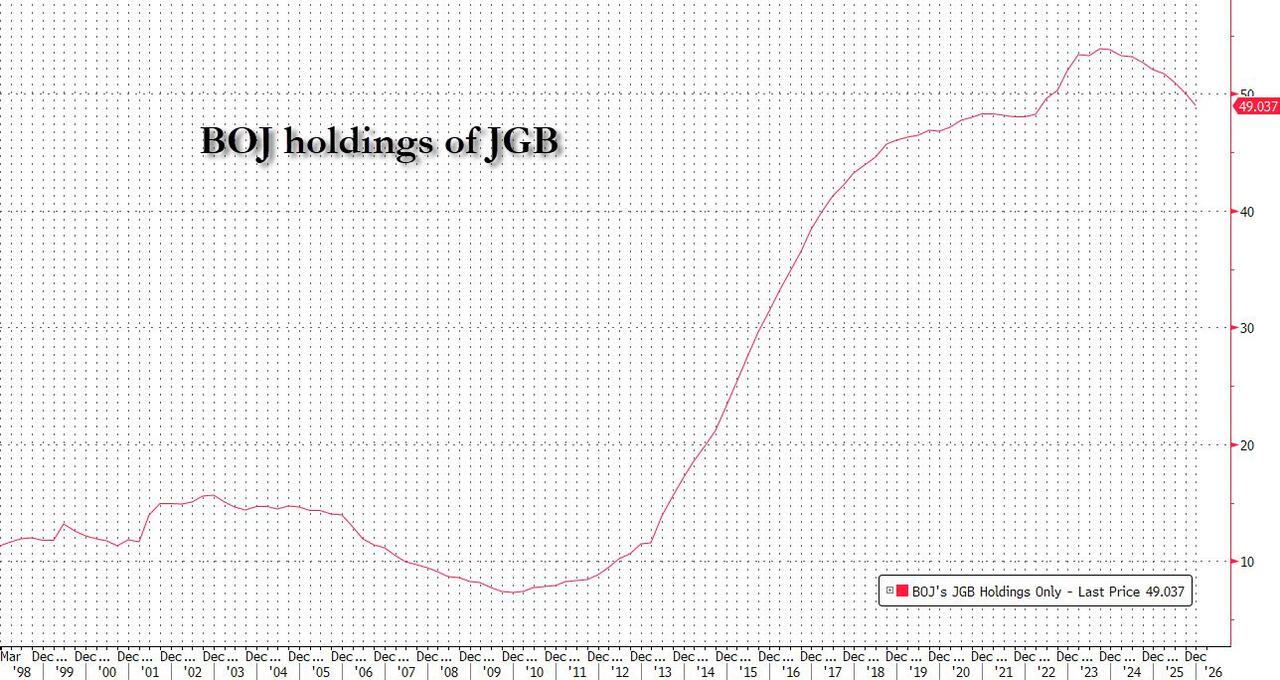
A pause would mark a turning point in the Bank ‌of Japan's quantitative tightening plan - started in 2024 as part of Governor Kazuo Ueda's efforts to unwind a decade-long, massive stimulus which everyone said would result in failure. Well, there it is. The next step, of course, is more QE.

According to Reuters, which is well known for being the mouthpiece of BOJ insiders, at its June 15-16 meeting, the Japanese central bank will review its bond taper plan running through March next year and lay out a new plan for fiscal 2027. With no change expected to the existing taper plan, markets are focusing on whether the BOJ would keep reducing its monthly bond purchases in fiscal 2027 or maintain the current pace.

While ​there is no consensus yet within the BOJ on the final decision, a pause in taper is increasingly seen as the preferred option with uncertainty over the Iran war keeping ​bond markets jittery, said two sources familiar with the deliberations.

"Markets remain volatile, so there's no need to rush," one of them said on the BOJ's ⁠taper, adding that many market players appeared to favor maintaining the current pace of buying. Ironically, the market volatility is precisely the reason to rush. 

Political considerations may also push the BOJ to pause as rising bond yields threaten to confine Takaichi's spending plans. "What the ​administration wants to avoid most is rises in bond yields," said one of the sources. Of course, if the intention is to avoid bond yields from surging, it's far too late.

Confirming the end of the QT is effectively a done deal, some investors are now calling on the BOJ to pause its bond taper plan, a central bank survey ​earlier this month showed, highlighting the challenge it faces in reducing its massive Japanese government bonds (JGB) holdings. 

Even before the Reuters report, there had already been some indications the BOJ might consider slowing its taper plan amid market uncertainty. A clearer signal on the BOJ's taper plan will come next week, when the central bank releases minutes of its meeting with bond market participants held on May 21-22.

"We've seen a pretty fast rise in bond yields, which makes it hard for investors to buy ​bonds. The finance ministry may be getting worried too," said former BOJ official Nobuyasu Atago. "Given the political headwinds, I see no reason for the BOJ to keep tapering next fiscal year," he said.

Concerns ​over Japan's worsening finances and rising inflation pushed up the 10-year JGB yield to a 30-year high of 2.8% last week, nearing the 3% estimate the finance ministry set in compiling its fiscal 2026 budget. A rise ‌above 3% ⁠would boost debt servicing costs and reduce scope for other spending.

The BOJ's rate-hike decision may also affect its taper plan with an increase in short-term rates to 1% from 0.75% seen as a strong possibility at the June meeting. While the central bank has said its taper program has no monetary policy implications, the case for slowing QT becomes stronger if it pushes through a hike, something it has been woefully unable to do so far despite a collapsing yen. 

"With the bond market so unstable, it would be natural for the BOJ to play it safe and avoid causing undue market turbulence," said Mari Iwashita, executive rates strategist at Nomura Securities, who projects a taper pause ​in fiscal 2027.

"A combination of a taper pause ​and rate hike would be a good ⁠one," as the former will ease upward pressure on yields, while the latter would alleviate concern the BOJ is behind the curve in addressing inflationary risks, she said.

It's not just Japan: rising debt and volatile yields have heightened challenges for central banks unwinding their balance sheets that ballooned from years of heavy asset ​purchases to reflate their economies. In the US, analysts doubt whether new Fed chief Kevin Warsh can push through his calls for a smaller balance ​sheet as U.S. Treasuries lose ⁠their luster.

The BOJ has also been cautious in its QT program which started in 2024, and under which the central bank gradually reduced purchases and currently trims monthly buying by 200 billion yen each quarter. 

Political hurdles for the BOJ's QT have heightened under Takaichi, who has vowed to cut tax and boost spending by issuing even more debt in the world's most indebted economy. 

Taper or not, a reduction in the BOJ's holdings, currently at around 500 trillion yen, will proceed steadily due ⁠to the runoff ​of maturing JGBs that already shaved 20% off its balance sheet from a peak in late 2023.
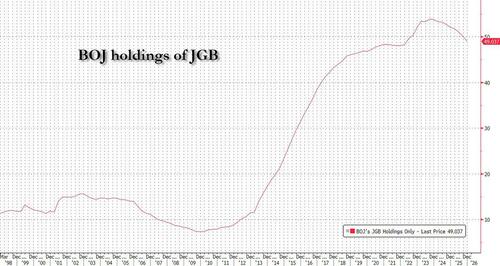
That's all the more ​reason for the BOJ to maintain the current pace of buying, said former BOJ executive Akira Otani, currently at Goldman Sachs Japan.

"When inflationary risks from the Middle East conflict and the government's proactive fiscal policy are putting upward pressure ​on bond yields, proceeding with further tapering could cause political friction by pushing up yields," he said.

Tyler Durden Fri, 05/29/2026 - 17:20
https://ift.tt/H65vI0R
from ZeroHedge News https://ift.tt/H65vI0R
via IFTTT

Japan Prepares To End Quantitative Tightening Amid Bond Market Turmoil SocialTwist Tell-a-Friend
| 0 comments ]

One In Three American Men No Longer Working

Via American Greatness,

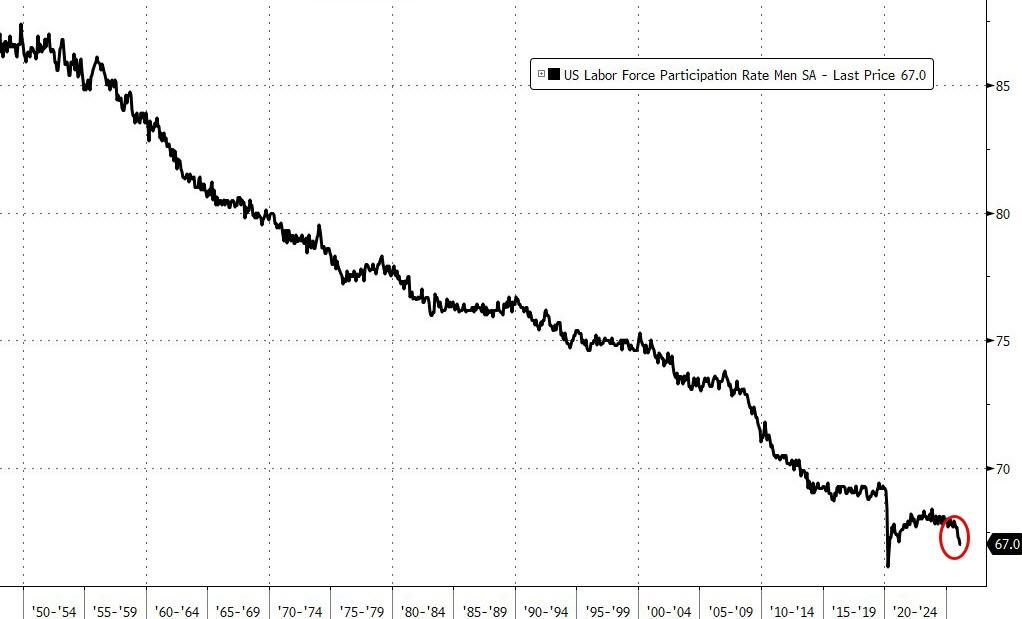
The number of American men participating in the workforce has fallen to one of its lowest levels in nearly two decades, according to new federal labor statistics.

Just 66 percent of men age 20 and older were employed or actively seeking work as of April, according to data released earlier this month by the US Bureau of Labor Statistics. That figure has dropped sharply from 73 percent in 2006 and now sits near levels last seen during the fallout from the 2008 financial crisis.

The numbers mean roughly one in three American men are no longer in the workforce.

The only modern period with lower participation rates came during the economic devastation caused by the 2020 pandemic, when male workforce participation collapsed to 59 percent.

While employment rates gradually recovered during the years following the Great Recession, those gains were wiped out during the pandemic downturn. Participation rebounded somewhat within two years before beginning another steady decline that has continued into 2026.

The downward trend appears ongoing. Male workforce participation fell another full percentage point in April compared with the same period in 2025, according to Labor Department data.

Several economic shifts are contributing to the decline.

Industries that have traditionally employed large numbers of men including transportation, manufacturing and other labor-intensive sectors, have shed jobs over the past year, according to the Washington Post.

At the same time, growing numbers of retirees and male students have reduced the share of men participating in the labor market.

The labor picture for women has followed a different trajectory.

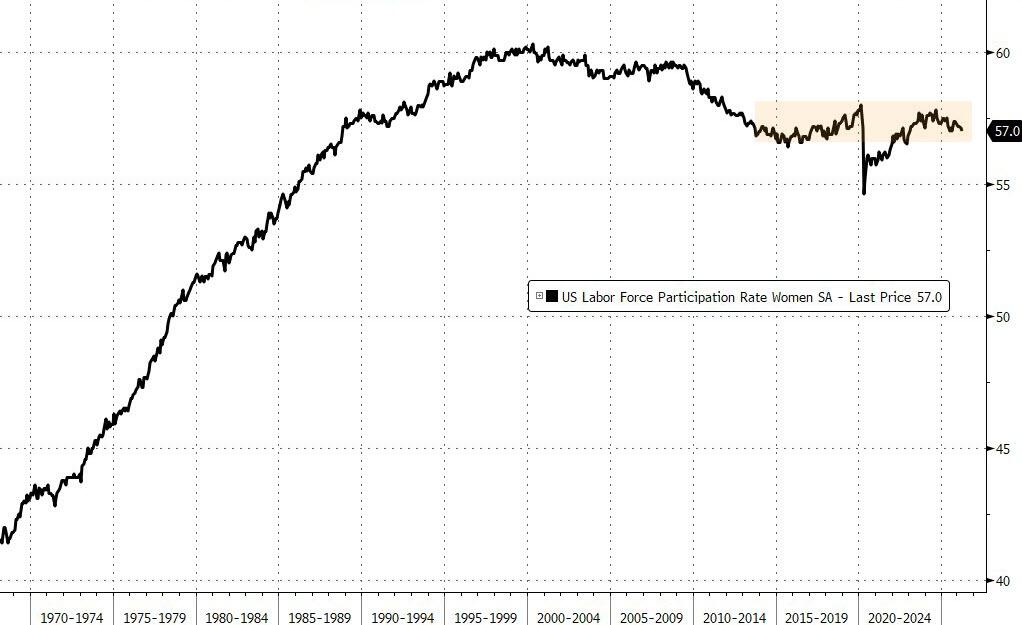
Female workforce participation also declined during the past two decades, though the swings have been less dramatic. Women saw only a 2-point decline during the 2008 recession, compared with a 5-point drop for men.

Women’s labor force participation has also remained more stable since the pandemic recovery, never falling below 56 percent since 2022.

The economy increasingly appears to favor sectors dominated by female workers. Healthcare and education jobs have grown over the past year, helping women capture nearly all recent job gains.

Of the 369,000 jobs added to the US economy since 2025, 96 perent went to women while just 4 percent went to men, according to the Washington Post.

Despite the shrinking share of men participating in the labor force, male unemployment has remained relatively low, hovering between 3 percent and 4 percent since 2021.

Tyler Durden Fri, 05/29/2026 - 16:20
https://ift.tt/KZnNuq8
from ZeroHedge News https://ift.tt/KZnNuq8
via IFTTT

One In Three American Men No Longer Working SocialTwist Tell-a-Friend
| 0 comments ]

Stellar 7 Year Auction Sees 3rd Highest Foreign Award On Record

In the week's final coupon auction, the US Treasury sold $44 billion in 7 Year notes to stellar demand. 

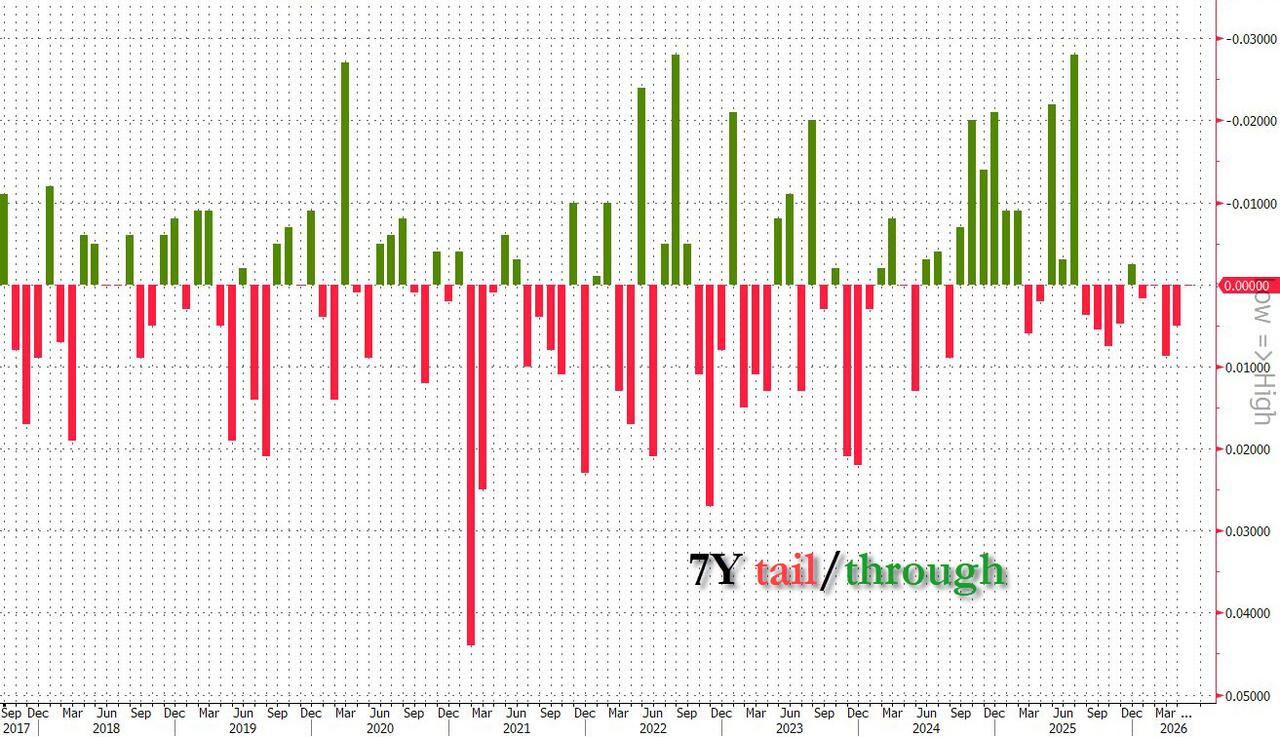
Extending on the strength yesterday's solid (if tailing) 5 Year auction, today's 7 Year sale printed at a high yield of 4.290%, up from 4.175% and the highest since Jan 2025. It also stopped through the When Issued 4.291% by 0.1bps, the first stop through since December 2025.

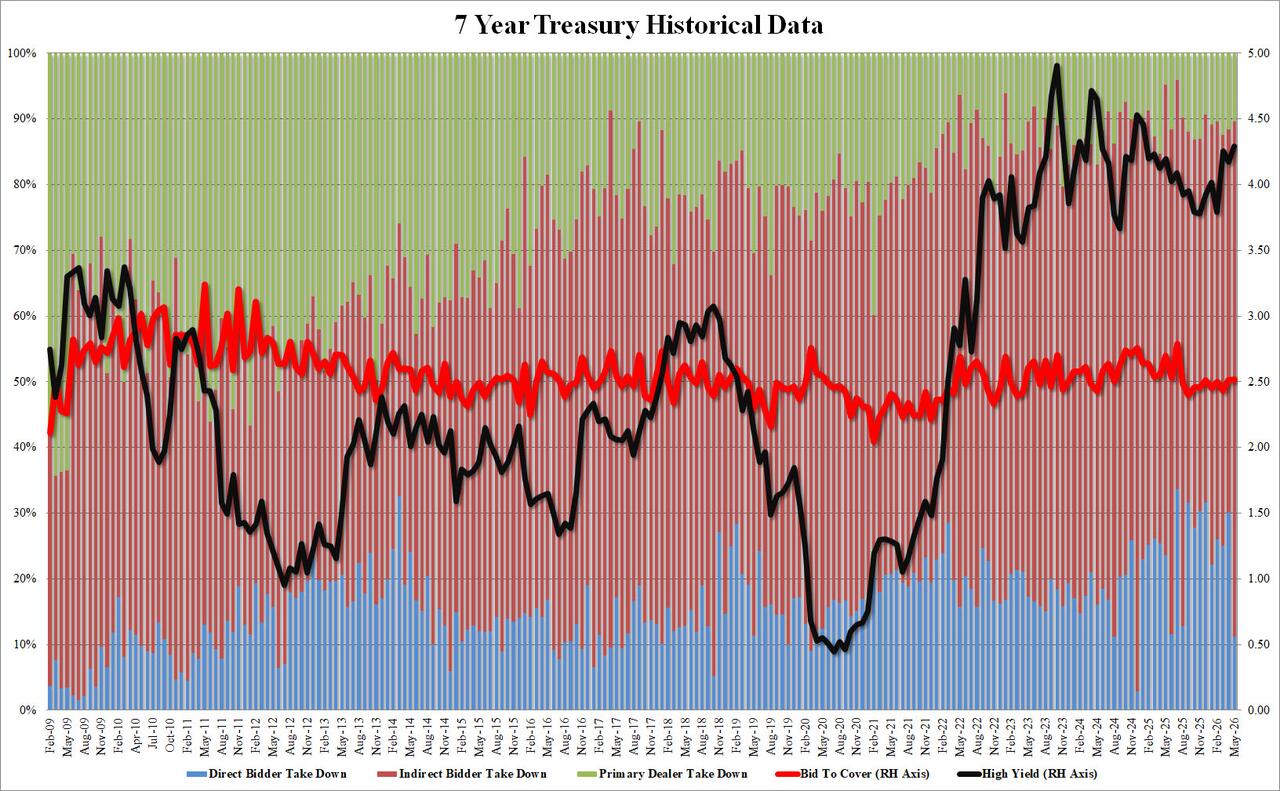
The bid to cover was 2.518, up from 2.513 and the highest since July 2025; it was obviously higher than the six-auction average of 2.478.

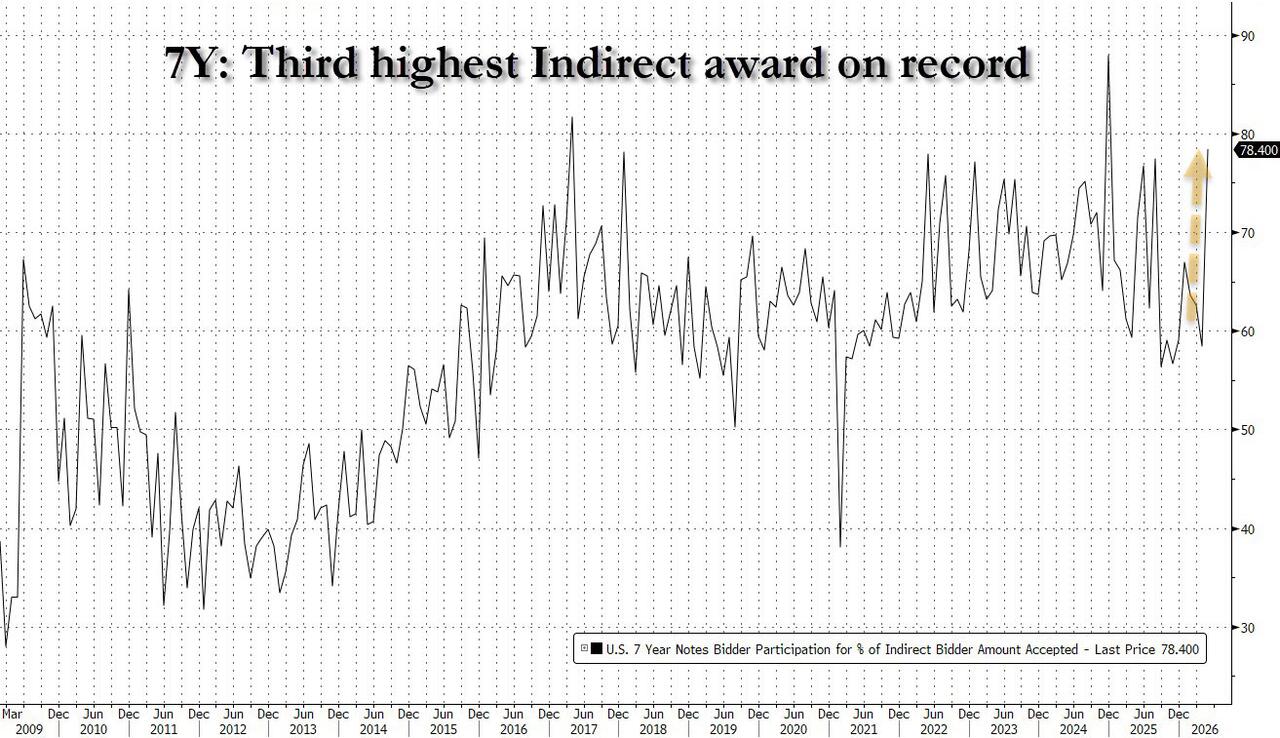
The internals were stellar, with Indirects surging from April's los 58.35% to a stunning 78.39%, the 3rd highest indirect award on record!

Naturally, for Indirects to soar this much, one of the other two categories had to drop, and sure enough Directs plunged from 30.01% to 11.19%, the lowest since December 2024. Dealers were left largely unchanged at 10.42%, down from 11.64%.

Overall, this was a fitting close to a solid week for Treasury auctions, as today's 7Y auction was an absolutely blockbuster, with all metrics stronger but it was the surge in foreign demand that was the showstopper. It appears that EMs are no longer dumping US paper - which they did in record mounts in March and April - to fund oil purchases and to prevent their currencies from crashing. 

Tyler Durden Thu, 05/28/2026 - 13:22
https://ift.tt/r0GfN4O
from ZeroHedge News https://ift.tt/r0GfN4O
via IFTTT

Stellar 7 Year Auction Sees 3rd Highest Foreign Award On Record SocialTwist Tell-a-Friend
| 0 comments ]

Biden DHS Released Nearly 90% Of Border Migrants Through Parole Program

Via American Greatness,

A new report from the Government Accountability Office found that the Biden administration released nearly 90 percent of migrants encountered at the southern border through parole authority at the height of its catch-and-release policies.

The report details how the Department of Homeland Security under former President Joe Biden and then-DHS Secretary Alejandro Mayorkas dramatically expanded the use of “humanitarian parole” between early 2021 and Jan. 20, 2025.

According to the GAO, parole authority had previously been used sparingly by presidential administrations before Biden took office.

“Specifically, our analysis showed that OFO and Border Patrol granted relatively few paroles during fiscal years 2019 and 2020,” the report stated.

The watchdog agency found that during 2019 and 2020, parole was granted in roughly 3 percent to 28 percent of southwest border encounters. That changed sharply beginning in the summer of 2021.

“The number of paroles granted increased beginning in the summer of 2021 and peaked in December 2022, when 89 percent of encounters resulted in parole,” the report stated.

“Paroles granted declined substantially after December 2022 and again after January 2025.”

The report also raised concerns that the Biden administration’s mass parole program overwhelmed federal immigration enforcement systems and left authorities struggling to track migrants released into the country.

“… without readily accessible information about noncitizens’ parole status, ICE does not have the information it needs to identify and monitor these noncitizens, or to take enforcement action, as appropriate,” the report stated.

Conservatives have argued throughout Biden’s presidency that the administration effectively dismantled immigration enforcement at the southern border by relying heavily on parole authority to release migrants into the interior of the United States.

Some architects of those immigration policies are now pushing Democrats to restore similar programs if the party regains power in Washington.

Tyler Durden Wed, 05/27/2026 - 15:40
https://ift.tt/VrcUS42
from ZeroHedge News https://ift.tt/VrcUS42
via IFTTT

Biden DHS Released Nearly 90% Of Border Migrants Through Parole Program SocialTwist Tell-a-Friend
| 0 comments ]

Iraq's Oil Collapse Sparks Race For New Export Routes

Authored by Simon Watkins via OilPrice.com,

  • Iraq's oil production has collapsed to just 1.39 million bpd after the Strait of Hormuz blockade stranded exports.

  • Baghdad is urgently trying to revive northern export routes through Turkey, including the Kirkuk-Ceyhan system and a new Kirkuk-Nineveh pipeline.

  • China is re-emerging as a major strategic player in Iraq's energy infrastructure, with Chinese firms heavily involved in Baghdad's new north-south pipeline expansion.

April was indeed the cruellest month for decades for Iraq's crude oil production, with an average of 1.389 million barrels per day (bpd) over the period. This compares to a monthly average of 3.47 million bpd from January 2002 to the end of March this year, and an average of over 4.1 million bpd in the three months leading up to the onset of the U.S./Israel-Iran War on 28 February. The last time oil production fell to the current level in the country was in the early 2000s, during and immediately following the 2003 U.S.-led invasion. Even for a diversified economy, this would spell bad news, but for Iraq, it is existential, with over 90% of its annual budget historically coming from oil and around 95% of that black gold having to pass through the still-blockaded Strait of Hormuz before it is monetised. The effective closure of that key export route meant that Iraq's domestic oil storage tanks quickly filled to maximum capacity, and because it has extremely limited options to transport its crude elsewhere, it has been forced to shut down production wells entirely. As disastrous as it is now, even worse may be to come soon, as these shutdowns can cause permanent damage to wells through a loss of reservoir pressure, water infiltration, and corrosion, among other factors. In Iraq's case, many of its biggest mature southern fields are highly susceptible to these problems. This is why the race has been on in Baghdad to secure other export options, most notably now, pipeline options in the north, but these bring their own sets of problems with them.

Historically, moving oil from the southern part of Iraq administered by the Federal Government of Iraq (FGI) in Baghdad was a largely redundant exercise, with little demand for it from Europe that was not already being filled by oil coming from the country's semi-autonomous northern region, presided over by the Kurdistan Regional Government (KRG). Instead, the onus of the FGI's export drive was to the East, especially to China - a route involving the Strait of Hormuz. This was also a pivotal means by which sanctioned Iranian crude oil could be surreptitiously transported to the same destination, rebranded as non-sanctioned Iraqi oil, with all elements involved in this mechanism analysed in full in my latest book on the new global oil market order. Aside from the ongoing conflicts with Washington that this continued practice brought with it for Baghdad, it also meant that the Federal Government could focus on measures aimed at stopping the KRG's oil exports to Europe via a pipeline running into the Turkish port of Ceyhan, thus pressuring its ability to generate financing independent of Baghdad. This was central to Baghdad's long-term objective to destroy the economic infrastructure of the Kurdistan region before rolling it into the remainder of a unified Iraq as just a regular administrative region. The idea was in line with the geopolitical ambitions of Baghdad's superpower sponsors, China and Russia, as also detailed thoroughly in my latest book. These objectives were outlined some time ago by a very senior member of the Russian administration to a senior source who works closely with Iran's Petroleum Ministry, and then exclusively relayed to OilPrice.com: "By keeping the West out of energy deals in Iraq, the end of Western hegemony in the Middle East will become the decisive chapter in the West's final demise." On the other hand, the U.S. and its allies wanted to bolster the independence of the Kurdistan region to act as leverage to extend their influence in the rest of Iraq to the south. Their objective was to have the Kurdistan region expel all Chinese, Russian, and Iranian companies from the region, and then to gradually push for the same to happen in the rest of Iraq.

The key lever Baghdad used to effect this plan to subsume the northern Kurdistan region was a deal struck in 2014, in which the FGI pledged to send the KRG money each month from Iraq's central government budget (17% at the time the deal was made) in exchange for the KRG pledging to send oil produced in its region (around 550,000 bpd at the time of the initial deal) to the FGI. The deal has never worked properly, with either Baghdad accusing Erbil of underdelivering oil (and selling it separately outside the terms of the agreement) or Erbil accusing Baghdad of underpaying from the budget - or both simultaneously. This, though, has caused a big problem for Baghdad since the outbreak of U.S./Israel-Iran War, in that the KRG had the only workable pipeline solution that would enable Baghdad to move its oil anywhere for monetisation through exports. Moreover, the supply/demand dynamics shifted so that European refiners grew desperate to secure any replacement barrels to compensate for those that had come through the Strait. To capitalise on this - but with no fully working pipeline itself, and disagreements with the KRG still simmering away - Baghdad has resorted in recent weeks to transporting oil to Turkey as and when it can through trucks overland.

Something is better than nothing, of course, but these volumes pale into insignificance when compared to those that could be achieved through a working pipeline, and it is this that Baghdad is aiming to get up and running as soon as possible. Not that long ago, the FGI had an oil pipeline that ran from the disputed, federally-controlled Kirkuk province adjacent to Iraq's Kurdistan region to the Turkish port of Ceyhan. It ran northwest from the Kirkuk K1 field through federal territory (the Salahaddin and Nineveh provinces, near Mosul) up to the border town of Fishkhabur. This "original" Kirkuk-Ceyhan Pipeline or Iraq-Turkey Pipeline (ITP) consisted of two pipes, which theoretically had a nameplate capacity of 1.6 million bpd combined and was split into 1.1 million bpd for the 46-inch (1,168-mm) diameter pipe and 500,000 bpd for the 40-inch (1,016-mm) line. This FGI-controlled pipeline's export capacity reached between 250,000 and 400,000 bpd when running normally, but even before the Islamic State entered the picture in 2014, the pipeline was subject to repeated and ongoing attacks by various Sunni militant groups operating in the region. Given its unreliability as an export option, the KRG constructed its own single side-track pipeline, from the Taq Taq field through Khurmala, which joins the Kirkuk-Ceyhan pipeline in the border town of Fishkhabur. This had a nameplate capacity of 700,000 bpd, which was then increased to 1 million bpd, although it has so far reached only 900,000 bpd.

With or without a peace deal between Iran and the U.S./Israel alliance, Baghdad is now pushing ahead with the Kirkuk-Nineveh pipeline as part of the Iraq-Turkey crude oil pipeline extending to Ceyhan Port on the Mediterranean Sea, which is independent of the KRG. The Kirkuk-to-Nineveh line is not a standalone project, but rather is the vital northern leg of the rehabilitated federal network, proving the physical pipe required to carry oil around the KRG's territory and deliver it directly to the Fishkhabur border terminal. The 350,000-bpd design capacity of this Kirkuk-to-Nineveh segment reflects the Oil Ministry's cautious, phased approach, as they cannot safely test the entire 1.6 million bpd nameplate capacity of the old system at once. Opening this 350,000-bpd pipeline allows Baghdad to easily handle the initial trial target of 150,000 to 250,000 bpd of Kirkuk crude next month. Moreover, once the southern Basra-to-Haditha corridor is built, it will plug into this newly opened Kirkuk-Nineveh-Fishkhabur line, creating a seamless, high-volume flow from the Persian Gulf to Turkey - at least, that is the idea.

However, just when the West thought that Iraq might be moving back into its own sphere of influence and away from China's, Beijing's hand has appeared again in this grand pipeline project. To obviate any future problems that might come in transporting oil from its massive southern fields out into the world, Baghdad is working to connect these directly to the northern network, and to achieve this, it has agreed to partner heavily with Chinese engineering firms. This will be part of the US$1.5 billion emergency infrastructure budget approved by former Iraqi Prime Minister Mohammad Shia al-Sudani that ties into the 2019 "Oil-for-Projects" agreement between Baghdad and Beijing, fully analysed in my latest book on the new global oil market order. Suffice it to say here that under this framework, Iraq sets aside 150,000 barrels of oil per day in an escrow account to serve as collateral for such work undertaken by Chinese entities. Indeed, Baghdad bypassed traditional open public bidding to directly invite specialised Chinese state companies to fast-track construction of the US$5 billion Basra-to-Haditha pipeline - the 700-kilometre mega-corridor designed to pump 2.5 million bpd from the south up toward the northern networks.

Tyler Durden Tue, 05/26/2026 - 17:00
https://ift.tt/4m6gJ72
from ZeroHedge News https://ift.tt/4m6gJ72
via IFTTT

Iraq's Oil Collapse Sparks Race For New Export Routes SocialTwist Tell-a-Friend
| 0 comments ]

Lavrov Warns Rubio: Get Diplomats & Americans Out Of Kiev Ahead Of 'Systematic Strikes'

Russia has again warned Washington to evacuate embassy staff in Kiev as it prepares to launch "systematic strikes" against the Ukrainian capital, in apparent retribution for last week's deadly Ukrainian drone attack on a college dorm in Starobelsk, in Russian-controlled Luhansk Oblast.

It is further and more broadly warning all foreign persons to exit the Ukrainian capital, which has already been getting pounded at various intervals, stretching back days. Russia's foreign ministry slammed the college dorm attack, which killed and wounded dozens - the "last straw" and that the military will initiate "systematic strikes" on assorted targets across the Ukrainian capital from now on.

The statement condemned the Zelensky government, which "deliberately targets civilians and does not hesitate to murder children in cold blood" - and warned that serious escalation is imminent.

AFP/Getty Images

"This was the last straw. Under these circumstances, the Russian Armed Forces will be launching systematic strikes against the Ukrainian military-industrial complex in Kiev, including locations where UAVs are designed, manufactured, programmed, and prepared for use,” the ministry said.

The Russian military will no go after "decision-making centers and command posts" - the statement featured in state media continued.

In Kiev, city residents and bystanders must stay away from the "military and administrative infrastructure facilities of the Zelensky regime" - the statement additionally warned.

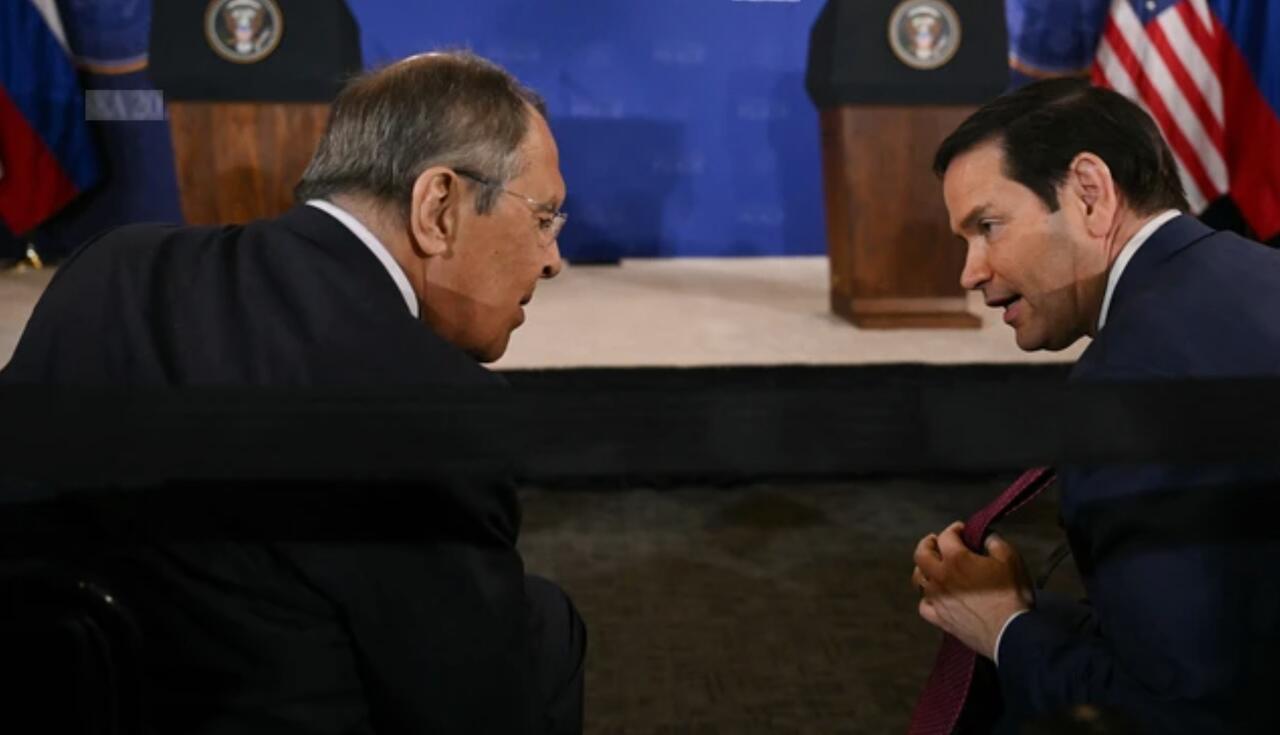
Most significantly, the Kremlin didn't just stop at this general public announcement, but directly notified the US State Department and Secretary of State Marco Rubio himself:

Russia said on Tuesday its government has warned U.S. Secretary of State Marco Rubio to evacuate diplomats and American citizens from Kyiv, as Moscow plots fresh strikes on the Ukrainian capital.

Foreign Minister Sergei Lavrov “officially informed” Washington that Russia would be launching “systematic and consistent strikes” against Ukrainian military facilities and what Moscow called “decision-making centers,” in a call with Rubio on Monday, according to the Russian government.  

...The call came after the Russian government issued a statement urging foreign citizens, diplomatic personnel, and international organizations to leave Kyiv, warning that it was preparing to target the capital, with a focus on facilities for designing, manufacturing, and programming drones.

At this moment, there's been little or nothing in the way of any official White House condemnation of the imminent new attacks on the Ukrainian capital.

The fact that Lavrov so bluntly informed his American counterpart is somewhat unprecedented, even after over four years of war. Russia seems to be stating ahead of time that if there's 'collateral damage' against foreign embassies or consulates, that it cannot be blamed. 

Tyler Durden Tue, 05/26/2026 - 15:40
https://ift.tt/AXzl0v9
from ZeroHedge News https://ift.tt/AXzl0v9
via IFTTT

Lavrov Warns Rubio: Get Diplomats & Americans Out Of Kiev Ahead Of 'Systematic Strikes' SocialTwist Tell-a-Friend
| 0 comments ]

Democrats Using Black Athletes As Pawns In Redistricting War

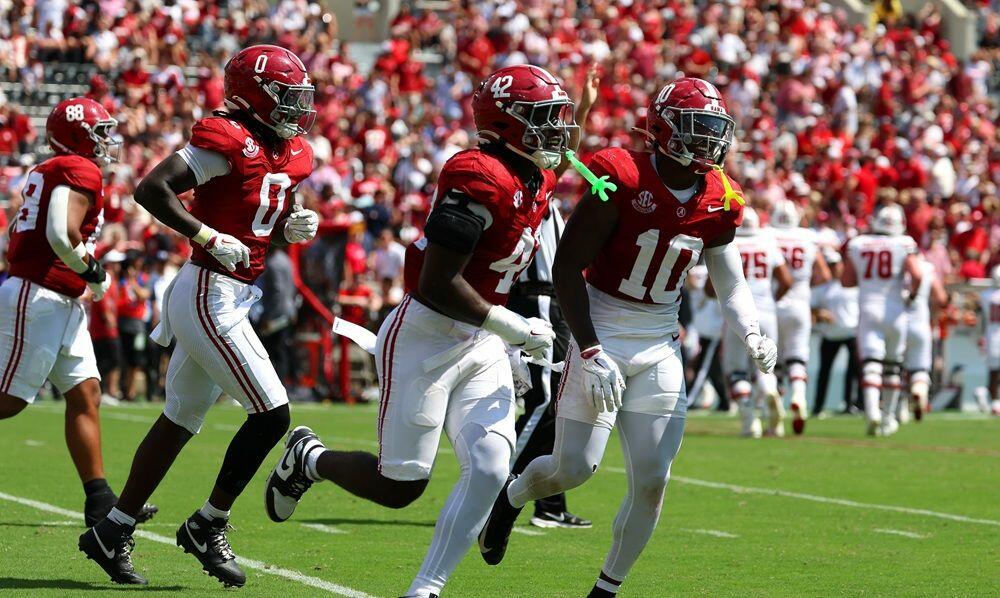
The Congressional Black Caucus, aligned with the NAACP, is urging black college athletes to avoid Southeastern Conference schools in Southern states as a form of economic pressure against Republican-drawn redistricting maps that eliminate majority-black congressional districts. The campaign is called "Out of Bounds,” and is essentially asking young black athletes to forfeit their best shot at a professional sports career so Democratic lawmakers can make a political statement about redistricting.

NAACP calls for black athletes to boycott college sports in south

“Across the South, Black athletes have helped build some of the most profitable college athletic programs in America, generating hundreds of millions of dollars in annual revenue,” the NAACP argues on its “Out of Bounds” campaign website. “At the same time, several southern state governments are moving to limit, reduce, weaken, or erase Black voting representation by creating new, unconstitutional voting districts.”

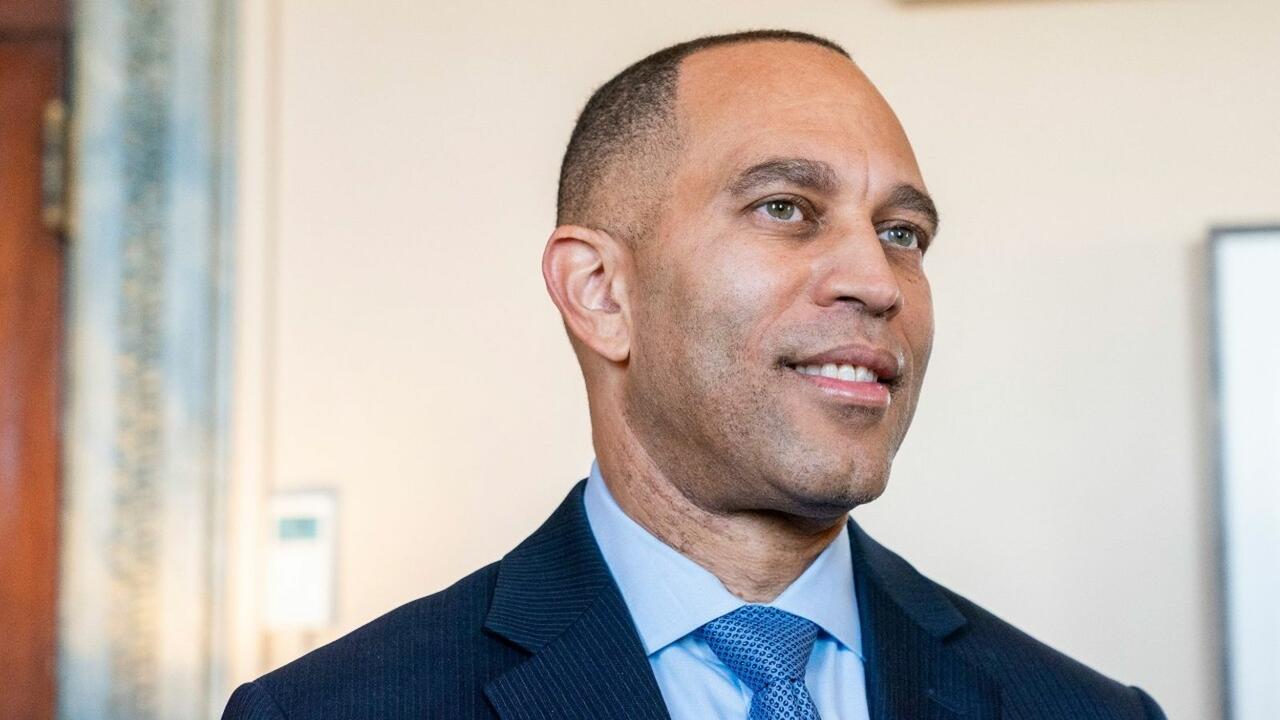
House Minority Leader Hakeem Jeffries framed the redistricting fights as "an unprecedented attack on black political representation,” demanding "an unprecedented response." That response, apparently, involves steering eighteen-year-old football recruits away from Alabama, Georgia, LSU, Florida, Tennessee, Texas, and Texas A&M - programs that collectively represent the most direct pipeline to the NFL in American sports. Jeffries said black lawmakers are "standing in solidarity with NAACP in its call for athletes to boycott institutions within the SEC that belong to states that have unleashed these Jim Crow-like racially oppressive tactics, which is unacceptable, unconscionable and un-American,” he continued. “And we believe that the silence of these institutions is complicity, and we will not stand for it.” 

For a talented black athlete from anywhere in the country, an SEC scholarship is frequently the fastest and most visible route to a professional contract, financial security and generational wealth. Yet, Jeffries and CBC Chair Yvette Clarke are asking those athletes to set that aside. 

"The Congressional Black Caucus cannot support legislation benefiting major athletic institutions that continue to remain silent while black voting rights and black political power are being systematically dismantled across the South,” Clarke said.

The legislation in question is the SCORE Act, a bipartisan proposal backed by the NCAA that would establish national standards for compensating college athletes. The bill had been scheduled for a House floor vote before Republican leaders were forced to postpone it after CBC members signaled opposition. 

In other words, a bill designed to ensure college athletes get paid was delayed, in part, because black Democratic lawmakers blocked it to protest that Southern public universities are not taking a stand against redistricting. 

According to Jeffries, these universities "should feel compelled to speak up. Not because of their athletic programs; because it's the right thing to do." Clarke argued that "institutions that profit from black talent and black communities have a responsibility to stand with those communities when their fundamental rights are under attack," extending that logic beyond athletics to "corporate America or any other institution within American civil society."

Clarke warned that the effort is "just the beginning" and could spread beyond state universities, adding, "Let this serve as an example: Silence from our institutions in moments of injustice carries consequences."

The CBC and NAACP can package this campaign in the language of “justice” and “solidarity,” but strip away the rhetoric, and the message is brutally simple: Democratic politicians want young black athletes to torpedo their own futures to wage a political pressure campaign over congressional maps. Democrats may be angry over Republican redistricting efforts, but they are asking young black athletes to walk away from the fastest route to the NFL, millions of dollars, and generational wealth over a political battle that has nothing to do with them or SEC football programs.

Tyler Durden Mon, 05/25/2026 - 18:10
https://ift.tt/1lDOJio
from ZeroHedge News https://ift.tt/1lDOJio
via IFTTT

Democrats Using Black Athletes As Pawns In Redistricting War SocialTwist Tell-a-Friend
| 0 comments ]

"It Should Be Studied": RFK Jr Says 'Trump Derangement Syndrome Is 'A Real Thing'

Authored by James Howard Kunstler,

For The Honored Dead

“I told my staff today that we need an ICD code for Trump Derangement Syndrome, because it is a real thing … It should be studied.”

- Robert F. Kennedy, Jr

As of this holiday morning, America is informed that the negotiations between the US and Iran may take several more days to resolve. You better believe that Iran is going to make a deal. One way or another, they will give up their stash of sixty-percent enriched uranium. Nobody believes they would not attempt to make bombs with it, especially Mr. Trump. So, Iran will not be going back to whatever is considered normal life until they agree to give it up, and then make it happen. Iran is like a demon-possessed teenager with a firearm getting its head banged into the sidewalk. What part of give-it-up don’t you understand?

The news media apparently forgot what it broadcast a couple of weeks ago: Iran’s oil storage capacity was nearing the red-line. If the wells have to be shut-in, such is the geology that it would wreck the oil fields themselves. Perhaps this is happening now. Nobody is reporting on it. But the news media doesn’t really report on anything. It opines. It spins. It constructs story-lines for advantage, it gaslights, it perverts the consensus about reality out of existence, it just plain lies.

If Iran is jerking the US around again, this will be the last time. They will prove to be negotiation-incapable, as the Russian phrase goes. They will punch their own express ticket back to the 12th century, lights out, bridges down across the rugged terrain, back to donkey carts, magic lamps, and vizeers instead of mullahs.

Why does America’s lefty-left beat its drum for an Iranian victory when 1) it’s not happening, and 2) it’s hardly in the interest of Western Civ for anything like that to happen? You can conclude that they hate and despise Western Civ, especially anything that resembles America’s traditional sense-of-self: a republic based on civic and economic liberty. Liberty means individuals making their own decisions within an armature of laws written in good faith, to mean what they say.

The Lefty-left is mainly about acquiring power through bad faith in order to push everyone around, tell them what they’re allowed to want out of life, and severely punish anyone who objects to that treatment. What’s often overlooked is the role that sadism plays in the psychology of the Lefty-left. They seem to love it when illegal aliens rape and strangle 19-year-old American girls. (You don’t hear them deplore it, do you? Their house-organ, The New York Times, won’t even report it.) More than anything they want to subject you to the most savage humiliations.

We are at a dangerous pass this Memorial Day.

Mr. Trump and his people are methodically rearranging the works to expel these grifting demons. Their resistance to being expelled will manifest in ever more dirty fighting as spring blossoms into a summer of violent “activism.” They will try as hard as possible to wreck the country’s 250th birthday celebrations. It might look like civil war. They will not stop trying to kill Donald Trump and possibly other figures around him.

Even if they manage that, it will not stop what it is coming for them.

This time around nobody believes their sob stories, their whining about “oppression,” their bullshit about “equity” and “justice.” This time, they will not be allowed to get away with sheer lawlessness. They will not be able to pass off fake martyrs such as George Floyd. The elections this time — if they can happen — will be clean and fair. That can be the only way they will be allowed to happen.

This will be the most emphatic counter-revolution in modern history, a complete rejection of childish unreality — the cavalcade of absurdities you have been told to swallow for a mad decade:

That you can change your sex “assigned at birth.” (Assigned by whom? By some cosmic committee of gender komisars?)

That merit has no merit (don’t be good at anything).

That men and maleness represent some inferior way of being human?

That people from outside American society, from faraway lands, deserve to live here under a special gift economy of vast subsidies, at your expense, to set up antagonistic counter-cultures?

That words don’t mean what they mean?

Expect the pace to quicken now, even with Tulsi Gabbard gone. Her operational deputy DNI, Aaron Lukas, is a proven, capable warrior. Most of the critical information has already been recovered from the Deep State’s vaults, hidden rooms, burn bags, and SCIFs. The adjudication of crimes against our country will be spooling out the next hundred days as a vivid and orderly counterpoint to whatever nose-ringed chaos the Democrats send out into the streets.

The republic will celebrate its 250th birthday by carrying-on as it was designed to do, while the demons skulk back into the shadows until the next great turning.

Tyler Durden Mon, 05/25/2026 - 17:35
https://ift.tt/Dlp17Bk
from ZeroHedge News https://ift.tt/Dlp17Bk
via IFTTT

"It Should Be Studied": RFK Jr Says 'Trump Derangement Syndrome Is 'A Real Thing' SocialTwist Tell-a-Friend
| 0 comments ]

OnlyFans "Hack" Hoax Likely Used To Push Malware-Laced Leak Checkers

A cyber threat actor advertised a purported database of 340 million OnlyFans-linked user records on a well-known cybercrime forum, asking for 0.313 BTC, or roughly $76,000, according to U.K.-based cybersecurity news site HackRead.

The alleged "340 million OnlyFans user mega leak" narrative ran rampant on X this past holiday weekend, garnering millions of views from several accounts, which were described as nothing more than an engagement trap.

HackRead pointed out that "conversations with the seller and a review of sample data suggest that the collection did not result from a direct breach or scraping of OnlyFans systems."

HackRead noted that:

The seller advertised the database as containing usernames, names, email addresses, phone numbers, follower counts, likes, uploaded content statistics, account types, and linked social media profiles. The claims initially gave the impression of a direct platform breach or scraping incident.

However, the story changed after Hackread.com contacted the threat actor directly on Telegram. In private messages, the seller clarified they did not hack or breach OnlyFans. Instead, they claimed the database was built using information collected from previous data leaks and public sources, including breached records from platforms such as Twitter, Instagram, and Spotify.

"We didn't breach or hack OnlyFans," the seller said in a message shared with Hackread.com. "We used existing breaches and leaks databases and matched with users of the OnlyFans platform."

But that didn't stop some X users from pushing the "OnlyFans is hacked" narrative.

As one X user pointed out, the hack story is "100% fake news," and the "manufactured hoax is a masterclass in clickbait."

The person said the "real trap" is that "hackers spreading these fake leaks are trying to panic you into downloading 'leak checkers.' The second you run those tools, they install infostealer malware, like Lumma Stealer, to steal your actual passwords."

The timing of the alleged OnlyFans "hack" narrative is notable. The panic cyber campaign comes just weeks after the Financial Times reported that the platform, widely used by sex workers, is selling a minority stake to San Francisco-based Architect Capital.

From an information operations view, this creates a window for threat actors to exploit and leverage privacy fears to drive users to malware-laced leak-checker tools under the guise of helping them verify exposure.

Tyler Durden Mon, 05/25/2026 - 15:50
https://ift.tt/jDrlTXE
from ZeroHedge News https://ift.tt/jDrlTXE
via IFTTT

OnlyFans "Hack" Hoax Likely Used To Push Malware-Laced Leak Checkers SocialTwist Tell-a-Friend
| 0 comments ]

My Retirement Accounts Fail In The World I Actually Live In

Authored by Patrick Brenner via RealClearMarkets,

I remember the first time I logged into my retirement account as a young professional. It felt like a milestone: proof that I had entered the world of adulthood, of long-term thinking, of ownership. I work in the nonprofit sector, so technically it's a 403(b), not a 401(k). The distinction is academic; the promise is the same: contribute consistently, invest wisely, and over time, build financial independence.

The longer I've contributed, the more I've realized something uncomfortable: my retirement plan isn't built for the world I actually live in.

Like many in my generation, I came of age during a period of profound economic change. Companies stay private longer. Technology, infrastructure, and energy companies increasingly raise capital outside public markets. The most dynamic growth in the economy often happens before a company ever reaches a stock exchange. When I look at my retirement options, I'm locked out of that world.

Instead, we see a familiar menu consisting of a handful of mutual funds and some index options that quietly steer me toward a standardized allocation. These are not bad investments, but they represent only a fraction of real economic growth.

For my younger peers just entering the workforce, this gap is even more consequential. The directions are thus: start early, take advantage of compounding, and think long term. If we each had a dollar for every time we got the lecture about the "time value of money," we'd all retire tomorrow. But we are also being funneled into portfolios that exclude entire categories of assets like private equity, private credit, real estate, and infrastructure that have historically delivered higher long-term returns and meaningful diversification.

Brett Arends at Market Watch incorrectly asserts that opening retirement plans to these assets would expose workers to high fees, illiquidity, and complexity. He misses a more important question: compared to what?

There's real asymmetry. Institutional investors regularly allocate 20 to 30 percent of their portfolios to private markets. They do so because these assets offer diversification, illiquidity premiums, and exposure to parts of the economy unavailable in public markets. Ordinary workers are confined to a narrower universe because litigious zealots neutered the system, compelling fiduciaries to avoid risk at all costs.

This narrowing of investment options originates in the legal environment surrounding employer-sponsored retirement plans. Under the Employee Retirement Income Security Act of 1974 (ERISA), plan sponsors face an onslaught of litigation. The risk of lawsuits compels employers to increasingly default to the safest legal options rather than to the best outcomes for participants, thereby directly limiting potential returns.

Even if you set aside litigation, the deeper issue is structural. The retirement system hasn't kept pace with the evolution of capital markets.

The proposed rule from the Department of Labor deserves serious attention. At its core, the rule introduces a safe-harbor framework for evaluating "designated investment alternatives" in defined-contribution plans. The definition encompasses everything from traditional mutual funds to more complex vehicles, including those that can incorporate private assets.

The framework is asset-neutral. It outlines how fiduciaries should choose. Plan sponsors are obligated to evaluate investments using a set of common-sense factors: fees, performance, liquidity, valuation, benchmarks, and complexity. If they do so objectively and analytically, they are presumed to meet their fiduciary obligations.

The White House's Council of Economic Advisers suggests that younger participants could benefit from allocating up to 30 percent of their portfolios to private markets. Institutional investors have approached portfolio construction using private markets for decades.

Yet parts of the proposed rule undermine that very goal. A 15 percent cap on private assets, derived from SEC Rule 22e-4, would limit exposure, a particular problem for collective investment trusts, which are regulated differently and historically operated without such constraints.

Angela Antonelli offers helpful insights. Georgetown Univerisity's research from the Center for Retirement Initiatives and other CRI analysis, even relatively modest exposure to private real assets, private credit, and private equity has the potential to boost outcomes by 7% to 8%, not just for the "average" DC participant but also across a range of more real financial savings patterns that DC participants too often find themselves in over the course of their working years.

Large institutions, from university endowments to public pension funds, routinely invest in private markets and reap the benefits of diversification and higher returns. We've created two classes of retirement savers: those with access to the full spectrum of capital markets, and those without.

That divide is the difference between participating in today's economy and being stuck in a version of it that no longer exists. Retirement policy should be about equipping workers to build wealth in the modern world.

Right now, my 403(b) originated on a promise that has become so antiquated it might be unattainable. Instead of "taxing the rich," can't we just be allowed to invest like them?

Tyler Durden Sun, 05/24/2026 - 18:40
https://ift.tt/gs5UbtO
from ZeroHedge News https://ift.tt/gs5UbtO
via IFTTT

My Retirement Accounts Fail In The World I Actually Live In SocialTwist Tell-a-Friend
| 0 comments ]

Bubble-Wrapped World: How Safety Culture Has Destroyed Our Sense Of Adventure

Authored by Murray Lytle via The Epoch Times,

Are Canadians less adventurous than they once were? It’s hard to argue otherwise.

Alexander Mackenzie was only 24 when the North West Company named him chief fur trader at Fort Chipewyan, in what is now Alberta. A few years later, in 1789 he travelled north along what is now known as the Mackenzie River to become the first European to reach the Arctic Ocean overland. Four years later he crossed the Rocky Mountains and was the first European to reach the Pacific Ocean, beating Americans Merriweather Lewis and William Clark by a full dozen years.

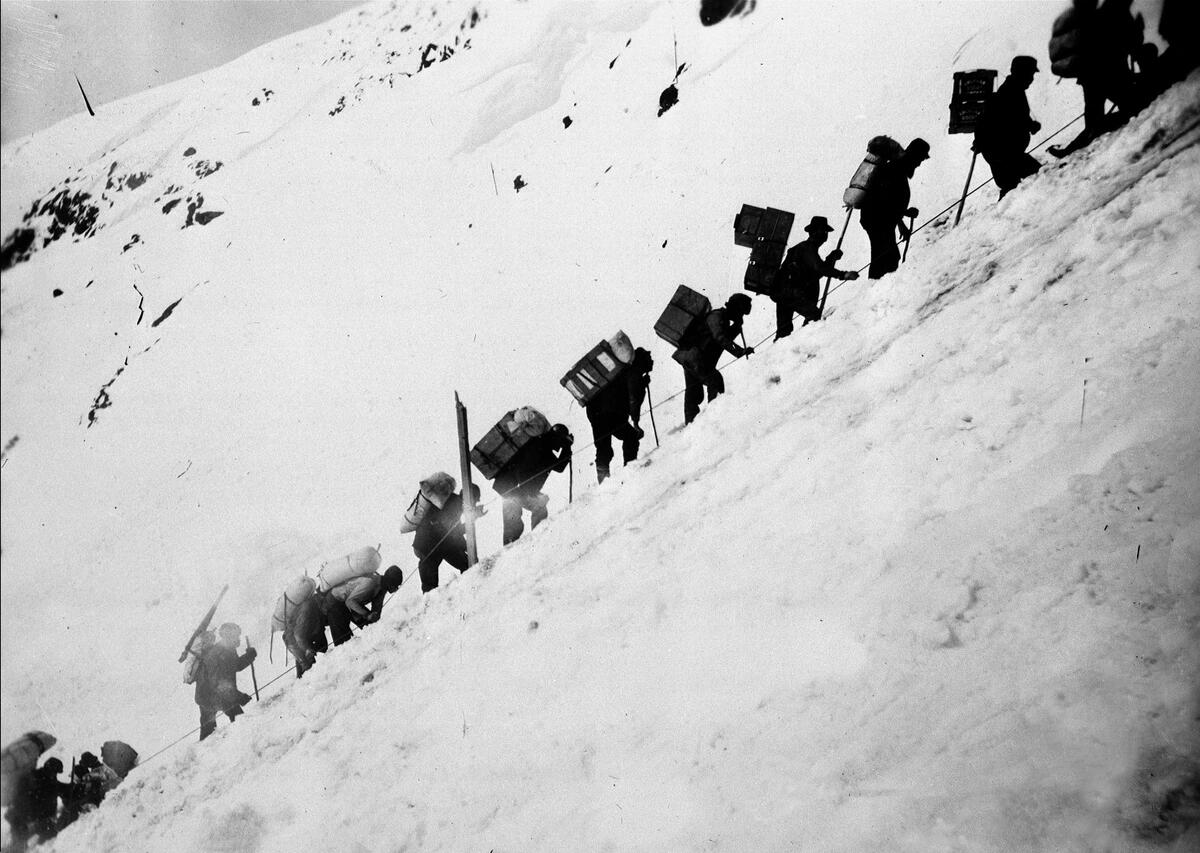
In 1898, Martha Purdy arrived in Dawson City to escape a failed marriage and make her fortune in the Klondike Gold Rush. It was while climbing the notorious Chilkoot Pass that she discovered she was pregnant with her third son. She later remarried and, as Martha Black, was the second woman to be elected to Canada’s Parliament. She was also a successful entrepreneur and a world-renowned expert on wild flowers.

Canadian history is filled with tales such as these. Explorers, soldiers, settlers, and other restless souls who endured great hardships and did great things.

There is a natural sense of awe that arises when retelling such lives filled with adventure. To our modern selves, they appear as fascinating aberrations, gifted men and women with unusual appetites for risky or dangerous undertakings. Their willingness to set out into the unknown strikes us today as thrilling, unnerving, and more than a bit foolhardy. But while their accomplishments may be striking, they lived in more adventurous times.

Today, society shrinks from adventure and the unknown.

Through a combination of practical circumstances, changing social standards, and dramatic shifts in individual risk tolerance and government behaviour, opportunities for adventure have been drastically curtailed.

How can Canadians get that sense of adventurousness back?

“An adventure is only an inconvenience rightly considered”, G.K. Chesterton once wrote. “An inconvenience is only an adventure wrongly considered.” There is a case to be made that adventures are simply harder to come by these days.

There are no more blank spaces left on maps, and hence no places for modern-day Mackenzies to discover.

The omnipresence of the internet and GPS similarly makes it almost impossible to get truly lost anymore. And if you do, help is usually close at hand.

Beyond these practical limitations, however, it seems incontestable that society today is less interested in promoting, facilitating, or participating in adventurous life experiences.

No one talks of running away with the circus or joining the French Foreign Legion anymore, even in jest. According to Statistics Canada, twice as many millennials are still living at home as was the case with previous generations. And if any of these young adults do go away, it’s more than likely to be an adventureless “gap year” holiday between graduate degrees recorded in minute detail on Snapchat and Instagram.

The perpetual childhood of today’s younger generations contrasts sharply with the youthful accomplishments of past eras. William Wilberforce, for example, was elected to the British Parliament at age 21 and then proved instrumental in ending the trans-Atlantic slave trade. His friend William Pitt became Prime Minister at 24, and spent his career fighting the French emperor Napoleon Bonaparte, who became a general at 24. Quite a lot can be accomplished when one starts early.

Other factors that limit the availability of adventure in our post-modern era include the suffocating impact of the welfare state. When Mackenzie left his family home at 15 to become an apprentice in the fur industry, it was because he had little choice. He needed to make his way in the world as a teenager. The same urgency applied to Black when she decided to escape a failed marriage by travelling to the Yukon. With no government to hold your hand, adventure follows. Popular culture in earlier eras also did its bit as well by celebrating explorers and adventurers as celebrities in the same manner that we laud singers and athletes today.

Just as adventure was once regarded as a social virtue to be admired, society today aggressively enforces the opposite expectation—that it is our duty to avoid risk at all costs. In their 2021 book “The Coddling of the American Mind,” social psychologist Jonathan Haidt and lawyer Greg Lukianoff take a close look at the impact of a creeping safety culture on the behaviour of younger generations.

Children, the authors observed, are now deliberately shielded from any sense of risk or uncertainty. How can anyone—young boys most of all—learn about the world around them when school principals announce at the onset of every snowfall that “all snow must stay on the ground.” The ideal of adventure and resilience has been replaced by a debilitating sense of fragility and risk-avoidance.

So is the dream of looking over an untravelled horizon that animated people like Alexander Mackenzie or Martha Black completely dead in the 21st century? Not exactly.

Adventure should properly be considered a spirit, not a place.

It is driven by a powerful mixture of curiosity, necessity, and an openness to experiencing new things. And it can be found wherever uncertainty reigns. Today, that might entail travelling to strange lands, meeting new people, or even engaging in uncomfortable discussions about whether Alberta should remain part of Canada forever.

Wherever the unknown lies, adventure can be found.

Tyler Durden Sun, 05/24/2026 - 17:30
https://ift.tt/XVOcrGU
from ZeroHedge News https://ift.tt/XVOcrGU
via IFTTT

Bubble-Wrapped World: How Safety Culture Has Destroyed Our Sense Of Adventure SocialTwist Tell-a-Friend
| 0 comments ]

Two Billboards In New York Capture The Conflict Of Our Time

Authored by Kay Rubacek via The Epoch Times,

Two billboards went up in New York City recently. This is a city of advertising, where images appear when someone wants the whole world to see them. One billboard is selling artificial intelligence, and the other is warning about it. The juxtaposition between these two advertisers, who most likely wouldn’t have seen the other’s message in advance, captures the conflict of our times and cements the uncertainty about the future within an artificial intelligence world.

The selling billboard is dark, purple, and almost cinematic.

An AI-generated face with artificial perfection stares out. Three words above her say: “Stop Hiring Humans.” The Era of AI Employees Is Here. The company is Artisan. The company says it “is a provocation. It works because it’s uncomfortable.” It is real. It wants your payroll budget, and it is not embarrassed to say so.

The warning billboard is light, purple, and funny in the way that grief sometimes is. A sad stick figure holds a small sign: Will Create 4 Food. Mock chat bubbles float across it like a corporate memo from a future that has already arrived: “Thank you artists for donating your life’s work to our AI. Your generosity hasn’t gone unnoticed. Just uncompensated.”

The organization’s name is Replacement.AI. It is also real, but it is not selling anything. It is run by anonymous artists who spent their own money to tell you the truth. Their website calls itself “the only honest AI company.” Its homepage reads: Humans no longer necessary. Stupid. Smelly. Squishy. It’s time for a machine solution.

The quotes on the site are genuine, such as one from OpenAI’s CEO, Sam Altman: “AI will probably most likely lead to the end of the world, but in the meantime, there'll be great companies.” And another from OpenAI’s charter, “To build ‘highly autonomous systems that outperform humans at most economically valuable work.’”

On the page dedicated to artists, the site reads: “If you’re one of the millions of artists, musicians, writers, journalists, scholars, or other creatives whose work we’ve stolen to train our AI, we want to thank you. We couldn’t have achieved a $100 billion valuation without all of your hard work, just sitting on the internet for us and our other AI company friends to scrape. Unfortunately for you, financial compensation is out of the question. Just because we’re making money from your copyrighted material doesn’t mean you’re legally entitled to any of it.”

It is satire. It is also accurate. In a submission to the House of Lords, OpenAI admitted, “It would be impossible to train today’s leading AI models without using copyrighted materials.”

The courts are beginning to agree too that something was taken. Well over thirty copyright infringement lawsuits have been filed by creators against AI developers. Visual artists sued Stability AI and Midjourney. Getty Images sued, arguing that over twelve million photographs were scraped without license. The New York Times sued OpenAI. Universal Music filed a $3.1 billion lawsuit against Anthropic in January 2026, alleging its AI was built on a foundation of piracy. None of these cases have reached final verdicts. The legal system is moving at human speed through a problem that was created at machine speed.

What passed through a million years of accumulated human experience—the knowledge handed from mind to mind, generation to generation, the grief and wonder pressed into stories and paintings and films and arguments on the internet at three in the morning—was consumed by hungry algorithms. There was no purchase or licensing. The great ingestion happened in server rooms, while the rest of us were clicking I Agree to ever-lengthening terms and conditions that no one ever bothers to read. And that phase is now over.

Yet predictions for our future keep rolling in, each one confident, and each one contradicting the last. Goldman Sachs estimates AI could replace the equivalent of 300 million full-time jobs. The World Economic Forum projects 92 million jobs displaced by 2030, offset by 170 million new ones created, which is a net gain, on paper at least. Anthropic CEO, Dario Amodei, warns AI could replace half of all entry-level office jobs within five years. Jensen Huang says greater productivity creates more hiring, not less. In 2025 alone, Amazon eliminated 14,000 corporate roles, Microsoft cut 15,000, and Salesforce reduced its customer support workforce by 4,000. Like the billboards in Time Square, both are right, yet neither agree. What the experts ultimately share is uncertainty.

And the AI models are hungry again. This time, media organizations are making sure they require payment from AI giants for their content. New York Times is partnering with Amazon’s AI, Meta with News Corp, and Google with Reddit. But human-made internet content is finite and cannot keep up with the voracious appetite of AI models that do not need time to sleep or metabolise. So the machines have no choice but to prompt themselves, and generate new content upon previous content, with less and less human origin, leading us down a spiral of infinite iteration with less human touch, less human spirit, and less human soul. The only thing the “experts” seem to agree on is that the business potentials are both exhilarating and terrifying.

Meanwhile, Artisan’s billboard promises relief from the burden of human employees. Lower payroll. No sick days. No long hot showers a person needs to feel like a person again. The face on that billboard doesn’t need to ground herself. She doesn’t need anything. What is being sold is not intelligence, but the absence of need. It is a cold world to advertise, and the advertisers seem not to fear the cold.

Two billboards in New York City, and the same ones are popping up in other major cities across the nation. Between them is the argument that is yet to be resolved: whether what is being built is a tool or a replacement, a future or an ending. The experts cannot agree. The lawyers are still filing. The models are still hungry. And somewhere in Times Square, a sad stick figure is still holding his sign, hoping someone walking past will stop long enough to read it.

Tyler Durden Sun, 05/24/2026 - 16:20
https://ift.tt/x5ZujNa
from ZeroHedge News https://ift.tt/x5ZujNa
via IFTTT

Two Billboards In New York Capture The Conflict Of Our Time SocialTwist Tell-a-Friend