
India's Trade Deficit Surges As Energy Import Prices Soar
India's trade deficit soared in April by more than analysts expected, as the surge in oil and gas prices hiked the Indian energy import bill.
The trade deficit jumped by $8bn from $20.6bn in March to $28.38bn last month, higher than the $26 billion estimate, on a broad-based increase in imports. At the same time, total exports grew by 13.8% in April from a year earlier to hit $43.56 billion.
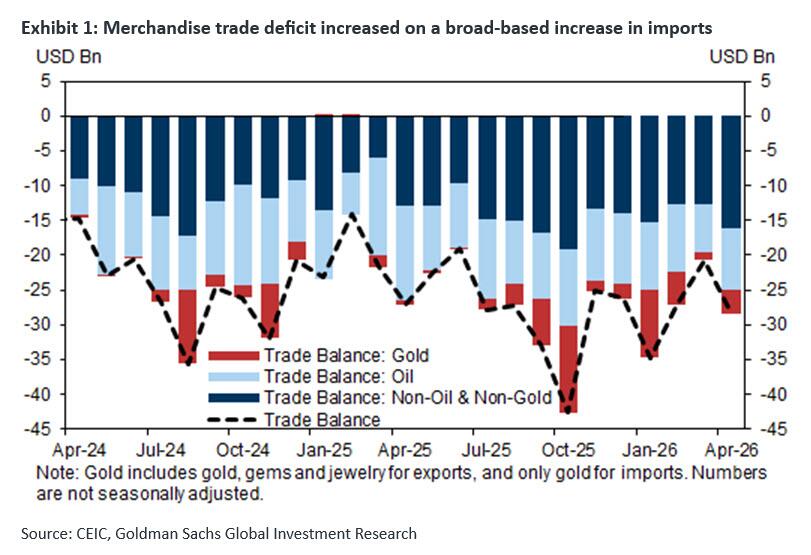
Oil imports sequentially rose by around 60% MoM likely driven by higher volumes in April (vs. March lows) and higher oil prices.
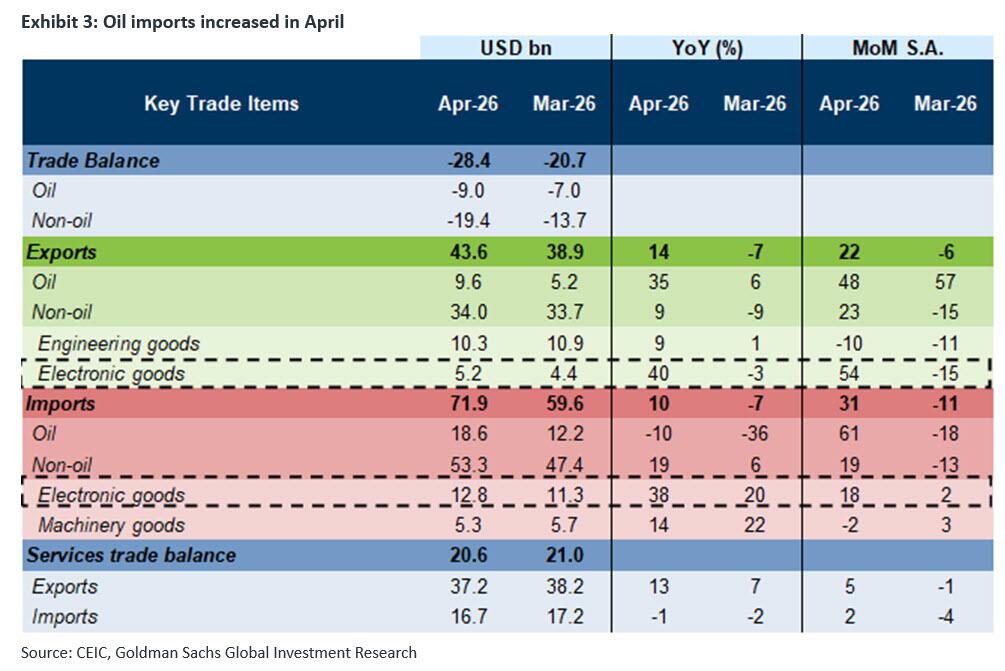
The value of imports soared as international oil and gas prices jumped amid the Middle East conflict that forced India and every other major crude oil importer to source more expensive supply from producers not dependent on the Strait of Hormuz, which remains closed to most tanker traffic two and a half months after the Iran war began. Meanwhile, petroleum product exports rose by around 48% mom s.a. likely driven by higher exports to Singapore. Gold imports rose sequentially likely driven by higher volume imports of semi-processed gold for refining and higher prices. However, gold imports (in volume terms) may likely decline in May following the government's import duty hike to 15% from 6%.
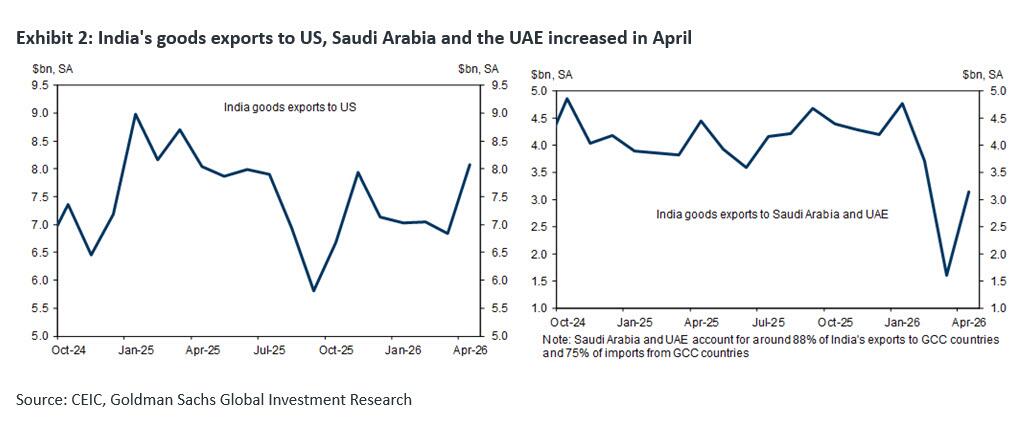
Overall non-oil exports remained strong, led by stronger electronics exports. Exports to Saudi Arabia and the UAE recovered in April from its March lows, but remained well below the last year's levels, while exports to the US increased both sequentially and in year-over-year (yoy) terms. Services trade surplus remained strong at around $21bn, supported by robust services exports.
The widening trade deficit and the soaring energy import bill are pressuring the government's current account and finances, as the oil supply crisis is already seeping through India's economy. In the past week, India imposed draconian tariffs on gold imports to defend the currency which has plunged to a record low against the dollar.
Since the war began and cut off over 40% of India's crude oil flows, those that passed through the Strait of Hormuz, one of the highest-flying economies in Asia has seen its oil import bill soar, investors fleeing the capital market, and the local currency plunging to an all-time low against the U.S. dollar.
Analysts have started to raise inflation estimates and reduce forecasts of this year's economic growth in India, which is beginning to feel the oil supply shock well beyond the actual disruption of deliveries of oil, LNG, and liquefied petroleum gas (LPG), the primary cooking fuel in the world's most populous country.
The oil shock that the war has created will weigh on India's economic growth in the current fiscal year to March 2027. BMI, part of Fitch, expects India's GDP growth to slow to 6.7% in the 2026/2027 fiscal year, down from 7.7% in 2025/2026, largely due to the oil price shock.
https://ift.tt/YF2PmVp
from ZeroHedge News https://ift.tt/YF2PmVp
via IFTTT





0 comments
Post a Comment