| 0 comments ]

DOJ Seeks To Rescind US Citizenship Granted To 10 Individuals

Authored by Naveen Athrappully via The Epoch Times,

The Department of Justice (DOJ) announced on Monday that it has filed to denaturalize 10 individuals charged or convicted with various crimes, including offenses against minors.

“Under the Immigration and Nationality Act, a naturalized U.S. citizen’s citizenship may be revoked, and certificate of naturalization canceled, if the naturalization was illegally procured or procured by concealment of a material fact or by willful misrepresentation,” the DOJ said in a July 20 statement, adding that the Trump administration was continuing its “largest denaturalization effort ever.”

One of the individuals targeted for denaturalization is Rodriguez Perez, 45, of Cuban origin, who was naturalized as an American in 2018. Prior to obtaining citizenship, Perez engaged in Medicare fraud worth more than $886,694 and concealed this conduct during the naturalization process.

Perez pleaded guilty in the case and was convicted of conspiracy to commit healthcare and wire fraud.

Another individual, Urbano Vazquez Ortega, 53, a Mexican naturalized in July 2017, had sexually assaulted children while being employed as a church priest in Washington. The crimes were committed between 2015 and 2017. Ortega was sentenced to 15 years in prison in 2019.

A third individual, Omar Cantu-Montalvo, 44, from Mexico, was naturalized in December 2005 after claiming in his application that he had never committed a crime. However, Cantu-Montalvo was later sentenced to 100 months in prison by a court for conspiracy to distribute cocaine, a scheme he joined just a few months before applying for naturalization.

Other individuals have been charged with crimes such as carrying a concealed firearm, sexually abusing a minor, misrepresenting identity to secure citizenship, and wire fraud.

“These 10 criminal aliens—including child sex abusers, a $900,000 Medicare fraudster, and a cocaine trafficker—lied their way into U.S. citizenship,” acting Attorney General Todd Blanche said in the statement.

“Each of these individuals lacked the good moral character required by law and procured citizenship through willful misrepresentations and concealment of their crimes. Under President Trump’s leadership, this Department of Justice will continue to aggressively pursue denaturalization to restore integrity to America’s naturalization process.”

In January, the Southern District of Texas court, McAllen Division, issued an order to revoke the citizenship of a naturalized person convicted of a child sex offense.

In March, the DOJ announced it had secured the denaturalization of two individuals—a convicted gun trafficker and a healthcare fraudster.

As of late April, the Trump administration had filed 22 denaturalization cases in its second term, according to the DOJ. During the entire Biden administration, 24 such cases were filed.

A DOJ memo from June 2025 prioritized investigations and enforcement actions advancing denaturalization. The memo directed the department’s Civil Division to aggressively pursue denaturalization cases by evidence, especially those involving national security threats, undisclosed felonies, gang activity, and terrorism.

Sanctity of US Citizenship

In an April 24 post on X, Rep. Grace Meng (D- N.Y.) criticized the Trump administration’s denaturalization efforts.

Naturalized people are American citizens, Meng said. Individuals who undergo the naturalization process are “extensively vetted,” often spending years navigating America’s immigration system, taking exams, and pledging loyalty to the United States, she said.

“The President’s targeting of naturalized U.S. citizens is not only a reckless weaponization of the Department of Justice, it is an attack on core American values,” Meng said.

During a Senate hearing last month, Sen. Eric Schmitt (R-Mo.) argued that denaturalization is a crucial safeguard to protect the sanctity of U.S. citizenship, according to a June 4 statement from the lawmaker’s office.

“For too long, Washington treated naturalization like paperwork. Check the boxes. Say the words. Get the passport. Collect the welfare check or federal tax credit. Move on. That approach desecrates American citizenship. It insults every immigrant who came here honestly, followed the law, learned our history, embraced our Constitution, and took the oath in good faith,” Schmitt said.

“The Supreme Court has made the rule clear: no alien has the slightest right to naturalization unless every statutory requirement is met. Citizenship obtained by fraud is stolen status. Stolen status should be revoked.”

Tyler Durden Tue, 07/21/2026 - 17:00
https://ift.tt/ebnrJON
from ZeroHedge News https://ift.tt/ebnrJON
via IFTTT

DOJ Seeks To Rescind US Citizenship Granted To 10 Individuals SocialTwist Tell-a-Friend
| 0 comments ]

Lockheed Unveils Move Towards Cheaper Patriot Missiles As Interceptor Stockpiles Dwindle

With US-Iran tit-for-tat strikes on their ninth day and the Russia-Ukraine war grinding on in Eastern Europe, US inventories of certain air-delivered munitions are being depleted. This has made the rapid procurement of lower-cost missiles and bombs a top priority for the Trump administration.

The Wall Street Journal reports that defense giant Lockheed Martin is planning a low-cost version of the Patriot interceptor missile that will cost less than half as much as the current version.

The PAC-3 Adapted Capability Effector will cost less than half the price of Lockheed's PAC-3 Missile Segment Enhancement interceptor, which currently costs $4 million per round.

The new missile is designed to counter cruise missiles and short-range ballistic threats while using existing Patriot launchers.

A separate report from the Financial Times states that Lockheed is exploring a European production line for the new low-cost interceptor missiles, which could drive the price down to between $1.5 million and $2 million per round.

Lockheed is already considering European suppliers for solid rocket motors, guidance electronics, and other critical components, potentially through a partnership with a leading defense contractor on the continent.

Lockheed's decision to look toward Europe, rather than expand exclusively in the US, may signal limitations within the domestic defense-industrial base, just as the Trump administration's war economy begins to accelerate.

So about lead time for these new missile? How many years?

Tyler Durden Tue, 07/21/2026 - 15:40
https://ift.tt/eGWiyjn
from ZeroHedge News https://ift.tt/eGWiyjn
via IFTTT

Lockheed Unveils Move Towards Cheaper Patriot Missiles As Interceptor Stockpiles Dwindle SocialTwist Tell-a-Friend
| 0 comments ]

30-Year Fixed-Rate Mortgage Reaches Highest Level In Almost A Year

Authored by Naveen Athrappully via The Epoch Times,

The average weekly rate on a 30-year fixed-rate mortgage is at its highest level in nearly a year, contributing to elevated housing costs and dampening buyer interest.

A home for sale in Alhambra, Calif., on Aug. 28, 2025. Frederic J. Brown/AFP via Getty Images

For the most recent week, the mortgage rate was at 6.55 percent, according to a July 16 statement by Freddie Mac. This is the highest level since the week ending Aug. 27, 2025, when the rate was at 6.56 percent. Since mid-May, rates have consistently hovered around 6.5 percent.

Rates have risen consecutively over the past two weeks, from 6.43 percent for the week ending July 1 to 6.55 percent currently.

Meanwhile, pending home sales in the country declined 2.2 percent for the four weeks ending July 12 compared to the four-week period ending July 5, according to a statement from real estate brokerage Redfin.

First-time homebuyers are facing a "tough time" breaking into the housing market, Christine Kooiker, a Redfin Premier agent in Grand Rapids, Michigan, said in the statement.

"High mortgage rates mean that even homes in the most affordable price point - under $350,000 in the Grand Rapids area - are a stretch for a lot of buyers, and they're hard to find and competitive," Kooiker said.

Many buyers are "sitting on the sidelines, too, because they're locked into low mortgage rates or can't find a new home they love."

Similar findings were made by the National Association of Realtors (NAR), which, in a July 16 statement, reported a 5.4 percent month-over-month dip in pending sales in June.

The decrease was most pronounced in the Midwest, followed by the West, South, and Northeast.

"The highest mortgage rates in nearly a year and the record-high national median home price together are contributing to a tepid housing market that is especially difficult for first-time homebuyers," NAR Chief Economist Dr. Lawrence Yun said in the statement.

Housing Affordability

Lawmakers have taken action to ease the burdens on prospective homebuyers and make housing more affordable for Americans.

On July 11, the 21st Century ROAD to Housing Act became law. The legislation aims to ensure housing affordability through various measures, such as rolling back permits and regulations, and offering financial support to homebuyers, builders, and state and local governments.

The bill was passed by the House and Senate last month. However, President Donald Trump refused to sign the bill until the election integrity bill, the SAVE America Act, was passed by Congress.

According to Article I of the U.S. Constitution, if a bill is not returned by the president within 10 days after being presented, it shall become law. Trump's deadline to veto the bill was July 10.

The bill "will cut red tape, lower costs, and boost the supply of housing," Rep. Sam Liccardo (D-Calif.) said in a July 13 statement.

"We need to build on this momentum and keep rolling up our sleeves to tackle the housing crisis confronting far too many American families."

Meanwhile, builder confidence in the market for newly built single-family homes declined in July from the previous month, according to a July 16 statement from the National Association of Home Builders (NAHB).

The NAHB/Wells Fargo Housing Market Index was at 36 in July, the 15th straight month it has remained below the 40 level. This is the longest stretch of monthly values below 40 since 2012.

NAHB chief economist Robert Dietz cited housing affordability as the "primary challenge" facing the home building industry.

NAHB chairman Bill Owens said that many potential buyers continue to hesitate to purchase homes as they wait for mortgage rates to come down and for more clarity on inflation and the economic outlook.

While the 21st Century ROAD to Housing Act has some important provisions addressing obstacles faced by buyers and builders, "these reforms will take time to implement," Owens said.

Tyler Durden Mon, 07/20/2026 - 14:05
https://ift.tt/Wa3iMBd
from ZeroHedge News https://ift.tt/Wa3iMBd
via IFTTT

30-Year Fixed-Rate Mortgage Reaches Highest Level In Almost A Year SocialTwist Tell-a-Friend
| 0 comments ]

Judge Strikes Down Race-Based Provision In Biden-Era Internet Access Grant Program

Authored by Aldgra Fredly via The Epoch Times,

A federal judge ruled on July 15 that a race-based provision of the Digital Equity Act, signed by President Joe Biden in 2021 to close digital gaps, was unconstitutional.

A judge's gavel rests on top of a desk in a courtroom in Miami, Fla., on Feb. 3, 2009. Joe Raedle/Getty Images

The Digital Equity Act was part of Biden's Infrastructure Investment and Jobs Act, which appropriated $2.75 billion to the National Telecommunications and Information Administration (NTIA) to establish grant programs to expand high-speed internet access for minority groups and communities in rural areas.

After taking office for a second term last year, President Donald Trump halted the competitive grant program authorized under the Digital Equity Act, saying it was unconstitutional because it allocated federal funding based on race.

The National Digital Inclusion Alliance, a recipient of the competitive grant program, later filed a lawsuit in October 2025 seeking to reinstate the program.

In a 35-page order, U.S. District Judge John Bates ruled that the Digital Equity Act's provision authorizing the use of race in awarding federal funds was unconstitutional, citing the Supreme Court's 2023 ruling that struck down race-based preferences in higher education admissions.

Bates said that while the Digital Equity Act aims to address the digital divide among minority groups and other covered populations, the Supreme Court precedent showed that remedying general social disparities alone does not justify the use of race in government action.

"Addressing that gap is a laudable goal, but the Supreme Court has admonished that ameliorating general societal inequalities - as opposed to specific instances of past discrimination - 'does not constitute a compelling interest that justifies race-based state action,'" the judge stated.

"Otherwise, Congress could deploy racial classifications when confronted with any situation of an uneven resource distribution."

Bates said the grant program could be reinstated without the race-based provision, and the government had committed to restoring it upon a judicial determination that the provision was unconstitutional.

Trump welcomed the ruling in a Truth Social post, calling it a "big win" for the American people.

"The so-called 'Digital Equity Act,' a Biden DEI law, was ruled exactly what I said it was last year - A RACIST and UNCONSTITUTIONAL giveaway that never should have become Law," he wrote.

The decision to end the Digital Equity Act comes amid the Trump administration's efforts to eliminate diversity, equity, and inclusion (DEI) programs from federal agencies and government initiatives.

Trump stated in a Jan. 20, 2025, executive order that the previous administration had forced "illegal and immoral discrimination programs" across virtually "all aspects of the federal government" through DEI initiatives.

Christopher Mitchell, director of the Community Broadband Networks Initiative at the Institute for Local Self-Reliance, credited the National Digital Inclusion Alliance with helping to secure the program's restoration.

"Yesterday's ruling on the Digital Equity Competitive Grant Program is, on balance, a victory," Mitchell said in a statement. "The only real question now is how quickly NTIA moves to actually implement it."

The National Digital Inclusion Alliance did not return a request for comment by publication time.

Tyler Durden Sun, 07/19/2026 - 18:40
https://ift.tt/uoWTYbQ
from ZeroHedge News https://ift.tt/uoWTYbQ
via IFTTT

Judge Strikes Down Race-Based Provision In Biden-Era Internet Access Grant Program SocialTwist Tell-a-Friend
| 0 comments ]

The Data-Center Revolt Goes National: Tea Party Veteran Leads 142 Rallies Across 42 States

The backlash against the AI data-center build-out - which we've been tracking since it was a smattering of county fights across 28 states - staged its first coordinated day of action on Saturday: 142 protests across 42 states, from Wasilla, Alaska to Naples, Florida, organized by Humans First, the nonprofit that Tea Party veteran Amy Kremer co-founded and chairs. The crowds spanned both sides of the aisle...uniting a MAGA stalwart in a 'faith, family, freedom' T-shirt in New Jersey, a first-time activist in Texas, and a left-leaning organizer in California's Imperial Valley.

The fight looked like Kenilworth, New Jersey. Residents of the 8,500-person borough gathered outside the municipal court at mid-morning with drums, plastic horns, and sidewalk chalk to protest the $1.8 billion CoreWeave AI data center their planning board approved in May 2025 on the former Merck campus - a project that has since drawn more than 12,000 petition signatures against it, several thousand more names than the town has people. The woman in the "faith, family, freedom" T-shirt marched beside neighbors holding "Build community, not data centers" signs. When heavy rain arrived later in the day, they pulled on ponchos, shared umbrellas, and kept marching. One sign, caught by Business Insider's photographer on the scene: "You think this is pressure? Wait 'til there's no water pressure."

Texas, the country's hottest data-center market, hosted the most rallies - 18 - with Georgia at 11, California at eight, and Pennsylvania, Florida, and Indiana at seven apiece. In Imperial Valley, where a proposed facility could pull 260 million gallons a year from the Colorado River, Ivan DelSol, 54, told Reuters that around 50 people turned out in 100-degree heat. "It's dystopian that you would use this much fresh water for AI," he said. Organizers released no headcounts; turnout ran below expectations in some rural areas and in Atlanta, where about a dozen showed - most of them, a volunteer there said, driving in from the smaller Georgia towns where the biggest data centers are going up.

Kremer is a founding figure of the Tea Party movement who went on to found Women for Trump, and an organizer of the January 6, 2021 rally that preceded the Capitol riot (she neither planned nor took part in the riot itself). She has spent months calling data centers the defining fight of her lifetime, warning the technology could threaten humanity itself, and she is open about running the old playbook: grassroots pressure, town by town, aimed at both parties.

Her crowds bear that out. One of Saturday's Texas rallies, in Tyler, was organized by Eva Cardona, a 31-year-old self-described political nomad and first-time activist who told Reuters she wanted something more hands-on than posting on Facebook; about a dozen people came. And in Imperial Valley, the man who helped lead the rally leans left. The polling explains why a coalition that broad holds. A June Reuters/Ipsos survey found only 14 percent of Americans would support a data center in their own community. Gallup polling fielded in March found 71 percent oppose building an AI data center in their area - 48 percent strongly - a worse number than a local nuclear plant gets. And Morgan Stanley told clients in a July 14 note that support for local data-center bans runs strongest among Republican, higher-income, and urban voters, while Morning Consult's national tracker crossed a line of its own in May: "stop building" (about 45 percent) overtook "keep building while expanding energy supply" (about 38 percent) for the first time since last October.

For all the movement's reputation, Kremer's demands stop well short of a shutdown. She opposes a national moratorium and statewide moratoriums alike, telling Business Insider that each community should choose what gets built inside it, and that too many of those choices are made behind closed doors. Humans First's platform runs to transparent approval processes, environmental review before permits are granted, union construction jobs, and binding developer commitments of the kind lawyers call community benefits agreements. She has aimed as much fire at her own side, accusing Republicans of giving Big Tech a free pass and predicting the industry will cozy up to Democrats the moment the majority flips. The fix, she argues, belongs to Congress.

Amy Kremer is the cofounder of Women for Trump and Women for America First. Now she's taking on AI data centers. Jacquelyn Martin/AP

The organization is a narrower thing than the crowds it convened. Humans First announced in April that its non-conservative team members would spin off into a separate group, with Kremer promising "a topflight team of conservatives" to fight Big AI and its lobbyists. The banner over Saturday's rallies, in other words, was a conservative one - which makes the mix of people who marched beneath it all the more striking.

Official Backlash

The rallies capped a fast-moving week. On Tuesday, New York Governor Kathy Hochul signed an executive order imposing the nation's first statewide moratorium on new hyperscale data centers - an immediate pause of up to a year on state environmental permits for projects of 50 megawatts or more while regulators draft standards covering energy demand, water use, and air quality. Her office promised localities community-benefit guidance within 60 days, and Hochul will pursue repeal of the state's sales-tax exemptions for massive data centers. A tougher bill passed by the legislature, with a 20-megawatt threshold, remains unsigned on her desk; her office has called it complicated, and Hochul said the state wants to be "the first to get it right."

New York was not alone. Virginia's new tax on data-center electricity - 1.1 cents per kilowatt-hour - took effect July 1. Pennsylvania's House passed a ban on non-disclosure agreements in data-center deals by a 171-31 vote, and separately voted 197-5 to repeal the industry's sales-tax exemption, a break worth roughly $517 million a year by 2030. Arizona's governor signed a three-year moratorium on new data-center tax breaks in June. Legislators have filed more than 300 data-center bills this year; local pauses have passed at the county, city, and tribal level in at least 15 states.

Meanwhile In China

Nothing comparable is happening on the other side of the Pacific. Two days before the marches, Beijing-based Moonshot AI released Kimi K3, a 2.8-trillion-parameter system billed as the largest open-weight model ever built and claimed to perform level with America's best frontier models. Bloomberg has reported that Beijing plans to spend roughly $295 billion over five years on a nationwide network of AI computing hubs - and none of it will face a zoning board. Under the state's "Eastern Data, Western Computing" program, the buildout is steered into the arid, sparsely populated west; provincial governments compete to attract data centers with tax holidays, cheap land, and compute vouchers, and the state absorbs up to half of operators' energy costs, so the strain never shows up on a household bill. No Chinese county has passed a moratorium, because no Chinese county gets a vote.

The financial toll is no longer hypothetical. Third-party trackers cited by Morgan Stanley in its July 14 note put the value of cancelled or delayed projects at roughly $156 billion in 2025 and another $130 billion in the first quarter of 2026 alone - about $286 billion in all - set against the bank's own estimate of $877 billion in AI capital spending this year. The underlying quarterly count comes from Data Center Watch, a tracker run by 10a Labs, an intelligence firm whose client list includes AI companies, which logged at least 75 projects blocked or delayed from January through March - matching in one quarter the number of projects derailed in all of 2025 - as active opposition groups more than doubled from 396 to 833 and spread to 49 states.

Saturday itself stayed peaceful - chalk, chants, drums, umbrellas - though the wider fight has had harder edges: developers of the Piedmont transmission line into Northern Virginia's data-center corridor asked a federal court last summer for U.S. Marshals to escort survey crews after landowners threatened workers, an episode we covered at the time.

The industry answered forcefully. The Data Center Coalition warned that New York's moratorium tells investors the state is "closed for business" and will push jobs and tax revenue to neighboring states. Seven major AI and cloud companies - Amazon, Google, Meta, Microsoft, OpenAI, Oracle, and xAI - point to the Ratepayer Protection Pledge they signed at the White House in March, a voluntary commitment to cover the grid costs their facilities create. And White House AI czar David Sacks went after Hochul's case point by point on the All-In podcast, calling data centers "the scapegoat for all of the angst that people have about AI." His answer to the utility-bill complaint: let developers build their own generation behind the meter instead of competing with households for grid power.

Some industry allies go further, pointing to OpenAI's June disclosure that it banned a China-linked network using ChatGPT to mass-produce comics and comments blaming data centers for rising power bills. OpenAI itself found the operation gained almost no authentic traction - and the crowds in Kenilworth and Imperial County were unambiguously homegrown.

Kremer spent Saturday evening thanking volunteers and looking past the weekend. "America is not for sale, and our communities are not collateral," she wrote on X. She expects data centers on the ballot in November, and again in 2028. The midterms are less than four months away.

Tyler Durden Sun, 07/19/2026 - 15:45
https://ift.tt/EjAL1D6
from ZeroHedge News https://ift.tt/EjAL1D6
via IFTTT

The Data-Center Revolt Goes National: Tea Party Veteran Leads 142 Rallies Across 42 States SocialTwist Tell-a-Friend
| 0 comments ]

"Start Spreadin' The News": New York Losing Billions As Millionaires Flee Big Apple

Authored by Jonathan Turley,

Below is my column in the New York Post on the sharp decline in millionaires in New York, costing the state billions as many flee. The exodus has been building for years but may now be accelerating. As Mayor Mamdani holds another press conference promising to end the “violence of evictions,” businesses are reading the writing on the wall. Rather than work to make the state more attractive to wealthy residents and businesses, Democrats are seeking to diminish the appeal of two-tax states. They want to tap into a long-barred area of taxation: the wealth rather than just the income of citizens. By passing a national wealth tax, Democrats will reduce the benefit of fleeing high-tax states like California and New York.

“Start spreadin’ the news, I’m leavin’ today” — that’s how the famous song “New York, New York”  captures the Big Apple’s draw.

Today, the line is becoming more ironic than iconic: Many people are indeed leaving … from New York, New York.

Worse yet, those “vagabond shoes” that “are longing to stray” are on the feet of the wealthiest New Yorkers.

And as they flee, according to a new study, they’re taking away billions in badly needed tax revenue.

As Mayor Zohran Mamdani and others pledge massive social programs and free services by taxing the wealthy, the wealthy are just melting away.

The reason is simple: if “you can make it there, you can make it anywhere.”

In today’s economy, it’s no longer necessary or even particularly beneficial to be in New York to make money in financial and other areas.

When any business meeting is a screen and a click away, you can go to a low-tax state like Florida or Texas and do as well as you can in the Big Apple.

Not surprisingly, many are choosing the money over the mystique and the madness.

This week the Citizens Budget Commission reported that New York’s share of millionaires fell from 12.7% in 2010 to 8.7% in 2022 — the largest drop of any state.

The exodus of wealthy citizens left New York short $10.7 billion in tax revenue.

By denouncing the remaining wealthy as effectively freeloaders who are “not paying their fair share,” Mamdani is only spurring them on.

It’s a demonstrably false claim that I discuss in my book Rage and the Republic — and part of a growing class-warfare theme the left is deliberately using to fuel political rage.

Yet it’s easy to form a mob —  and far more difficult to control it.

That is particularly the case when your economic policies destroy your economy, and your ability to pay for all the free services that you’ve promised.

There’s a good-faith debate to be had over optimal tax levels, but the fact is that the top 10% of Americans pay more in taxes than the other 90% of the country. The top 1% pays roughly 40% of federal taxes.

As rational actors flee the state, Mamdani and New York Democrats are forced to cull the shrinking herd of high-end taxpayers who remain, layering on special fees like a pied-à-terre tax to be imposed on NYC’s luxury property owners.

And rather than change course to make New York a more attractive place to do business and live, national Democrats are moving to make other states no better — by nationalizing wealth taxes and by taxing fleeing citizens as if they still lived in the state.

Many are following Sen. Bernie Sanders’ and Rep. Ro Khanna’s call to impose a federal wealth tax they’ve dubbed the Billionaire Tax.

The idea is to stem the exodus from California and New York by giving the highest earners no place to go . . . except out of the country.

That’s the option many took when similar wealth taxes were attempted in countries like France, only to be rescinded after doing massive economic damage.

Fleecing the wealthy is a revenue loser.

New York is losing billions, and California has reportedly lost trillions due to top taxpayers’ departure.

Unwilling to adopt greater fiscal restraints and truly compete for businesses and residents, Democrats are looking for pockets of new areas to tax.

The wealth tax is a virtual bonanza of untapped revenue — if it can make it through the courts.

Our Constitution was amended in 1913 to allow for an income tax, not a wealth tax.

Once you pay taxes on what you earn, you’re supposed to be able to use your hard-earned money to buy whatever you wish, from bikes to boats.

Democrats now want to tax those possessions: “your Rembrandts, your stock portfolio, your diamonds and your yachts,” as Sen. Elizabeth Warren once dramatically warned.

And Khanna recently confirmed what some of us have been saying for years: The Billionaire Tax isn’t only for billionaires.

“The tax should not stop at billionaires,” he said in a pitch to his party’s rising socialist movement; “it must reach centimillionaires. The tax has to reach all fortunes $50 million and up.”

Khanna and others hope that, once taken nationally, a wealth tax would destroy the benefit of moving to low-tax states — and open up literally trillions in new potential revenue.

In the meantime, New York will continue to burn billions as it taps its dwindling number of millionaires.

As their wealthy neighbors depart, those remaining will have to make up for their loss.

Being among the last to leave New York will be a costly distinction.

They will indeed “wake up” — and find that they’re “king of the hill, top of the list” for wealth redistribution.

Jonathan Turley is a law professor and the New York Times bestselling author of “Rage and the Republic: The Unfinished Story of the American Revolution.”

Tyler Durden Sat, 07/18/2026 - 17:30
https://ift.tt/jkwTZyH
from ZeroHedge News https://ift.tt/jkwTZyH
via IFTTT

"Start Spreadin' The News": New York Losing Billions As Millionaires Flee Big Apple SocialTwist Tell-a-Friend
| 0 comments ]

Is Home Affordability Actually Better Than Headlines Suggest

Authored by Lance Roberts via RealInvestmentAdvice.com,

The doom feed says home affordability locked a generation out. The math on the payment you actually write says something the headlines won’t.

Here are the “facts” that the media tells you about home affordability.

Let’s start with a recent survey. Two out of three Americans now say it’s a bad time to buy a house, the most negative reading Gallup has ever recorded. Another study showed that a record 25.2 million adults under 35 are living with their parents. Scroll any feed, and you’ll hear that home affordability has priced an entire generation out for good. Those are the “facts” according to the media.

However, here’s the problem with that story. When you measure home affordability today against the metric that actually governs the check you write each month, the picture flips. By that measure, buying a home may be easier now than it was for the Boomers and Gen Xers who get blamed for everything.

Let me be clear about what’s real, because I won’t build an argument on a false floor. Since 2019, the median listing price has jumped about 34% to roughly $430,000. The payment on a median home went from near $1,700 in early 2020 to about $3,100 by late 2025. Rates tripled off the 2021 lows. That shock was real, and it landed in five short years.

So the frustration makes sense. What doesn’t hold up is taking a recent, regional price spike and turning it into a permanent law of physics that applies to every zip code and every buyer. The honest version of home affordability today is narrower, more local, and far more fixable than the headline suggests.

But let’s start with the narrative that the Boomer generation had it easy. As one individual posted on X:

“You boomers had it easy, you could buy a home for the price of bread and a gallon of milk.”

Boomers Did Not Have It Easy

Here’s the part the narrative skips. The Boomer who bought in 1980 financed at a 30-year fixed rate of 13.74%, watched it climb past 18% by October 1981, and had no way to know rates would ever come back down, which made every payment feel like a life sentence. Think about that. For a median home price of $64,600 with 20% down, that household sent roughly 39% of its income to the mortgage before property taxes.6 Add the taxes, and the typical 1980 family spent close to 47% of their income on housing.

Today’s buyer, financing about $417,000 near 6.5%, spends closer to 32% on the mortgage and about 43% all in. Two independent analyses ran this exact math and landed in the same place. On the payment that matters, 1980 was as hard as, or harder than, 2026. So home affordability today is mostly a payment story, and the payment math favors the present. Notice what the work did. It isn’t the price of the home, it’s the rate.

The Crisis Is Regional, Not National

Now look at where the “home affordability” pain actually sits. A typical home in Iowa costs about 3.7 years of household income, near where the national buyer stood in 2000. Ohio, Indiana, Illinois, and Kansas still sell near or below $300,000. Among large metros, Chicago, Houston, Dallas, Atlanta, and Philadelphia rank among the most affordable in the country. Home affordability today is a function of your zip code first, your generation second.

The expensive markets are real, but they’re specific. And here’s the twist most coverage misses. The old escape hatch of moving somewhere cheap is closing, because Montana now costs 8.7 years of income, worse than California or New York. The same regional pattern shows up in who’s living at home. In New Jersey it’s 44% of young adults. In South Dakota, 18%.8 The map of “kids who can’t move out” is mostly a map of expensive states.

That “one in three” figure above also deserves a second look. It counts everyone ages 18 to 34, which includes college kids, 22-year-olds in their first job, and people who’ve always lived at home for a stretch. If you narrow that gap to a more realistic home ownership range, ages 25 to 34, the share drops to about 18%. And roughly 70% of those 25-to-34-year-olds at home are employed.2 So this “home affordability” story isn’t about a lazy generation or a broken job market. It’s a story about down payments, rent, and a marriage age that has drifted six years later since 1980.

Where The Skeptics Are Right

I won’t pretend that nothing has changed. Two things genuinely got harder, and waving them away would insult the reader. First, the down payment. In 1980, 20% down ran about two-thirds of a year’s income. Today it runs a full year or more, which is why the median first-time buyer now puts down just 9% to get in the door, and why the first-time buyer’s median age has climbed from 29 to roughly 40. That capital wall is a real barrier.

Second, insurance. Premiums jumped 24% from 2021 to 2024 to an average of $3,303, twice the rate of inflation, rising in 95% of zip codes. In Utah, insurance premiums rose 59%. That cost isn’t your fault, and it won’t be fixed by skipping lattes, but notice what both problems have in common. They’re specific and addressable, not a sentence handed down to an entire generation. The home affordability debate today has two honest exceptions, and naming them is what separates analysis from a comment-section rant.

Where They Aren’t

Here’s the irony buried in the down payment story. The 1980 buyer didn’t just face a 20% norm; they put down even more, averaging about 28%. To skip mortgage insurance on a conventional loan, you needed the full 20% in cash, no exceptions. There were no mainstream 3% conventional programs, no piggyback structures in wide use, no stack of state assistance grants to pull from. You saved the lump sum, or you stayed a renter.

Today, the menu is wide open. A first-time buyer can go conventional with as little as 3% down, FHA with 3.5% down, or zero down with a VA or USDA loan if eligible, and can cover even that with gift funds, a 401 (k) withdrawal, or a state assistance grant. The 20% rule is dead. The median first-time buyer actually put down 10% last year, not 20. Less down means PMI and a bigger payment, of course. But the belief that you need 20% in cash just to walk in the door is the single most expensive myth keeping renters stuck, and it hasn’t been true for decades.

The Playbook: Home Affordability Today Is on You

So what’s the move? Stop reading a national headline as a verdict on your situation. The buyer who treats “homeownership is dead” as gospel, while sitting in a market where a solid house costs three or four times income, talks himself out of a purchase he could actually make. Bob Farrell’s ninth rule fits here. When every expert and forecast agrees, something else usually happens. Sentiment just hit a record low. That’s historically when the patient buyer gets paid.

But mindset only gets you to the starting line. Here’s the part nobody wants to hear.

Working isn’t enough. Roughly 70% of the young adults living at home already have jobs, so a paycheck alone clearly doesn’t get you out of the basement. What gets you out is a set of decisions most people dodge because they sting. So let’s say them plainly.

  • Run the number, then automate it. A 3.5% down payment on a $250,000 home is $8,750, about $730 a month for a year. If you can’t find $730, that’s a spending problem or an income problem, and both are yours. But here’s the part the pushback misses. The inability to save that money isn’t just a down payment problem. It’s a signal you can’t afford to own yet. The mortgage is only the floor. Property taxes, insurance that now averages $3,303 a year, the roughly 1% of a home’s value it consumes in annual upkeep, and HOA dues, if you have them, all add up to the monthly payment. Can’t bank $730 a month as a renter? You’ll drown in those carrying costs as an owner. The savings test isn’t the barrier. It’s the readiness check.

  • Cut the big rocks, not the pebbles. The daily coffee isn’t what’s keeping you in your childhood bedroom, but the $650 truck payment, the $1,900 rent in a city you picked for the nightlife, and the lifestyle you finance to look successful on a phone screen absolutely are. Sell the financed truck. Get a roommate. Buy smaller, because the median new home is 38% larger than it was in 1980, making a 1,500-square-foot starter a choice rather than a hardship. Live below your means on purpose. Nobody is coming to subsidize your standard of living.

  • Then move to the money. The good jobs and the cheap houses rarely sit in the same expensive zip code you grew up in. They sit in Columbus, Des Moines, Indianapolis, and Greenville, where a median income still buys a median home. Remote work made that move easier than it has ever been. If you won’t relocate for opportunity, fine, but then you’ve made unaffordability a choice, not a fate.

  • Raise your income and your credit score at the same time. A side income of $1,000 a month is a full down payment in under a year. A credit jump from 580 to 620 can move you off a 3.5% FHA loan and onto a 3% conventional, saving you thousands up front and more over the life of the loan. And every year you stall has a price tag. The National Association of Realtors estimates that delaying a purchase from age 30 to 40 costs the typical buyer around $150,000 in lost equity.

The market isn’t fair. It was never fair. The only question that matters is what you’re going to do about it.

The bottom line is this. Housing isn’t unaffordable everywhere, for everyone, forever. It’s expensive in specific places, for specific reasons, and most of all since 2020. The rest is geography, a savings problem, and a story people keep repeating until they believe it. After three decades of watching cycles, I’ve learned the worst financial decisions get made when people accept a narrative instead of running the numbers.

Home affordability today is better than the Fed admits. Run your own numbers and see.

Tyler Durden Sat, 07/18/2026 - 16:20
https://ift.tt/vf9hseT
from ZeroHedge News https://ift.tt/vf9hseT
via IFTTT

Is Home Affordability Actually Better Than Headlines Suggest SocialTwist Tell-a-Friend
| 0 comments ]

Trump Wants To Revoke Broadcast Licenses Of Networks That Didn't Air His Election Meddling Speech

President Donald Trump on Thursday said that US TV networks that refused to air his primetime address on election integrity should have their licenses revoked

President Donald Trump addresses the nation from the East Room of the White House on July 16, 2026 in Washington, DC. Saul Loeb/Pool - Getty Images

During the address, Trump said that both NBC and ABC News said they "would not cover the speech" - something he called a "rare move." 

"They knew what it was about because of the fact that they don’t like the topic, because they know how corrupt our system is, and they don’t want to reveal it," he said, adding "Fraud like this should mean a revocation of their licenses. They use our public, multi-billion-dollar in value airwaves for absolutely no money. They pay nothing. All we want is honesty in our elections and honesty in reporting."

ABC News said on Thursday that they would run the speech - but only on their live streaming platform and ABC News Radio - but not on its broadcast channel. NBC News also aired the speech on its streaming platform. 

As the Epoch Times notes further, Trump announced the declassification of information that he said reveals large-scale Chinese hacking of American voter information, saying that China obtained 220 million voter records during the 2020 election.

The president also detailed the findings of a Homeland Security Department review that found 278,000 noncitizens were registered to vote in federal elections. Trump said he had ordered the agency to notify states and direct them to remove all ineligible voters from their voter rolls.

White House communications director Steven Cheung called out NBC and ABC News for not airing the president’s address and encouraged viewers to watch it on the White House’s platform instead.

NBC and ABC don’t want you to hear the truth. All they want to do is hide the facts from YOU. Tune in @WhiteHouse at 9:00pm EDT, where we always get bigger ratings than any of the networks,” Cheung said in a post on X.

Trump had previously called for the broadcast licenses of ABC News and NBC to be revoked over what he described as “unfair coverage of Republicans and/or Conservatives.” He also accused the networks of being “an arm of the Democrat Party.”

The Federal Communications Commission (FCC) in April ordered an early review of license renewals for eight Disney-owned ABC television stations. The FCC was also looking into whether ABC’s daytime talk ​show “The View” violated federal rules requiring broadcast stations to provide equal airtime to all political party candidates.

Tyler Durden Fri, 07/17/2026 - 17:20
https://ift.tt/tNYFJn7
from ZeroHedge News https://ift.tt/tNYFJn7
via IFTTT

Trump Wants To Revoke Broadcast Licenses Of Networks That Didn't Air His Election Meddling Speech SocialTwist Tell-a-Friend
| 0 comments ]

After Trump's 'Election Cyber-F**kery' Speech, "The Game Is Gonna Get Rough Now"...

Authored by James Howard Kunstler,

“. . . the Democrat Party. . . are morally bankrupt nincompoops who have been beaten by the establishment like the rented mules they are. “

- Kurt Schlichter on X

Strange to relate, in last night’s speech to the nation on election chicanery, President Trump managed to both overwhelm and underwhelm public expectation.

He touched on voting machine shenanigans, registration skullduggery, cyber-fuckery, labor union toolery, ballot fraud, and especially China meddling.

Internal CIA / FBI docs at the time said that China’s policy around the 2020 US election was to “leverage all domestic and foreign elements” opposed to the President to prevent his re-election. The Intel bunch never sent that memo to the White House. They were too busy pushing fake Russia meddling, fake impeachment, and a fake Covid-19 pandemic. Then they declared the 2020 was “the most secure election in history.”

As of yesterday, the President de-classified many thousands of Intel agency documents for the public (and news media) to peruse.

And naturally, the major cable news networks (except Fox) declined to broadcast the speech.

As of Friday morning, The New York Times leads the offensive to disparage the actual news.

He’s Obsessed, that Trump!

The actual news: China hacked over 220-million voter registrations, plus social security files; manufactured and shipped tens of thousands of fake US driver’s licenses to be used in motor-voter states; and paid favored US journalists to write negative articles about Mr. Trump. The Department of Homeland Security reported 278,000 non-citizens were registered to vote in federal elections. But that number was compiled only from states that complied with DOJ demands for voter rolls. California, New York, and Illinois and many other states refused, so the number is probably more than double the DHS figure.

The big take-away was that US Intel agencies withheld all this intel from the President of the US, Mr. Trump, in the lead-up to the 2020 vote.

Yes, there really is Deep State, as seen starkly in a now-declassified memo from the then-chief of the FBI’s Counterintelligence Division, one Nikki Floris, who wrote “I’m basically running a shadow government at this point” by hiding information from POTUS.

Ms. Floris is now employed as Microsoft’s Director of Insider Risk (former Deputy Attorney General under “Joe Biden,” Lisa Monaco, is President of Microsoft Global Affairs.)

According to the NY Post’s Miranda Devine, in August 2020, Nikki Floris also tried to hoodwink Senators Chuck Grassley and Rob Johnson, telling them the Hunter Biden laptop was a Russian op — a gag later ratified by fifty-one former intel officers (including five former CIA Directors) who signed the notorious October letter to the news media.

All of this activity, Mr. Trump averred, amounted to a cover-up of a conspiracy by members of the permanent bureaucracy to overthrow the government. And that is exactly why more than one federal grand jury is convened in Fort Pierce, Florida, right now, to sort out who, exactly, is going to account for these rather grave crimes. The new document release is apt to accelerate the work of US Attorneys there, since declassification is the biggest routine holdup in the process.

On the “underwhelming” side of the president’s speech, there was little mention of the swing-state ballot fraud enabled and conducted by local election officials in Fulton County, Georgia, Maricopa County, Arizona, Milwaukee, Wisconsin, Antrim County, Michigan, Mesa County, Colorado, and Philadelphia, PA. But you know that the FBI raided Fulton County election headquarters months ago and seized around 700 boxes of evidence, and then reassigned 260 FBI agents to examine all the material. All that might still be to-come.

Then there is the question of the millions of dollars that Hunter Biden winkled out of China over the years before the 2020 election — records of which were stuffed in his infamous laptop, along with photos and video of his sexual exploits there — and whether Hunter’s father, Joe, was a blackmail captive of China leading up to that election. Stay tuned on that.

Altogether, Mr. Trump’s speech and document drops are obviously an effort to move election reform, the Save America Act, through Congress, where it has languished in a procedural miasma for months due to one man: Senate Majority Leader John Thune. The President’s emphasis last night on China’s election meddling is purposeful in ways not broadly apprehended, but I will tell you:

If Congress does not find a way to vote that bill out to Mr. Trump’s desk before they recess for the rest of the summer in late July, Mr. Trump will invoke an executive order under the National Emergencies Act (NEA) — Public Law 94-412; codified at 50 U.S.C. §§ 1601–1651 — requiring the fifty states to employ all the same provisions that are in the SAVE America Act for the 2026 midterm elections. Under the NEA, the federal courts cannot be used to fight or strike down the executive order; it can only be stopped by a two-thirds vote in both the House and the Senate.

If that is the course that this takes, you can expect Antifa and the Democratic-Socialist foot-soldiers to take to the streets this fall in a violently-amplified episode of “No Kings” demonstrations — because fair and honest elections with citizens-only voting will mean the end of the Democratic Party, and they know it. Last night’s move by President Trump is only the opening bid of a quickening game against the Deep State, and their partners-in-sedition.

The game is gonna get rough now.

Tyler Durden Fri, 07/17/2026 - 16:20
https://ift.tt/U2G4CRs
from ZeroHedge News https://ift.tt/U2G4CRs
via IFTTT

After Trump's 'Election Cyber-F**kery' Speech, "The Game Is Gonna Get Rough Now"... SocialTwist Tell-a-Friend
| 0 comments ]

Iran Tells Houthis To Close Red Sea Energy Chokepoint If Trump Bombs Power Grid

Yemen's Houthis have long warned of their ability to close the Red Sea oil route, but have by and large stayed on the sidelines of the expanding Gulf regional conflict which is focused on Iran since Operation Epic Fury began.

Things began changing dramatically this month, however, after Saudi warplane incursions into Yemen - which bombed Sanaa International Airport on July 13 - in an effort to prevent an Iranian commercial jet from landing there.

via Marine Insight

The Houthis responded by sending missile and drones on Saudi Arabian airbases and infrastructure, opening up the possibility of renewed Saudi-Houthi war (hearkening back to the more intense war of the prior decade).

Houthi rhetoric is growing, related to the US-Israel war on Iran:

The leader of Yemen’s Houthi movement has denounced US and Israeli collaboration as the source of the problems in the Middle East.

In a televised address, Abdel-Malik al-Houthi also blamed Saudi leaders for advancing US and Israeli objectives in the region. “The United States and Israel are the source of evil and instability in the world,” al-Houthi said.

In a rare moment of the now long-running conflict, on Thursday reports have emerged that Tehran is actively requesting that the Houthis join the war in the scenario that Washington begins attacking Iran's power infrastructure.

This is after President Trump told Fox News on Tuesday evening that "Next week it gets really bad for them because next week comes the power plants."

"Next week comes the bridges. We’re going to knock out all their power plants. We’re going to knock out all their bridges unless they get to the table and negotiate," he warned.

But according to Reuters, Iran still has another escalatory card of its own to play:

Iran has asked Yemen’s Houthi rebels to stand ready to close the Red Sea oil route if the United States strikes Iranian power infrastructure, three sources told Reuters on Thursday, posing a potent new threat to global energy supplies.

The idea has been discussed within the Islamic Republic’s leadership, and the message has been conveyed to Iran’s Houthi allies, two senior Iranian sources and a regional source familiar with the matter said, speaking on condition of anonymity. The sources said the Houthis had been informed recently of Tehran’s request, which has not been previously reported.

It's long been reported that the Houthis have indeed been making preparations to attack shipping by deploying missiles and drones near Bab el-Mandeb Strait, which is the crucial entry point to the Red Sea.

This could obviously greatly exacerbate the global energy crisis - and would likely set off a new round of regional escalation - which might also see Houthi missiles once again targeting southern Israel, but also Saudi Arabia and the GCC allies.

Tyler Durden Thu, 07/16/2026 - 15:20
https://ift.tt/IChF2fJ
from ZeroHedge News https://ift.tt/IChF2fJ
via IFTTT

Iran Tells Houthis To Close Red Sea Energy Chokepoint If Trump Bombs Power Grid SocialTwist Tell-a-Friend
| 0 comments ]

NYC Council Grapples With Debate Over Bill To Ban Horse-Drawn Carriages

Authored by Nicholas Zifcak via The Epoch Times,

The family of Romanch Mahajan delivered emotional testimony over video link and in person on July 15, during a New York City Council hearing about a law that would phase out carriage horse rides in Central Park.

Tearful aunts and uncles of the deceased 18-year-old urged city council to outlaw the horse-drawn carriage rides and spare other families the grief they are still struggling to cope with.

The law, renamed in honor of the teen from India who died on June 17, would stop the city from issuing new licenses and over two years phase out the horse-drawn carriage rides through Central Park by June 1, 2028.

Majahan was thrown from a carriage after the horse spooked and bolted during a ride with his family on June 17 during their visit to New York. At the time the carriage driver had stepped down to take a photo of the Mahajan family in the carriage. City law requires carriage drivers to hold the reins of horses at all times.

Testimony from the family was followed by city officials, animal rights activists, and the union representing carriage drivers, TWU Local 100.

On Tuesday, New York City Council Speaker Julie Menin announced her support for the bill in a video on X, calling the teen’s death “heartbreaking and infuriating,” and preventable. She said it’s time “to begin the transition away from horse-drawn carriages. “

Multiple past attempts to end the horse-drawn carriage rides in Central Park have failed. The previous bill, Ryder’s law, introduced in 2022, was blocked by then-Speaker Adrienne Adams, according to former council member Bob Holden, who introduced the bill and attended Wednesday’s hearing to testify.

City Council members focused on how to help the 208 drivers navigate a career change and how to make sure horses are not sold for meat or end up pulling a carriage somewhere else.

Dr. Gabriel Cook, a veterinarian who was hired by carriage owners to look after the health of their horses, said the bill would be a death sentence for the horses. He said many horse retirement sanctuary facilities struggle financially and are not necessarily a better environment for the horses than their current stables.

Council Member James Gennaro of Queens berated city officials for lax enforcement of city law, demanding to know how many carriage medallions were revoked or suspended for violations in recent years.

“What have you done to enforce?” asked Gennaro when questioning Carlos Ortiz, the deputy commissioner at the city’s Department of Consumer and Worker Protection. Ortiz said there have been suspensions but could not provide exact numbers.

Gennaro favors reforming the industry and introduced a bill on June 11 that would require the city to study ways to improve safety for horses by such improvements as allowing pitching posts in the park to tie horses up and allowing them to start working at 7 a.m., when temperatures are cooler.

Ashley Byrne of People for the Ethical Treatment of Animals (PETA), echoed Gennaro’s argument of “little to no enforcement from the city,” leading to the injury and death of a long list of horses over the past several decades.

Gennaro challenged Byrne in a heated exchange about what PETA has done for horses after the death in June of carriage horse Deniz, which TWU Local 100 has said died from eating poisonous Japanese yew that the Central Park Conservancy had planted within reach of the carriage route. Gennaro said he organized a campaign and reached out to the Conservancy.

“What have I done about a plant?” Byrne shot back at Gennaro as the audience jeered the council member. But Gennaro’s allotted time was up.

Speaking on the topic on July 14, Mayor Zohran Mamdani expressed concern that adequate assistance be provided to carriage drivers, who would be put out of work.

“We support the spirit of the bill,” Mamdani told reporters, speaking at an unrelated press conference on July 14 in Inwood, Manhattan.

He suggested that the council do more to make sure drivers and stable hands employed in the industry find new employment.

Tyler Durden Thu, 07/16/2026 - 13:45
https://ift.tt/7DsmUwS
from ZeroHedge News https://ift.tt/7DsmUwS
via IFTTT

NYC Council Grapples With Debate Over Bill To Ban Horse-Drawn Carriages SocialTwist Tell-a-Friend
| 0 comments ]

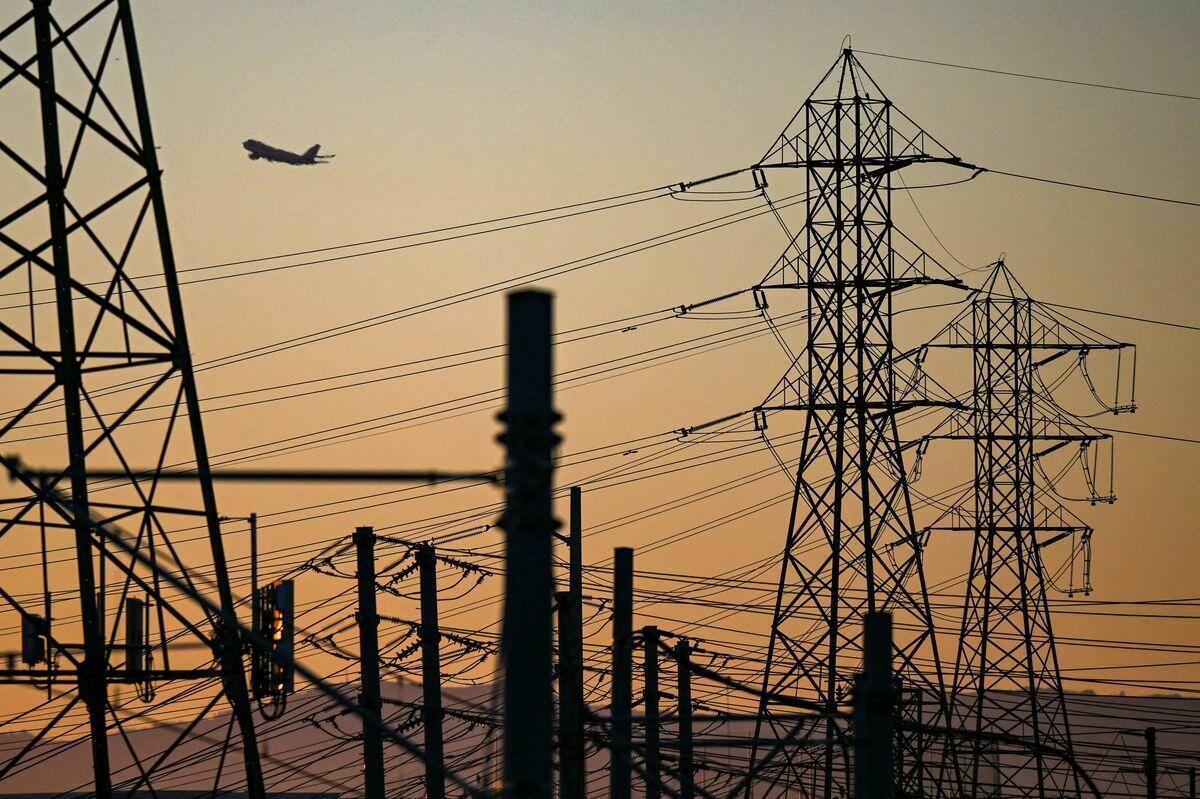
US Utilities Requested $9.2BN In Rate Hikes In Q2, Up 26% From Previous Year

By Ethan Howland of UtilityDive

Electric and gas utilities in the second quarter asked state regulators to approve $9.2 billion in rate hikes, up 26% from the $7.3 billion in rate increase proposals filed in the same period last year, according to an updated report released Tuesday by the advocacy group PowerLines.

In the first half this year, utilities asked for $18.6 billion in rate hikes, down from about $25 billion in the same period last year, according to data collected by the nonprofit.

The report comes as average U.S. residential electric rates increased 7.3% from the year before to 18.8 cents/kWh in April, according to the U.S. Energy Information Administration. As a result, “regulators face mounting pressure to scrutinize utility spending plans while balancing the infrastructure investments that a modernizing grid genuinely requires,” PowerLines said.

The utility sector appears to be entering a capital investment “super-cycle” amid growing affordability concerns. Backlash to rising bills has prompted protests by consumers and their advocates, as well as new state laws intended to tackle the issue.

The Edison Electric Institute, a trade group for investor-owned utilities, estimates that IOUs will spend about $1.4 trillion from this year through 2030 on capital investments. EEI expects capital expenditures will jump 17% this year to nearly $239 billion, from about $204 billion in 2025.

Some utilities contend they can make the investments without significantly affecting their rates. FirstEnergy, for example, is proposing to increase its electric rates in Ohio over three years by about $392 million — partly to cover roughly $2.5 billion in planned capital expenditures. The company says this will increase average annual residential customer bills by less than 3% a year.

According to PowerLines and public filings, other rate hike proposals utilities filed in the second quarter include:

  • Dominion Energy in Virginia is seeking about $1.5 billion across three rate requests;
  • Oncor in Texas requested the largest single increase in the second quarter, at $1.2 billion, driven largely by transmission and distribution investments to meet demand from the oil and gas industry and data centers in the Permian Basin;
  • We Energies in Wisconsin is seeking about $606 million in rate increases;
  • DTE Energy in Michigan is seeking an increase of $474 million; and,
  • Consumers Energy in Michigan is asking for a rate hike of $456 million.

The proposed rate increases in the Midwest total about $193 per customer, followed by $172 per customer in the South, $135 per customer in the Northeast and $110 per customer in the West, according to the data from PowerLines.

Utility regulators will scrutinize the rate hike proposals in the coming months.

“These requests, while often approved at a lower cost than utilities propose, have a high chance of reaching consumer bills in some form,” PowerLines said.

State regulators approved 58% of the total costs utilities sought to add to their rates from 2023 through 2024, the organization said.

U.S. residential customers paid 18.8 cents/kWh on average in April, up 7.3% from the year before, according to the latest data from the Energy Information Administration.

Those costs ranged from 12.4 cents/kWh in North Dakota to 46.6 cents/kWh in Hawai’i. The other highest cost states for residential customers were California at 35.3 cents/kWk, Connecticut at 32.2 cents/kWh and Massachusetts and New York at 29.5 cents/kWh.

Eversource Energy’s Connecticut Light and Power subsidiary is preparing to seek a $503 million rate increase, according to a May 20 filing at the Connecticut Public Utilities Regulatory Authority. If approved, it would increase residential rates by about 13%, the utility estimated.

CL&P said it would show PURA it has strategies to keep customer bills as stable and affordable as possible, while keeping the distribution system reliable.

Tyler Durden Wed, 07/15/2026 - 15:05
https://ift.tt/HBjJ0x5
from ZeroHedge News https://ift.tt/HBjJ0x5
via IFTTT

US Utilities Requested $9.2BN In Rate Hikes In Q2, Up 26% From Previous Year SocialTwist Tell-a-Friend