Radiant has secured a long-term source of nuclear fuel for its Kaleidos microreactor, removing a potential supply hurdle as the company prepares the system for deployment.
Standard Nuclear will fabricate TRISO fuel for Radiant under an agreement covering planned Kaleidos deployments through the early 2030s. The deal gives the reactor developer a dedicated fuel supplier as its program moves toward full-scale testing and production.
Fuel availability remains a critical challenge for advanced nuclear developers. A reactor cannot reach customers without a reliable source of qualified fuel. Radiant is betting that greater control over its supply chain will help avoid that problem.
Fuel supply secured
Standard Nuclear will produce fuel specifically for the Kaleidos reactor. TRISO fuel consists of uranium particles protected by several layers of ceramic and carbon materials. Advanced reactor developers have adopted the technology for its ability to contain radioactive materials within each fuel particle.
Kaleidos is a 1-megawatt microreactor designed for transport to customer sites. Each unit can operate for up to five years before refueling.
Tori Shivanandan, Radiant's president and COO, said securing fuel represents an important step toward larger-scale deployment. "Securing the fuel supply chain is a strategic advantage to deploying at scale," she said.
Radiant also plans to control the reactor's broader fuel cycle. Customers would not handle fresh or spent fuel at their locations. The company instead plans to manage fueling, refueling, and storage through its own facilities.
Reactor testing advances
Kaleidos is now undergoing full-scale testing at Idaho National Laboratory's DOME facility. The Department of Energy selected Radiant through a competitive process and granted it exclusive access to the facility for one year.
Engineers will test the reactor at full scale and full power during extended runs. The campaign will use the same reactor design and fuel specifications intended for customer deployments.
Full-scale testing could reveal engineering challenges that smaller demonstrations cannot easily expose. Radiant says crews can transport Kaleidos by land, sea, or air. The reactor has a planned operating life of 20 years.
A 300,000-square-foot facility in Oak Ridge, Tennessee, will support the company's manufacturing and fuel operations. The site will handle reactor production, fueling, and fuel storage as Radiant prepares for larger deployments.
Customers already waiting
Equinix has signed a commercial agreement for 20 Kaleidos units. The deal gives Radiant an early commercial pathway for its microreactor.
The company has also secured a project with the Department of the Air Force and the Defense Innovation Unit. Radiant will develop and operate a microreactor at Buckley Space Force Base under that effort. Those projects give Kaleidos potential applications across commercial infrastructure and U.S. defense facilities.
Radiant still needs to complete testing, establish repeatable manufacturing, and navigate regulatory requirements before widespread deployment can begin. The Standard Nuclear agreement resolves an important piece of that puzzle.
Radiant now has a committed fuel fabrication partner as it works to move Kaleidos from testing into production and eventual operation.
An Alabama jury ruled on Aug. 20 that The New York Times defamed ex-college basketball player Kai Spears when the newspaper falsely reported in 2023 that he was present during a fatal shooting in Tuscaloosa.
Spears, who was then a walk-on basketball player for the University of Alabama's Crimson Tide, filed a defamation suit against the newspaper in May 2023 after it falsely reported that he was one of the passengers in a car involved in the Jan. 15, 2023, shooting that killed 23-year-old mother Jamea Harris.
After a nine-day trial, the eight-person jury in the U.S. District Court for the Northern District of Alabama sided with Spears and awarded him $9.25 million in damages.
Spears's attorney Matt Glover welcomed the ruling in a statement, saying he believed it would help improve journalism across the country.
Charlie Stadtlander, a spokesperson for the NY Times, said the company was disappointed by the jury's decision to hold it liable for he called "an honest mistake" and will review its legal options.
"We thank the jury for its service, but believe the verdict and award of damages are contrary to law and not supported by the evidence," the spokesperson said in a statement.
The case stemmed from a 2023 article that identified Spears as being present during the shooting, citing an anonymous source.
Spears said in his complaint that the newspaper's false reporting had affected his education and his ability to advance in basketball. He also said the false statements would permanently associate him with the murder.
The newspaper later issued an editor's note, saying that its article "misidentified the person who was in the car with Brandon Miller when the shooting occurred" and that it regretted the error.
"Based on information from a person familiar with the case, the article erroneously identified that person as Kai Spears, a freshman basketball player. After the article was initially published, Alabama's athletic director and Spears's father denied that Spears was present," the editor's note said.
The newspaper "included those responses and reviewed its reporting, but did not conclude that any other change to the article was warranted at that time," it added.
The newspaper said its editors assigned further reporting after Spears filed the suit, which "determined that the other person at the scene was not Spears."
A NY Times article reporting on the verdict Thursday said the newspaper "had not lost a defamation lawsuit brought in the United States over one of its articles in more than 50 years."
Immigration and Customs Enforcement (ICE) arrested five suspected child predators during an operation in Omaha, Nebraska, between Aug. 12 and 14, the agency said in an Aug. 20 statement.
The undercover operation was carried out by ICE's Homeland Security Investigations (HSI) Omaha unit together with state and local partners. Among the five arrested and charged, three had prior convictions for sexual crimes against children and were also listed on sex offender registries, the agency said.
If convicted on the new charges, these three individuals could face enhanced penalties, likely adding 10 more years to any sentence.
ICE said the HSI is "delivering on President Trump and Secretary Mullin's mandate to protect America's children."
More than 5,000 child predators and human traffickers have been arrested since President Donald Trump took office in January 2025, according to an Aug. 18 White House statement.
Trump has backed law enforcement agencies and empowered the Federal Bureau of Investigation to "hunt predators instead of political targets," the White House said.
In its recent statement, ICE said that one of the arrested individuals, Bryan Dady, 48, a U.S. citizen, has been listed in Nebraska's sex offender registry for a 2023 conviction for enticing a 9-year-old girl. The person was also arrested in January this year on new charges alleging the grooming and enticement of a 13-year-old.
Another individual, Jocsan Aparicio Santos, 39, a Mexican citizen with lawful permanent residency in the United States, is currently on a sex offender registry for a 2010 conviction linked to assaulting a 15-year-old girl.
A third individual, Logan Trigg, 29, an American citizen, is also on a sex offender registry for a conviction related to sexually assaulting a 13-year-old girl.
The fourth person, Law Eh, 39, a naturalized American from Burma, also known as Myanmar, was charged with possessing files containing child sexual abuse material, while the fifth, Tillian Hutton, 25, another U.S. citizen, is facing charges of sex trafficking children.
All five suspects intended to engage in sexual acts with children, according to ICE.
"These cases are not hypothetical; they show a real demand for the sexual exploitation of children in our community," HSI Kansas City Special Agent in Charge Rick Sabatini said in the statement.
"They show why law enforcement must continue to identify and disrupt offenders before they have the opportunity to harm a child."
According to ICE, the HSI Omaha Metro Juvenile Sex Trafficking Task Force has obtained 21 federal convictions for sex trafficking children since 2021.
The Epoch Times reached out to the public attorneys representing the charged individuals but did not receive any response by publication time.
Child Trafficking, Exploitation
According to data from the National Center for Missing & Exploited Children, it received more than 113,500 reports of potential child sex trafficking last year, a 323 percent increase from 2024.
A child can be trafficked by family members, strangers, and gangs. In some cases, exploitation of children may not involve any trafficking. Instead, the children may be offered food, money, or shelter in exchange for sexual engagement.
Some of the risk factors of child trafficking include intergenerational sexual abuse, low self-esteem, substance abuse, gang activity, and developmental or physical disabilities, the center said.
Legislative actions have been taken to address the issue of child exploitation. On June 10, Trump signed the Secure America Act into law, which contained a provision to combat child exploitation.
The provision provided the Department of Homeland Security with $108.5 million to hire 200 new child exploitation investigators and analysts, according to a June 9 statement from the office of Sen. Josh Hawley (R-Mo.), who introduced the provision.
Before the legislation was in place, Homeland Security employed seven full-time specialists to identify child exploitation victims, the statement said.
"That's two hundred new law enforcement officers to find and rescue kids trafficked by predators and a new initiative to coordinate local, state, and federal enforcement," Hawley said in the statement. "This is the biggest surge against online child exploitation ever by the federal government. It's time to rescue these kids."
In an unrelated operation, the U.S. Marshals Service said on Aug. 10 that 48 missing children from Massachusetts were rescued during a multi-agency operation tied to the FIFA World Cup.
The agency said the rescued children were between 12 and 17 years old. Several of them were found outside state borders after investigators tracked leads across the country and to multiple states. The children have since been reunited with their families or referred to child welfare and victim services, the service said.
In another major operation conducted in April, Operation Iron Pursuit, the FBI targeted alleged child exploitation predators across the United States. The effort led to the rescue of more than 200 child victims and the arrests of more than 350 individuals, the FBI said in a May 15 statement.
An earlier effort, the two-week Operation Relentless Justice conducted in December, resulted in 205 child victims being located and 293 alleged offenders being arrested.
Tonight: Trump To Appear On Turncoat Michael Cohen's Radio Show
Michael Cohen - Donald Trump's former 'fixer' who once vowed to take a bullet for him, only to flip after he was raided by the FBI in 2018 in the Stormy Daniels hush-money probe - says that Trump has agreed to appear on his New York City-area radio show this week.
Cohen wrote on X on Wednesday to confirm that Trump would appear on “the radio show I’m hosting tomorrow night at 6pm and the rest on my Sunday” show on 770 WABC Radio.
It’s not for the podcast…it’s the radio show I’m hosting tomorrow night at 6pm and the rest on my Sunday 5pm est radio show on 77WABC radio called “When You Know…You Know”. https://t.co/ap68IAlrcJ
Cohen told CBS that this will be "the first public conversation between the president and myself in eight years," adding "You know, there have been private conversations that have, of course, been reported. But this is the first public conversation."
As the Epoch Timesnotes further, Cohen also linked to a Substack article that served as a recollection of the public feud the two had, which included Cohen testifying against Trump in his New York City criminal trial in 2024. Cohen served as one of the Manhattan District Attorney’s Office’s star witnesses, alleging the president was intensely involved in a plan to pay off a former adult film actress during his 2016 campaign.
“Eight years of silence. Hundreds of thousands of headlines. Fifteen years of history fractured in an instant, and somehow, against almost every expectation, here we are. Since yesterday’s announcement broke, my inbox has once again become a digital battlefield. It has been flooded with hatred, anger, disbelief, and some of the most spectacularly vicious things imaginable,” Cohen wrote.
He later wrote that “apparently, quite a few are ready to personally escort me to the gates of hell for daring to share a microphone with Donald Trump again.”
Speaking to Politico on Wednesday, Cohen answered a question about whether he would seek a presidential pardon.
Cohen in 2018 was sentenced to three years in federal prison after pleading guilty to campaign finance violations, tax evasion, bank fraud, and lying to Congress. He completed his sentence and supervision requirements in November 2021.
“We’ll see,” he said in response. “Will I make that request down the road? I don’t know. Maybe maybe not.”
Referring to the upcoming interview, Cohen told the outlet that listeners will be “interested to hear two individuals that were friends for a decade and a half who have not publicly spoken in eight years” talk about their past.
Trump, who was convicted in a jury trial on 34 counts of falsifying business records, denied the charges against him and pleaded not guilty. He has long said that the Manhattan district attorney’s case and cases that were brought against him in Georgia, Washington, and Florida were a “political witch hunt.”
The judge who oversaw the case, Juan Merchan, sentenced Trump to an unconditional discharge in January 2025, coming about two months after Trump won reelection.
In his first term, Trump often criticized Cohen in response to claims his former lawyer made about him, writing on X in 2018: “If anyone is looking for a good lawyer, I would strongly suggest that you don’t retain the services of Michael Cohen!” Cohen would often appear on then-MSNBC and CNN to criticize the first Trump term.
California Retail Theft Blitz Leads To 97 Arrests And $1 Million In Stolen Merchandise
A coordinated crackdown on organized retail crime across California ended with 97 arrests and the recovery of thousands of stolen products, according to KTLA.
Over nine days in early August, California Highway Patrol investigators worked alongside more than 100 law enforcement agencies as part of the National Organized Retail Crime Blitz. The enforcement effort focused on suspected theft activity at retailers, shopping centers and other businesses throughout the state.
The KTLA report says that authorities ultimately recovered more than 8,500 items believed to have been stolen. CHP estimated the merchandise was worth roughly $1.05 million. Of the 97 people arrested during the operation, eight were taken into custody on felony charges.
The enforcement push included operations in several communities. In San Diego, authorities recovered a large quantity of stolen sneakers, while officers in Roseville, Lodi and Stockton carried out proactive operations that led to additional arrests.
CHP Commissioner Sean Duryee said retail theft can have lasting consequences for businesses and the communities they serve, and said the agency plans to continue committing resources to identifying and apprehending those involved.
The latest operation adds to several years of organized retail crime enforcement by the CHP. Since its Organized Retail Crime Task Force began operating in 2019, the agency has been involved in more than 4,700 investigations and over 5,300 arrests.
During that period, authorities have recovered more than 1.6 million stolen products with an estimated combined value exceeding $76.6 million, according to CHP.
Harvard University has agreed to pay $53 million to resolve lawsuits brought by the families of those whose loved ones' body parts were donated to its medical school only to be sold on the black market by its morgue manager.
A state court judge in Boston preliminarily approved a class action settlement on Aug. 18 that would resolve the lawsuits filed against the Ivy League institution eight months after Cedric Lodge, the former manager of Harvard Medical School's morgue, was jailed.
Dozens of relatives of individuals whose bodies were donated to Harvard filed lawsuits accusing the school of negligence, contending it turned a blind eye to Lodge's years-long misconduct until he was indicted in 2023.
On Dec. 16, 2025, Lodge, 58, pleaded guilty to charges related to the interstate transportation of stolen goods and was sentenced to eight years in prison.
He admitted to stealing body parts from cadavers donated to Harvard Medical School's Anatomical Gift Program and selling them to buyers across the country.
Morgue Manager Stole Brains, Skin, Bones
Prosecutors said that between 2018 and March 2020, Cedric Lodge stole and trafficked "heads, brains, skin, bones, and other human remains" after the donated bodies had been used for teaching and research.
His wife, Denise Lodge, 65, was also sentenced to 12 months and one day in prison.
Cedric Lodge, who had worked in Harvard's morgue for almost three decades, smuggled the body parts from the morgue in Boston to his home in Goffstown, New Hampshire, where he and his wife sold them, prosecutors said.
A judge had initially dismissed the class action lawsuit against Harvard, but in October 2025, the Massachusetts Supreme Judicial Court overturned that decision, finding that the plaintiffs had sufficient claims that the institution had failed to act in good faith in handling the bodies.
"Instead of the dignified treatment and disposal of human remains required ... the donors' remains were ghoulishly dismembered and sold for profit under the most horrifying of circumstances," Justice Scott Kafker wrote in the court's opinion at the time. "This horrific and undignified treatment continued for years and involved numerous donors."
'Flagrant Betrayal of Our Values'
Harvard's dean of the faculty of medicine, George Daley, and the dean for medical education at Harvard Medical School, Bernard Chang, said in an Aug. 17 message to the school's community that Lodge's actions took place without the school's knowledge.
"His violations ... were despicable, abhorrent, and a flagrant betrayal of our values as a medical community," they wrote. "These events do not reflect the reverence we hold for the altruistic individuals who selflessly donate their bodies to our Anatomical Gift Program (AGP) to provide essential educational opportunities to medical and dental students, practicing surgeons, and allied health professionals."
Daley and Chang offered their "deep sorrow and empathy" to the families of the donors and said that, in addition to the financial payment, they will provide a statement to the families via a live webinar "confirming that Lodge's criminal acts were morally reprehensible" and inconsistent with the standards Harvard Medical School expects for the treatment of anatomical donors.
John Morgan, whose law firm Morgan & Morgan represented families in the litigation, said, "We hope that this resolution ensures that this never happens to another family ever again."
The remains were sold to, among others, Katrina MacLean, who ran Kat's Creepy Creations, a studio and store in Peabody, Massachusetts, the indictment stated. Payments were often made to Denise Lodge through her PayPal account.
On Aug. 18, MacLean, 47, was jailed for 24 months by Chief U.S. District Judge Matthew W. Brann for interstate transportation of stolen property.
This past week ended with shock and sadness at the news that Jason Arday ended his own life in the midst of an investigation over his intellectual credibility. He was the vaunted education sociologist at Cambridge University, media darling and beneficiary of a big book contract, the toast of the town, and the subject of countless hagiographic profiles in media venues.
Plenty of people had whispered for years that he nowhere near qualified for all this celebration. He was not a genius. He was a fabulist. Saying it, however, was dangerous to one's career. As a result, he kept getting away with it. His luck ran out when a U.S. academic pressed the issue. The tissue of lies collapsed.
The circumstances surrounding his absurd appointment to a full professorship with a named chair - the youngest black professor to enjoy such privilege - are hardly unique to him. When the full truth coming out about his plagiarism and autobiographical embellishments hit the international news, despair overwhelmed him in tragic ways.
It goes without saying that this young man had benefitted from what's called DEI, which is the new term for what used to be called "affirmative action" but mutated into rampant privilege based on raw identity politics. Reverse racism doesn't describe it fully. It is institutionalized discrimination that breeds deep resentment from those passed over and cultivates hidden contempt for those who ride this wave to unearned prestige and plaudits.
Something else has always bugged me about these systems that confer high titles and salaries on people solely on grounds of their race. It is deeply condescending and cruel to the point of being abusive of our fellow human beings. While it is easy to resent people who benefit from unearned exaltation, the plight of those who are its seeming beneficiaries also deserves some attention.
Years ago I had the opportunity to get to know a university administrator and his wife who occupied such a role. We met at a dinner party. He was the only black gentleman in the upper echelon of a major state university. His title was vice president for civil rights or some such made-up badge. It was a position invented to create the appearance of diversity. The position fell to him because he ticked all the boxes.
He was proud of his new position. But the more we spoke, the more he had doubts that he would express under his breath. He said that he has a large budget and staff but is rarely included as part of any serious planning team. He told me that he is mostly sent out on fundraising efforts to tell his story about how he grew up poor, overcame racism, and now has a prestigious position in university administration. But, he told me with frankness, he is tired of that story of himself.
We met up a few weeks later because I was curious to know more. He laid it all out to me. He came of age in an educational environment that was especially seeking blacks who performed above expectations which he always did. But instead of moving up a notch based on merit, he said he became aware early on that he was being accelerated and escalated beyond a level that was justified.
It became obvious in his college admissions, which pushed him into an institution far above that for which he was prepared. He found himself lost in a sea of high achievers. His privilege became a burden. He could not keep up in his classes and began to cut corners. It became obvious to him early that he was going to get away with this.
It seemed like the entire system was on his side. He tried to justify this to himself on grounds that every university has white kids on trust funds with legacy connections. They work less hard than a working-class kid who made it on his own so perhaps this is not unusual.
But, he said, he always felt burdened in multiple directions. It was sad enough that he grew up poor and black in the Deep South and was not expected to achieve. But it was far worse that he was given advancements beyond what he deserved when everyone knew it and considered him to be little more than a token of a compensatory system.
He described to me that choice he had to make. He could refuse the high grades, the advanced placements, the awards and attention that he knew were unmerited. But he was never sure what the point of that would be. Instead, he accepted them all as part of a game. He lost trust and respect in the system that he joined precisely because the system never really expected a high degree of performance from him.
He continued in this vein to tell me about graduate school and PhD studies which were more of the same. There was no point in this where he knew when to refuse, when to say no, when to call out the condescension and fakery of which he was presumably benefiting. In fact, he never saw himself as much of a beneficiary at all. He felt burdened by it all, and even robbed of what all the white kids faced: high expectations and the satisfaction of knowing that one climbed the ladder by virtue of his own efforts.
The story ends with his then appointment, which he knew to be fake at least on some level, though he believed that he truly did have something to contribute to university culture. It was that tag of having been marked by DEI that prevented it. He said he knew from childhood that in any endeavor in life, a title is easy but genuine respect from colleagues must be earned. He simply did not have that and did not know how to get it.
I was hardly in a position to give him advice so I did my best simply to be a sympathetic ear. I've thought about this case often through the years, knowing all the while that such cases were growing in academia to absurd extents.
What if the entire system of educational and professional achievement suddenly decided that white guys from Southwest Texas needed a boost through the ranks to make up for past wrongs? Everything I did and everywhere I went was read through my accidental identity and I was celebrated on the basis that I was from Southwest Texas, bypassing everyone else. How would this sit with me?
Absurd, right? Well, for my friend and by virtue of his race, whole degree programs were being manufactured as well as departments all designed to create the illusion of achievement without the reality. And who was doing this? For the most part, it was white left-liberals who were seeking some kind of propitiation for perceived social sins, using black people as pawns in their egalitarian gamesmanship.
And it wasn't just academia. DEI bled into corporate America, banking, media, the movies, arts institutions, publishing, and into every space and sector in modern life. Objecting to it at any point meant taking a huge risk of being called a racist. Whole systems of communication and enforcement have been invented to cover up all the ways in which meritocracy was being displaced by a new racial hierarchy.
Countless whistleblowers in academic and corporate life have faced brutal retaliation for calling this out. Everyone knows the rules: play along or face the purge. This is how Arday and so many others have gotten away with this for so long. The brave dissidents are smeared and broken. All that's left are the people willing to live with the lies.
None of this can end well. In the case of Jason Arday, it was not a case of Icarus who flew too closely to the sun and saw his wings melt before falling to earth. No. Instead he was catapulted by others at his previous schools and by Cambridge itself as high in the air as possible but given no parachute.
One day, seemingly out of the blue, the standards police came for him and revealed vast plagiarism and implausible biography. He tried the old tricks of calling them names but they would not stop their investigations. His entire life story was being upended and he was being made a laughingstock, merely for playing along with a system that everyone knew was fake to begin with.
The personal pain of this level of public humiliation is impossible to describe. It is worse than prison. Even when it is completely deserved - he had played the game all along, just as his critics had said - the suffering is unbearable for most mortals. What angers me most about this is not even that Arday played along with the racket that he knew was nothing more than that. It's that the racket was constructed to work exactly the way it did work, and then suddenly and without any warning, it stopped working.
Decades have gone by when such intellectual fakery has only grown and persisted. It's not that such systems have been abused by bad actors. It's that the systems themselves were built to baptize abuse and injustice as a fairness and compensation for past wrongs.
In reality, DEI is demeaning to everyone: the bypassed, the whistleblowers, and the seeming beneficiaries. It is a socially engineered scam created by guilt-ridden intellectuals that is exploitative even of those who seemingly win from its emoluments.
Jason Arday, despite all his failings, never deserved the indignity that comes with an unmerited promotion to the top. He knew this all along, just as my friend knew it. Any serious person with the capacity for self-examination knows it. We should stop these absurd games. They are unsustainable and can end in terrible tragedy.
Jeffrey A. Tucker is the founder and president of the Brownstone Institute and the author of many thousands of articles in the scholarly and popular press, as well as 10 books in five languages, most recently "Liberty or Lockdown." He is also the editor of "The Best of Ludwig von Mises." He writes a daily column on economics for The Epoch Times and speaks widely on the topics of economics, technology, social philosophy, and culture.
A federal court on Aug. 17 blocked a Trump administration plan to move the proposed new FBI headquarters to the Ronald Reagan Building in Washington instead of a site in nearby Greenbelt, Maryland, that was chosen in 2023.
Congress passed laws requiring the General Services Administration (GSA), which manages the federal government's real estate holdings, to select a site for the project from among three suburban sites outside of Washington: Greenbelt; Landover, Maryland; or Springfield, Virginia. In 2023, GSA chose Greenbelt.
However, in July 2025, the Trump administration jettisoned those plans and said it would be more cost-effective to move the FBI to the Reagan Building, which houses U.S. Customs and Border Protection and, until last year, the U.S. Agency for International Development.
U.S. District Judge Theodore Chuang ruled in favor of the state of Maryland and Prince George's County, finding the federal government illegally scrapped the plan to build the facility in Greenbelt, and reprogrammed funds Congress already approved for the project to an alternate location.
Chuang said choosing the Reagan Building ran afoul of legislation Congress approved in 2022 and 2023 that directed the GSA to select one of three sites.
"Notably, the text provides no conditions under which the selection could be unilaterally rescinded or switched to a nonconforming site," Chuang said in his written opinion.
"Had Congress sought to make the location restriction associated with the site selection provisional or qualified, it could have done so," the judge said.
Because the Trump administration did not have authority to choose the Reagan Building, it could not lawfully reprogram $555 million in previously appropriated funds to prepare that site, he said.
The federal government's decision to reprogram the funds was "arbitrary and capricious" because it was based on a misinterpretation of existing law "under which the FBI erroneously concluded that the FBI and the GSA had the authority to select the Reagan Building as the site for the consolidated FBI headquarters," the judge said.
The court vacated the reprogramming and site selection decisions and issued a permanent injunction blocking the government from implementing the Reagan Building plan or reprogramming the funds.
Maryland Gov. Wes Moore, a Democrat, hailed the new court ruling.
"From the beginning, we said the decision to move the FBI headquarters to Greenbelt was final, earned, and the Trump Administration's attempt to overturn it was illegal and wrong for our national security. Today, the court agreed," Moore said in a statement.
"Now it is time to stop the games and get to work building the world-class FBI headquarters that our public servants deserve, where it belongs: in Prince George's County, Maryland."
The Epoch Times reached out to the U.S. Department of Justice for comment. No reply was received by publication time.
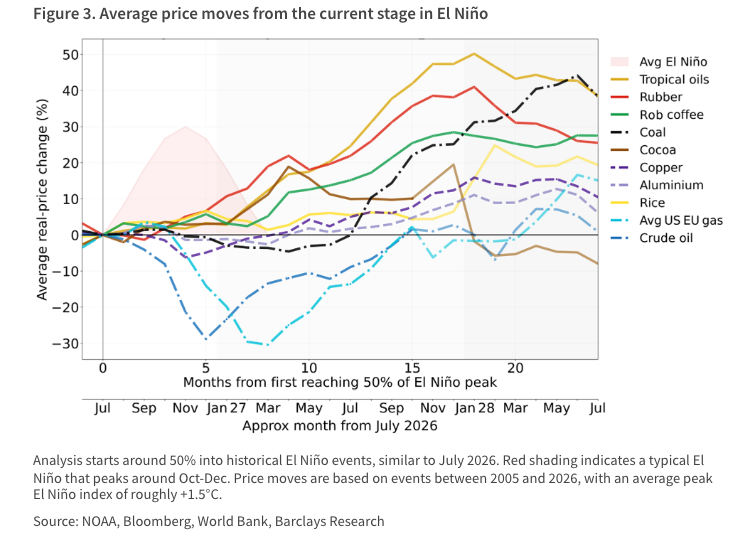
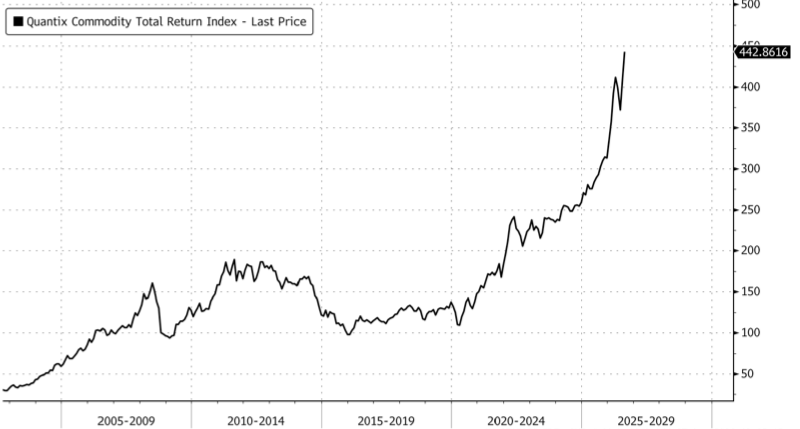
Copper Squeeze Deepens In London As Futs Near Record; Barclays Flags Top Mining Picks
Copper prices in London have held above $14,000 a ton for nine consecutive sessions, with steep backwardation signaling that near-term demand is outstripping available supply. A confluence of bullish drivers is pushing prices toward record highs, while the key cash-to-three-month spread has widened to its highest level since the 2021 market squeeze.
The spot price traded as much as $543.50 a ton above three-month contracts on the London Metal Exchange, a hallmark of steep backwardation that signals near-term demand is outstripping available supply.
LME copper curve signals deep backwardation:
Three-month futures rose as much as 1.7% to $14,396 a ton on Monday, closing in on January's record of $14,527.50.
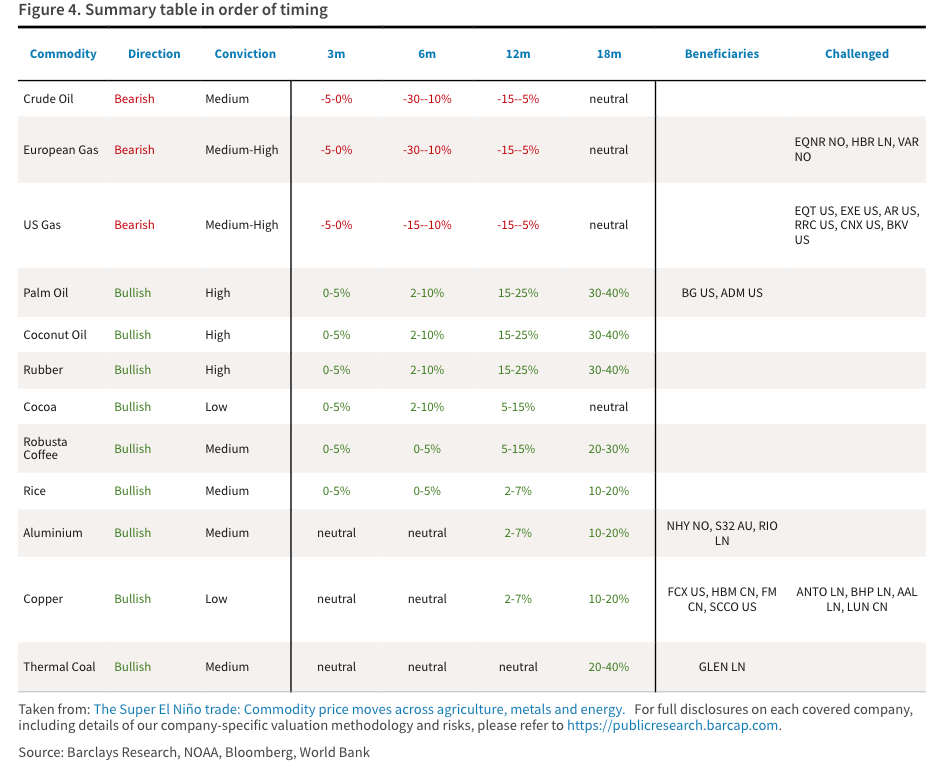
Richard Garchitorena, a New York-based Barclays equity research analyst covering North American metals and mining stocks, wrote Monday morning that mining stocks are poised for further gains as copper supplies continue to tighten.
Garchitorena said copper supplies remain constrained for a number of reasons: Chilean production fell 6.7% year over year through June, prompting Cochilco to cut its 2026 forecast to 5.27 million tons, down 2.6%. Antofagasta separately reduced its annual guidance by about 5% after severe weather disrupted its Los Pelambres mine. An outage at Indonesia's Gresik smelter has also delayed shipments, with no restart date established.
He added that LME copper stockpiles have plunged 32% from a month earlier to 205,000 tons, while Comex inventories rose 8% to 735,000 tons as traders await a potential U.S. tariff on refined copper. He also noted that speculative net-long positions increased to 77,123 contracts, up 20% from July.
Garchitorena's preferred individual mining stocks to watch include Freeport-McMoRan, First Quantum Minerals, Hudbay Minerals, Newmont and Agnico Eagle.
Global X Copper Miners ETF (COPX)
Separately, David Wilson, head of metals strategy at BNP Paribas SA, told clients, "There seems to be momentum for it to get there," referring to the potential for LME copper to exceed the January record. "It's moving into overbought territory, but I don't know if that means anything at the moment, given how tight it is."
"Normally you'd expect to get more Chinese deliveries into the LME," BNP's Wilson said. "But the thing is, why would you deliver to the LME when you can still effectively ship metal into the US?"
Bloomberg noted that the copper squeeze comes "ahead of the third Wednesday of the month delivery date, the main focus of liquidity in the LME's contracts. That may pile pressure onto traders with short positions."
More than 80% agreed economic hardship can make socialist policies attractive even to people who oppose socialism.
Most Americans see communism in an unfavorable light, and a strong majority of Epoch readers say it’sincompatible with the United States’ founding principles. Yet socialism, an early stage of communism, continues to attract people by promising equal wages, low costs, and public benefits.
The goal sounds appealing, but the means have historically included higher taxes and extensive state control.
When asked about a movement in the United States to embrace socialism, Vice President JD Vance said in an Aug. 13 Fox News interview, “Our response to that can’t be to just ignore the economic concerns that I think are feeding this rising interest in socialism.”
American citizens deserve a good life in this country and a good government to make that happen, said Vance.
The Trump administration is rebuilding the industrial base and the heartland, making streets safer, and making it possible for young people to afford a home, Vance said.
“This is how you stop socialism.”
“You don’t stop socialism by throwing slogans at people about the free market—as much as I love the free market—you stop socialism by making people’s lives better, and that’s what we’re trying to do every single day,” Vance said.
Here is a look at Epoch readers’ attitudes towards socialist ideology and a government-controlled economy.
Socialism and Cost
The majority of survey respondents are against the socialist ideology of high taxes and income redistribution.
Ninety percent of readers opposed substantially higher taxes on high-income Americans to fund benefits for working- and middle-class families.
A whopping 97 percent opposed using the tax system not only to fund the government, but also to make incomes more equal, with 92 percent strongly against.
The same 97 percent agreed that the public ultimately absorbs the cost of free government benefits.
Additionally, more than 90 percent of readers would not consider voting for a democratic socialist candidate even if they supported the candidate’s economic policies.
Government Control
Around 96 percent of survey takers oppose greater government economic control in exchange for greater economic security.
Nearly all those polled (98 percent) were against government determining wages and prices rather than leaving them to the free market.
Ninety-three percent opposed allowing extensive government intervention in wages, prices, and social benefits, even if private ownership were preserved.
When it comes to life and affordability, readers’ attitudes softened toward government intervention.
Just over 80 percent of respondents opposed government limits on prices (85 percent), a higher mandated minimum wage (83 percent), and limits on rent increases (81 percent).
Public Benefits
Almost all of those surveyed (97 percent) opposed government providing more basic needs if it weakens individual initiative and productivity.
While 90 percent opposed fare-free public transportation, there was a modest drop to 80 percent who were against taxpayer-funded child care for needy families.
When asked about homeowners funding public schools through property taxes even if they do not use public schools, 67 percent of survey takers opposed, 16 percent were unsure, and 17 percent supported the idea.
How Socialism Gains Popularity
A majority of respondents (94 percent) agreed socialism can expand gradually by eroding private control of property while retaining the label of capitalism.
A similar majority of readers (93 percent) agreed that socialist policies can gain support when presented as benefits rather than as government control.
Eighty-seven percent agreed that people may reject socialism by name while accepting its policies one at a time.
Meanwhile, 82 percent agreed economic hardship can make socialist policies attractive even to people who oppose socialism.
San Mateo County may become the first in California to regulate humanoid robots used for commercial purposes.
The county board of supervisors on Aug. 11 passed a resolution sponsored by Supervisor Ray Mueller to direct county legal and administrative staff to draft an ordinance regulating the use of untethered autonomous or semi-autonomous humanoid robots, or “mobile humanoid robots,” in restaurants, retail stores, and other businesses.
State law already regulates autonomous vehicles but not the commercial use of humanoid robots, according to a county memo. The resolution aims to create a “comprehensive permitting process governing the commercial deployment and operation” of such robots within the county.
Several companies have already started humanoid robot pilot projects.
Tau Robotics, for instance, offers cleaning services to invited San Francisco residents at $30 per hour in a pilot program launched on July 28. The robots are operated by humans and artificial intelligence, according to the company’s website.
According to the county memo, having a permitting framework in place before these robots are widely implemented would “encourage the responsible integration of emerging technologies in a manner that serves the public interest.”
The resolution directs county staff to consider having businesses pay an annual fee dedicated to HazMat and fire equipment for local first responders to handle risks from the lithium-ion batteries the robots use.
“In recent years, we’ve seen an uptick in lithium-ion battery fires due to thermal runaway,” Rich Seguine, vice president of Local 2400, which represents firefighters in San Mateo County, said in a public comment at the county board meeting. “A funding source like this in the resolution can be used to purchase necessary specialized equipment.”
The resolution also aims to require the robots to have accessible emergency “kill switches,” have clean manufacturer safety records, and be supervised by a trained human onsite.
Technological progress and protecting working people aren’t competing goals, said Julie Lind, a member of the San Mateo Labor Council, in a virtual public comment.
“Businesses should understand and account for the human consequences of deploying this technology, including potential job losses,” Lind said.
Non-humanoid robots have already been deployed in a few commercial uses in the area, including Cafe X, a robotic coffee bar in San Francisco International Airport; Artly Coffee in Stonestown Galleria in San Francisco; and autonomous sidewalk delivery company Coco Robotics.
More Than Half Of Gen Z Investors Have Moved Money Into Sports Bets
A growing share of young Americans is folding sports gambling into their long-term financial plans, according to new research from the investment platform Betterment.
In an online survey of 1,000 U.S. retail investors conducted in late March and early April and released this week, 52% of Gen Z investors said they had shifted money originally set aside for stocks or other investments into sports wagers over the past year. Only about one-third of Gen Z participants reported no involvement in sports betting at all, compared with 63% across all age groups in the survey.
26% of Gen Z respondents - those born between 1997 and 2007 - said they view sports betting as a deliberate, ongoing part of their wealth strategy. That figure drops sharply with age: 14% of millennials, 6% of Gen X, and just 1% of baby boomers reported the same outlook.
Of those Gen Z respondents, roughly 11% described betting as an investment strategy aimed at high returns, while 15% treated it as a short-term way to raise cash.
The betting numbers sit inside a broader shift in where young investors get their information. Social media is now Gen Z's most commonly cited source for financial news, rising from 45% in 2024 to 60% this year - nearly three times the 21% who cite a financial advisor.
The findings highlight how the rapid growth of legal sports gambling and prediction markets is competing for the same discretionary dollars that once flowed into retirement accounts and brokerage portfolios. The state-regulated sports betting industry in the United States has expanded into a nearly $17 billion business in recent years. Prediction markets have also surged; Robinhood Markets, long known for democratizing stock trading, added them to its app in 2025 and has called the segment its fastest-growing business line ever.
Betterment Chief Executive Officer Sarah Levy warned that the trend carries risks. "When a prediction market or sportsbook starts to feel like a retirement strategy, we have a problem," she said in a statement. "These products are designed to keep people seeking the next quick score, not to help them build toward the next decade. Younger investors deserve access to the tools and information that meet them where they are, but the industry also has a responsibility to be clear about the difference between participating in a trend and building lasting wealth."
Robert Kosciuk, a 32-year-old from Huntington, New York, illustrates the shift - maintaining a Robinhood account for stocks but devoting more energy this year to betting, Bloombergreports. He says he approaches sports wagers with the same discipline he applies to investing: researching outcomes carefully, avoiding emotional decisions, and limiting most bets to $100. He acknowledges the activity is gambling but believes he manages it more thoughtfully than casual players.So far this year he has earned roughly $2,500, enough to cover a vacation he attributes in part to successful bets on the Carolina Hurricanes.
Industry representatives push back on the idea that betting should be treated as investing. Joe Maloney, president of the Sports Betting Alliance - whose members include FanDuel, DraftKings, Fanatics Betting & Gaming, bet365, and betMGM - told Bloomberg that sports wagering is entertainment, not a wealth-building strategy. Adults who choose to bet, he added, should do so responsibly within a fixed entertainment budget and never with money needed for savings or essentials.
Broader economic pressures may be amplifying the appeal of high-risk options. Eighty percent of Gen Z respondents who already use or are considering speculative investments said concerns about falling behind financially played a role, according to a Northwestern Mutual study of 4,357 adults conducted by the Harris Poll in January. As homeownership grows more difficult and everyday costs rise, some younger adults are turning to sports betting, prediction markets, and crypto in hopes of accelerating progress toward their goals.
The Betterment survey also examined how investors make decisions. 56% percent said they rely primarily on their own research and judgment - more than any other single source. That self-reliance increased with age, rising from 40% among Gen Z respondents to 69% among baby boomers. About one in three participants reported trusting artificial intelligence for financial advice. Of those, 53% said AI had prompted a decision they would not otherwise have made, including 48% of all Gen Z respondents. Gen Z investors were eight times more likely than baby boomers to say they were comfortable using AI for long-term financial planning - 41% against 5%.
The survey polled 1,000 U.S. retail investors between March 27 and April 3, split evenly across four generations, meaning each generational figure rests on roughly 250 respondents. Participants were recruited through an incentivized online panel and were required to hold at least one investment outside a 401(k).
Ukraine Hits Key Russian Space Facility With Flamingo Cruise Missiles
Ukraine's long-range drone attacks have frequently targeted military bases and oil refinery and energy sites of late, and more recently warehouses of major Russian online retailer Wildberries - but on Saturday a new target has been added: space facilities.
Ukrainian forces have touted that they've struck the Progress Rocket and Space Center in Russia's Samara region. The facility focuses on the manufacturing and operation of space launch vehicles.
Ukrainian President Volodymyr Zelensky said on X that Ukraine hit the space manufacturing center with FP-5 Flamingo cruise missiles - among the largest in Ukraine's arsenal, and which are domestically developed and produced.
He said it was necessary to target Russian space agency Roscosmos as among Russia's "key enterprises" - and that the targeted site was also involved in "electronics production" connected to military operations.
Other sites targeted in the fresh wave of attacks included Savasleyka air base in the Nizhny Novgorod region, which hosts aircraft used to attack Ukraine, as well as an oil facility in Ust-Luga, which lies close to the Estonian border.
"Our plan of long-range sanctions against Russia for this war is being implemented, and it is important that Russia’s war potential be reduced," Zelensky stated.
Ukrainian national media offered this as a backgrounder:
The “Progress” Rocket and Space Center is one of the key enterprises in the Russian Federation’s rocket and space industry, producing launch vehicles of the “Soyuz” family. These are used to launch Russian spacecraft for military, reconnaissance, and communications purposes into orbit.
In particular, the “Soyuz-2.1b” is used to deploy the Russian “Rassvet” satellite constellation – a broadband satellite communications system that Russia positions as an analogue to Starlink.
The Progress Rocket and Space Center also manufactures Earth observation satellites, which the enemy uses for reconnaissance purposes.
Russia also attacked Ukraine overnight, as has long been the norm. Over 150 Russian drones were sent on the country, with Ukrainian forces claiming shootdown or neutralization of 124 of these, according to a military statement.
Ukraine has struck a facility used in the production of Russia’s new satellite internet system.
Kyiv deployed Flamingo cruise missiles to target the Progress Rocket Space Centre in Samara, south-western Russia, in an overnight attack, Volodymyr Zelensky said on Saturday ⤵️… pic.twitter.com/eoalkZcMgz
The fresh onslaught resulted in dozens of injures. As for potential casualties inside Russia, little is yet known of this in terms of secretive space and airbase facilities targeted.
Energy Drinks Overtake Coffee As Gen Z's Primary Caffeine Source
Filippo Falorni, Citi’s lead US equity-research analyst covering beverages and household and personal-care companies, published his latest survey of 2,400 US energy-drink consumers, revealing a significant generational shift in caffeine consumption.
Energy drinks, led by category giants Red Bull, Monster, and others, have overtaken coffee as the primary caffeine source among Gen Z consumers. In other words, younger Americans are increasingly abandoning the morning cup of coffee, even as Millennials, Gen Xers, and Baby Boomers continue to rely on it for their daily boost.
Among respondents aged 16 to 24, 30.6% now identify energy drinks as their primary caffeine source, up from 20.6% last year. Coffee fell to 27.3% from 40.4%, meaning energy drinks have overtaken coffee among the youngest cohort surveyed. Across all older age groups, coffee is the primary source of morning caffeine.
Falorni added more color:
Based off our survey results, younger consumers are increasingly comfortable with using energy beverages as their primary caffeine source, with 30.6% and 24.3% of 16-24 and 25-34 year-olds, respectively, reporting energy drinks are their primary source of caffeine, up markedly from 20.6% and 19% in our 2025 survey and above the 23.6% for total respondents (vs. 16.6% in 2025) and only 12% for the 55+ age group (vs. 7.7% in 2025). We also highlight that coffee consumption is lowest for the youngest demographic we surveyed, with only 27.3% of 16–24-year-olds stating coffee was their primary caffeine source (down significantly from 40.4% in 2025) vs. 40.8% for total respondents (also down from 47.4% in 2025) and 60.4% for the 55+ age group
Looking specifically at energy drink consuming respondents, we can see the coffee category has been the largest share donor to energy beverages across all age groups, with 45% of all respondents reporting coffee was their primary source of caffeine before switching to energy beverages vs. 30% for soft drinks and 10% for tea.
Other compelling findings in the survey:
Women accounted for 58% of consumers who entered the category during the past year, compared with only 29% of consumers who have been drinking energy beverages for six years or longer.
Zero-sugar products now represent about 49% of US energy-drink sales, up from 37% in 2021.
Energy-drink prices have risen only 4.9% since late 2021, compared with 42% for soda and 47% for coffee, giving Monster and Red Bull considerable room to raise prices.
About 40% of respondents increased their energy drink consumption over the past year, while just 20% reduced it.
Brand loyalty is soft: 51% switched their primary brand during the past year, making flavor innovation and shelf space critical.
Monster and Red Bull control about 70% of the market despite a surge of challenger brands.
In markets, Monster is outperforming Celsius year-to-date:
Our latest coverage in the space includes the report that Rockstar founder Russell Weiner has accumulated a roughly $300 million stake in Celsius Holdings and is preparing an activist campaign aimed at accelerating the company's turnaround. Read the full report here.
Tailing 30Y Auction Prices At Highest Yield In 25 Years
After yesterday's ugly 10Y auction, moments ago we got the last of the week's refunding auctions, when the Treasury sold $25BN in 30Y paper (the same paper that has seen yield shoot up in the past week, ever since Warsh's most recent FOMC meeting in which he left the long-end hang out to dry), and just like the 10Y auction before it, this one was also rather deplorable.
Pricing at a high yield of 5.216%, the auction tailed the When Issued 5.212% by 0.4bps...
... but more importantly, it priced at the highest yield since 2001 some 25 years ago.
The bid to cover was 2.392, down from 2.444 in July and below the recent average of 2.429.
The internals were more palatable: Indirects slumped from 77.7% in July - one of the highest on record - to 66.9%, which was just below the six-auction average of 67.0%.
And with Directs loading up, and taking down 21.6% of the auction, which also was just below the recent average of 22.5%, Dealers were left with 11.5%, 150bps higher than July, and a bit over the average of 10.6%.
Overall, this was a weak auction if hardly catastrophic, and while demand was there, the more ominous question is where do yields go from here, and how much higher can the yield on the long-end keep rising before something finally breaks.