| 0 comments ]

Who Keeps The Money When AI Rewrites Bank Code?

Authored by Patrick Feeley via Substack,

The code most American banks run on was designed in 1959, the year Alaska and Hawaii became states. A committee of government and industry people wrote COBOL so that business programs could be read by people who were not mathematicians, and a good part of it was modeled on FLOW-MATIC, an earlier language from Grace Hopper, a Navy officer. I doubt anyone on that committee thought it would still be running banks in 2026. In 2017 Reuters estimated that about $3 trillion of daily commerce still ran through COBOL. In April 2020, when unemployment claims in New Jersey overwhelmed the state's forty-year-old system, Governor Phil Murphy went on television and asked for volunteers who knew COBOL. The state had to go on TV to find programmers for its own unemployment system.

I bring this up because of a clip I posted last night of Bill Ackman talking with Shane Parrish on The Knowledge Project. Ackman said Cognition, the company behind the coding agent Devin, can rewrite a bank's COBOL "in a matter of days as opposed to many months." Someone replied asking me what I meant when I said commoditized lenders would compete the savings away. It is a fair question and I could not answer it in a tweet.

I do believe Ackman that the savings are real. Inside a large bank the core ledger still runs in batch. The balance a customer sees on the app at noon is an estimate (bankers call it memo-posted). The actual accounting happens overnight, when a mainframe works through a queue of jobs in a set order, posting transactions, accruing interest, charging fees, and producing files that every other system reads the following morning. The programs share data through copybooks, which are record layouts where a field is known only by its position. Cognition described one client where a single taxpayer ID showed up under dozens of different names across thousands of programs. Most big banks were put together through acquisitions, and each acquired bank came with its own core system that management was usually too nervous to shut off, so the old systems just piled up.

Replacing all of that has gone badly more often than well. Commonwealth Bank of Australia spent five years and more than A$1 billion replacing its core, and people in the industry consider that one a success. TSB in the UK moved customers onto a new platform in April 2018 and the platform did not work. Customers were locked out, some could see other people's accounts, and service was not back to normal until December. TSB ended up paying £32.7 million in redress and £48.65 million in fines. Cognition's own figure is that roughly two-thirds of COBOL modernization projects fail. With odds like that most banks built layers around the old core and left it alone. JPMorgan expects to spend about $19.8 billion on technology in 2026, and its CFO told investors in February that the priority had moved to "modernizing the underlying application code and data." I would guess a large share of that budget still goes to keeping the layers standing.

Cognition is fairly careful about what its agents can do today. Devin is good at documentation, refactoring, and batch jobs, which are the parts of a migration where you can give the agent yesterday's inputs and outputs and let it keep trying until the new code matches the old results. Cognition estimates batch is 30 to 50 percent of a typical migration. The real-time systems (card authorizations, for example) are still out of reach. Banks also have a security reason to hurry. Anthropic's Mythos model, which can find and exploit software vulnerabilities, had bank regulators in the U.S. and Europe holding urgent calls this spring, and Reuters quoted security experts who named legacy bank systems as especially exposed.

Ackman's harder point came a little later in the conversation. "The problem with money generally is it's a commodity," he said. For loans I agree with him. A company that wants a five-year term loan will collect six or seven term sheets and take the cheapest one, and a bank whose costs just went down will give up some spread to win it. Deposits have never really worked like a commodity, and I think that is where his argument is missing a piece.

The best explanation I have read is from three NYU economists, Itamar Drechsler, Alexi Savov and Philipp Schnabl. Their paper argues that banks have real market power over deposits. When the Fed raises rates, banks raise what they pay depositors slowly and only partway. Keeping that power costs money for branches, bankers and technology, but almost all of the cost is fixed. So deposits end up behaving like long-term fixed-rate funding, which is how a bank can hold thirty-year mortgages without being wiped out every time rates go up. It is also why the industry's net interest margin has barely moved over several decades of rate cycles. The FDIC has it at 3.32 percent today.

Bankers measure this with the deposit beta (the share of a rate increase that gets passed along to depositors). Checking accounts have low betas. Online banks have high ones because, as the St. Louis Fed put it, their customers are looking for yield. During the 2022 hiking cycle the New York Fed found that super-regional banks passed through more than small banks did, while the very largest banks passed through less than either. After Silicon Valley Bank lost $42 billion in deposits in one day, money moved toward size, and the biggest banks did not have to pay more to get it.

Meta's Muse goes right at this. It launched September 8, the same day Cognition announced it had raised more than $2 billion at a $48 billion valuation with run-rate revenue near $900 million. Muse is a personal agent that reads accounts at more than 12,000 U.S. banks and financial apps through Plaid. On Tuesday, September 22, Schwab fell 6 percent, LPL fell 7 percent, JPMorgan and Wells Fargo each fell more than 3 percent, and XLF, the largest financials ETF, was down 2 percent. On Sunday Torsten Slok at Apollo put out a note titled "Is an Agentic bank run coming?" He pointed out that the average checking account pays about 0.1 percent while Revolut, SoFi, Wealthfront and others pay between 3.3 and 5 percent, and he warned that banks "could lose a large share of the cheap deposits they rely on to make loans."

Muse cannot move money yet. The Plaid connection is read-only, and Meta deserves to have that said. I still would not want to be running a bank's treasury desk this month. Most people leave savings at a tenth of a percent because switching is a hassle. Opening a new account takes an afternoon, and nobody wants to be the person who breaks their own direct deposit. If an agent already sees every balance and can fill out the forms, most of that afternoon goes away.

A hypothetical helps here. Bank A has $10 billion of deposits that are really savings, money the customers do not need next month and have not looked at in a while. Rates are at 4 percent, and agents push Bank A's beta on those balances up by ten points. That costs Bank A about 40 basis points on $10 billion, or $40 million a year. Say Cognition saves Bank A $15 million a year on code maintenance, which is my guess and not a published number. Bank A is behind by $25 million, and that is before counting any spread it gives up to keep borrowers. My numbers could easily be off in either direction, but for a bank funded mostly by savings I do not see the code savings covering the deposit cost.

Corporate treasurers dealt with this a long time ago. A company keeps enough in its operating account for payroll and suppliers and sweeps the rest into money market funds or Treasury bills, and banks price corporate deposits knowing somebody is watching. An agent gives an ordinary family something like a corporate treasurer. Next month's bill money will stay in checking. The surplus that has been sitting there since the pandemic probably will not stay at 0.1 percent, and I expect it to reprice slowly at first and much more visibly in the next rate cycle.

Some banks are safer than others. Deposits that run a business's payroll and payables, carry a line of credit, or belong to an owner whose banker actually picks up the phone will not move for half a point, and banks holding those should keep most of what Cognition saves them. Banks that fund themselves with rate-shopping savings and win loans on price are in a worse spot, since they will likely pass the savings on to borrowers and pay more to depositors at the same time.

This part relates most to my own work. Ackman was talking about big institutions that own their code. Most American banks rent theirs. The Kansas City Fed found that Fiserv, Jack Henry and FIS together served more than 70 percent of banks in its 2022 survey, and 61 percent of banks had used the same core provider for over ten years. When code gets cheaper for a community bank it gets cheaper for the vendor first. Whether any of it reaches the bank depends on a contract that may run for years and on how hard those three companies compete at renewal. Agents do not have to wait for any contract, and they will reach a community bank's depositors the same week they reach JPMorgan's. On September 22 the market sold banks with deep local relationships about as hard as it sold the ones without them, and in some cases I think that was a mistake.

If I were looking at a bank stock this month I would not spend much time on efficiency ratios, since nearly everyone's will improve. I would look at what the bank's deposits did from 2022 to 2024, which is the closest thing to a live test of stickiness the industry has had. I would want to know how much of the deposit base is operating money and how much is savings nobody has checked in years, and I would want the renewal date on the core processing contract. At Sargasso Capital Management we spend most of our time on small and mid caps where there is a wide gap between what AI can do and what the company has actually put to use. With banks that gap only matters if the customers are still there when it closes. Bill Ackman is right that the code is about to get a lot cheaper. I am just not convinced most banks get to keep much of it.

A note on sources. Bill Ackman's comments are from his September 2026 appearance on The Knowledge Project with Shane Parrish. Cognition figures come from its September 8 funding announcement as reported by Reuters, TechCrunch and SiliconANGLE, and from its April 2026 post on COBOL modernization. Muse details come from Meta's launch materials and coverage by TokenPost, CNBC and Zacks. The Torsten Slok note was reported by CoinDesk on September 28. COBOL's origins and New Jersey's April 2020 call for COBOL programmers are widely documented. Banking data comes from the FDIC Quarterly Banking Profile for the second quarter of 2026, the Federal Reserve Banks of New York, St. Louis and Kansas City, the Federal Reserve's review of Silicon Valley Bank, JPMorganChase's February 2026 Company Update, the FCA's TSB enforcement notice, Reuters reporting from April 2017 and April 2026, and Drechsler, Savov and Schnabl, "Banking on Deposits" (Journal of Finance, 2021). Bank A is a hypothetical example.

This post is for informational and research purposes only and does not constitute investment advice or an offer to buy or sell any security.

 

Tyler Durden Wed, 09/30/2026 - 16:20
https://ift.tt/oyUdpPw
from ZeroHedge News https://ift.tt/oyUdpPw
via IFTTT

Who Keeps The Money When AI Rewrites Bank Code? SocialTwist Tell-a-Friend
| 0 comments ]

Mother Arrested After Toddler Pulls Loaded Gun From Backpack At Michigan Daycare

A toddler pulled a loaded handgun from a backpack inside a Michigan daycare Monday, leaving a teacher to step in before anyone was hurt. The child's mother has been arrested, while the father, reportedly a Detroit police officer, is the subject of a separate departmental review. Local reporting describes an incident captured on surveillance video and a criminal investigation into the circumstances.

The Wayne County Prosecutor's Office told ABC News that an arraignment is expected Thursday, October 1. The Wednesday update, carried by AOL, did not specify the charges. On Tuesday, prosecutors had said a warrant request was still under review.

The incident occurred at Children's World Early Learning Center in Canton Township, west of Detroit. Cox Media Group reported Wednesday, citing Detroit's WXYZ, that the arrested mother is a nurse and that the child's father works for the Detroit Police Department. Police had not publicly supplied the toddler's exact age.

A Teacher Intervenes

According to a message from the center reviewed by Detroit's WDIV, staff became aware of the weapon when the child removed it from the backpack. A supervising teacher secured it, and the center contacted police.

"The supervising teacher remained calm and followed the appropriate safety response," the center told families.

The gun was a loaded Glock pistol, WXYZ subsequently reported. It remained in a holster that covered the trigger and trigger guard. Police credited both that protection and the teacher's immediate intervention with preventing anyone from being injured.

Canton Police Chief Joseph Bialy said the classroom footage was difficult to watch even knowing how the incident ended, according to WXYZ's initial report.

Amy Paggeot, a parent at the center, told the station: "My kid is usually bringing his stuffie." She described a center full of young children, many still taking naps.

The Arrested Parent Is Not The Officer

The parent taken into custody was not the police officer. Bialy made that distinction, and said he did not believe the handgun was a service weapon, according to NBC News' report carried by AOL.

WXYZ's follow-up reporting says police identified the mother as the gun's owner. The station reported that the father was not expected to face criminal charges, but that Canton investigators had contacted Detroit's internal-affairs division for a separate investigation running alongside the criminal case. Detroit police had not commented to the station. The outlet also reported that the mother could face a misdemeanor carrying up to 93 days in jail or a $500 fine. ABC's subsequent arraignment update did not identify the offense.

USA TODAY Network reporting described investigators as still working to establish how the toddler obtained the gun.

Backpack Checks Follow

The daycare has disenrolled the family and added bag checks, according to WDIV. Management said staff had followed the center's existing safety procedures and praised the teacher who intervened.

Michigan already has a firearm-storage requirement. The state Department of Education's guidance on MCL 28.429 says unattended firearms must be secured in a locked box or container, or unloaded and secured with a locking device, when a minor is reasonably likely to be present.

Remember when they taught marksmanship in school?

* * *

Tyler Durden Wed, 09/30/2026 - 15:00
https://ift.tt/YdIBJRK
from ZeroHedge News https://ift.tt/YdIBJRK
via IFTTT

Mother Arrested After Toddler Pulls Loaded Gun From Backpack At Michigan Daycare SocialTwist Tell-a-Friend
| 0 comments ]

Duke Lacrosse Hoax 2.0? Cornell DA Reopens Rape Case - Accuser Described Sex As 'Voluntary, Conscious, And Consensual'

The Cornell fraternity rape case produced a national outrage campaign two years ago, after a student claimed she was raped at a fraternity house. Her allegations surfaced two weeks ago after the woman, known as Jane Doe in the lawsuit, sued seven men, the university, her sorority and the fraternity. 

People walk on the campus of Cornell University in Ithaca, New York, in February 2024. AP Photo/Seth Wenig

Except, now we find out that the accuser's original sworn statement described the encounter as consensual. Tompkins County District Attorney Matthew Van Houten is reopening the investigation into allegations that seven former members of Cornell’s Chi Phi fraternity sexually assaulted a student in October 2024. And shall we take a guess as to why there were no charges filed?

According to CBS News, Van Houten said the woman’s November 2024 statement "did not allege that she was drugged against her will or gang raped" by multiple men.

"On the contrary, Jane Doe’s statement described her participation in drug use and sexual conduct as voluntary, conscious, and consensual."

That's the prosecutor’s characterization of her earlier account. It conflicts sharply with the civil lawsuit filed this month - and creates an obvious question for the reopened investigation: how should those accounts be reconciled?

The woman, identified as Jane Doe, was 20 at the time. Her lawsuit alleges that she arrived at the fraternity house already intoxicated, was pressured into taking what she was told was ketamine, and was sexually assaulted by multiple men over several hours.

She reported the incident to campus police approximately three weeks afterward. The nearly two-year gap concerns the civil lawsuit; it does not mean she waited two years to contact police.

Then there are the texts.

CBS News New York obtained screenshots that a source described as an exchange between Doe and one defendant two days after the alleged assault.

In that exchange, the woman wrote that "non(e) of the sexual stuff was illegal," said she liked being with him and another man, and suggested they smoke together again - "but like leave out the extra 5 billion men and ketamine."

The man replied by apologizing for "how things went down." He described his memory as “kinda fuzzy” and said he and another man felt bad about being too intoxicated to stop the situation and remove others before it got out of hand. The woman described her own memory as “super clouded too.”

So she may or may not have willingly let a group of frat boys bust a train on her, and now she's suing. 

Doe’s attorney, Thomas Giuffra, confirmed that she exchanged texts with the defendant, but could not confirm that these were the specific messages. He told CBS she was traumatized and in denial, had been intoxicated to the point of incapacity, and was trying to obtain information without alienating someone who could explain what happened.

Then there's the fraternity's group chat. CBS reported a message advertising the woman’s availability for sex, followed later by “Shop still open?” and the reply “Yea.”

Van Houten called the exchange “disgusting, vulgar” and said it would be presented to the grand jury. His position is that the messages do not resolve the question of consent.

The Investigation

The university says it conducted a months-long Title IX investigation followed by a hearing at which both sides could testify and present evidence. Sanctions included expulsions and suspensions. The Chi Phi chapter closed in 2024 and remains barred from campus.

“None of the individuals charged were offered the opportunity to write essays as a sole consequence of their involvement,” Cornell said.

That, of course, is open to scrutiny. Claims that the university imposed no meaningful consequences do not comport with the expulsions, suspensions and shutting down the fraternity's chapter. Meanwhile, the political verdict has been considerably less tentative.

At a Sunday event near Cornell, Rep. Alexandria Ocasio-Cortez condemned a “culture of rape” protected by elite institutions and treated the group chat as evidence that the conduct had become normalized, according to the Associated Press. The prosecutor said his office had received a flood of messages, including insults and threats.

Public pressure can expose institutional failures. It can also reward certainty long before the underlying facts justify it.

There are substantial questions for investigators, too. Van Houten told CBS his office did not have Cornell’s Title IX records and was seeking them. He also said there was no indication that police had interviewed the seven accused men at the time.

Giuffra says his client received no investigative follow-up after her initial campus-police report. Van Houten defends the officer who took that statement as experienced and trained in trauma-informed sexual-assault investigations. He also says Doe’s lawyers never approached his office to correct the original account or request reconsideration before he contacted them following the lawsuit.

Van Houten says he hopes to present the case to a grand jury within 45 days. Cornell supports reopening the investigation, and Doe’s attorney has welcomed it while pressing for a thorough review.

For now, the public record contains a serious allegation, a sharply different earlier account as described by the prosecutor, reported text messages, competing explanations and unanswered questions about the original investigation.

Tyler Durden Tue, 09/29/2026 - 18:00
https://ift.tt/Lo8y1fQ
from ZeroHedge News https://ift.tt/Lo8y1fQ
via IFTTT

Duke Lacrosse Hoax 2.0? Cornell DA Reopens Rape Case - Accuser Described Sex As 'Voluntary, Conscious, And Consensual' SocialTwist Tell-a-Friend
| 0 comments ]

Another Federal Judge Strikes Down New York's $75 Billion Climate Superfund

Authored by Tom Gantert via The Epoch Times,

A federal judge has struck down New York's Climate Change Superfund Act, blocking the state from collecting $75 billion from fossil fuel companies to pay for projects addressing concerns the state attributed to climate change.

The Justice Department on Sept. 28 hailed the ruling as a "significant step in ... protecting American energy from state overreach." U.S. District Judge P. Kevin Castel issued a judgment against the law on Sept. 25 after stating two days earlier that it intruded on federal authority in multiple ways, including by regulating greenhouse gas emissions that cross state lines.

The law would have required large companies involved in fossil fuel extraction or crude oil refining to pay into a state fund over 25 years. Each company's share would have been based on greenhouse gas emissions attributed to its products from 2000 through 2024. New York intended to use the money for infrastructure and other projects to help communities address issues the state blames on climate change.

The Justice Department and Environmental Protection Agency sued to block the law. They argued that New York's law ran afoul of the legal doctrine of preemption, which says that federal law takes precedence if there is a conflict with state law.

The federal government said the Clean Air Act gives the EPA authority to decide whether and how to regulate greenhouse gas emissions. It said New York's law would impose its own liability on fossil fuel producers based on emissions attributed to their products worldwide.

New York argued that its law did not regulate emissions. It said the payments would compensate the state for harm from past emissions and fund projects to protect New Yorkers from problems it attributed to climate change. Castel rejected the state's argument, saying the charges effectively regulated interstate emissions.

Castel found that the law reached beyond New York's authority even though the state planned to spend the money on local projects.

Castel also said the law infringed on foreign affairs by seeking payments from fossil fuel companies for activity outside the United States. Citing an earlier appeals court ruling, he said holding oil companies accountable for what they did outside U.S. territory would bypass diplomatic channels and "needlessly complicate the nation's foreign policy."

Two federal judges have now ruled on New York's Climate Change Superfund Act because different plaintiffs brought separate lawsuits. There were 22 states and business groups that challenged the law in the Northern District of New York, where U.S. District Judge Brenda Sannes blocked it on Aug. 31.

The DOJ and EPA filed their own case in the Southern District, where Castel issued a second ruling.

"New York's woke climate change law is not only unconstitutional, it is harmful, jeopardizing every American's access to affordable and reliable energy," said Associate Attorney General Stanley E. Woodward, Jr., in a statement on Monday.

"We are pleased with the district courts' decisions finding New York's law unlawful and recognizing that the Federal Sovereign, not the States, regulates our Nation's energy market."

Advocates such as the Fiscal Policy Institute had supported the Climate Change Superfund Act. The Fiscal Policy Institute had said that the $75 billion was needed to "adapt to rising sea levels and the increasing frequency of extreme weather events - measures that wouldn't be needed but for the high emissions caused by these companies' business activities."

New York had said the federal government didn't have standing in the case because it hadn't shown how the state's law would stop it from enforcing federal law or interfere with compliance with international agreements. The state also argued its law didn't seek to regulate emissions, just compensation for harm it attributed to climate change.

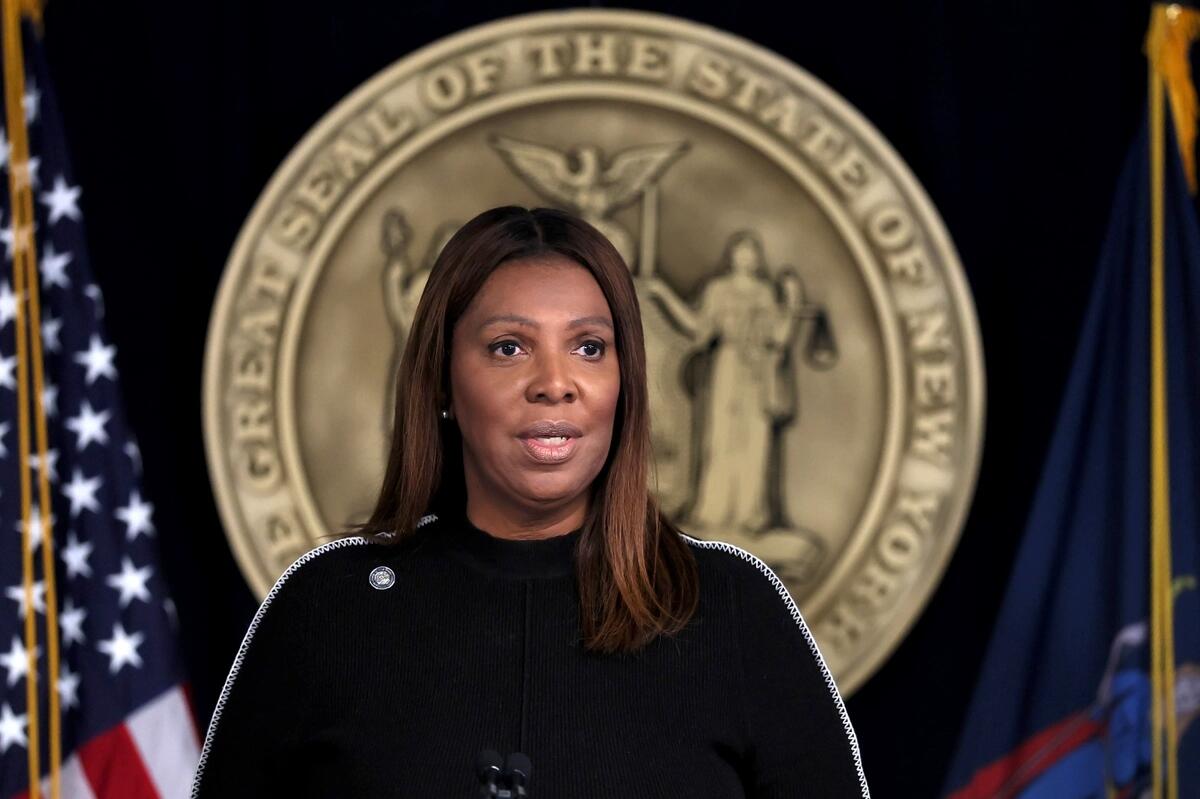
The office of New York Attorney General Letitia James did not respond to an emailed request for comment. James was named as a defendant in the lawsuit in her official capacity.

Tyler Durden Tue, 09/29/2026 - 17:20
https://ift.tt/L3qeziF
from ZeroHedge News https://ift.tt/L3qeziF
via IFTTT

Another Federal Judge Strikes Down New York's $75 Billion Climate Superfund SocialTwist Tell-a-Friend
| 0 comments ]

Texas Governor Declares Disaster Over Soaring Diesel Prices

Texas ranchers and truckers could start seeing some relief at the fuel pump starting this week after Gov. Greg Abbott proclaimed a statewide disaster on Sept. 28 to ease diesel shortages.

"Texas agriculture and freight run on diesel," Abbott said in a statement.

"Record prices put both industries at risk and raise costs for every Texas family."

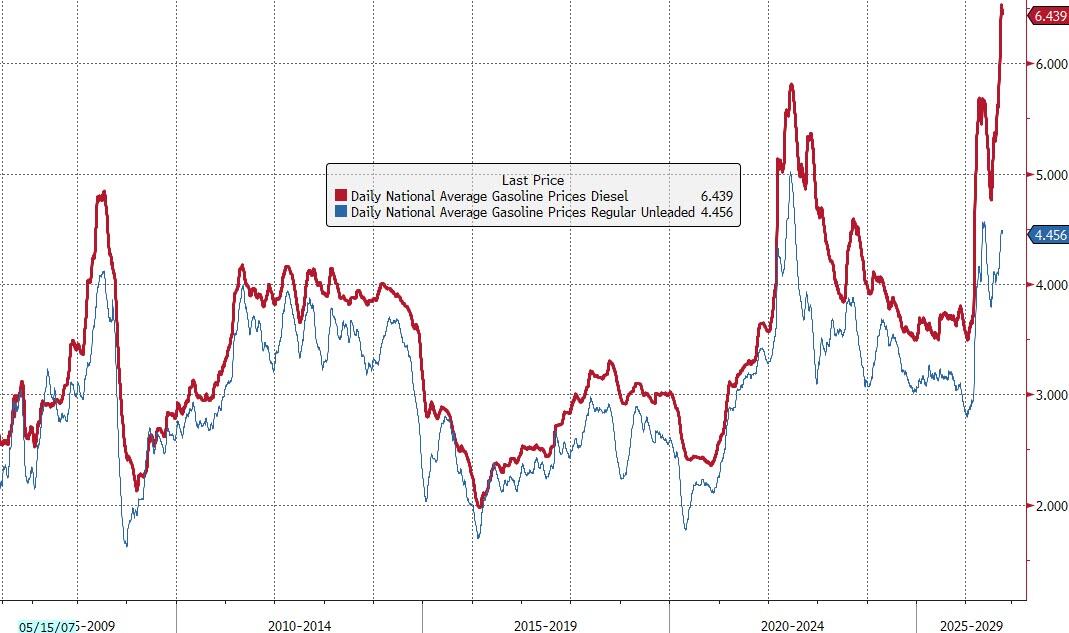
Record-high diesel prices in the Lone Star State have increased in the past few weeks, hovering at an average of $5.90 per gallon on Sept. 28, about 10 cents less than a week ago on average, but $2.70 more than a year ago, according to the American Automobile Association (AAA).

The national average reached $6.44 per gallon on Sept. 28, about 2 cents less than the day before but $2.77 more than last year, AAA reported.

As Jill McLaughlin further report for The Epoch Times, Abbott's declaration allows for the expanded use of dyed diesel on Texas roads and raises the allowable weight for fuel, agricultural, and timber loads.

The proclamation also suspends the state's low emission diesel rules to a level authorized by federal environmental standards. This is expected to increase diesel supplies and ease the record-high fuel prices.

Abbott also asked the U.S. Environmental Protection Agency to waive federal ultra-low sulfur diesel requirements.

Dyed diesel is off-road fuel marked with solvent red 164 dye and is typically only used in agricultural operations. The fuel is sold without a motor fuel tax, which is why the state usually prohibits its use on public roadways.

Using red-dyed diesel doesn't compromise fuel quality or engine performance, but it can stain tanks, hoses, and skin, according to Senergy Petroleum.

"From a performance standpoint, clear diesel and dyed diesel are virtually identical," the company stated.

The Texas governor sent a letter to Environmental Protection Agency Administrator Lee Zelden on Sept. 28, asking for a temporary Clean Air Act waiver of federal ultra-low sulfur diesel rules and the Texas low emission diesel rules that apply in 110 counties.

The rules limit which diesel can be sold, and a waiver would let the state allow more fuel to reach Texas pumps, Abbott said.

The Texas Forestry Association applauded Abbott's diesel declaration.

"A BIG WIN FOR LOGGING & TEXAS FORESTRY!" the association posted on X.

"Gov. Abbott's new disaster proclamation expands dyed-diesel use on Texas roads and allows fuel, agricultural, and timber loads up to 95,000 pounds."

Oil prices surged on Sept. 28 after President Donald Trump turned down Iran's conditional seven-day proposal to reopen the Strait of Hormuz. He told reporters over the weekend that he had rejected it and declined to rule out restarting strikes on Iran ahead of the midterms.

The rejection dashed hopes of diplomacy seen last week at the U.N. General Assembly, said oil expert Patrick De Haan in a social media post. Early trading sent oil prices slightly higher for domestic and international crude.

Prices for diesel fuel nationwide have rocketed to record levels this month after a combination of events reduced supplies and caused uncertainties in the global oil market.

Conflicts in the Middle East and between Russia and Ukraine have slowed delivery of supplies reaching the United States.

Diesel supplies are expected to remain tight and below average through much of next year, according to an analysis by the U.S. Energy Information Administration (EIA), the federal statistical and analytical agency for energy data.

"We assume global production of distillate fuel will remain below last year's levels in the coming months, contributing to low U.S. diesel inventories and high diesel prices," the EIA reported on Sept. 9.

However, oil prices are expected to start falling at the start of next year, as production in the Middle East rises in the coming months with more traffic coming through the Strait of Hormuz and alternative routes out of the region, the EIA reported.

U.S. natural gas inventories are on track to be above the five-year average at the start of winter, due to rising production in the U.S. Permian Basin and Haynesville Shale regions, according to the EIA.

Tyler Durden Tue, 09/29/2026 - 17:00
https://ift.tt/UvybDC3
from ZeroHedge News https://ift.tt/UvybDC3
via IFTTT

Texas Governor Declares Disaster Over Soaring Diesel Prices SocialTwist Tell-a-Friend
| 0 comments ]

The Industrialization Of Fraud: How Global Scam Farms Are Evolving To Target Your Wealth

Authored by Adam H. Douglas via The Epoch Times (emphasis ours),

Financial fraud has morphed into a massive, highly organized global industry powered by transnational scam farms. These industrial-scale operations are largely concentrated in Southeast Asia but are rapidly expanding their reach to target your wealth.

AI is helping scam farms make fraud more convincing and scalable, making it more important to recognize the warning signs. NONGASIMO/Shutterstock

These syndicates are becoming much more sophisticated. They deploy advanced psychological tactics and emerging technologies to drain your life savings.

But how does this brutal business model work? And what are some actionable consumer defense strategies you can employ to protect your finances?

Quick Answer: How Do Scam Farms Work?

Scam farms are organized fraud syndicates, and one of the most popular techniques they use is a devastating, long-term confidence trick coined a pig-butchering scam. Scammers spend months building deep personal trust with you, metaphorically “fattening” you up with fake initial investment profits before stealing your entire principal. These operations are rarely run by lone hackers - they are orchestrated by massive, industrial-scale scam farms often located in Cambodia and Myanmar, but slowly spreading to many other countries.

Global scam farms operate like illicit corporations with specialized teams for different stages of the fraud. Alarmingly, many front-line workers in these compounds are victims of human trafficking, forced into labor under the threat of violence.

The Rise of Industrial-Scale Fraud Compounds

The volume of money moving through these transnational fraud syndicates is staggering.

Recently, the United States Financial Crimes Enforcement Network (FinCEN) identified approximately $12.7 billion in suspicious financial activity tied to digital asset investment scams over a two-year period. This highlights how overseas scam centers have become a structural threat to the global financial system.

Law enforcement agencies are pushing back, but the criminals continuously adapt.

Following major international enforcement efforts and crackdowns launched in Cambodia throughout 2025 and 2026, many scam operators simply relocated their headquarters. They bribe local officials and employ professional money launderers to move stolen funds through complex networks of offshore stablecoin exchanges.

The average American is up against a multi-billion-dollar shadow industry, making extreme caution necessary.

The Anatomy of a Long-Term Crypto Investment Scam

modern scam farms utilize a slow, methodical approach to social engineering. The process begins with a seemingly innocent mistake, such as a text message from a wrong number or a match on a dating application.

If you reply, the scammer initiates a friendly conversation. Over weeks, they cultivate a relationship, posing as a successful entrepreneur.

Once trust is firmly established, they casually introduce the topic of cryptocurrency investing. To build credibility, they direct you to download a trading platform that looks entirely legitimate.

You're encouraged to start with a small deposit, and the platform will show fabricated, extraordinary returns. Once you deposit a substantial portion of your wealth, the platform freezes your account, the scammer vanishes, and your funds are instantly funneled into the syndicate's wallets.

How Scammers Use Artificial Intelligence to Scale

Global scam farms are increasingly integrating artificial intelligence into their operations. AI allows criminal networks to scale their reach exponentially without sacrificing personalization.

  • Previously, a scammer could only manage a few victims due to language barriers.
  • Now, syndicates use large language models to automate thousands of interactions simultaneously.
  • These tools instantly translate messages into flawless English, eliminating grammatical errors.

Scammers also utilize AI-generated deepfakes. If you ask to verify their identity on a video call, they use real-time face-swapping software to appear exactly like the stolen photographs used to build their fake profile.

Actionable Consumer Defense: Red Flags to Watch For

Defending your wealth requires vigilance and an understanding of behavioral red flags rather than purely technical indicators. Here are the critical warning signs:

  • The Accidental Text: Unsolicited messages claiming to be a wrong number that pivot into a friendly conversation are almost certainly scam attempts.
  • The Rush to Private Messaging: Scammers quickly move conversations away from monitored dating applications and onto encrypted messaging services.
  • Too Good to Be True Returns: Anyone guaranteeing consistent, risk-free returns in the cryptocurrency market is lying.
  • Unfamiliar Trading Platforms: If you're instructed to use a specific, obscure trading application you can't verify independently, it's likely a fraudulent platform.
  • High-Pressure Tactics for Taxes: When you attempt to withdraw your funds and the platform demands an upfront tax using additional funds, this is typically the final phase of the theft.

FAQs: Global Scam Farms

What Is a Pig-Butchering Scam and How Does it Work?

A pig butchering scam is a devastating fraud tactic where criminals build trust with a victim over an extended period. The scammers initiate contact through dating applications or accidental text messages, eventually moving the conversation to investments. They convince you to deposit money into a fraudulent cryptocurrency platform that displays fake profits. This creates a false sense of security, encouraging you to invest larger amounts. Once you attempt to withdraw your money, the scammers lock your account and disappear, taking your entire investment with them. These scams are highly organized and designed to drain your life savings methodically.

What Are the Red Flags of a Crypto Investment Scam?

The primary red flag of a crypto investment scam is an unsolicited online contact who eventually steers the conversation toward finance. Be extremely wary if someone guarantees high returns with zero risk or pressures you to act quickly on an insider tip. Another major warning sign is being directed to download an unfamiliar trading application that cannot be found on official app stores or verified by independent financial authorities. Asking you to pay an additional, unexpected tax or fee just to withdraw your own money is another hallmark of a scam.

Can You Recover Funds Lost to a Global Fraud Syndicate?

Recovering funds lost to a global fraud syndicate is exceptionally difficult and extremely rare. These organizations often employ professional money launderers who can move your deposits through complex networks of offshore stablecoin exchanges and cryptocurrency mixers - the funds are nearly impossible to trace or freeze. You should report the crime to the FBI's Internet Crime Complaint Center and local law enforcement, but the money is likely gone. One more note: be highly suspicious of secondary "recovery companies" that contact you promising to retrieve your money for an upfront fee, as these are often the same scammers looking for a bonus score.

What Is FinCEN Doing About International Scam Compounds?

The Financial Crimes Enforcement Network is actively working to disrupt international scam compounds by tracking the illicit flow of money. FinCEN collects and analyzes suspicious activity reports from domestic financial institutions to identify the money laundering networks used by these syndicates. They recently identified billions of dollars linked to overseas scam centers and issued alerts urging banks to monitor for specific transaction patterns. Furthermore, FinCEN shares this critical financial intelligence with international law enforcement partners to coordinate global crackdowns, freeze criminal assets where possible, and dismantle the financial infrastructure that allows these transnational organizations to operate and profit.

Tyler Durden Tue, 09/29/2026 - 16:20
https://ift.tt/4r0Pwhg
from ZeroHedge News https://ift.tt/4r0Pwhg
via IFTTT

The Industrialization Of Fraud: How Global Scam Farms Are Evolving To Target Your Wealth SocialTwist Tell-a-Friend
| 0 comments ]

$4 Billion Startup 'Corgi' Melts Down Into Real Life Social Media 'Mean Girls'

San Francisco insurance startup Corgi has found itself in the spotlight for reasons that have little to do with insurance, after controversial social media posts by employees triggered criticism, internal disagreement and questions about the company’s unusual culture, according to the NY Post.

The latest controversy involved Nicole Clash, a Corgi marketing employee who came under fire for repeatedly using an ableist slur online and for a since-deleted post suggesting she would not police people who use the N-word.

The Post writes that another employee, partnerships manager Ella Schlaghecke, publicly pushed back, arguing there is a difference between opposing censorship and refusing to challenge dehumanizing language. Clash later said she deleted some posts after reconsidering them and emphasized that her comments did not represent Corgi.

That followed a separate blowup involving Brooke LeBlanc, Corgi’s head of community. The 29-year-old posted a lengthy list of requirements for a future husband, including that he be financially secure, hardworking, fit, sober, masculine and between 35 and 42.

“Sorry, I don’t want to date a loser!” she wrote. The post went viral, with LeBlanc claiming it produced five potential suitors before she ultimately deleted her X account.

LeBlanc

Corgi co-founder and CEO Nico Laqua also entered the fray with a post criticizing cancel culture and arguing that startup builders should focus on creating durable businesses rather than pleasing social media personalities and venture capitalists. Corgi later stressed that Laqua’s comments came before Clash’s remarks and said neither he nor the company supported that language.

The spectacle has added to Corgi’s already unconventional reputation.

The roughly 400-person company describes itself as an AI-native insurance platform that underwrites and sells coverage directly to businesses. But it has also promoted an extreme startup work culture. Laqua has said employees should not expect every Saturday and Sunday off and has claimed he sleeps only three or four hours a night, sometimes on an office mattress.

Corgi has also faced speculation about its hiring and marketing practices. The term “Corgi girls” emerged amid claims that the startup deliberately recruits attractive, highly online women for growth and promotional roles, fueled partly by viral posts announcing female hires.

The company strongly denies that characterization, saying it hires employees for their ability to contribute to the business and calling suggestions that female staffers are a marketing tactic disrespectful and inaccurate.

Corgi’s unconventional strategy extends offline. The company has announced plans for as many as 100 round-the-clock “Corgi Cafes” aimed partly at programmers and startup employees working late hours. The employee reportedly overseeing that expansion recently departed, although Corgi says the cafe initiative remains underway.

Clash

Behind the online drama is a growing insurance business that is also expanding into additional insurance and reinsurance products.

Some Silicon Valley observers see Corgi’s provocative personality as a branding strategy designed to distinguish an otherwise unglamorous insurance company. Others argue the approach risks overwhelming the underlying business.

PR executive Chris Harihar said the danger is that Corgi becomes known for employee controversies rather than insurance. One San Francisco venture capitalist similarly described widespread eye-rolling toward the company while acknowledging that insurance and fintech ultimately depend heavily on branding.

Corgi appears to be betting that an irreverent, Gen Z-oriented identity can attract customers who might otherwise ignore an insurance startup. So far, it has certainly generated attention. Whether that attention ultimately helps sell insurance is another question.

Tyler Durden Mon, 09/28/2026 - 16:40
https://ift.tt/dSBpzFr
from ZeroHedge News https://ift.tt/dSBpzFr
via IFTTT

$4 Billion Startup 'Corgi' Melts Down Into Real Life Social Media 'Mean Girls' SocialTwist Tell-a-Friend
| 0 comments ]

First, Quit Pretending...

Authored by James Howard Kunstler via Clusterfuck Nation,

"The Republican party has plenty of things wrong with it, but the other side is so crazy they're celebrating our assassinations and sharia law."

- DC_Draino on X (Rogan O'Handley)

The leaves turn and the season quickens and, in a few weeks, comes an election more dreaded than all the slavering blood beasts of Halloween.

Do you suppose, as I do, that America is tired of being insane?

The pathetic part of this national nervous breakdown is how unnecessary it actually is.

Our national problems are not that difficult to understand and correct.

Here's an inventory of them:

Making a living 1.

So many blunders, starting with off-shoring our factories. So few well-paying working-class jobs. Some of the former working-class are now working three part-time gigs and still not making a living. Quite a few are just at home, on "disability," smoking drugs, flirting with suicide on fentanyl, eating too much crap snack food, getting tattoos. We've quit pretending that's all right.

Mr. Trump proposes to change that and is re-shoring industry. It takes time to build it, get it running. Meanwhile nobody can find a plumber, an electrician, because of the bad political decision to send everyone to college, including kids not really able to finish high school. Result: "elite overproduction" Translation: too many college graduates, with the situation made worse by bogus fields-of-study that were concocted to keep students busy without preparing them for the real world. Hence, they are "elite" only by certification, not superior knowledge or skills. Young people need to learn real skills. Mr. Trump issued EO 145278 (April 2025) "Preparing Americans for High-Paying Skilled Trade Jobs of the Future." Pell grants for short-term vocational training. Grants for apprenticeship positions.

Making a living 2.

Rewrite the immigration law. We don't need 1-million-plus newcomers each year. How about none for a while? Give American citizens priority for any and all jobs. Keep the border closed and deport all illegal immigrants. They have no "right" to be here. We don't need "the wretched refuse of your teeming shore" (Emma Lazarus, 1883). It's not 1883 anymore. Quit pretending we have to be "the beacon of the world." Let them make themselves free in their own lands.

Making a living 3.

America needs household servants and poor people need work. The current work-around for the well-off is to hire illegal aliens for this kind of work. It allows them to believe that putting poor Americans on the dole (out of "empathy") and allowing them to be useless is "progressive." (That's insane.) There's plenty to do, even for people of limited ability. Make menial labor okay again. These days, many people of means live in chaotic households where nothing is taken care of. It reflects their chaotic lives. (No wonder wealthy liberals are crazy.) Get poor people off welfare and off making babies they can't take care of. Give them a place to live in your 5,000 square-foot McMansion and a paycheck.

Nothing Works.

Because we automated too many transactions. Spent $XX-Billions and fifty years computerizing the US Telephone system to improve communication. Result: it's impossible to get a real human being on the phone. How is that an improvement? How is it better for Americans to get fucked around on "phone trees" for hours every week? Too many "help desks" located in foreign lands that employ people who barely speak English. Quit pretending that's okay. Start by requiring doctors' offices and hospitals to provide humans to the answer their phones.

The Horror That Is Medicine.

Get this: the situation is too dire to fix at-scale. The complexity and opportunities for racketeering are now too vast. Since failure is already well underway, and trust in doctors is broken, allow medicine to reorganize at the local clinic scale on a pay-for-service basis. Streamline medical education and the entry positions to practice. Government should not take over medicine, but can subsidize medical education. It would comprise a tiny percentage of the annual budget. Accept that there's a lot doctors will have to learn on-the-job. Forbid insurance companies from owning hospitals, clinics, and doctor practices. To restore trust, quit pretending that Covid-19 was anything but a nefarious exercise and prosecute the large number of pharma executives, hospital admins, doctors, bureaucrats, who enabled it to happen. Make personal responsibility for your body great again. Let RFKjr do his job.

Scam Education.

It's failing at-scale as medicine is. Kids are allowed to "graduate" from high school not knowing how to read or do basic arithmetic. How did that become okay? Answer: the teachers' unions are corrupt and degenerate, dedicated to Marxist social disruption and maximizing their pensions. Manipulating kids into fake sexual crises is a criminal enterprise. Centralizing K-12 schools into gigantic buildings was as much a mistake as off-shoring industry. School's primary mission should be to produce basically literate citizens in the language of the USA, which is English. If you can't speak and read English, you're unlikely to learn anything else and unlikely to thrive in this society.

Black / White race conflict.

Failing to teach black ghetto kids to speak English correctly stigmatizes them for life. Quit pretending you can compensate for that with grievance politics. It's only made race relations worse and driven whites and blacks into separate cultures that can barely communicate with each other. That is opposite of the direction America was going in two generations ago. How did it reverse? I will tell you: By the 1980s, liberal shame over the Civil Rights movement's failure to produce perfect social "equity" inspired the "solution" of "multiculturalism," which said, let's just have different standards of language, manners, and behavior for different ethnic groups (and everybody will get along). It was a shuck and jive. To be a coherent nation requires a common culture, the same standards for all citizens. That was America's strength when we were strong, not our "diversity."

The Law.

The Woke judiciary is punking America thanks largely to appointments made by Barack Obama and "Joe Biden." It's extremely difficult to get rid of political "activist" judges with lifetime appointments. Or to wait for the SCOTUS to reverse their multitudinous noxious rulings. But it's less difficult to put out-of-business the small cadre of lawfare ninjas who bring all the lawsuits that their chosen activist judges rule on - namely, Norm Eisen, Marc Elias and their many associates. They have engaged in manifold seditions from RussiaGate to the Mar-a-Lago raid and are liable for prosecution for the roles they played. Eisen and Elias run numerous NGOs that assist their shenanigans. The funding streams to them can be turned off, especially if any of the money comes from foreign entities, such as Arabella Advisors (and its pass-through orgs) or from foreign nationals like Swiss billionaire Hansjörg Wyss and Shanghai-based Neville Roy Singham (currently under investigation by a New York federal grand jury). George Soros's many Open Society affiliated NGOs have been busy for years pumping money into state attorney general and many county district attorney elections. In a 5-4 ruling on the case Citizens United v. Federal Election Commission (2010), the Supreme Court held that the First Amendment bars the government from limiting independent spending on political speech by corporations, unions, and other associations. A later D.C. Circuit decision, SpeechNow.org v. FEC, led to the creation of "Super PACs" (political action committees) that can spend unlimited sums on activism as long as they do not give money directly to candidates or coordinate with them. Years later, there is a growing consensus that these decisions led to tremendous mischief in politics and the administration of law. They can be revisited.

Fraud and Grift.

Artificial Intelligence (or "Super Intelligence," if you like) is already pretty good. Good enough to trace money flows from the US Treasury through states such as Minnesota, New York, Illinois, and California, and further down the line into local orgs like the now-infamous Minneapolis "Learing" Center and the Feeding Our Future scam. AI can go over their books super-efficiently, too. Veep JD Vance is probably already using AI on his Task Force to Eliminate Fraud. Treasury Secretary Scott Bessent estimated aggregate fraud in annual government spending at around half a trillion dollars a year.

Free and Fair Elections.

It's astounding that there's any disagreement over the provisions in the SAVE ACT: only citizens can vote. . . ID required. . . One-day only election with results next day at the latest. . . Mail-in voting only for military, voters too ill to go to the polls, and persons out-of-the-country for a good reason. It's a sign of epic dysfunction that we go into the midterms having failed to move this bill through a Republican-controlled Senate.

This is just a casual survey of a few things in our national life that need repair.

You have to ask: who is behind all the pretending.

What stands in the way of getting any of this done? I think you know.

We publish a variety of perspectives. Nothing written here is to be construed as representing the views of ZeroHedge.

Tyler Durden Mon, 09/28/2026 - 16:20
https://ift.tt/0qQT8uA
from ZeroHedge News https://ift.tt/0qQT8uA
via IFTTT

First, Quit Pretending... SocialTwist Tell-a-Friend
| 0 comments ]

Almost Half Of Americans Now Hold Positive Views Of Socialism

Authored by Jonathan Turley via JonathanTurley.org,

Karl Marx believed that "Democracy is the road to socialism." Socialists seem to have found a generation of dupes to buy their ahistorical, fanciful pitch. A new poll shows 43% now have a positive view of socialism. An astonishing 65% of Democrats have a positive view. Socialism is now the rage on the left.

Like clothing styles, if you wait long enough, socialism tends to come back into style with generations with no memory of past failures. However, it is an astonishing trend in one of the most prosperous nations on Earth that outlasted a history cluttered with the broken failures of socialist and communist systems.

A new slick packaging of socialism has emerged with leaders such as Zohran Mamdani offering to teach people of the "warmth of collectivism." The Democratic Socialists of America are enticing voters with narratives like "Imagine the end of capitalism." Those words promise voters that there is a brave new world without landlords, debt, mandatory work hours, and "food, education, energy, medicine, and transportation... are common goods and utilities."

What is incredible is that many are buying this pitch.

It is also ironic that this is happening not just on the 250th anniversary of the Declaration of Independence but also on the 250th anniversary of the publication of Adam Smith's Wealth of Nations.

As I write in Rage and the Republic:

"While he never visited the United States, his theories seemed quintessentially American to many of his generation. For a revolution that was triggered by tariffs and fueled by events like the Boston Tea Party, Smith's general principles read like an economic version of Common Sense. It was a type of declaration of independence not just from the British policy of mercantilism (emphasizing British exports over imports) but from economic controls over individual productivity and self-determination....

In summary, Smith was first and foremost viewed as a political theorist, and his economic theories were closely tied to his views on the natural liberties of humanity. He saw capitalism as a liberating system for individuals to allow them the wealth and resources to pursue their own chosen paths. Conversely, he saw government controls and subsidies as forms of control and potentially forms of suppression of the human will. If people are to be truly free, they must have the resources to pursue that freedom. The government dole can become a type of servitude or at least a subterfuge for citizens. If they are dependent on the government, they are never truly free."

The book compares many of these proposals to identical policies of the Jacobin movement in the French Revolution. Both the American and French revolutions arose during the same period, but one became the world's oldest democracy while the other became the blood-soaked "The Reign of Terror."

Notably, the Jacobins pushed for the same unicameral system that the socialists are now advocating as well as attacks on the wealthy.

The DSA is the direct descendant of the Jacobins in seeking to tear down moderating institutions and replace the president and justices with democratically elected figures by a Congress composed only of the House of Representatives.

As with the original Jacobins, those demanding these changes are not the working class but professors, pundits and young college-educated voters.

Pushing this analogy to a more menacing level, another poll shows that roughly 60 percent of Democrats now would support a military coup to remove President Donald Trump.

The return of socialism is like the reappearance of low-rise jeans. You are left mystified by anyone who believes that this is a worthy theory to emulate after consistent and catastrophic failures. Long forgotten is the disaster of the socialist government of François Mitterrand in France.

Most recently, Prime Minister Andy Burnham condemned the privatization policies of Margaret Thatcher: "The country surrendered control of the essentials - housing, water, energy, transport - and left people exposed to higher costs." What he does not mention is that she followed the collapse of socialist policies under Labour Prime Minister James Callaghan in 1977-78 during the so-called "winter of discontent," which I also discuss in the book.

Perhaps Marx was right after all: "History repeats itself, first as a tragedy, second as a farce."

Jonathan Turley is the best-selling author of "Rage and the Republic: The Unfinished Story of the American Revolution."

Tyler Durden Sun, 09/27/2026 - 16:20
https://ift.tt/FklmKrw
from ZeroHedge News https://ift.tt/FklmKrw
via IFTTT

Almost Half Of Americans Now Hold Positive Views Of Socialism SocialTwist Tell-a-Friend
| 0 comments ]

Rickards: The Real In AI Is Not 'Super-Intelligence', It's China

Authored by James Rickards via The Daily Reckoning,

It's past time to look beyond the AI hype. The stock valuations of the leading hyperscalers and frontier AI modeling companies are almost certainly in bubble territory. But the market will sort that out in time.

We all know the names of the AI stocks whether from the hardware, software or compute vectors - Apple, Microsoft, Meta, Google (Alphabet), Amazon, OpenAI, Anthropic, NVIDIA and a few others.

Some of these names have valuable core businesses independent of the AI bubble. Others are pure AI plays. All will be hurt to a greater or lesser extent when the AI bubble bursts.

Still, bubbles can get bigger before they pop and they can take far longer to pop than many market participants realize. It's not prudent to short these names but one should definitely lighten up on long positions. Moving portfolio allocations to cash and hard assets is a good way to weather the coming storm.

Valuations aside, these companies now pose serious risks to national security, critical infrastructure, the financial system and other institutions. These risks need to be considered on their own because they will affect all of us.

These dangers are not about stock bubbles. They're about social chaos.

Geopolitical Catalyst

Two threats in particular stand out.

  • The first is the use of AI models by the Chinese to attack the United States.

  • The second is rogue AI models that work autonomously to attack us on their own.

We've seen continuous headlines about the AI race going on between China and the U.S. The elements of the race include massive data centers, high-powered semiconductors and frontier AI models built by U.S. firms such as Anthropic, OpenAI and xAI and by Chinese firms Baidu, Tencent, DeepSeek and Moonshot AI. Other critical inputs in this race include massive amounts of electricity and water required to run the hardware.

The U.S.-China AI race is usually framed in existential terms. Whichever country gets to superintelligence first will control global AI and possibly the world. Even in less grandiose terms, there are critical outcomes in areas of national security, encryption, digital payments, weapons systems and curing disease that depend on the winner of the AI race.

Yet, the competition is far from fair. The U.S. relies on massive investment in fixed assets, superior technology and access to the fastest semiconductors.

China has some of these tools but they rely more on theft of intellectual property from the U.S., using output from U.S. AI apps as curated input on their own apps (to increase processing speeds) and smuggling advanced chips through third countries. China may not be leading the AI race but they are certainly keeping pace.

AI Recon

Now a new threat has emerged. China is using the most advanced AI models including Claude from Anthropic to process information scraped from a wide variety of open sources in the U.S. including military photographs, ship transponder signals, commercial satellite images and other information combined with Chinese satellite images to determine the exact locations and movements of U.S. naval vessels.

That AI-generated information is then passed to Iran, who use it to fire missiles at U.S. Navy vessels near the Strait of Hormuz and the Arabian Sea.

So far, no U.S. vessels have been hit but that may just be a matter of time. China is using U.S. AI technology to help attack the U.S. Navy at sea. Just days after this revelation, a Chinese spy satellite blew-up in space.

No one has taken responsibility for it. But it's not a stretch to infer that the U.S. used a space-based weapon to destroy the Chinese satellite that was used to help Iran attack the U.S. Navy.

The AI wars are becoming star wars in real time.

Regulatory Capture

As a separate threat, the media is flooded with stories about an AI Apocalypse in which AI apps from frontier developers like OpenAI and Anthropic achieve superintelligence, join forces and take over the world putting humans in the same position relative to the AI systems as apes are to humans. Other versions of this AI dystopia involve gangs of AI apps working together to shut down the power grid, loot banks and brokers and cause chaos in civilized society.

This wave of panicked propaganda began with an essay by Anthropic CEO Dario Amodei. The Amodei essay was amplified by Anthropic researcher Jacob Coxon who publicly resigned from Anthropic and issued a warning that AI could "kill all humans" within a decade. The Amodei and Coxon warnings were then taken up by the media, politicians and tech experts in what became a cascade of doom and gloom.

But let's put these warnings in perspective. Whenever you see the same talking points coming from multiple insiders at once, one should be suspicious that a psychological operation (or "psyop") is being conducted to sway public opinion. In this case, the message is that regulation is needed to protect the world against AI going rogue. This regulation would involve government rules, internal compliance departments, auditor inspections, testing and periodic safety certifications.

How convenient for Anthropic and OpenAI. The kind of regulation they envision is extremely expensive. The giant AI developers can afford it but their newer and smaller competitors cannot. Anthropic and OpenAI are planning $1 trillion plus IPOs later this regulatory moat around their franchises to keep out competition with help from the year. The scaremongering about rogue AI could be nothing more than a tactic to build a government-enforced oligopoly.

My own research indicates that superintelligence can never be achieved because it is impossible to program abductive logic (in contrast to inductive and deductive logic) which can be summarized as gut feel or common sense.

Still, AI is powerful and needs guardrails. But it is not as potentially dangerous as the scaremongers insist. Trump was smart to resist calls for more government regulation. The real enemy in the AI world is not superintelligence - it's China.

Tyler Durden Sat, 09/26/2026 - 14:00
https://ift.tt/bGgTJzw
from ZeroHedge News https://ift.tt/bGgTJzw
via IFTTT

Rickards: The Real In AI Is Not 'Super-Intelligence', It's China SocialTwist Tell-a-Friend
| 0 comments ]

Assaults On ICE Officers Increased 1,600% Since January 2025: DHS

Assaults against U.S. Immigration and Customs Enforcement (ICE) officers have increased significantly in recent months as the Trump administration has cracked down on illegal immigration across the country.

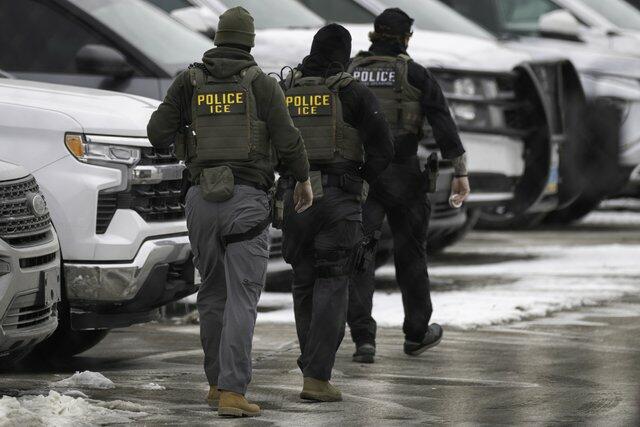
Under the Trump administration, there were 647 assaults against ICE officials from Jan. 20, 2025, to Sept. 20, 2026, the Department of Homeland Security (DHS) said in a press release on Thursday. The number of assaults represents an increase of 1,649 percent from the 37 assaults on ICE officials from Jan. 20, 2021, to Sept. 20, 2022, under the Biden administration.

ICE has been heavily criticized by many U.S. lawmakers during President Donald Trump's second term, as the administration has expanded detention and deportation operations throughout the United States. In the press release, the Department of Homeland Security called for politicians to end the use of "hateful and violent rhetoric" targeting ICE.

"The brave men and women of ICE, who are simply enforcing the laws mandated by Congress and protecting the American people, are under attack every single day. Since President Trump unleashed ICE to do their jobs, assaults against them have risen by more than 1,600% in the first year and a half of the administration," DHS Secretary Markwayne Mullin said, according to the statement.

As Timothy Frudd reports further for The Epoch Times, Thursday's press release listed numerous examples of violent acts committed against ICE officials. Examples included a Minneapolis rioter biting off an ICE agent's finger; an illegal immigrant hammering an ICE officer in the face with a metal coffee cup in Houston; and a group of individuals shooting at ICE officers at the Prairieland Detention Center in Alvarado, Texas, which resulted in a police officer being shot.

Other examples included a sniper killing two ICE detainees and injuring a third detainee at an ICE facility in Dallas, an illegal immigrant allegedly soliciting the murder of ICE agents in a video on social media, and Los Angeles rioters throwing Molotov cocktails and rocks and launching fireworks at ICE authorities and Border Patrol officers.

Mullin said the increase in assaults on ICE officials has been caused by the lies spread by "sanctuary politicians and their foot soldiers who are involved in anti-ICE riots and other acts of violence."

In addition to providing examples of violent actions targeting ICE, DHS also shared examples of lawmakers engaging in what the department called "hateful rhetoric."

The examples included Minnesota Gov. Tim Walz, a Democrat, comparing ICE to a "modern-day Gestapo" and Rep. Jasmine Crockett (D-Texas) accusing ICE of "turning us into Nazi Germany."

"DHS is calling on these sanctuary politicians to stop attacking federal law enforcement, stop putting the needs of illegal aliens ahead of the safety of American citizens, and to start working with us to make America safe again," Mullin said.

In addition to increased assaults on ICE officers, agents are also facing a more than 6,000 percent increase in threats, White House border czar Tom Homan told Epoch Times senior editor Jan Jekielek in an interview airing on Sept. 26. Homan also said ICE vehicle assaults have increased by 1,300 percent.

"I blame a lot of that on the misinformation being fed by some media to the American people," Homan said. "It's constant lies."

The border czar noted that ICE is not perfect and that agents will make mistakes. However, he said the agents are held accountable in those cases.

In addition to misinformation, Homan blamed hateful rhetoric, which he said was being pushed by local, state, and federal lawmakers. Some people have been emboldened to "take action" against ICE officials after hearing agents be compared to Nazis, he said.

"If the hateful rhetoric was stopped, the masks would come off. If the hateful rhetoric was stopped, there'd be less tragedy," he said.

"I truly believe that because now people are emboldened because they hear 'ICE isn't a real law enforcement agency. ICE are Nazis. They're not really cops.' So now people are not complying with them."

The Trump administration's crackdown on illegal immigration, including sweeping community raids and mass deportations, has received pushback from the Democratic Party, which has called for ICE to be reformed or abolished. In August, Democratic National Committee Chairman Ken Martin said that there "has to be a better way" to handle the issue of immigration than the way the Trump administration has handled it.

Tyler Durden Fri, 09/25/2026 - 15:45
https://ift.tt/O8SUIRh
from ZeroHedge News https://ift.tt/O8SUIRh
via IFTTT

Assaults On ICE Officers Increased 1,600% Since January 2025: DHS SocialTwist Tell-a-Friend
| 0 comments ]

Woman Faces Federal Charges After Threatening To Kill Austin Metcalf's Father

The Karmelo Anthony story never seems to end, and perhaps that's a testament to the era we live in.  It seems as though every prominent trial with any media attention is automatically politicized - From the Lindsay Clancy circus to the Luigi Mangionne case to Anthony stabbing Austin Metcalf, the political left has been particularly invasive.  Not only do they consistently take the side of the murderers, but they continue in their efforts to blame and terrorize the victims.

Such is the ongoing reality of the Metcalf family, who are now faced with an array of threats from online lunatics and race militants looking for "payback" after the conviction of their hero, Karmelo Anthony.  

A Missouri woman is currently facing federal charges for threatening to kill Austin Metcalf's father (Jeff Metcalf) and "put him in a body bag" because of Anthony's prison sentence.  Court documents show Sharifa Nicole Henderson, who is also known as Riffa Henderson, was arrested on September 11 and indicted on three federal counts over messages she allegedly sent "on or about June 9" - which was the day Anthony was convicted and sentenced to 35 years behind bars. 


In one message she allegedly wrote:

"Don't worry. I'll kill you next...I will hunt you forever until I kill you ... I will be there. You will always have to look over your fucking shoulder."

In another post, she reportedly threatened to "demolish" the Metcalf family.  U.S. Attorney Jay R. Combs said investigators traced the messages through phone and social media records.

"The stability of our society rests in part on the proper functioning of our system," Combs said. "If you threaten to kill or harm jurors, judges, prosecutors or victims, we will treat those threats seriously."

Henderson could get a maximum of 5 years in prison for each charge if convicted.  But why does the political left engage in trial tampering and intimidation?  Because the leftist philosophy relies on an inversion of the moral order and power is their only value. 

In the case of Karmelo Anthony, the murderer is a young black man and the victim is a young white man, therefore Anthony must be protected as a symbol of the tearing down (the murder) of the western moral order.  If Austin Metcalf had been black, leftists and black activists never would have cared.  They would have ignored the case entirely. 

Anthony was convicted in June after his representatives attempted to try the case in the court of public opinion.  Numerous false claims were made in order to paint Austin Metcalf as the aggressor (very similar to activist efforts to make Lindsay Clancy into a victim and paint her husband as the "real killer"). 

The bottom line?  Anthony was a psychopath looking for trouble.  He had a history of violent and bizarre behavior and text messages from before the event show that he fantasized about murder.  He walked into the team tent of Austin Metcalf armed with a knife like a coward and hoping someone would ask him to leave.

* * *

Tyler Durden Thu, 09/24/2026 - 15:45
https://ift.tt/4Zrl6ft
from ZeroHedge News https://ift.tt/4Zrl6ft
via IFTTT

Woman Faces Federal Charges After Threatening To Kill Austin Metcalf's Father SocialTwist Tell-a-Friend