| 0 comments ]

"The Nightmare Has Ended": Shanghai Reopens After Two-Month COVID Lockdown

Relieved residents danced in the streets after Shanghai on Wednesday officially lifted a two-month virus lockdown that triggered public outrage while dealing a huge blow to the economy, sending it reeling to depths not seen since the global shutdown in Q1 2020.

Dozens of cities across China have been under full or partial lockdown for months as the country with the "zero covid" policy battled its worst COVID-19 outbreak since early in the pandemic. But the Shanghai shutdown was the biggest, with most of the city's 25 million residents confined to their homes since late March, turning the once-bustling metropolis into a ghost town.
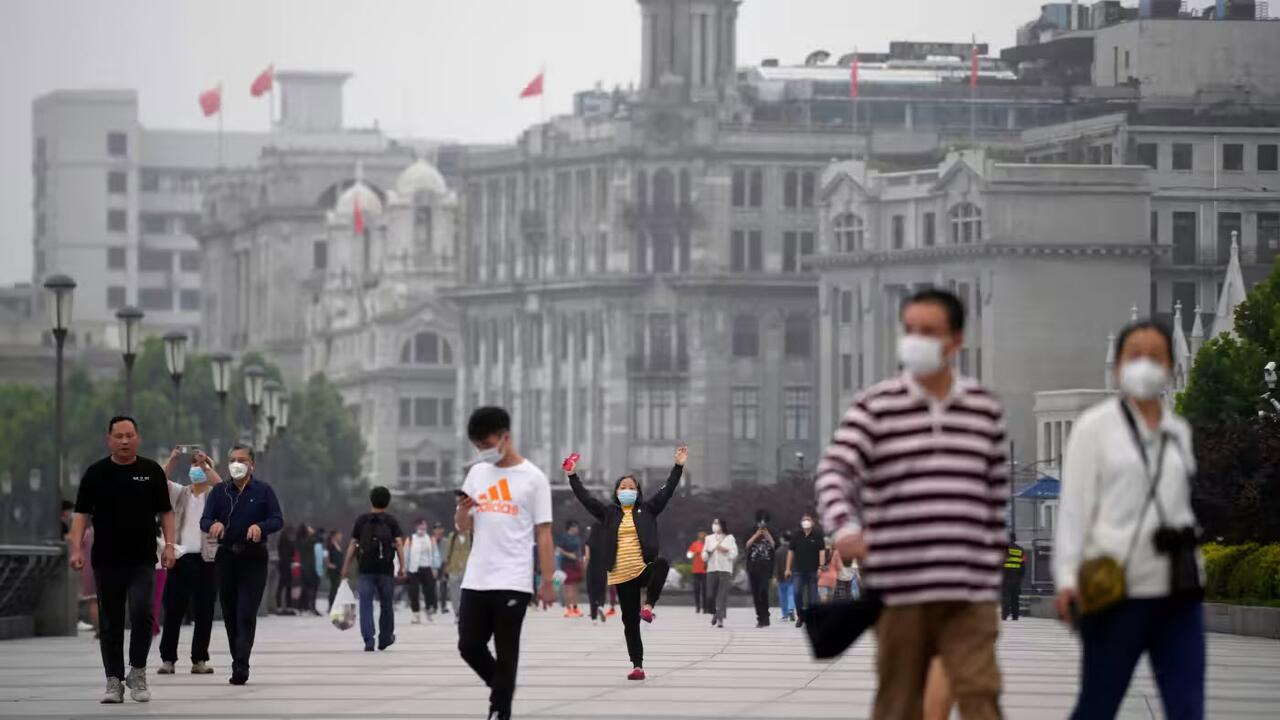
That changed at midnight on Wednesday, when Shanghai authorities started taking down metal barriers and yellow plastic blockades that had blanketed one of the world's biggest cities. Residents spilled into the streets to celebrate what was for many their first taste of freedom since the lockdown orders.

As the Nikkei reports, some residents cheered and posed for photos, others danced and drank in the streets until the early hours of Wednesday morning while parks filled up with kids and their parents. The end of the lockdown meant a green light for neighborhood businesses and major manufacturers to restart operations. But dining inside restaurants was still banned, bars are open but don't serve alcohol, and movie theaters and gyms remain closed. Supermarkets, convenience stores and pharmacies were to reopen gradually with capacity limits.
Restarted public transit filled up with white-collar workers making their way back to the office. "I am glad the nightmare has ended," said a banker surnamed Chen as he returned to work in the Lujiazui financial district. "But only about half of the staff will be back to the office this week due to COVID-prevention rules before we fully resume next week," Chen said.

Chen was among hundreds of thousands of unlucky people hauled off to makeshift quarantine facilities after being suspected of coming into contact with a virus-infected person. He described his two-week stay at the bare-bones site as a "horrifying experience."

Some more details from Nikkei:

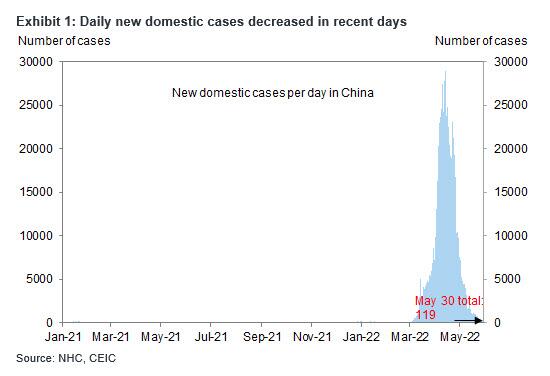
Shanghai lifted the lockdown after confirmed infections this week plunged into the low double digits from highs topping 20,000 a day in April.

But the draconian measures sparked widespread anger as they left some homebound people jobless and others desperately struggling to keep businesses afloat. Food shortages and limited access to medical care aggravated the outrage, which often spilled on to social media despite government efforts to portray the shutdown as orderly and well managed.

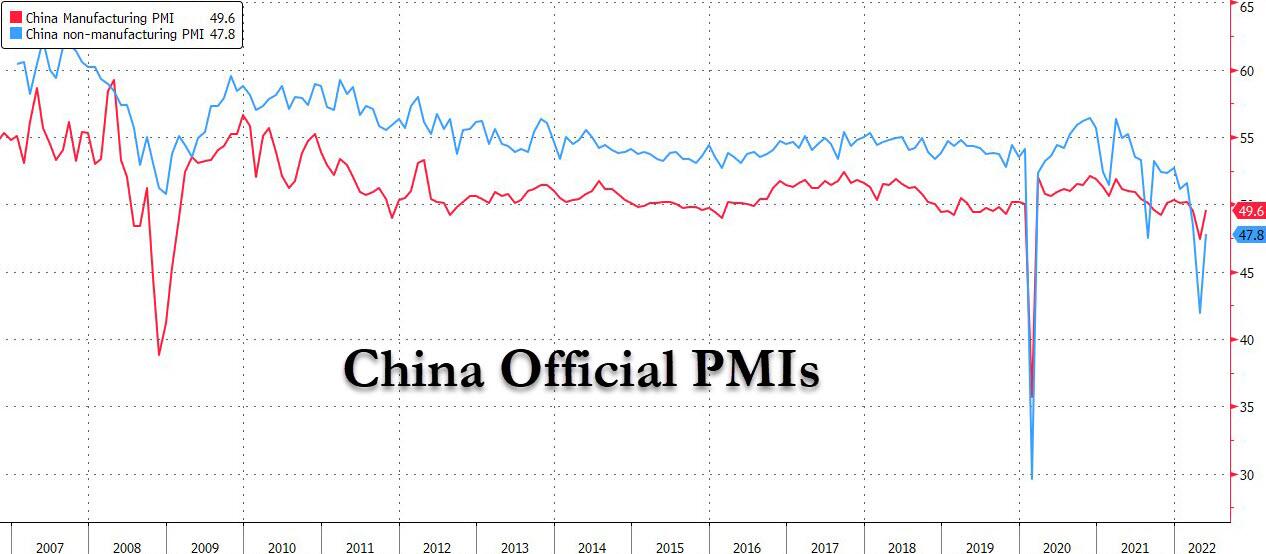
The restrictions in Shanghai and other cities, including the capital Beijing, have taken a bite out of the economy and raised questions about whether China can hit its 5.5% growth target this year. There were signs, however, that factory activity was rebounding modestly as production shutdowns and other virus restrictions are eased.

To be sure, China is already "benefiting" from the reopening, with the latest PMI print seeing a bounce from recent lows. Expect these numbers to rise materially in coming months as more lockdowns ease.
On Wednesday, people walked their dogs on Shanghai's streets and seniors practiced tai chi in public squares while barbers welcomed shaggy-haired residents in need of a trim. But the jubilation was mixed with caution, as many feared another outbreak could prompt nervous authorities to bring back restrictions.

"We feel happy, but at the same time we worry about another outbreak," a husband and wife duo told Nikkei Asia as they walked along the Bund, Shanghai's historic riverside district. "Many people think the pandemic is over ... but it is clearly not."

Some shopping malls threw open their doors Wednesday, while many retailers spent the day cleaning and disinfecting shops before welcoming back shoppers.

"Customers will likely to stay away for the first few weeks, just like what we went through in 2020," said Jia Hong, a hot bun seller in the Jing'an central business district. "Many are wary about the risks of eating outside."

China's biggest lockdown tested President Xi Jinping's signature zero-COVID policy, which relies on heavy restrictions, including mass testing and lockdowns, to quash outbreaks at any cost.

The government has said it is sticking with that approach in a bid to save lives and stop its health care system from being overwhelmed, even as much of the world moves toward living with the virus. That means Shanghai residents must now take a PCR test every three days at one of thousands of temporary screening booths in order to use public transit or enter shops.

"We will have to do this endlessly," said Bai Ying, a property agent who was getting tested. "The risk of catching the virus is higher here than at home, but we have no choice."

Tyler Durden Wed, 06/01/2022 - 17:05
https://ift.tt/G01FvhC
from ZeroHedge News https://ift.tt/G01FvhC
via IFTTT

"The Nightmare Has Ended": Shanghai Reopens After Two-Month COVID Lockdown SocialTwist Tell-a-Friend
| 0 comments ]

CDC Director Issues Alert On Pfizer's COVID-19 Pill

Authored by Jack Phillips via The Epoch Times,

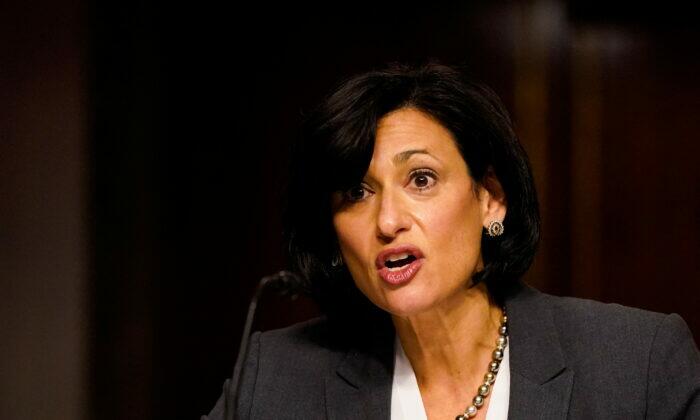
Centers for Disease Control and Prevention Director Rochelle Walensky warned that Pfizer’s COVID-19 pill Paxlovid can lead to a rebound in symptoms.

“If you take Paxlovid, you might get symptoms again,” Walensky told CBS News on Tuesday.

“We haven’t yet seen anybody who has returned with symptoms needing to go to the hospital. So, generally, a milder course.”

Another researcher who is not affiliated with the CDC said that he has observed such a scenario.

“People who experience rebound are at risk of transmitting to other people, even though they’re outside what people accept as the usual window for being able to transmit,” Dr. Michael Charness of the Veterans Administration Medical Center in Boston told CNN on Tuesday.

After a patient recovers from COVID-19, the aforementioned rebound has occurred between two and eight days later, according to the CDC. The agency, however, told CBS that the benefits of taking Paxlovid outweigh the risks of COVID-19, namely among those who are at a high risk of developing severe symptoms from the virus.

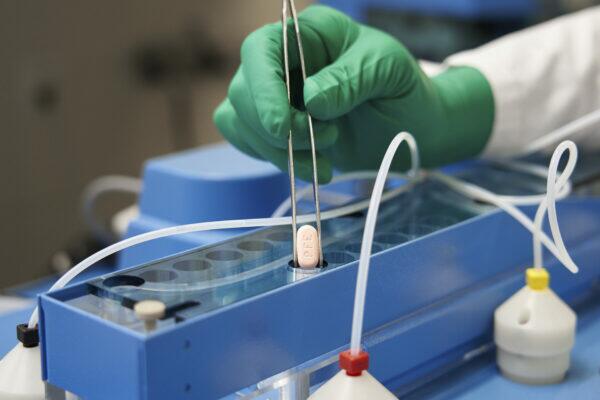
A Pfizer technician handles the company’s COVID-19 pill, known as Paxlovid, in a file photograph. (Pfizer via AP)

About a week ago, the agency issued an alert to health care providers about the rebound, saying that patients who took Paxlovid either test positive for the virus after having tested negative or will experience COVID-19 symptoms.

“A brief return of symptoms may be part of the natural history of SARS-CoV-2 infection in some persons, independent of treatment with Paxlovid and regardless of vaccination status,” the federal health agency said at the time. SARS-CoV-2 is another name for the CCP (Chinese Communist Party) virus, which causes COVID-19.

“Limited information currently available from case reports suggests that persons treated with Paxlovid who experience COVID-19 rebound have had mild illness; there are no reports of severe disease. There is currently no evidence that additional treatment is needed with Paxlovid or other anti-SARS-CoV-2 therapies in cases where COVID-19 rebound is suspected,” the CDC added.

The Epoch Times has contacted Pfizer for comment. Pfizer told CBS that it is observing a rebound rate of approximately 2 percent and is continuing to monitor patients.

“We have not seen any [COVID-19] resistance emerge to date in patients treated with Paxlovid,” a spokesperson for the company told Reuters this week.

In recent weeks, doctors have increasingly prescribed Paxlovid, which has been authorized to treat at-risk people. But some health care workers told Reuters they are putting off prescribing the medication.

“I am shying away from giving it to people who are very low- risk, and are not terribly ill, particularly people who are vaccinated and boosted,” said Dr. Bruce Farber, chief of public health and epidemiology for Northwell Health, in an interview with the news agency. He will still prescribe the bill to people who have significant health conditions or are aged 75 and older.

Tyler Durden Wed, 06/01/2022 - 16:45
https://ift.tt/EarADPc
from ZeroHedge News https://ift.tt/EarADPc
via IFTTT

CDC Director Issues Alert On Pfizer's COVID-19 Pill SocialTwist Tell-a-Friend
| 0 comments ]

WTI Holds At Day's Low After Crude Inventory Draw

Oil prices pumped (after OPEC+ rejected WSJ's comments on Russia yesterday and cut its estimate for global year-end over-supply) and dumped to end the day near their lows after the Biden administration said it still hopes to engage with Saudi Arabia. Markets took the headline as a concrete step by the administration to actively fight energy costs, traders said.

“Meaningful progress probably takes time to come to fruition but headlines around progress will keep some sort of a governor on crude rallies,” said Rebecca Babin, senior energy trader at CIBC Private Wealth Management

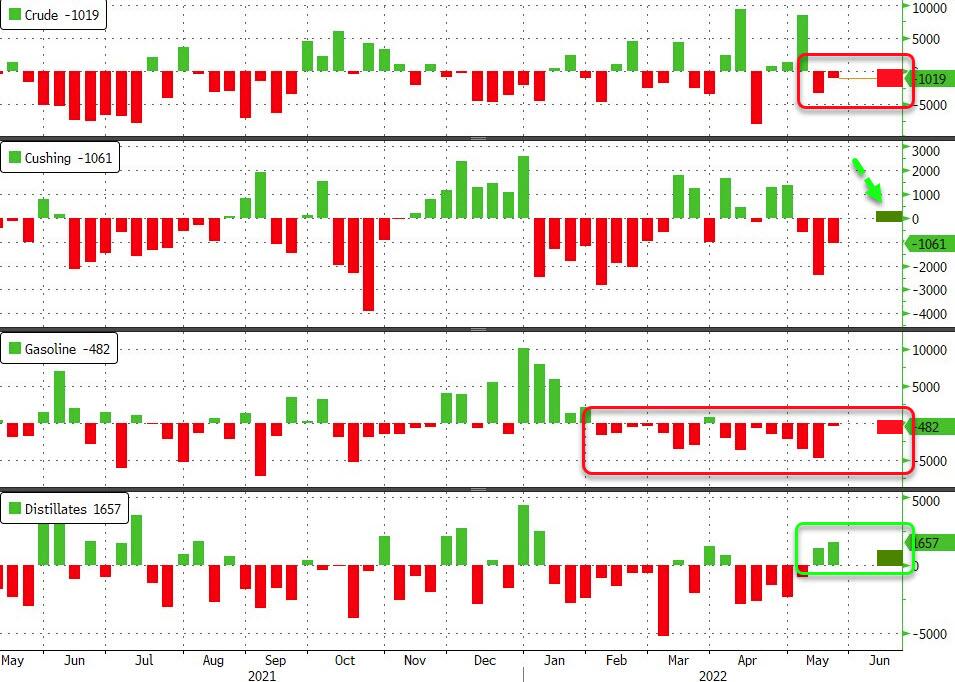
Traders were predicting a drop in crude oil inventories, but an increase in gasoline and distillate stockpiles.

API

  • Crude -1.181mm (-67k exp)

  • Cushing +177k

  • Gasoline -256k

  • Distillates +858k

US crude stocks fell for the 3rd straight week, with a bigger than expected draw last week. Interestingly,. Distillates saw their 3rd straight weekly build...

Source: Bloomberg

WTI was hovering around $114.75 ahead of the API print, unchanged on the day and didn't move after the data hit.

“Oil markets are a dead cert to tighten further following EU’s ban on Russian oil,” PVM Oil Associates analyst Stephen Brennock said in a note.

“This, in turn, should ensure further upside in oil prices in the second half of this year. The Russian oil embargo is finally over the line, but more price pain is on the horizon for the EU and its Western partners”

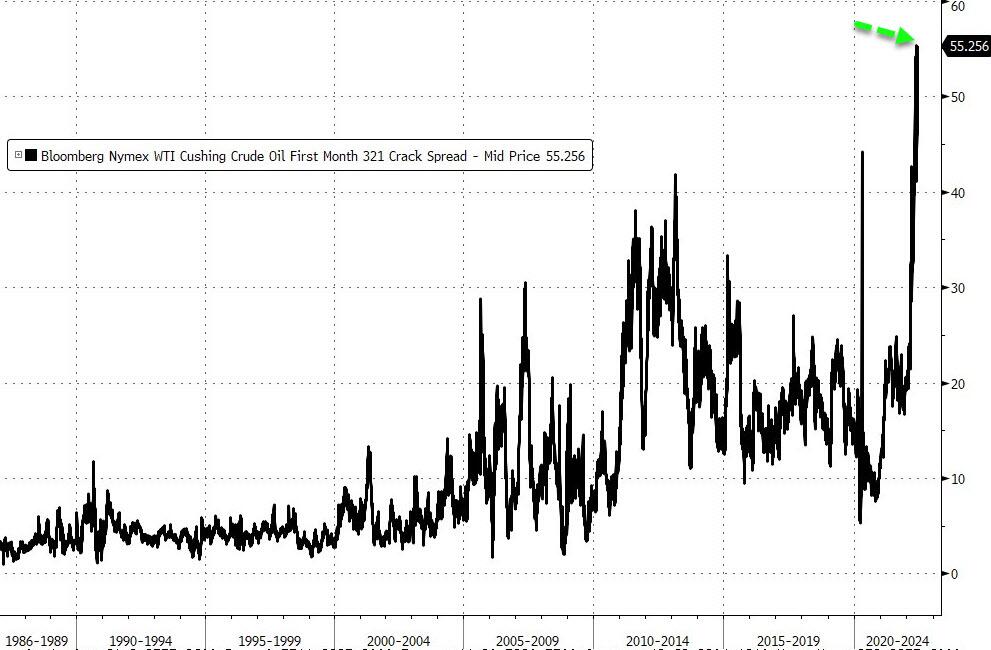
The 3-2-1 crack, which approximates turning crude into gasoline and diesel, soared to a new record high of $55.26 today...

As Bloomberg's Javier Blas noted earlier this suggests the refined products markets continue to lead (where's the demand destruction?), encouraging higher refinery runs.

Additionally, Dennis Kissler, senior vice president of trading at BOK Financial said that “the fuel fundamentals of diesel and gasoline is whats going to keep crude supported at least into the driving season of July and that’s the major catalyst for crude."

Tyler Durden Wed, 06/01/2022 - 16:39
https://ift.tt/JUFfX8u
from ZeroHedge News https://ift.tt/JUFfX8u
via IFTTT

WTI Holds At Day's Low After Crude Inventory Draw SocialTwist Tell-a-Friend
| 0 comments ]

Daily Briefing: Are We Headed for Recession or Not?

We are experiencing technical issues - please head over to our YouTube to watch the livestream. The recording will be up on the website soon after we go off air. The Institute for Supply Management reported that May factory activity exceeded consensus expectations, another sign of resilience for the U.S. economy. “Today’s ISM Manufacturing data represents a decent middle finger to us growth cycle bears - although the market doesn’t seem to care,” said Darius Dale. Still, the founder and CEO of 42 Macro believes the global downturn is not adequately priced into equity markets. Darius joins Andreas Steno Larsen to unpack the May ISM data, the economy, and recent price action. Want to submit questions? Drop them right here on the Exchange: https://rvtv.io/3m7TtE1. Watch the full interview with Charlie Morris and Michael Nicoletos here: https://rvtv.io/3PUGvHu.

Tyler Durden Wed, 06/01/2022 - 14:36
https://ift.tt/fngCsRr
from ZeroHedge News https://ift.tt/fngCsRr
via IFTTT

Daily Briefing: Are We Headed for Recession or Not? SocialTwist Tell-a-Friend
| 0 comments ]

Looming Price-Hikes On Food Set To Hit Americans Even Harder This Fall

Authored by Kevin Stocklin via The Epoch Times,

In its effort to contain inflation, the Federal Reserve has launched what many expect to be an ongoing series of interest rate increases, which are already taking a toll on stock and housing markets, with job losses likely to follow. As weary as Americans have become from paying record high gas and grocery prices, however, another round of price hikes is making its way through the food supply chain and is expected to reach consumers this fall.

“People don’t realize what’s fixing to hit them,” said Texas farmer Lynn “Bugsy” Allen.

“They think it’s tough right now, you give it until October. Food prices are going to double.”

The 8.8 percent increase in food prices that Americans have already seen does not take into account the dramatic cost increases that farmers are now experiencing. This is because farmers pay their costs upfront and only recoup them at the point of sale, months later.

“Usually, what we see on the farm, the consumer doesn’t see for another 18 months,” said John Chester, a Tennessee farmer of corn, wheat, and soybeans. But with the severity of these cost increases, consumers could feel the effects much sooner, particularly if weather becomes a factor.

Lorenda Overman, a North Carolina farmer who raises hogs and grows corn, soybeans, and sweet potatoes, said the spike in fuel costs has put her farm into the red this year. “Nothing that consumers are paying is going to bridge the gap for farmers right now,” she said. “The prices now have not hit the grocery stores yet,” but she expects they will start to by the end of summer.

Much of the cost of food hinges on the price of oil.

“They have no electric trucks delivering that food and there are no electric tractors,” Allen said.

“It takes diesel to run all this.”

Chester said that fuel and fertilizer together make up 55 percent of his total costs. The price of diesel fuel has more than doubled, from $2.50 per gallon at the end of 2020 to more than $5 per gallon today. Farmers say the cost of fertilizer, an oil derivative, has tripled and in some cases quadrupled.

“When you look at the machinery that uses diesel, it’s farm equipment, it’s railroads, and it’s truckers,” said Daniel Turner, Executive Director of Power the Future, an energy advocacy group. Diesel “moves all of our goods, it grows our food. From cargo ships arriving from overseas to trucks or trains getting those goods across the country. All those things now have added costs that will get sent to the consumer.”

“That surge in food and energy costs is very demand destructive for U.S. households,” said Joseph Lavorgna, Chief Economist at Natixis, a European bank. “If you have to pay a lot more money for your food, to heat or cool your home, or put gasoline in your vehicle to get to work, there’s less money available elsewhere.” Price hikes in gas and food will leave Americans with less money to spend on other goods, which will reduce demand and have a knock-on effect on the wider economy.

Economic reports are indicating that Americans are already unable to keep up with inflation. Household savings fell to the lowest rate in 14 years, as people struggle to maintain their standard of living. Credit card debt is hitting record highs, and retailers say they are preparing for more consumers to limit their spending to the “bare-bones basics.”

While it is possible that Americans’ loss of spending power may help to reduce inflation, some economists fear a return of 1970s-era “stagflation,” rising prices coupled with economic stagnation and increasing unemployment. That period of inflation was ultimately tamed by the Fed raising interest rates to nearly 20 percent.

In contrast to the Carter-era energy crisis, which was sparked by an embargo from foreign oil producers at a time of declining American oil output, today’s energy shortages are largely the result of domestic U.S. government policies, as the Biden administration attempts to force Americans to switch from fossil fuels to wind, solar, and electric. This effort has included shutting down pipelines, suspending oil and gas leases, and putting up regulatory roadblocks—all of which has reduced new investment in American oil and gas production.

Last week, Biden stated that the spike in oil prices was “an incredible transition that is taking place that, God willing, when it’s over, we’ll be stronger and the world will be stronger and less reliant on fossil fuels.”

Energy Secretary Jennifer Granholm said last week that rising oil prices were “an exclamation point” for the need to transition to wind and solar and “build homegrown clean energy.” Granholm previously stated that “if you drive an electric car, this would not be affecting you.”

With natural gas prices now hitting a 14-year high, Biden’s Department of Energy recently posted “a few tips on how you can prepare your home and office to safely navigate a blackout.”

Samantha Power, head of Biden’s Agency for International Development, said the solution to rising fertilizer prices is “natural solutions like manure and compost, and this may hasten transitions that would have been in the interest of farmers anyway. Never let a crisis go to waste.”

“That’s not the real world,” Overman said. “We are in the highest density for hog production in the nation and there’s not enough hog manure or turkey manure or chicken manure to fertilize our crops. We tried this fall to lock in some chicken and turkey litter to spread on our crops and there’s none to be had. There’s just not enough animals to produce the amount of fertilizer we need.”

“Energy is a very capital intensive business and we’re basically down to about half the level of cap-ex within energy that we had a couple years ago,” Lavorgna said. “A lot of that has to do with the fact that oil companies are not tone-deaf to what shareholders want, or more importantly what the regulators and politicians want.”

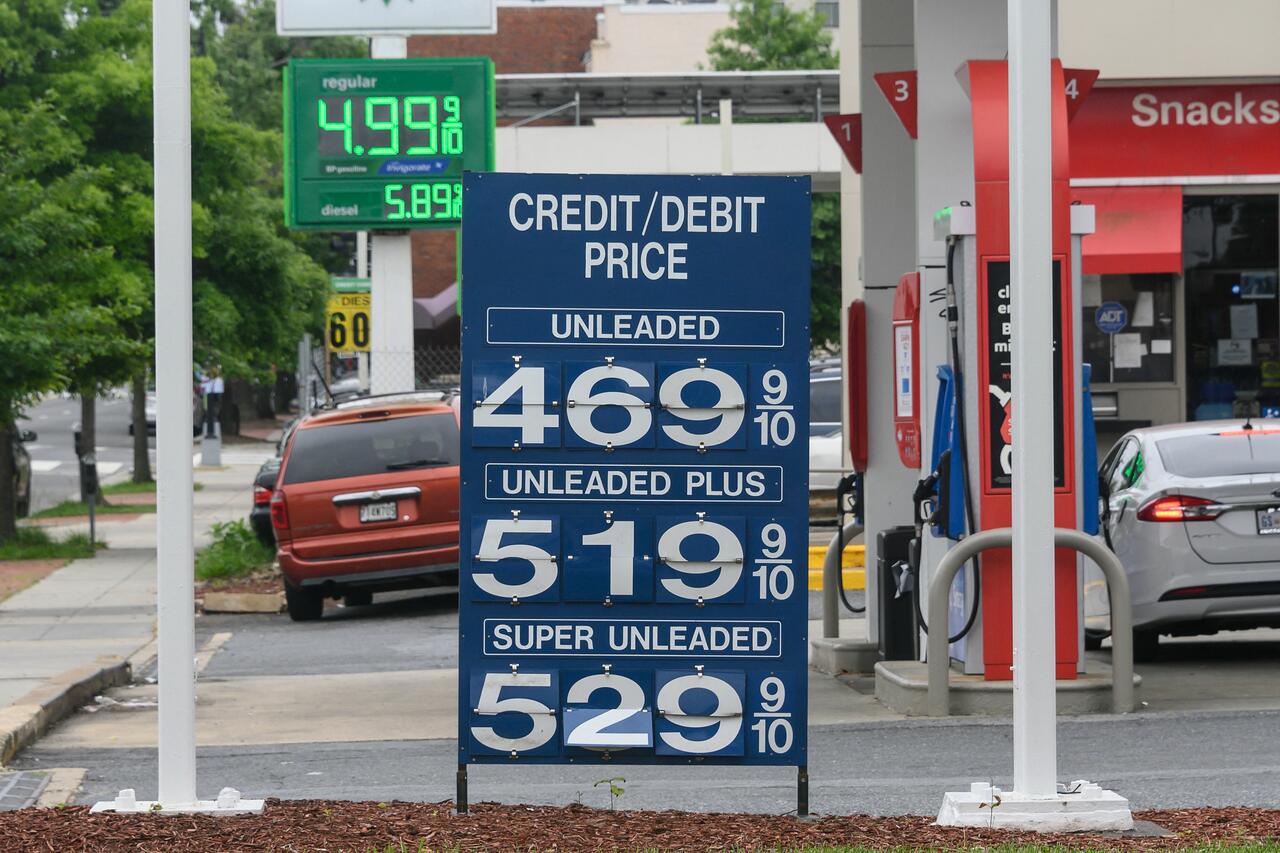
Gasoline prices are posted at a gas station in Washington on May 26, 2022. (Nicholas Kamm/AFP via Getty Images)

“It’s incredibly curious that of all [Biden’s] rhetoric, I have yet to hear anything along the lines of ‘we will do everything to increase production in America.’” Turner said.

“They are comfortable with the current state because of their green philosophy, and we’re just necessary casualties.”

Together with ruptures in global supply chains, oil and food prices are a key reason why many economists think the Fed will have a particularly hard time taming inflation. “There is a real risk the price [of gas] could reach $6 a gallon by August,” Natasha Kaneva, head of global oil and commodities research at JPMorgan Chase, told the press. “U.S. retail price could surge another 37% by August.”

The higher prices climb, the more aggressive the Fed will need to be to contain inflation.

“We think the risks are skewed towards a much more significant recession, as inflation proves more persistent than is generally expected … the moves from the Fed currently envisioned by markets will be too slow to restrain inflation,” stated economists from Deutsche Bank in a research report titled “Why the coming recession will be worse than expected.”

“A mild recession would be a relatively small increase in the unemployment rate,” Lavorgna said. “If, however, the Fed feels that it needs to compress demand further, then we are looking at a much deeper recession, with the unemployment rate perhaps doubling, if not more.”

One of the unique features of the current economic crisis is the extent to which it is driven by government actions, as opposed to a market failure. This includes trillions of dollars in federal spending to prop up an economy reeling from draconian government lockdowns that now appear to have had little success in containing the coronavirus. This spending was compounded by the Federal Reserve holding interest rates near zero while expanding its balance sheet to $9 trillion, flooding America with cash. These problems were then further exacerbated by the Biden administration’s re-regulating of the economy and its antipathy toward America’s fossil fuel industry, together with a western boycott of Russian oil and fertilizer exports following Russia’s invasion of Ukraine.

Inflation is the result of too many dollars chasing too few goods, and, in this case, it has been a “perfect storm” on both sides of the equation. As the Fed works to cool demand by raising rates, some economists say the Biden administration must reverse the policies it has put in place that are undermining productivity and holding back supply.

“If you want to address the inflation problem, you do it through the painful way of Federal Reserve action and higher interest rates and borrowing costs,” said Jonathan Williams, Chief Economist at the American Legislative Exchange Council. But simultaneously, “you do it through the supply side, which reduces taxes and gets productivity back up across the United States.”

Given the federal government’s reluctance thus far to take the necessary steps, some states have stepped up with their own solutions, Williams said. Since March, four states—Iowa, Mississippi, Georgia, and Arizona—have gone from progressive income tax rates as high as 8 percent to flat tax rates in the range of 2–4 percent. North Carolina eliminated business income tax, and nine other states currently have no state income tax at all.

On May 17, Sen. John Barrasso (R-Wy.) and other GOP Republicans introduced the ONSHORE Act, which would give states the power to manage oil and gas production on federal lands within their borders. They simultaneously introduced the Lease Now Act, which would require the Department of Interior to resume the sale of oil and gas leases.

Asked what Biden could do to help farmers, Allen said “lower the fuel prices. It will save the middle-class people. It will help them when it comes to buying food.”

Tyler Durden Wed, 06/01/2022 - 16:20
https://ift.tt/KeR3HEa
from ZeroHedge News https://ift.tt/KeR3HEa
via IFTTT

Looming Price-Hikes On Food Set To Hit Americans Even Harder This Fall SocialTwist Tell-a-Friend