| 0 comments ]

New CDC Director Defends Vaccine Mandates, School Closures

Authored by Zachary Stieber via The Epoch Times (emphasis ours),

The new director of the U.S. Centers for Disease Control and Prevention (CDC) on Nov. 30 defended COVID-era policies like vaccine mandates in her first appearance before Congress.

"I'm very proud of the work we did in North Carolina," Dr. Mandy Cohen, the new director, told Rep. Jeff Duncan (R-S.C.) after he asked if she regretted any of the policies put into place in North Carolina, such as school closures, when she was the state's health secretary.

"I feel like we did that in a way that was very inclusive," she added.

U.S. Centers for Disease Control and Prevention Director Mandy Cohen testifies in Washington on Nov. 30, 2023. (Win McNamee/Getty Images)

When Rep. Debbie Lesko (R-Ariz.) noted that Dr. Cohen supported harsh measures as health secretary, including vaccine mandates, Dr. Cohen said it was time to "look forward" and start a "new chapter."

"You have to remember, at different moments in time, we needed different solutions," she said in response to how Americans would know whether the new director will support the same measures at the federal level.

"The good news is that we're in a different place than we were before. We both have different tools and have different mechanisms to respond," she said to another question, about whether she'd shut down schools if a pandemic happened again. "I can't really address a hypothetical but I think we've learned a lot about how to approach things."

Did closing schools harm students?

"We always knew in-person instruction was incredibly beneficial," Dr. Cohen said.

"You'd be great in the sales department," Rep. Gary Palmer (R-Ala.) said, prompting a rare smile from the new director.

Dr. Cohen replaced Dr. Rochelle Walensky, President Joe Biden's first CDC director, over the summer. Dr. Walensky was an advocate for COVID-19 vaccines, masks, and school closures.

Dr. Cohen also indicated she supports mask mandates, saying all masks, including cloth masks, worked as a "barrier" and protected against COVID-19. The CDC recommends wearing "well-fitting" masks for protection.

Dr. Cohen's answers sparked frustration from lawmakers of both parties.

"My neighbor would say, should I wear a cloth mask? I don't know from your answer what I should tell them," Rep. Scott Peters (D-Calif.) said.

Rep. Dan Crenshaw (R-Texas) said that Dr. Cohen was in the perfect place to help the CDC reestablish credibility.

"If the CDC wants its credibility back, you've got to have a mea culpa moment. You're in the perfect position to do it, because you had nothing to do with their decisions at the time. So there's no reason to defend it," he said.

"It's ok to say 'it didn't make any sense to shut down schools.' The data shows that now. 'It didn't make sense to do major lockdowns.' The data shows that now. 'It doesn't make sense to mask kids.' The data shows that now. It's okay to say it. And the public will reward you for it," he added later.

But Dr. Cohen refused to say authorities in North Carolina or at the CDC did anything wrong, repeatedly steering the discussion back to the future, not the past.

She did refer broadly several times to lessons learned during the pandemic, including being more transparent.

Answers on Illness in China, Lab in California

Dr. Cohen also answered questions about other topics, including a bout of illness in China.

Dr. Cohen said that the CDC was in touch with counterparts in China, where the agency has an office, and that the surge in respiratory infections in China was not, based on current information, from "a new or novel pathogen."

The World Health Organization and Chinese officials have also said the illnesses are from existing illnesses such as influenza.

"The Chinese officials have shared with us that there are no novel pathogens, and we were able to corroborate that information across other sources from our European Union partners and others to make sure that we're getting a complete picture," Dr. Cohen said.

Rep. Cathy McMorris Rodgers (R-Wash.) said the situation in China "brings us back, sadly, to the early days of COVID-19" when there was a "lack of reliable information coming out of China."

“We are hoping that you can put some pressure in an attempt to try to get China to not mislead the world as they did with COVID-19,” Rep. H. Morgan Griffith (R-Va.) said.

Some lawmakers pressed Dr. Cohen on a laboratory in China that was operating without permission, after a House report said the CDC refused to speak for months to local officials who raised the alarm.

Dr. Cohen said the CDC investigated quickly and found no indications the lab was experimenting with Ebola or other select agents.

She echoed an earlier CDC statement that said the report "includes numerous inaccuracies, including both the charge that CDC did not respond to local requests for aid and the false implication that CDC had the authority to unilaterally investigate or seize samples from" the lab. The agency said it was actively engaged in the investigation into the facility.

Tyler Durden Sat, 12/02/2023 - 16:20
https://ift.tt/6Z5D0LN
from ZeroHedge News https://ift.tt/6Z5D0LN
via IFTTT

New CDC Director Defends Vaccine Mandates, School Closures SocialTwist Tell-a-Friend
| 0 comments ]

Hezbollah Rejoins Fight, Lebanese Civilians Killed, After Gaza Truce Ended

The resumption of fighting between Israel and Hamas in the Gaza Strip after the truce ended Friday morning has quickly translated into rocket and artillery fire in Israel's north, where emergency sirens have sent residents running for shelter across several towns. 

Hezbollah, which over the past week has respected the Hamas truce during which time it by and large silenced its weapons, has rejoined the conflict. Already there have been deaths in Lebanon after Israel responded by shelling the town of Hula. Hezbollah-affiliated television channel al-Manar said that a mother and her son were killed in the attack.

Previously in the day Al Jazeera reported that "Hezbollah claimed a strike on Israeli soldiers in the first cross-border attack on Israel since the resumption of the fighting in Gaza."

Last weekend, the government of Iraq warned that if the Gaza ceasefire doesn't become permanent, there's a strong chance the conflict turns into broader regional war.

The Pentagon has forces on high alert at US bases in Syrian and Iraq. Prior the truce of last Friday, American bases in the region had come under some 60 or more total drone and rocket attacks. The US responded with airstrikes several times against 'Iran-backed militias'. 

Whether these attacks will start up again is a big question the West will be watching closely. The Biden administration has repeatedly threatened to strike against Iran-linked targets and assets if Americans come under threat.

Below: Israeli artillery shelling parts of southern Lebanon

As for Hezbollah, despite that before the truce there were daily attacks on southern Israel, its role has been limited thus far after eight weeks of conflict. Secretary-General Hassan Nasrallah has previously stated that the group's intent is to keep Israeli forces bogged down enough in the north to where the IDF can't focus its entire arsenal and tanks on the Gaza theatre. 

But a big fear in Tel Aviv and Washington remains the possibility that Hezbollah could launch a full war. Its rockets and manpower are considered much bigger than that of Hamas, and a scenario like the 2006 war is something Israeli military leaders likely hope to avoid.

Tyler Durden Fri, 12/01/2023 - 17:40
https://ift.tt/7vHzkw2
from ZeroHedge News https://ift.tt/7vHzkw2
via IFTTT

Hezbollah Rejoins Fight, Lebanese Civilians Killed, After Gaza Truce Ended SocialTwist Tell-a-Friend
| 0 comments ]

Our National Bankruptcy: Moral, Economic, And Political

Authored by Mark Hendrickson via The Epoch Times (emphasis ours),

The National Debt Clock in Washington on Nov. 13, 2023. (Madalina Vasiliu/The Epoch Times)

Commentary

Last month I got a call from a friend who works in Congress. He was distressed by the absurd condition of the federal finances. How could the wealthiest country in the world be almost $34 trillion in debt while charging ahead into ever-deeper debt? It seems like a horror movie come to life.

Congress is gridlocked with the spigot of federal spending seemingly locked permanently into the wide-open position.

The conversation with my friend touched on three points: how did this untenable situation come about, how can we reverse course, and what model of government would protect us from endless debt?

How Did We Get Into This Untenable Predicament?

What has brought the federal government of the United States of America to the edge of a fiscal abyss? It boils down to two main factors: the perverse incentives of electoral democracy accompanied by a gradual moral decay.

The fundamental underlying cause of our catastrophic debt is a decay of morality. Over the decades, the traditional American respect for the sanctity of private property has eroded and diminished. Under the influence of progressive and socialist ideas and other sophistries, the American people came to believe that they were entitled to receive benefits that others would be made to pay for. This is the self-destructive nature of democracy. By popular demand as expressed at the ballot box, voluntary exchange and charity have been progressively replaced by compulsory government-mandated transfers of wealth (transfers of wealth that would be considered theft if done by non-government actors).

In a democracy, politicians seeking elective office always need more votes. They have found that they can buy votes, not with their own money, but with money from the federal treasury, by conferring ever-larger benefits on ever-more beneficiaries. The political incentive is for Congress and presidents to spend, spend, spend. And since voters hate taxes, another political incentive is to not antagonize voters by raising taxes. Running up the national debt is the inevitable outcome of these incentives.

Government over-spending is the Achilles’ heel of democracy. In words often attributed to Alexander Fraser Tytler, “A democracy cannot exist as a permanent form of government. It can only exist until the majority discovers it can vote itself largess out of the public treasury. After that, the majority always votes for the candidate promising the most benefits with the result the democracy collapses because of the loose fiscal policy ensuing, always to be followed by a dictatorship ..."

Twentieth-century American economist Howard Kershner put it less eloquently: “When a self-governing people confer upon their government the power to take from some and give to others, the process will not stop until the last bone of the last taxpayer is picked bare.”

How Can We Pull Out of This Fiscal Tailspin?

The short answer is: We can’t. Theoretically, it would be possible if a majority of voting Americans recognized the dangers inherent in national bankruptcy and elected presidents and a Congress that would undo the vast web of wealth-transfer programs, but this isn’t realistic. Few voters are willing to relinquish the particular government programs that benefit them, and so dismantling the welfare state voluntarily is a non-starter.

Instead, the most likely scenario is to continue on our present self-destructive course until the point in time when there won’t be enough suckers who believe in “the full faith and credit of the federal government” to buy its debt, and the Federal Reserve is forced to create additional trillions of dollars, thereby torpedoing the purchasing power of the people and precipitating an economic cataclysm causing massive social upheaval and a likely political revolution.

A Blueprint for a Fiscally Responsible Government

Yes, and it's a blueprint sitting in plain sight. It's our Constitution.

The Constitution enumerates a relatively small number of functions that the federal government is to perform. There's no explicit authorization in the Constitution for the federal government to get involved in directing, influencing, or managing such areas of our economy as agriculture, housing, health care, energy, education, transportation, retirement, etc.

It's clear from the writings of the founding generation that they never expected the federal government to extend into the economic affairs of citizens.

Thomas Jefferson (letter to Albert Gallatin, 1817): “Congress has not unlimited powers to provide for the general welfare, but only those specifically enumerated."

Chief Justice of the Supreme Court, John Marshall (McCulloch v. Maryland, 1819): "This government is acknowledged by all, to be one of enumerated powers."

James Jackson (member of the First Congress): “We must confine ourselves to the powers described in the Constitution, and the moment we pass it, we take an arbitrary stride towards a despotic Government."

What happened to our founders’ vision of limited government? Again, the moral decay of “We, the people” bears the primary responsibility. President John Adams hit the nail on the head: “Our Constitution was made only for a moral and religious people. It is wholly inadequate to the government of any other.”

What President Adams understood is crucial. Any constitution—even one that expresses the most noble ideals and enlightened ideas—is little more than a piece of worthless paper if the people don’t value it enough to accept its authority and lack the commitment to consistently accept, uphold, and defend its strictures and rules.

We need a blueprint like our original constitution. But more than that, we need a moral revival so that we can again live as free people under a federal government limited to the task of defending our lives, liberty, and property.

Views expressed in this article are opinions of the author and do not necessarily reflect the views of The Epoch Times of ZeroHedge.

ZeroPointNow Fri, 12/01/2023 - 17:00
https://ift.tt/uOch01n
from ZeroHedge News https://ift.tt/uOch01n
via IFTTT

Our National Bankruptcy: Moral, Economic, And Political SocialTwist Tell-a-Friend
| 0 comments ]

Chrysler Building's EU Co-Owner Goes Bankrupt 

Europe may be experiencing its most significant real estate meltdown since the global financial crisis. The abrupt ending of easy monetary policies and soaring interest rates have led the property and retail conglomerate Signa Holding GmbH to declare bankruptcy following its inability to secure funding. 

Bloomberg reports that Signa, also the co-owner of New York's Chrysler building, has assets upwards of $25 billion as of the end of 2022. It filed for insolvency in Vienna on Wednesday. 

"Despite considerable efforts in recent weeks, the necessary liquidity for an out-of-court restructuring could not be sufficiently secured," the company said.

Signa's current debt load totaled around $5.5 billion, according to creditor representative KSV1870. There are over 273 creditors impacted by the proceedings. 

"From today's standpoint, it's impossible to predict whether further companies of the Signa Group will file for insolvency and whether it will lead to a domino-effect," said Karl-Heinz Götze, the head of insolvencies at the group.

Austrian tycoon Rene Benko heads Signa, which has commercial real estate properties across Europe and is a co-owner of New York's Chrysler building. 

Austrian chancellor Karl Nehammer played down the collapse of Signa. He said, "What's really important is that all those who invested here, especially the banks, stay stable." 

Earlier this week, analysts at Austria's Raiffeisen Bank International, one of Signa's top creditors, warned that the fallout might spark further CRE turmoil if properties must be offloaded. 

"The aim is to continue business operations within the framework of self-administration," Signa said.

Bloomberg sources said Signa has been 'frantically' searching for $650 million in short-term liquidity, reaching out to Saudi Arabia's Public Investment Fund and Elliott Investment Management, among others. 

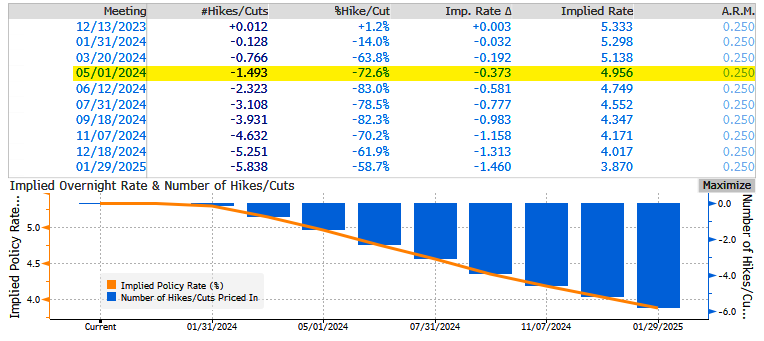
The crash of Signa comes as global central banks have likely concluded the most aggressive interest rate tightening cycle in a generation to tame hot inflation. Fed swaps show interest rate cuts are forecasted to begin as early as May. 

Furthermore, we don't need to expand on the CRE crisis as readers are well-informed about the rumblings this year. We leave you with a recent interview featuring Goldman's Allison Nathan and Scott Rechler, Chairman and CEO of RXR Realty. 

Rechler told Nathan that the crisis in the CRE space was just beginning.

Recall in March, when several regional banks imploded, we noted "Why Small Banks Are In Big Trouble: As Hedge Funds Pile Into The New "Big Short," The Next' Credit Event' Emerges." 

So what are the contagion risks with the implosion of Signa? 

Tyler Durden Fri, 12/01/2023 - 16:40
https://ift.tt/GD47zZO
from ZeroHedge News https://ift.tt/GD47zZO
via IFTTT

Chrysler Building's EU Co-Owner Goes Bankrupt  SocialTwist Tell-a-Friend
| 0 comments ]

Back To 2-And-A-Half Wars?

Authored by John Mills via The Epoch Times (emphasis ours),

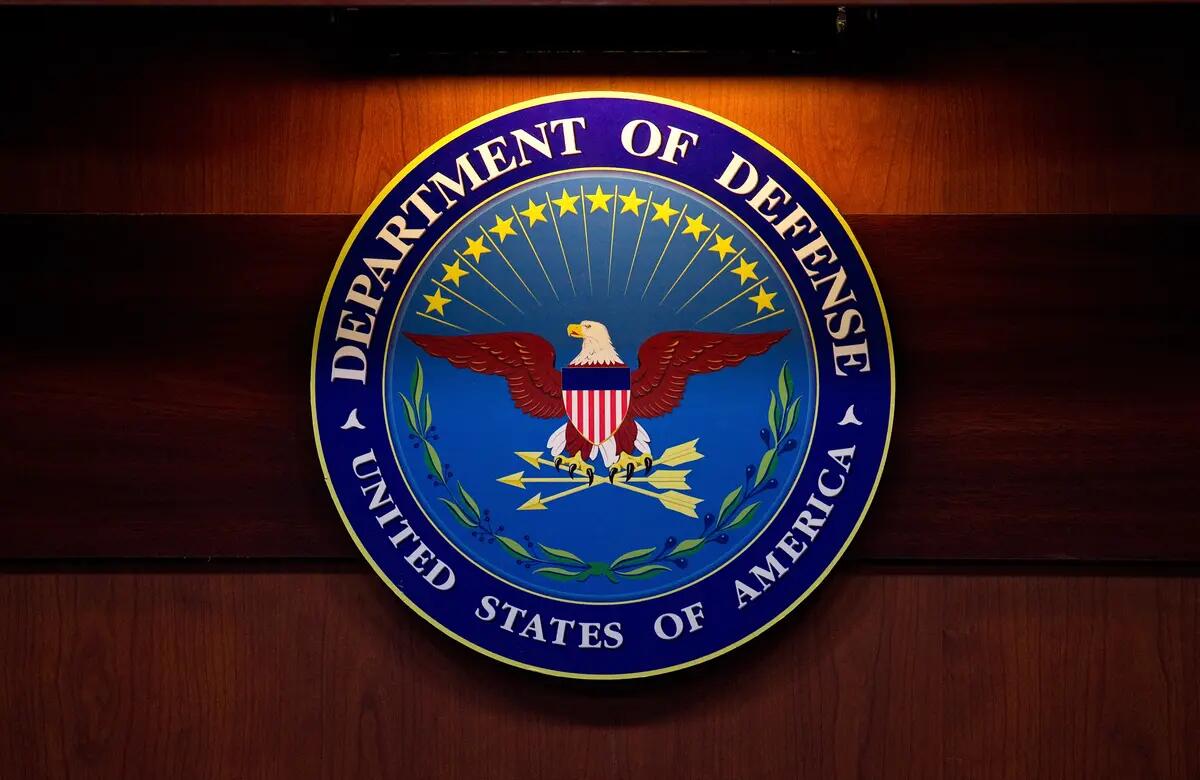
A plaque of the Department of Defense seal is seen at the Pentagon in Washington, D.C., on Jan. 26, 2012. (Mandel Ngan/AFP via Getty Images)

Commentary

An overarching tenet for decades in the American national security planning environment was the ability for the U.S. military to simultaneously conduct two-and-a-half major regional conflicts (MRCs).

Translated, this meant that the United States had the military size to generate and project military force for a major conflict in the European area, a major conflict in the Asian area, and a smaller “brushfire” conflict somewhere else. Going back 30 years, the 1993 “Bottom Up Review” was the seminal Department of Defense planning document that defined the beginning of the pivot away from this classic Cold War viewpoint to a new, post-Soviet era one.

The budget process descended into decades of arguing that to pay for new systems, force structure had to be diminished. The flip side of the argument was that peacekeeping requirements (Bosnia, Rwanda, etc.), as well as the massive increase in deployment cycles brought on by the War on Terror, prevented the diminishment of the number of military units.

This led to an unsolvable impasse on the topic. New systems had a bill that could only be paid by cutting units and military personnel. Units and military personnel couldn’t be cut because of the demands of the deployment cycle.

And now the world seems to have descended into a real situation of two-and-a-half conflicts without seeking permission from the force structure planning community.

China Threat Re-awakening This National Security Imperative

The war in Ukraine drags on, but with some momentum perceptible as Ukrainian forces appear to have established a firm beachhead across the Dnipro River in a drive toward Crimea. After decades of relative peace, now the Middle East is inflamed as Israel strikes into the Gaza Strip to destroy Hamas terrorists while holding additional Iranian-backed proxies in southern Lebanon, Syria, the West Bank, and Houthi missile fire from Yemen in check. Meanwhile, there's the specter of even greater conflict in the possibility of strategic strikes as Iran threatens Israel (and America).

In the two-and-a-half MRC calculus, it’s not clear whether these contagions are the “two-and-a-half,” or even possibly the “two-and-a-half-plus,” of the retro MRC worldview.

Hamas and the Houthis are proxies for Iran; Iran is a proxy for China. Russia, mired in the death and destruction it created, is a proxy for China. In December 2021, Xi Jinping and Vladimir Putin met virtually, weeks before Russia invaded Ukraine, and agreed to a “no limits” partnership to topple American leadership of the world system.

Tensions in the Pacific have increased as China has greatly elevated its military exercises—demonstrations toward Taiwan and the Philippines. The Fiscal Year 2023 National Defense Authorization Act and related appropriations greatly increased American military spending while making numerous declarative statements of support for Taiwan, which has significantly displeased China.

Air Force and Navy in the Lead

With the upward trajectory of the American defense budget and the existence of an ongoing or building two-and-a-half-plus MRC world whether we like it or not, the question is, what force structure strategy and policy should be in effect?

The common outcome of the national security budget debate is what’s called “salami slicing,” where all military services and requirements take equal cuts or equal plus-ups. This is often the normalcy of the defense debate within and between the executive and legislative branches of the U.S. government.

With the surging two-and-a-half-plus MRC world, intuitive priorities come to the forefront. The American border should be the first priority, and, beyond that, capabilities and force structure that can project deterrence and, if necessary, war-winning capabilities should receive the highest priorities for a unified joint operational concept. These are more resident in air, naval, space, cyber, and special operations domains, with a special emphasis on artificial intelligence-enabled autonomous systems.

The Army and Marines will have a key role in the burgeoning two-and-a-half-plus MRC world, and they need to find where they create the best value as “supporting” services to the primary “supported” services who should be in the lead. The Army has made bold moves toward this in its multi-domain doctrine development, which emphasizes long-range fires, rejuvenated air and missile defense capabilities, and a return to strong operational experience and capabilities in maritime and amphibious operations.

The Army and the Marine Corps have similar interests and should work closely together in partnership to develop a larger and more capable maritime transport capability of smaller vessels that complement the Navy’s larger amphibious warfare ship structure and robust special operations capabilities. The Army should retain a world-class armored force capability but ensure it's postured for maximum ability to be in the right place at the right time. The rest of the conventional “Big” Army may have to shrink somewhat to ensure the priorities are properly resourced.

Countering Unrestricted Warfare

The Chinese Communist Party is achieving some success in its worldwide campaign of unrestricted warfare to include civil-military fusion, Belt and Road influence operations, and pernicious and deadly adjuncts such as fentanyl production in northern Mexico that is introduced into American society on a broad scale in an “Opium War” initiative to destabilize American society. This implies that the American solution must be whole-of-government and inclusive of key strategic partners.

The historic challenges of military recruiting and retention need to be addressed in an open and honest dialogue that addresses all core causal factors that can no longer be dismissed. Even the U.S. Coast Guard is achieving a striking inability to deploy ships: It has the budget and equipment, but it doesn’t have the personnel—an extremely perplexing inverse of the world they have lived in for years.

The two-and-a-half MRC world is only growing, and the best response is to build the right capabilities to deter the developing storm as fast as possible.

Views expressed in this article are opinions of the author and do not necessarily reflect the views of The Epoch Times or ZeroHedge.

Tyler Durden Fri, 12/01/2023 - 16:20
https://ift.tt/2L7XApu
from ZeroHedge News https://ift.tt/2L7XApu
via IFTTT

Back To 2-And-A-Half Wars? SocialTwist Tell-a-Friend