| 0 comments ]

Kunstler: Suburban Sprawl Is A 'Death Trap' For America's National Spirit

Authored by James Howard Kunstler via Clusterfuck Nation,

The Late, Great Debate About Suburbia, An Apologia

"It is difficult to design a place that will not attract people. What is remarkable is how often this has been accomplished."

- William H Whyte

Greenland, yes, yes, okay ! Smooth move. . . !

But. . . today we put aside the vagaries of national and geo-politics to return to a longstanding affliction in American life that is evermore absent from the public discourse and deserves an airing: the quandary of our suburban sprawl living arrangement, and what can be done about it.

First, get this: the demolition derby we live in day-by-day is responsible for as much misery, injustice, economic failure, and ill-health as anything else in our collective doings.

Its sheer ugliness - the horror of the six-lane highway with its ensembles of strip-malls, burger shacks, muffler shops, topless bars, Big Box stops, screaming signage, and the vast wastelands of parking. . . the suicide-inducing housing pods marching out remorselessly through forest, prairie, upland, lowland, basin and range. . . the depressing freeways with their monster entanglements of on-and-off-ramps. . . this epic mutilation of our continental landscape - is an evil quite beyond our ordinary imaginings. This inescapable, immersive ugliness, I remind you, is entropy-made-visible. And entropy, of course, is the force in nature that you really don't want to mess around with because it is the agent of death.

I do not exaggerate. It's a death trap, the way we live in this country, for the mind, the body, the family, the community, and the national spirit. Until fairly recently this was widely apprehended (or at least suspected). But the politicization of everything has wrecked what had been a growing and pretty robust national discussion about it.

To re-cap briefly: this is a big country. It had once been composed of cities, towns, farmlands, and wilderness, a coherent transect of human habitation. The invention of the motor car changed all that, starting in the 1920s.

The ambiguous territory outside these cities and towns represented vast potential fortunes in property development. . . and the race was on.

The Great Depression and World War 2 interrupted the suburban expansion, but it resumed on steroids afterward when the rest of the world was a smoldering ruin and we could sell them anything (and lend them money to buy it). The construction of all the new suburban infrastructure alone was a major component of the late 20th century US economy, and then it became the scaffold for our so-called consumer economy, comprised of furnishing that scaffold with so much stuff that it overflowed into thousands of self-storage sheds.

The decanting of our cities that ensued - the steady dribble of the middle-classes moving out, along with the commerce that served them - left most of those cities ruined. Eventually even the small towns got whacked, the farms paved-over, too. What we're left with is a weird hybrid landscape that is neither town nor country, has few of the civic amenities that add-up to a genuine sense of community, and none of the rural charm formerly found in the countryside. It became painfully obvious that a suburban house was a cartoon of a house in the country, and living in a cartoon is just not spiritually rewarding. Cue the Prozac. . . .

The whole kit, aided by the dogmas of zoning and government lending schemes, became easily reproducible from one locale to the next. For the development industry, the template became a habit. . . and so it boogied on through the decades. By the 1990s, the generation coming into power (yeah, the Boomers) started a revolt against all that. It crystalized in the New Urbanism movement and its signature org, the Congress for the New Urbanism, CNU. We can do better than this, this. . . this. . . national clusterfuck, they declared.

I was excited by this movement, wrote a couple of books about it, got to know the excellent people behind it - architects, urban planners, civic officials, property developers. They were smart, skilled, visionary. They believed that walkable communities and disciplining the automobile would produce places worth caring about and worth living in - and it seemed to me that such an effort would go a long way to curing the desperate anomie of American life. Over the next several decades, the New Urbanists produced scores of great projects. Some were actual new towns, some projects were renovations of existing towns, neighborhoods, business districts, and small town Main Streets. The results of their work are visible all over the country now.

But then, the political crack-up of the country commenced around 2009 with the Great Financial Crash and the ascent of Obama-inspired Wokeness, and really accelerated with the reaction to the advent of Mr. Trump in 2016. From that point on, as a nation, we've been arguing about everything but the disastrous arrangement of daily life on-the-ground in America. Some new twists in the spin of history have made matters worse.

One is that suburban sprawl is, by default, the favorite pattern of MAGA (and I happen to be a Trump voter). To them, suburbia is all tied up with ideas about economic liberty, as is the whole apparatus of Happy Motoring. They are still mentally stuck in the imagery of the TV car commercial - the lone sedan gliding through the sine-cosine curves of the empty seacoast highway, the romantic epitome of freedom! It's a lie, pretty much, because the more universal experience of motoring these days is getting stuck at a crawl in freeway traffic with a thousand other motorists per mile, half of whom desperately need to take a pee and can't do a darn thing about it.

And then there's the fallacy of the suburban housing development being a "community" - bwa-ha-ha-ha-ha-ha! See: I don't even have to explain that. But, MAGA tends to see it this way, along with all the activity that enables it - the mortgage system, the production home-builders ("it's more than a house, you understand, it's a home!"), all of which is so central to a booming economy. So, you don't dare inveigh against suburbia - except I will, because it is making America worse, not great again, and somebody's got to say it.

Yet another thing has come along to wreck the New Urbanist dream of reconstituting the American city and small town, and that thing is the World Economic Forum's (WEF's) proposal they call the "15-minute City." Superficially, it seems to resemble the traditional neighborhood model that the NU's espouse. But deeper down the 15-Minute City is much more about a surveillance and tracking apparatus - and this has caused many conservatives (especially them) to reject anything that looks like traditional urban design.

It's a most unfortunate situation, but that's where things stand, and it's one reason that the debate over suburban sprawl has stopped. A final and equally unfortunate development is that the CNU org came to be taken over the past decade by political Wokesters more interested in Diversity, Inclusion, and Equity BS than in their original mission of providing workable remedies for the tragic fiasco of American suburbia.

And now you know why it is so hard to talk about this geography of nowhere anymore.

We publish a variety of perspectives. Nothing written here is to be construed as representing the views of ZeroHedge.

Tyler Durden Mon, 09/21/2026 - 16:20
https://ift.tt/cHd4DF9
from ZeroHedge News https://ift.tt/cHd4DF9
via IFTTT

Kunstler: Suburban Sprawl Is A 'Death Trap' For America's National Spirit SocialTwist Tell-a-Friend
| 0 comments ]

Trump Would 'Probably Be Open' To Meeting Iranian President, Who Will Address UN

President Trump in a Sunday morning Fox News interview repeated some of his talking points about a big decision he is preparing to make regarding what comes next in the Iran war

He told the outlet he's currently in "deciding mode" on Iran and that "very big things" are coming, and once again suggested it would either involve major military escalation or else a drawdown in tensions.

The president said: "My question is, if and when do I blow the entire nation up? They better behave."

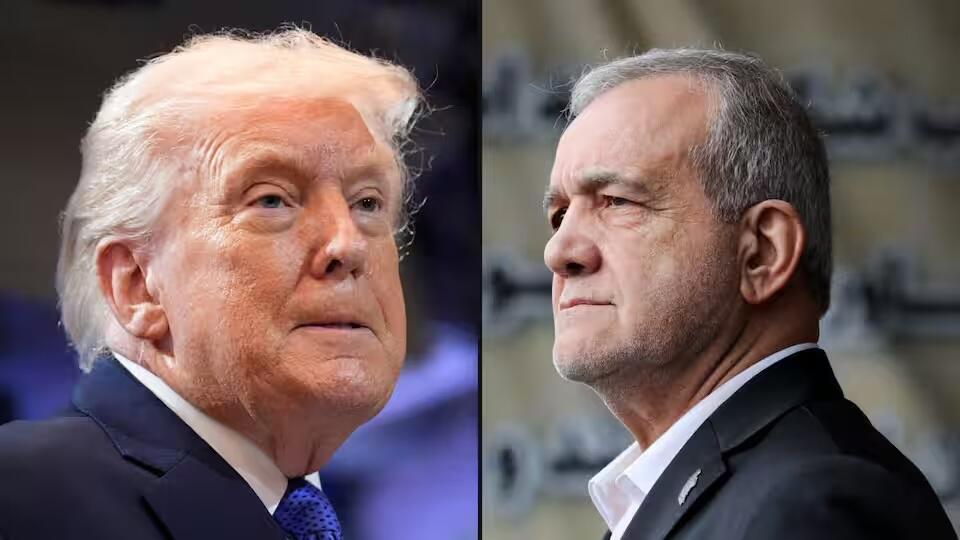
But he went from saying that he's mulling the destruction of an entire society, to then suggesting it could be the opposite - top negotiations could happen, to the point that he could meet Iranian President Masoud Pezeshkian.

He said he might allow Iran to "rot" economically or else a deal could be forged, adding that "very big things are going to be happening in the not-so-distant future."

Interestingly, the US actually issued visas to allow Iranian top officials and diplomats to travel for the UN General Assembly meeting through this week. According to Iran's PressTV:

Iranian President Masoud Pezeshkian is set to travel to New York to attend the 81st session of the United Nations General Assembly next week.

Pezeshkian is scheduled to address the General Assembly on Wednesday, September 23, where he’s expected to present the Islamic Republic’s stance on international developments and the US-Israeli war of aggression against the country.

On the sidelines of the gathering, the president is also expected to hold meetings and consultations with world leaders.

Trump was asked about the high level UN meeting which opens Monday, and surprisingly signaled a willingness to engage diplomatically, going so far as to say he would "probably be open" to meeting with Iranian President Masoud Pezeshkian.

In Trump's mind, there seem to be three options on the table, or as he put it--"to obliterate Iran, letting it rot economically or reach a deal."

Iran has meanwhile over the weekend once again warned US allies in the region that they'll be considered "complicit" if the US resumes it military assault on the Islamic Republic. The Iranian military HQ stated that "any mistakes will result in painful attacks."

Tehran further indicated Sunday that it is still awaiting Trump's response to its conditions for ending the war. Mohammad Bagher Ghalibaf confirmed to AFP that Iran's demands were sent to Washington via the Qataris.

These conditions have been summarized as "the end of the war on all fronts, the release of frozen assets and the end of the naval blockade."

Releasing all frozen funds is a tall ask, given the White House has only become more aggressive it waging economic war on the Iranians. But Iran has blasted the theft and hijacking of its funds and sovereign assets.

* * *

Tyler Durden Sun, 09/20/2026 - 18:00
https://ift.tt/fxlchGo
from ZeroHedge News https://ift.tt/fxlchGo
via IFTTT

Trump Would 'Probably Be Open' To Meeting Iranian President, Who Will Address UN SocialTwist Tell-a-Friend
| 0 comments ]

Trump Says His Planned DC Arch Would Host Drones And Snipers

Via Headline USA,

President Donald Trump said Sunday that the massive arch he wants to build between the Lincoln Memorial and Arlington National Cemetery would become a "top grade military complex" able to host drones and snipers while storing ammunition.

It is one more example of how Trump is insisting that his initiatives to beautify the White House and the city are also serving a defensive purpose.

Trump has been calling the new White House ballroom a "military complex" and arguing it is necessary for national security purposes.

The Republican president said in a social media post that he had agreed, at the "strong request" of the military, to convert the planned 250-foot-tall memorial arch "into a top grade Military Complex/Triumphal Arch, to house, store, and have the rapid ability to use large numbers of drones, plus Snipers, on both the roof and plaza areas, and additionally have and hold large quantities of sniper ammunition in storage."

After teasing it in October 2025, Trump has continued to promote his vision for a 250-foot triumphal arch situated between the Lincoln Memorial and Arlington National Cemetery.

The arch will “celebrate the triumphs of the American people, inspire patriotism and love of country, and beautify our nation’s capital,” the Department of the Interior, as its sponsor, declared in its project materials.

The arch (one of several projects that the Republican president is pursuing to leave his lasting imprint on Washington) is currently awaiting final approval from the National Capital Planning Commission (NCPC), a federal review panel dominated by Trump appointees.

Among the others are the white House ballroom, renaming and renovating the Kennedy Center, refurbishing the Lincoln Memorial Reflecting Pool and rebuilding a golf course in East Potomac Park that could significantly reduce the public's access to running and biking paths.

Rep. Don Beyer (D-Va.) on Sunday criticized Trump’s announcement.

“Putting a drone launching site directly in the landing path for [Ronald Reagan Washington National Airport] is a stupid, dangerous, and unworkable idea,” Beyer said on X.

“Trump clearly expects to lose a lawsuit and therefore wants to set up a pretext to argue that the arch is tied to national security.”


Tyler Durden Sun, 09/20/2026 - 16:30
https://ift.tt/uHBV5DQ
from ZeroHedge News https://ift.tt/uHBV5DQ
via IFTTT

Trump Says His Planned DC Arch Would Host Drones And Snipers SocialTwist Tell-a-Friend
| 0 comments ]

Iran Submits Conditions For Ending War With US Via Qatar, Awaits Trump Response

Iran has announced Saturday that its Supreme National Security Council has submitted Tehran's conditions for ending the war with the United States via Qatar, and that it awaits the Trump White House's response.

"We are in contact with the Qatari intermediary who conveyed our conditions to Washington to end the war, and we are awaiting a response from President Trump," the supreme council's secretary Mohsen Rezaei said.

Via Asharq Al Awsat

But he warned that if Washington doesn't comply, the Islamic Republic is ready for a "decisive war". The conditions, according to his summary, features--

"the end of the war on all fronts, the release of frozen assets and the end of the naval blockade."

"Iran has become convinced of the need to change its strategy towards Washington following the US withdrawal from the memorandum of understanding," Rezaei explained in words given to Al Jazeera.

He blasted US and Israeli calculations which have been on display through over six months of war as "flawed" and asserted that the conflict was ultimately instigated by Netanyahu.

"Iran knows the US military’s vulnerabilities and is more prepared than ever to counter its air strikes," Rezaei stated. He went on to claim that Iranian forces recently tested an anti-ship missile near a US aircraft carrier.

"Iran is serious about defense," the high-ranking Iranian security official continued, and "if attacked, will strike US bases and Washington's interests in the region with greater force."

Meanwhile, President Trump continues to shut down critics of his "little excursion" in the Middle East, which is increasingly an obvious quagmire from which the US is seeking to extricate itself, by saying that high fuel prices don't matter in light of the potential for Iran obtaining a nuclear weapon.

Interestingly, at the same time Iran continues to seek to demonstrate it is not bent on achieving nuclear weapons status. 

However, Rezaei has also newly teased withdrawing from the nuclear non-proliferation treaty:

Iran complies with a fatwa issued by the late Ali Khamenei prohibiting the development of nuclear weapons and has not yet decided to withdraw from the Treaty on the Non·Proliferation of Nuclear Weapons.

"We still adhere to the fatwa of the late supreme leader and have not changed our nuclear doctrine, but we do not know what will happen in the future. We have not yet made a decision to withdraw from the Non·Proliferation Treaty, and this issue depends on Washington’s behavior," said Mohsen Rezaei

However, according to Rezaei, the actions of the United States and Israel allow Iran to withdraw from the treaty.

The Iranian official in the fresh remarks also addressed the escalating Saudi-Yemen war. He described that the Houthis seek a peace settlement with Saudi Arabia, and suggested a broader US-Iran deal would facilitate that.

Of course, Tehran at the same time knows that the Houthi advance along the Red Sea coast has only increased Iranian leverage over global energy - given the Yemeni rebels are now in easter shooting distance of the vital Bab Al-Mandab Strait. Iranian advisers are likely coordinating with the Shia Ansar Allah movement as it battles the Saudi coalition.

* * *

Tyler Durden Sat, 09/19/2026 - 14:35
https://ift.tt/MUvuHFW
from ZeroHedge News https://ift.tt/MUvuHFW
via IFTTT

Iran Submits Conditions For Ending War With US Via Qatar, Awaits Trump Response SocialTwist Tell-a-Friend
| 0 comments ]

Flock Camera Ping Jails Innocent Woman For 13 Days

Authored by Steve Watson via Modernity News,

A 23-year-old Palm Coast Florida woman spent 13 days in a Volusia County jail cell facing life in prison after Florida Highway Patrol troopers treated a Flock Safety camera hit like a confession.

Lindsey Brooke Isaacs did not cause the crash. Her black Dodge Durango had no collision damage. A 911 caller had already described a maroon Durango and a partial plate that was not hers. None of that stopped the machine-assisted hunt.

The October 4, 2025 hit-and-run on eastbound I-4 near DeBary killed motorcyclist Joaquin Deno, Flagler County Deputy Administrator Jorge Salinas, and Salinas' wife, Nancy. A fourth person was badly hurt. Witnesses described a Dodge Durango fleeing the scene. Investigators searched nearby Flock cameras for a black Durango and found Isaacs' tag, RJVN10, crossing the Seminole-Volusia line at 9:51 p.m., about three miles west of a wreck that started around 9:53 p.m.

That ping became the case.

Troopers later pounded on Isaacs' door while she was asleep. "I thought I was getting set up. I didn't understand what was going on," she said. They seized the Durango for months and claimed "marks" consistent with the crash.

Photographs later showed an immaculate 2025 SUV. "Where is the damage on the vehicle? Because I'm standing right in front of it and I don't see any damage," Isaacs recalled.

On April 17, 2026, FHP booked her on eight felonies, including three counts of vehicular homicide and three counts of leaving the scene of a crash involving death. She was held without bond, then sat in G Block for 13 days. "Being incarcerated, falsely incarcerated, in jail, in G Block, was the worst 13 days in my life," she said. "I was devastated, I was scared. I thought my life was over."

Attorney Patrick McGeehan did the work the camera search replaced. A time-and-distance analysis using the same Flock timestamp put Isaacs past the crash site when the collision happened. "In Lindsey's case, there was nothing indicating that she was ever there," he said.

A 911 caller described a maroon Durango and the partial plate "458." Paint transfer on a struck Ford Focus was maroon. Isaacs' plate did not match. Witnesses had described three different vehicles: black, white, and maroon. "For some reason, [Florida Highway Patrol] never went past the black Dodge Durango," McGeehan said. "They hooked onto this black Dodge Durango to the exclusion of everything else." He called it "confirmation bias, to the highest degree" and "a major failure of basic investigative skills."

"Lindsey wasn't even at the crash scene," he told NewsNation. "These were investigators that got it in their mind that there was a black Dodge Durango involved. They got on Flock, found the first black Dodge Durango, that belonged to Lindsey Isaacs, and pinned that on her."

On May 22, 2026, prosecutors dropped every charge. The same day, they arrested 47-year-old Alisa Lee Montalvo of Deltona, whose maroon Durango and plate beginning 458 lined up with the original 911 call.

Authorities say her SUV had crash damage, she paid a mechanic to replace doors, pull airbags, and change tires, and an event data recorder later showed roughly 112 mph seconds before impact. Montalvo faces nine counts, including vehicular homicide and tampering with evidence. She has pleaded not guilty. Those charges remain allegations.

Isaacs walked out with a ruined name and a federal lawsuit against FHP Sgts. Tiffany Jateff and Joshua Buday, alleging false arrest and malicious prosecution. "I have to carry this like a big bag of bricks for the rest of my life," she said. "I'm still receiving death threats and hate." She is not suing Flock. She blames how troopers used the footage. "They just picked up my car off a camera and called it the end of the day. We got her."

Flock's answer is corporate and tidy. "Flock cameras provide investigative leads; they do not identify perpetrators, determine guilt, or make arrest decisions," a spokesperson said. The company notes Isaacs' own complaint calls the camera record "exculpatory, not inculpatory," because it placed her three miles away two minutes before the crash.

This is the dragnet Gov. Ron DeSantis ordered off state highways. FDOT revoked every permit for Flock units and other automated plate readers in state right-of-way and gave agencies 30 days to pull them. Miss the deadline, and state crews tear the poles down.

"I think these cameras, the license plate readers, I think it's out of control," DeSantis said. He drew the line most voters can understand. "I'm all about having law enforcement have tools to be able to hold criminals accountable... But I don't want to have this become a surveillance state." On another stop: "What we don't want in the state of Florida is to have a digital AI surveillance state where everything we're doing is being tracked at all times." His example was a drive to Buc-ee's. "It's really none of the government's damn business if you're doing that, right?"

Isaacs' case is that argument with a booking photo attached. A tool sold as an Amber Alert machine became a nationwide movement file. Officers in Florida have already used the same network as a stalking app - hundreds of plate runs on exes and partners in Haines City, Sarasota, Sumter, Orange City, Monroe, and Brevard. Texas froze state funding after similar abuse. Cities from Dallas to El Paso to Clark County, Wisconsin, have cut contracts or bagged the lenses.

Knox County, Tennessee, Mayor Glenn Jacobs, the former WWE star Kane, got there first on the product itself. He thought Flock was a passive hit-on-a-hot-list reader. Then he read the contract.

"What I discovered is these things are completely different than that," Jacobs said. "Instead of a passive system... these cameras are an active system that's pulling data from every car that drives by." The snapshot feeds an AI "vehicular fingerprint" - make, model, color, roof racks, bumper stickers. He told Flock the 2020 Knox County deal was invalid after purchases blew past the $100,000 threshold that required County Commission approval, and he refused to renew more than 140 cameras.

"The lack of transparency surrounding Flock's rollout is one of the most troubling aspects about all this," he posted. "It's sure seems like there was a sprint towards a fait accompli before the public took notice."

McGeehan's verdict on the Florida grid is shorter. "It's a good tool, but now it's unrestricted. It's the Wild West of Flock."

Isaacs used to think they were traffic cameras. "I feel very different about those cameras now," she said. "It's like, they're watching me. They're watching, you know? They're watching everybody."

That is the product. A searchable history of who drove where, handed to whoever has a login, and treated in this case as enough to put an innocent woman in a cell for three deaths she did not cause. Targeted tools for actual criminals are not the argument. A warrantless travel dossier on every driver is.

* * *

Tyler Durden Fri, 09/18/2026 - 14:20
https://ift.tt/qhoSeDf
from ZeroHedge News https://ift.tt/qhoSeDf
via IFTTT

Flock Camera Ping Jails Innocent Woman For 13 Days SocialTwist Tell-a-Friend
| 0 comments ]

"I'm Not Going Back" Haitian Gang Thug Deported

Authored by Steve Watson via Modernity News,

The man who told federal agents he would never set foot in Haiti again is back in Haiti.

Wisteguens Jean Quely Charles spent 19 months in federal custody after a viral January 2025 ICE arrest in Boston.

Last Thursday he was loaded onto a removal flight out of Louisiana. Sources told Fox News he was combative aboard the aircraft and made crude, profane threats toward President Trump and his family on the way home.

Good riddance.

Fox cameras were there when ICE Enforcement and Removal Operations grabbed him on January 22, 2025, days into Trump's second term.

Charles shouted, "I'm not going back to Haiti ... you feel me?" Then: "F-- Trump." Then: "Biden forever bro."

Coverage of the same clip also recorded him thanking Obama "for everything he did for me." He was 25. He had already piled up more than 17 Massachusetts convictions in a two-year stretch.

DHS identifies Charles as a member of the Back Block Money Gang. Between August 2022 and August 2024 his convictions included assault and battery on a public employee, resisting arrest, assault and battery with a dangerous weapon, drug possession and trafficking, carrying brass knuckles, possessing a firearm and ammunition without permits, and trespassing.

ICE had already tried. Officers issued a detainer after a 2023 arrest. The Norfolk House of Correction released him in October 2023 without honoring it. He stayed on the street in a sanctuary jurisdiction until Trump-era ICE came back for him.

A Department of Justice immigration judge signed a final order of removal on November 7, 2025. Charles then ran every appeal and delay available. That is why a man with a gang affiliation and a two-year crime binge sat in custody for 19 months instead of leaving in weeks.

DHS Secretary Markwayne Mullin said: "This illegal alien gang member from Haiti had quite the rap sheet, with convictions for assault and battery on a public employee, resisting arrest, and drug trafficking, among other heinous crimes. He went viral for praising Biden as he was getting arrested, because he knew that the Biden Administration's open borders turned America into a paradise for criminals like him."

"The Trump Administration has finally done what both the Obama and Biden Administrations failed to do and deported this criminal back where he belongs," he added.

The White House put it more bluntly: "This gang member and criminal illegal alien loved Obama, Biden, and open-border Democrats who let him enter our country with TPS and allowed him to terrorize American citizens. Thanks to the Trump administration, he is now off our streets and back in Haiti."

Charles first came in July 2013 under Obama and received Temporary Protected Status. USCIS later revoked that TPS in 2022. Biden-era enforcement never finished the job.

TPS for Haitians started after the 2010 earthquake as a short-term shelter. Successive administrations kept rolling it forward until hundreds of thousands were living and working in the United States as if the designation were a settlement program. In late 2025 DHS terminated protections for roughly 353,000 Haitians, stating the designation no longer served U.S. national interests.

Stephen Miller was explicit after the Supreme Court cleared the path to end the designation. "The illegal alien Haitians are going back to Haiti. They can build their country there." He also said the Biden-era extensions turned a disaster-relief tool into a pipeline into American towns.

That is the policy Charles ran into. The T in TPS stands for temporary. Courts delayed. Activist litigation delayed. He still went.

As weekly removal flights to Cap-Haïtien ramped up, national outlets framed the story around children on planes and long-settled workers "dumped" into a violent country. They spent far less time on the gang members, sex offenders, and repeat assailants ICE has put on those aircraft.

Charles is the case they prefer not to lead with: a man who thanked Obama, cursed Trump on camera, collected 17 convictions, threatened the president's family on the jet, and still consumed a year and a half of detention beds and court time.

The broader numbers are moving in the same direction. Center for Immigration Studies analysis of Census data shows the foreign-born population falling for the first time in a century - about 2.3 million illegal immigrants gone since January 2025, plus hundreds of thousands of legal exits, for a total drop near 2.9 million.

Formal removals and self-deportations both rose after interior enforcement tightened and TPS expansions were shut down.

In the lame-duck window, Biden officials drafted a plan to stretch TPS into a de facto shield for more than three million people from a list of countries, hoping to bury the next administration in litigation.

Sen. Eric Schmitt later called it an attempt to "keep millions of illegal aliens in our country by abusing the 'Temporary' Protected Status program" and "mass amnesty-by-decree" after voters had already chosen the opposite.

Charles is one data point inside that fight. Obama let him in. A sanctuary jail cut him loose. Biden-era policy left him in place after TPS was pulled.

Trump-era ICE arrested him immediately. The courts let him stall. The plane still left Louisiana.

Mass deportations only work if the last appeal is not a lifetime lease. Miller said they all go back. This one did - yelling the whole way.

Tyler Durden Thu, 09/17/2026 - 13:45
https://ift.tt/iFO2kgG
from ZeroHedge News https://ift.tt/iFO2kgG
via IFTTT

"I'm Not Going Back" Haitian Gang Thug Deported SocialTwist Tell-a-Friend
| 0 comments ]

US Announces South Africa Visa Curbs Citing Racism Against Afrikaners

Authored by Troy Myers via The Epoch Times,

The U.S. Department of State announced Tuesday new visa restrictions against some foreign nationals in South Africa who are alleged to be involved in discrimination and incitement of violence against minority groups in the country.

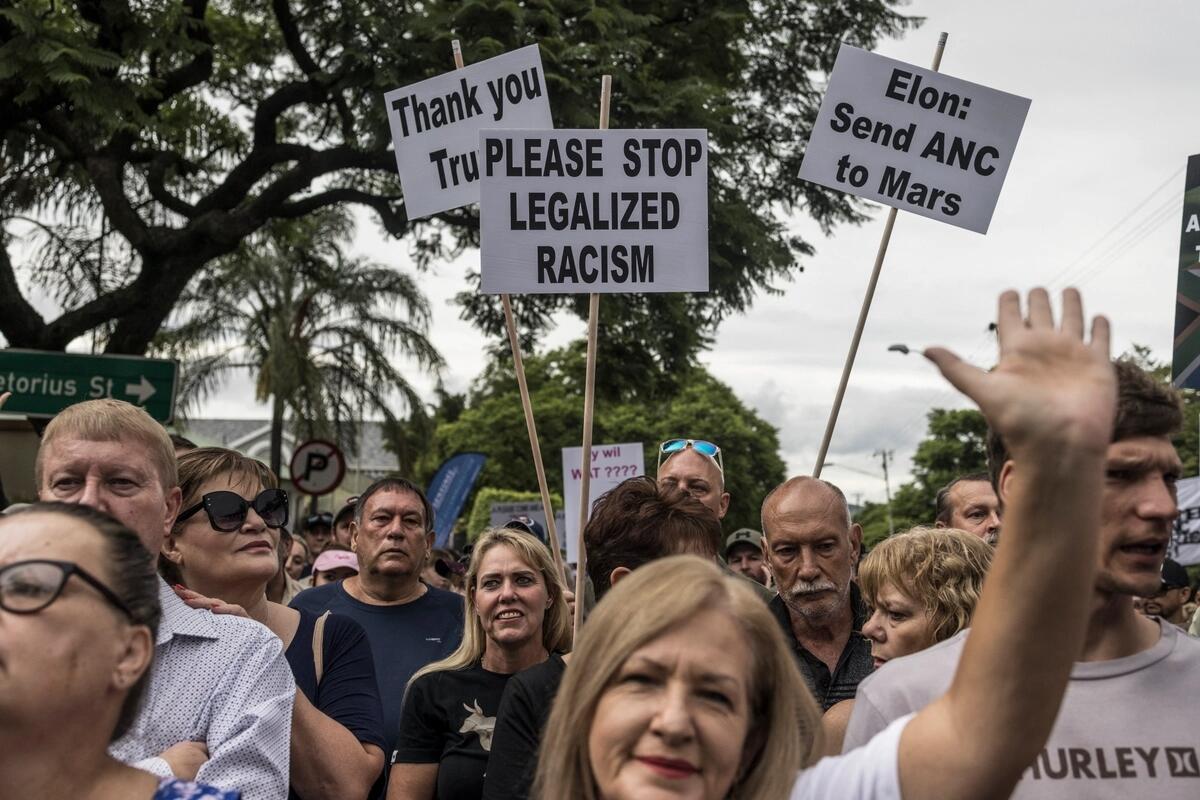
A State Department news release said the policy will target any individual involved in racially motivated crime, uncompensated land seizures, government-sponsored discrimination, and race-based legislation against the Afrikaner community, a white South African group of Dutch, German, or French descent, and any other minority ethnic or racial groups in the nation.

U.S. President Donald Trump has alleged on several occasions that a "white genocide" is happening in South Africa, which the country's President Cyril Ramaphosa has denied.

"As [Trump] has made clear, the South African people are being failed by a government that is destroying its economy through an obsessive pursuit of racial grievance against the Afrikaner minority," State Secretary Marco Rubio wrote on X.

"The South African government has consistently failed to adequately address rural crime, violent and dehumanizing rhetoric, and race-based discriminatory policies against Afrikaners and other minority populations."

Rubio added that the alleged behavior will not go unchecked and that actions against minority groups in South Africa undermine peace, economic stability, rule of law, and are incompatible with the foundations of America's foreign policy.

"Those responsible for these injustices have no place in the United States," Rubio said. "We once again strongly urge the South African government to quickly address these egregious actions."

The state secretary referenced Trump's executive order, titled Addressing Egregious Actions of the Republic of South Africa, signed in February 2025.

That directive pulled $440 million in yearly funds that went to South Africa over similar concerns.

The executive order highlighted Ramaphosa's signing of the Expropriation Act, which is facing a legal challenge. Trump said the legislation enabled the government to seize Afrikaners' agricultural property without compensation.

"The United States shall promote the resettlement of Afrikaner refugees escaping government-sponsored race-based discrimination, including racially discriminatory property confiscation," Trump said in his order.

The president directed the State Department and Homeland Security to prioritize humanitarian relief, including admission and resettlement, for Afrikaners.

On May 12, dozens of Afrikaners arrived in the United States after they were granted refugee status.

About a week later, Ramaphosa flew to Washington, where the two world leaders held a tense meeting in the Oval Office.

Trump confronted Ramaphosa with allegations of mass violence against Afrikaners, and the South African leader denied that any killings or violence are taking place.

In a dramatic moment, Trump instructed his staffers to "turn the lights down."

He showed a several-minute-long video showing crowds at rallies calling for white South African farmers to be shot, which was followed by scenes of what Trump described as burial sites for Afrikaners.

"These are burial sites right here. Burial sites of over 1,000 white farmers," Trump said, speaking over the video. "Each one of those white things you see is a cross."

Ramaphosa looked away from the video, said he'd never seen it before, and wanted to know where it was filmed.

"I mean, it's in South Africa," Trump responded.

Relations between D.C. and Pretoria, the South African capital city, have been at an all-time low, as Trump and other administration officials criticized the country's policies. Trump has also imposed high tariffs on South Africa.

Before Ramaphosa's visit to the White House last year, Rubio skipped a G20 meeting hosted in Johannesburg, South Africa.

"South Africa is doing very bad things," Rubio wrote on X, explaining his absence. "Using G20 to promote 'solidarity, equality, & sustainability.' In other words: DEI and climate change. My job is to advance America's national interests, not waste taxpayer money or coddle anti-Americanism."

Tyler Durden Wed, 09/16/2026 - 14:45
https://ift.tt/P3GLs7J
from ZeroHedge News https://ift.tt/P3GLs7J
via IFTTT

US Announces South Africa Visa Curbs Citing Racism Against Afrikaners SocialTwist Tell-a-Friend
| 0 comments ]

Manufacturers Set To Move Production Out Of Canada As US Tariffs Hit Hard

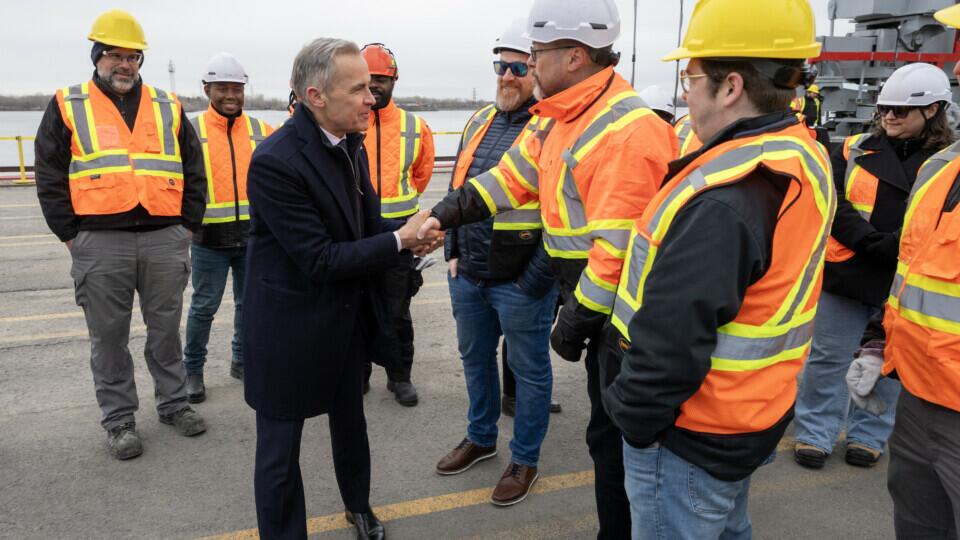
The circumstances of US/Canadian trade should be common knowledge by now, but the details often get mired in the swamp of political rhetoric.  When Canadian Prime Minister Mark Carney describes the tariff issue as the US "waging war" on Canada, he knows exactly what he's doing.  Carney has turned a simple trade issue over reasonable 10% tariffs into an existential crisis, an invasion, an ethnic cleansing, a last stand against "evil" imperialists.  

But getting the Canadian public riled up with delusions that they are underdog insurgents will not help them keep manufacturing companies or domestic jobs.  There is no reason to "endure" a trade war involving 50% tariffs that can be easily solved by simply taking the sweetheart deal that was offered to them.  Carney could easily wait Trump out and try to renegotiate once a new president is elected.  Unless, there's an alternative agenda at play for Carney.

Estimates in July on manufacturing losses indicated that 42% of Canadian companies (and some US companies) would be moving at least a portion of their operations to the US to avoid the debilitating tariffs.  Some will be shutting down entirely.  With Carney asserting that negotiations are off the table, this leaves no room for speculation.  Businesses are adjusting operations for the long haul which means skyrocketing job losses for Canada.

The latest manufacturers to make announcements are:

Aeris Protective Packaging in Montreal: The company says it is opening a U.S. plant after 50% U.S. tariffs on paper and packing containers. About 70% of its customers are in the U.S. It plans to keep some manufacturing in Quebec and Ontario for Canadian, European, and Mexican customers.

Sapporo/Sleeman Breweries:  Sapporo says it will move production of beer made in Canada for the U.S. market to the United States by the first half of 2027, citing 50% tariffs on Canadian beer. Sleeman later said the move is “not finalized”. Most beer sold in Canada would still be brewed in Canada.   

RYAM (Rayonier Advanced Materials) in Témiscaming, Quebec:  The US-owned paperboard mill announced an indefinite temporary shutdown, blaming 50% U.S. tariffs. About 400–425 workers were affected. The stop was first set for mid-September, then postponed to October 3rd after new Canadian orders. The company has not given a restart date. 

Stellantis - Brampton Assembly (Ontario):   In mid-August 2026 the company told Unifor it was opening talks on a possible sale of the idle Brampton plant (idled since late 2023 after Jeep Compass production was moved to the U.S.). Stellantis had plans to reopen the mothballed site, but they backed out after the trade war with the US went parabolic.  

Northern Cable (Brockville, Ontario):  An August 2026 report says the firm is considering a U.S. factory if 50% tariffs on electric cable take effect, because half of the company's business is in the United States.  

Some companies have already move production to the US, including Crown Royale which moved its bottling plant to Alabama in April.

A Reuters/LSEG poll of economists originally predicted Canada would add 15,000 jobs in August 2026.  Instead, the country lost 42,000 jobs; that's a 57,000 job disparity.  Canadian economists are treating the forecast miss as an anomaly, however, it is likely that the decline in jobs will escalate through the end of the year unless a deal between the US and Canada is struck.  

If Carney's intention is to use economic hysteria as a tool to help Democrats win during the US midterm elections, then there's no chance of a deal before the end of the year.  Canadians will continue into winter with the threat of rising unemployment and much higher prices. 

Canada relies on the US for 78% of all export sales and there are no practical trade alternatives.  A similar but smarter base case is Mexico, which sells around 84% of all their exports to American markets.  The difference?  The Mexican government has avoided arrogant jousting with the US and is engaging in fair negotiations (so far).  They are also showing more cooperation to meet the Trump Administration's demands on securing the southern border. 

In other words, they didn't abandon negotiations at the last minute like Carney, and this has helped Mexico to avoid punishing tariffs and job losses.  Whatever Carney's intentions, it's clear that average Canadians will be paying the price for the Prime Minister's lack of diplomacy.  

Tyler Durden Tue, 09/15/2026 - 15:40
https://ift.tt/GCmXjy8
from ZeroHedge News https://ift.tt/GCmXjy8
via IFTTT

Manufacturers Set To Move Production Out Of Canada As US Tariffs Hit Hard SocialTwist Tell-a-Friend
| 0 comments ]

"Dead Mall" Era Ends As Shoppers Return, Values Surge And Sector Leads CRE Revival

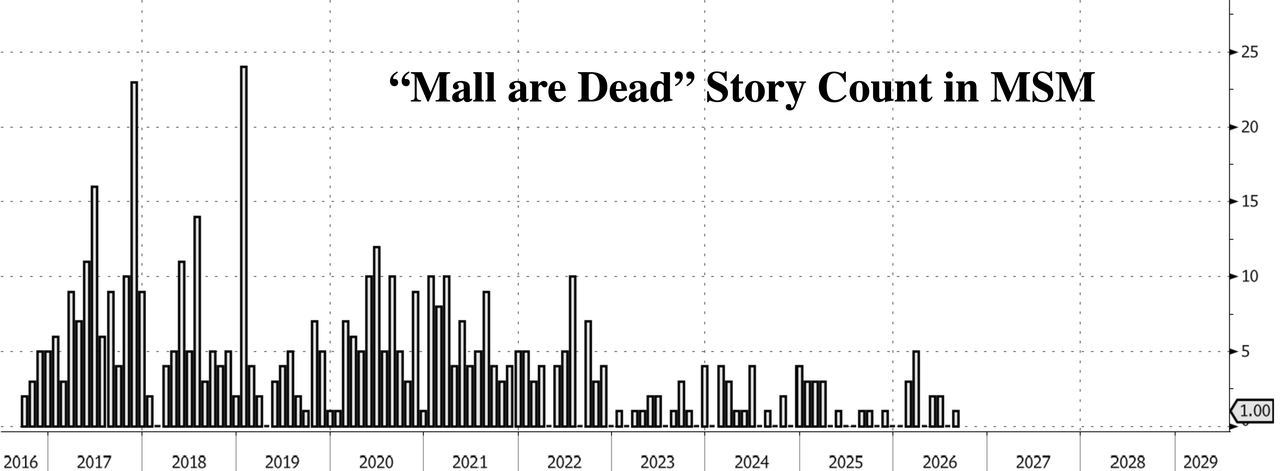
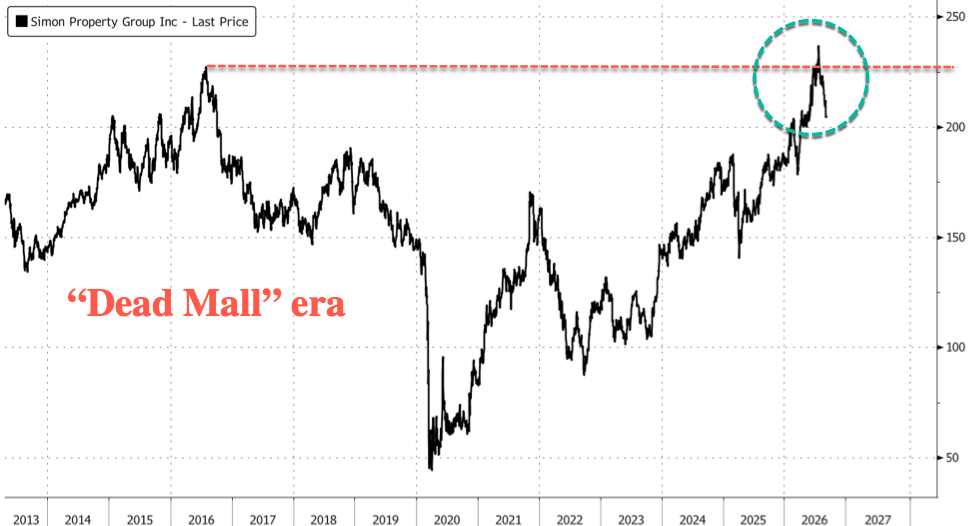
The "malls are dead" narrative gained traction in corporate media coverage in 2016 and 2017 and lasted until 2022.

Those headlines reflected the strain across the sector as excess retail space, department-store closures, and shifting consumer habits led to widespread low occupancy and cratering property values.

But now, new data suggest that the "dead mall" narrative has not just reversed: that part of the CRE market is thriving, with a Wall Street Journal report saying it's outperforming every other major CRE sector.

CRE research firm Green Street released a new report showing that mall values across the US rose 13% over the past year, leading all 10 sectors it tracks and more than doubling the increase in overall CRE prices. That recovery has attracted investors who are souring on weak performance across office and multifamily properties.

Simon Property Group, the largest US mall owner, saw its shares surpass their 2016 peak in July. That earlier peak came just as the "dead mall" narrative began to erupt in MSM headlines. The stock is up nearly 11% this year.

WSJ cited Vincent Rouget, CEO of Unibail-Rodamco-Westfield, a Paris-based CRE company, who explained that US tenant sales and net operating income growth are exceeding the company's broader portfolio average, with rent growth at levels unseen since the early 2010s.

"We see the type of rent growth that we haven't seen since the beginning of the 2010s," Rouget told the outlet.

Morgan Stanley real estate research chief Ronald Kamdem said, "In terms of how we think about the malls today fundamentally, this is probably the best it's felt post-Covid."

The tailwinds extend beyond trophy malls. CBL Properties, which entered bankruptcy protection during the Covid pandemic, reports rising traffic and sales. Its shares have climbed 48% this year, and it has acquired five properties since July 2025 after shrinking its portfolio footprint for years. 

CBL's West County Center near St. Louis couldn't refinance its debt in 2022, and the property was in decline but has since seen tenant sales increase by 13% since 2023. 

Oversupply conditions have likely abated, as Green Street said about an estimated 200 malls have closed since 2008, leaving about 900 operating nationwide. 

Resilient consumer spending has put the remaining malls on some of their strongest footing in years, and many have shifted from a department-store-led business model toward destinations built around shopping, dining, and entertainment.

Tyler Durden Mon, 09/14/2026 - 15:45
https://ift.tt/Aja0ioE
from ZeroHedge News https://ift.tt/Aja0ioE
via IFTTT

"Dead Mall" Era Ends As Shoppers Return, Values Surge And Sector Leads CRE Revival SocialTwist Tell-a-Friend
| 0 comments ]

California Enacts New Child Safety Laws On Social Media And AI Chatbots

Authored by Kimberly Hayek via The Epoch Times,

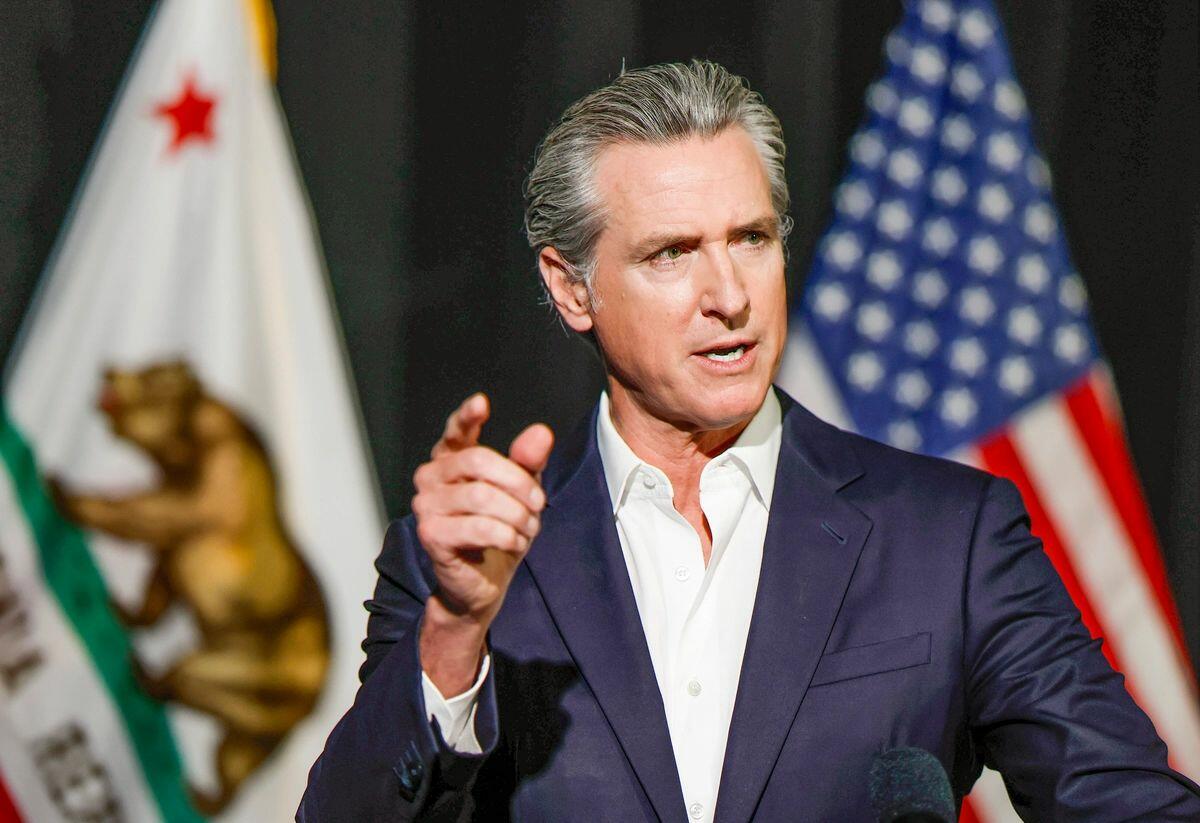
Gov. Gavin Newsom on Thursday signed bills that restrict how social media companies may design products for children and that tighten rules for AI companion chatbots.

California Gov. Gavin Newsom speaks to reporters in Stockton, Calif., on Oct. 22, 2025. Justin Sullivan/Getty Images

He announced the package on X.

"I just signed the strongest kid safety laws for AI chatbots and social media in America," Newsom wrote. "California is banning addictive social media features for kids, cracking down on dangerous AI chatbots, and strengthening privacy protections for ALL kids. PROTECT OUR KIDS!"

The signing took place in Marin County, where Newsom was joined by his wife, Jennifer Siebel Newsom, and the legislators who carried the measures.

The social media bills focus on product design.

AB 1709, by Assemblyman Josh Lowenthal, a Democrat representing Long Beach, bars platforms from offering users under 16 autoplay and algorithmic feeds drawn from a user's history and profile.

AB 2, also Lowenthal's, adds civil penalties when children are injured.

Fighting Online Addiction

In September 2024, Newsom signed SB 976, the Protecting Our Kids from Social Media Addiction Act. That statute would have required parental consent before addictive feeds reached minors and would have limited alerts during school hours and overnight. The 9th U.S. Circuit Court of Appeals on Jan. 28, 2025, blocked SB 976 after NetChoice sued, arguing the law impinged upon protected speech.

Thursday's package focuses on strict age verification and penalties. Chatbots are another focus.

SB 1119 is titled Adam's Law, named after Adam Raine, 16, of California, whose parents, Matthew and Maria Raine, sued OpenAI in San Francisco Superior Court on Aug. 26, 2025. Their complaint argued ChatGPT became their son's "closest confidant," mentioned suicide more than 1,200 times, and urged him toward what it called a "beautiful suicide."

Adam's Law, the governor's office said, requires companion-chatbot firms to keep crisis protocols for suicidal ideation, provide parental controls, notify a parent if a child disables safety settings, submit to independent child-safety audits, and file annual risk assessments.

The bills also include SB 867, which restricts companion-chatbot toys, while other bills limit targeted ads aimed at children and set rules for K-12 pupil data inside AI systems.

AB 1946 adds a reporting route for child sexual abuse material. SB 1276, by state Sen. Susan Rubio, a Democrat from Baldwin Park, extends child sexual-exploitation law to digitally altered or AI-generated material depicting a person under 18 in sexual conduct.

"Our children's safety deserves to be at the center of every conversation about technology," Newsom said. "As innovation moves faster, our protections must keep pace. Today's legislation makes clear that California will not stand by while unregulated technology puts our children at risk. Innovation comes with responsibility and protecting our children comes first."

Siebel Newsom said technology should support children's well-being, not exploit their vulnerabilities.

"With this critical legislation, California is sending a strong message that when it comes to our kids, safety must not be an afterthought - but baked into design and a necessary requisite for all innovation," she said.

State Sen. Steve Padilla, a Democrat and co-author of the chatbot bill, said California must set an example for the rest of the country.

"Adam's Law will save the lives of children here in California and across the country as it becomes a national model," Padilla said.

Assemblyman Josh Hoover authored AB 2071, which directs public schools to plan digital-wellness instruction.

"Protecting kids online is not a partisan issue. As a parent and former school board member, I have seen first-hand the impacts that screens and social media have had on our kids," he said.

AI Safeguards

Earlier, on Oct. 12, 2025, Newsom signed measures requiring Apple and Google operating systems to send age-range signals, add warning labels after three hours a day for users under 17, and ban using an AI tool as a shield when a user's prompt produces harmful content.

This followed after Megan Garcia in 2024 filed a lawsuit alleging a Character.AI chatbot contributed to the suicide of her 14-year-old son, Sewell Setzer III.

Character.AI later said it would block open-ended chat for users under 18. California dockets have also seen lawsuits arguing that infinite scroll, autoplay, and recommendation engines were built to keep adolescents on the apps.

Tyler Durden Sun, 09/13/2026 - 16:40
https://ift.tt/I092Dqd
from ZeroHedge News https://ift.tt/I092Dqd
via IFTTT

California Enacts New Child Safety Laws On Social Media And AI Chatbots SocialTwist Tell-a-Friend
| 0 comments ]

New Report Exposes Climate Litigants' Campaign To Influence The Judiciary

Authored by Michael Toth via RealClearEnergy,

Thousands of judges across the nation have sat through climate-science training and received literature from trusted federal bodies and scientific institutes. Those judges had every right to expect that the information they received was neutral, objective, settled science.

They were mistaken.

My latest research paper presents the first full taxonomy of a coordinated, multi-year campaign designed to shape how the American judiciary understands climate litigation. It documents how the Environmental Law Institute (ELI) built an extensive educational apparatus to train judges on climate issues - in the words of one session attendee - "from what would effectively be the plaintiff's side."

ELI routinely portrays itself as a neutral arbiter committed to "insightful and impartial analysis." In 2018, it launched the Climate Judiciary Project (CJP) to provide judges with "authoritative, objective, and trusted education on climate science." Yet, as my report details, CJP shares multiple donors and advisors with Sher Edling LLP, the San Francisco-based law firm behind more than two dozen climate lawsuits against energy companies.

The training methodology CJP deployed is striking. The goal was not merely to educate judges about complex areas of law and science, but to encourage them to develop and execute their own climate "action plans." Slide presentations and emails obtained between ELI staff and attendees show judges being coached on how to spread that influence to colleagues on the bench.

Attendance forms show judges from California, Delaware, Illinois, Hawaii, Maryland, New York, Oregon, Rhode Island, Vermont, Washington, and even Puerto Rico attended CJP trainings - all jurisdictions with active climate suits.

CJP's reach extended to established judicial and scientific gatekeepers. A 2020 CJP curriculum draft identified the Federal Judicial Center's (FJC) Reference Manual on Scientific Evidence and the National Academy of Sciences (NAS) Extreme Weather Attribution Report as publications judges could rely upon. Both would go on to bear the project's fingerprints.

Released in 2025, the Fourth Edition of the Reference Manual included a climate change chapter for the first time. That section was later revealed to have lifted material heavily from the prior writings of a lawyer representing climate plaintiffs, Sher Edling's Michael Burger.

The chapters' listed authors, moreover, were both CJP presenters and the manual shared some of the same funders as the foundations bankrolling the public-nuisance suits targeting the energy sector. Following the public outcry over these conflicts of interest, the FJC and NAS took the unprecedented step of removing the climate chapter entirely.

That controversy, however, did not stop NAS, which initially pushed back against criticism of the manual, from releasing the Extreme Weather Attribution Report.

The committee behind the report was similarly one-sided in favor of climate plaintiffs, which may explain why the 253-page document lays out theories for attributing the effects of climate change to specific energy producers without seriously dealing with the inconvenient fact that greenhouse gas emissions are largely driven by global demand for energy.

When private interest groups slip past the adversarial process to tilt the scales on contested issues, the rule of law is compromised. The findings in my report demonstrate an urgent need for updated disclosure requirements surrounding judicial education programs. Trusted institutional gatekeepers like the Federal Judicial Center must institute rigorous vetting mechanisms to restore their credibility.

Ultimately, federal and state officials should investigate how ELI and CJP gained such unchecked access over the bench and establish strict guardrails to ensure this cannot happen again.

* * *

Tyler Durden Sun, 09/13/2026 - 15:50
https://ift.tt/mdcGvFD
from ZeroHedge News https://ift.tt/mdcGvFD
via IFTTT

New Report Exposes Climate Litigants' Campaign To Influence The Judiciary SocialTwist Tell-a-Friend
| 0 comments ]

What Critics Keep Getting Wrong About Capitalism

Authored by Vincent Geloso via FEE,

The Stanford Encyclopedia of Philosophy is not a publication most would be familiar with. It is meant as a repository of overviews of big topics in philosophy broadly defined, inclusive of political theory. As such, entries added to it are unlikely to generate strong responses by the experts deeply familiar with each individual entry. Every rule has exceptions though.

Image Credit: Custom image by FEE

Recently, Chiara Cordelli, a political philosopher at the University of Chicago, delivered her "three years in the making" commissioned piece on "capitalism." The piece went viral. The reason that it sparked such attention is that it read to many as basically a rehash of old online talking points spewed by more refined trolls. That is unfair but there is truth to the claim that there is no smoke without fire. It is indeed a boring "takedown" of capitalism.

Let me be precise here: the problem is not that the entry is critical of capitalism. There is nothing wrong with criticising capitalism, Friedrich Hayek, Milton Friedman or classical liberalism. The problem is that much of the discussion does not pass even a modest ideological Turing test. An ideological Turing test asks whether one can state an opposing position so accurately that its proponents would recognise the argument as their own before one proceeds to criticise it. Here, too often, they would not.

This points to a common reflex in debates over "capitalism" and "neoliberalism." The vocabulary is often not used to define but rather rationalise already-held ideological priors. The characteristics one dislikes are incorporated into the definition of the system, after which those same characteristics are rediscovered as criticisms of it. The conclusion has, in part, been smuggled into the premises. But these end up being recycled over and over as one scholar states it before another regurgitates it back as fact and so forth.

Some examples help show this usual reflex. When describing the "market capitalism" advanced by Hayek and Friedman, Cordelli claims that they believed capitalism required "complete, private, and unregulated markets," and that this stemmed from their acceptance of a "general equilibrium" view, with the implication that "capitalism goes wrong when it is politically interfered with." But both claims - which underlie much of the entry - are massively incorrect. Not minor quibbles, mind you, but major and easily verifiable errors. Friedman initially advocated antitrust laws and, while he moderated on this front later in life, he still believed they did some good. He supported a negative income tax - a variant of a guaranteed minimum income - and schooling vouchers. Hardly the mark of someone who believed in the complete absence of political interference. Hayek for his part rejected the idea of general equilibrium altogether and preferred to speak of competition and markets as discovery processes. He defended regulation of natural monopolies and he also spoke in favour of some basic welfare state functions.

But this is not new. This description of Hayek and Friedman - and others like them - has been there since the 1960s and it can be found in the work of many. So too are the replies pointing all of this out. The claim has been recycled and vomited back. The replies have been ignored - the mark of the inability to undergo the key Turing tests I mentioned. Thus, the entry massively misrepresents what it dubs "normative defences" of capitalism.

And then, the preferred views of the entry's author also eschew major criticism raised at it. The best illustration of this is visible in the considerably detailed treatment that Karl Marx gets. Marx is presented as complete, coherent and accurate. No mentions are made of the fact that Das Kapital self-contradicts itself via the well-known transformation problem. Marx first argues that the value of commodities is determined by the labour required to produce them (i.e., the labour theory of value). This is the key foundation of "exploitation" theory in Marxist theory. But he later recognises that competition tends to equalise profit rates across industries. For that to happen, market prices must diverge from labour values. The problem, then, is explaining how one gets from labour-determined values to observed competitive prices without abandoning the labour theory of value itself. Marx never provides a fully consistent solution to that transformation. And no solution to the problem exists.

It explains why Marxist predictions fail to materialise. The most obvious example is that wages and incomes for unskilled workers were rising while Marx was writing his works. Not only that, he was writing in Britain - a society where inequality was actually falling! Moreover, in the United States - the country most often described as most capitalist by Marxists then and now - even socialist writers like Charles Spahr produced data which, when used with subsequent works, show massive growth in living standards at the bottom while inequality between the top 1% and the bottom 90% either stagnates or actually declines.

Not only did Marx predict that capitalism would generate pauperisation; he also added that it generated persistent pressure to lengthen working hours and lower labour's share of national income. Historical evidence runs strongly against these predictions: working hours have fallen dramatically since the nineteenth century, both annually and as a share of waking life - with only modest influence on unions or legislation. Marx's prediction about labour's share of income also fares poorly empirically, as many studies find that greater economic freedom (a proxy for capitalism) and globalisation are associated with a larger share of national income accruing to labour. In fact, in causal empirical tests, economies that become more capitalist (by liberalising) tend to show rising boats for everyone. Taken together, these findings suggest that some of Marx's central empirical predictions about capitalist labour markets have been contradicted rather than confirmed by subsequent economic history.

All of these massive holes in the Marxist account of capitalism are ignored and set aside. The criticisms are still presented as high-quality despite the fact that they have repeatedly failed to generate the predictions they are supposed to.

This is precisely where the usual reflex in debates over "capitalism" becomes problematic: early and criticised claims (even debunked ones) are built into the description of capitalism itself and then rediscovered as criticisms of it, even when the empirical evidence points in the opposite direction. Once repeated often enough, such claims pass from one scholar to another as established facts, with the original empirical proposition increasingly insulated from serious testing. The entry falls prey to this and while it does offer insight into how some people think about capitalism, it is merely a sophisticated rant - nothing more.

This article was originally published by CapX.

Tyler Durden Sat, 09/12/2026 - 18:40
https://ift.tt/iPpCtjy
from ZeroHedge News https://ift.tt/iPpCtjy
via IFTTT

What Critics Keep Getting Wrong About Capitalism SocialTwist Tell-a-Friend
| 0 comments ]

Trump: Houthis 'Don't Want' US In Yemen - So They're Letting Most Red Sea Shipping Through

After it was widely reported this week that Saudi Crown Prince Mohammed bin Salman urgently sought military assistance from President Donald Trump amid the rapid Houthi takeover of Yemen's Red Sea coast from the forces of the internationally recognized Sanaa government, Trump has said the Houthis are in contact with him and have pledged to let ships through the Bab Al-Mandab Strait. 

Trump is currently in Ireland. He said to reporters Saturday while meeting with Irish Prime Minister Micheal Martin, "The Houthis called us, and they don't want to fight with us. They don’t want us to go after them." 

He further explained that "they would much prefer not having us involved:" and so "they are letting most ships go through." The president did acknowledged they do have a ban on Saudi vessels, however.

Indeed this is consistent with Ansar Allah's latest statements declaring the Red Sea passage remains open, but closed to Saudi and Israeli-linked shipping.

This seems to confirm prior reporting that said Trump rejected MbS' request for US military intervention in Yemen. To review:

Axios: Trump declined Saudi requests to strike Ansarallah as they advanced Saudi Crown Prince Mohammed bin Salman called U.S. President Donald Trump twice on Thursday, urging him to launch strikes against Yemen’s Ansarallah as they advanced along the Red Sea coast toward Bab al-Mandab, two U.S. officials told Axios. Trump declined, with Washington saying it has no plans to intervene directly for now.

It seems Washington also doesn't want to see the Iran conflict explode into a runaway regional war which would certainly greatly exacerbate the global energy crisis.

Aaran Kennedy, a maritime security analyst with the global consultancy, Control Risks, has described to Al Jazeera that while "These advances strengthen the Houthis’ already strong position over the Red Sea. They simply make it even easier for the Houthis to target shipping" - the reality remains “It doesn’t necessarily mean that, right now, they’re going to expand their maritime target set."

Kennedy believes a full Bab al-Mandeb closure is unlikely. "Just because the Houthis have gained this territory near the Bab al-Mandeb Strait, it doesn’t mean that they’re going to close it down. That situation remains highly unlikely. But what it does do is it expands their capabilities because it puts their weaponry closer to the Red Sea shipping lanes."

But this does also ultimately given Tehran huge leverage, given it can persuade its Houthi allies anytime to take drastic action over the strait. Houthi threats over regional waters was on full display during the height of the Gaza War, which saw the US Navy get involved in the Red Sea, but warships later departed under the guise of handing security over to regional as well as European allies.

Tyler Durden Sat, 09/12/2026 - 16:55
https://ift.tt/wIDW4QZ
from ZeroHedge News https://ift.tt/wIDW4QZ
via IFTTT

Trump: Houthis 'Don't Want' US In Yemen - So They're Letting Most Red Sea Shipping Through SocialTwist Tell-a-Friend