| 0 comments ]

Americans Become More Pessimistic About The Future Of The Country

Authored by Tom Ozimek via The Epoch Times (emphasis ours),

The share of American adults who say they’re optimistic about the future of the country has dropped to a new tracking low, according to a poll by Morning Consult, which comes on the heels of a closely-watched consumer confidence gauge that fell to its lowest level on record.

Consumers shop for meat at a grocery store in Annapolis, Md., on May 16, 2022. (Jim Watson/AFP)

The Morning Consult survey, carried out on a representative sample of 2,210 U.S. adults between June 16–20, shows that 45 percent of respondents said they were “very optimistic” or “somewhat optimistic” about the future of the United States.

This is a record low as far as this particular data series is concerned, which goes back to October 2020. By comparison, a series high was reached in March 2021, when 65 percent of U.S. adults expressed optimism about the future of the country.

Consumer Confidence Plummets

While the Morning Consult’s data series goes back only two years, a separate measure of U.S. consumer confidence from the University of Michigan, which goes back to the mid-1970s, has plunged to a record low.

The Michigan consumer sentiment index fell from a reading of 58.4 in May to just 50.0 in June, an all-time low, with soaring inflation a key factor behind the surge in pessimism.

“While consumers still appear relatively optimistic about the stability of their incomes, their perceptions of the economy are much more strongly influenced by concerns over inflation,” according to University of Michigan economist Joanne Hsu, director of the consumer confidence survey.

All components of the University of Michigan sentiment index declined in June, but the sharpest drop was in the year-ahead outlook for the U.S. economy, which fell 24 percent between May and June, according to Hsu.

Inflation Expectations Ease a Little

One bright spot in the University of Michigan survey was that longer-term inflation expectations among U.S. consumers eased slightly to 3.1 percent over the next five to ten years, down from an earlier preliminary reading of 3.3 percent.

Hsu told Bloomberg that the downward revision in longer-run inflation expectations was driven by a jump in the share of respondents who said they expect “extremely low inflation in the years ahead,” with around half of those expressing “bleak views about the risks of recession or unemployment.”

Growing concern about the prospect of a recession as the Fed tightens monetary conditions could be a factor in the easing of the University of Michigan inflation expectations, as price pressures tend to ease during economic contractions.

A number of Wall Street analysts recently raised their forecasts for the odds of a U.S. recession, with Goldman Sachs predicting a 30 percent chance of the U.S. economy contracting over the next year, up from 15 percent in an earlier projection.

‘Quite Eye-Catching’

Still, U.S. inflation expectations as reflected in the 10-year breakeven inflation rate per the St. Louis Federal Reserve data jumped on Friday to 2.56 percent following a three-day downtrend that touched a multi-month low of 2.50 percent.

Policymakers fret over future inflation expectations—not just actual price growth—as they are a barometer of potential pressure building in the wage-price spiral. A de-anchoring of inflation expectations could fuel stronger demand for wages, driving a feedback loop that sees inflation pushing higher.

The dreaded wage-price dynamic was at play during the economic upheaval of the 1970s, which led then-Fed chief Paul Volcker to raise interest rates sharply, taming inflation but also sparking a recession.

Current Fed Chair Jerome Powell recently noted the University of Michigan’s preliminary inflation expectations reading—which he called “quite eye-catching”—as one of the factors that drove policymakers to hike rates by 75 basis points on June 15, the biggest jump since 1994.

‘Unimaginable Fed Pivot’

While an early signal, the slight easing of inflation expectations takes some pressure off the Fed to keep hiking rates aggressively, some analysts say.

Last week’s rally in stocks and other risk assets could reflect a shift in investors’ view of the Fed’s future path in light of inflation expectations.

“The market is telling us it is salivating at the prospect of a currently unimaginable Fed pivot,” analyst Sven Henrich wrote in a series of tweets, referring to a potential reversal of the Fed’s current monetary tightening cycle.

“Perversely, we may enter a period where bad news is good news as ever slowing growth will raise recession expectations and cause yields to drop (bullish stocks),” he added.

Henrich argued that any type of rollover in inflation data over the summer would “be massively positive” for equities, though the risk of a full-blown recession remains with the risk for new lows in stock markets remaining “extremely high.”

Tyler Durden Wed, 06/29/2022 - 17:00
https://ift.tt/DkBLQC0
from ZeroHedge News https://ift.tt/DkBLQC0
via IFTTT

Americans Become More Pessimistic About The Future Of The Country SocialTwist Tell-a-Friend
| 0 comments ]

US Consumer Implodes As RH Cuts Guidance For 2nd Time This Month, Warns Of Cratering Demand

One month ago, Snapchat shares cratered after the company unexpectedly slashed guidance for the second time in under one month (it had guided lower in late April and said that since then "the macroeconomic environment has deteriorated further and faster than anticipated.")

Well, fast forward to today when moments ago RH - aka Restoration Hardward - just pulled a Snapchat and just three weeks after the company with the outspoken CEO saw its shares tumble after it guided lower for Q2 and the full year despite sold Q1 results, RH just cut guidance again with CEO Gary Friedman saying that “the deteriorating macro-economic environment has resulted in lower than expected demand since our prior forecast, and we are updating our outlook, particularly for the second half of the year.”

Taking into account the macro-economic conditions and our current business trends, RH provided the following outlook for the second quarter and full year, which assumes demand will continue to soften during the remainder of fiscal 2022:

  • Fiscal 2022 net revenue growth in the range of (2%) to (5%), with adjusted operating margin in the range of 21.0% to 22.0%.
    • Previously the company had seen revenue growth of 5% to 7% and operating margin of 23.0% to 23.5%, so a huge hit to both the top-line and profit margins.
  • For Q2, RH sees net revenue growth in the range of (1%) to (3%), with adjusted operating margin in the range of 23.0% to 23.5%. The second quarter outlook remains unchanged versus our prior forecast due to faster backlog relief offsetting lower than expected demand.

Friedman's catastrophic forecast continued, “With mortgage rates double last year’s levels, luxury home sales down 18% in the first quarter, and the Federal Reserve’s forecast for another 175 basis point increase to the Fed Funds Rate by year end, our expectation is that demand will continue to slow throughout the year.”

Friedman concluded, “While we anticipate the next several quarters will pose a short-term challenge as we cycle the extraordinary growth from the COVID-driven spending shift, shed less valuable market share as we continue to raise our quality, and choose not to promote our business while we navigate through the multiple macro headwinds, we continue to believe our long-term investments will enable us to drive industry-leading performance over a longer term horizon.”

The Company also noted that it has not repurchased any shares since announcing the expansion of its common stock repurchase authorization on June 2, 2022.

Which reminds us that just two weeks ago we wrote that "the debate is now over on the dismal state of the US consumer", after Morgan Stanley unloaded on the driving force behind 70% of US GDP. It now appears that this particular realization is starting to finally trickle through to the rest of the economy.

RH stock, of course, tumbled, 5% taking its decline for 2022 to a new low of 55%, and down much more than half from its 2021 all time high of $744

As for the broader implications, in case this needs to be said again - the US consumer is now, and has been for months, in a recession, one which has shocked corporate America with its size and speed, and it's only a matter of time before we get a deflationary tsunami for most non-food and energy goods and services. And, as we have said previously, we also fully expect that the Fed will recognize said recession just around the time of this year's Jackson Hole symposium where recession will become the new Fed baseline.

Tyler Durden Wed, 06/29/2022 - 16:43
https://ift.tt/8SJmFKq
from ZeroHedge News https://ift.tt/8SJmFKq
via IFTTT

US Consumer Implodes As RH Cuts Guidance For 2nd Time This Month, Warns Of Cratering Demand SocialTwist Tell-a-Friend
| 0 comments ]

Demand Destruction Emerges As Americans Cancel Road Trips

Gasoline demand destruction is underway as most fuel stations in the country average around $5 a gallon for regular (87 octane). New data finds that high gas prices deter some Americans (most likely the working poor) from road trips this summer. 

Conference Board's data found Americans who planned a road trip in the next six months fell to 22.7% in June. Only 36% intend to take a vacation within the next six months, the lowest level in the dataset going back four decades. 

Slumping gas demand growth is a sign that higher prices are beginning to alter the spending patterns of consumers in what seasonally should be a busy travel season. 

"Demand is currently below seasonal averages, but the key thing for crude is that it is still growing," Rebecca Babin, a senior energy trader at CIBC Private Wealth Management, told Bloomberg. 

A four-week moving average of implied gas demand dropped to about 9 million barrels daily, or 600,000 barrels less than the 2015-19 average. 

Ed Moya, a senior market analyst at Oanda, said, "given where fuel costs are and how expensive dining out has become ... everything is becoming too pricey in America, and lower and middle-income households are feeling the pinch."

We agree with Moya that low to middle-tier consumers have maxed out their credit cards and drained savings, barely able to survive the inflation storm -- which has forced them to change spending habits dramatically. 

The big concern during this summer's travel season is that energy prices could still go much higher. A new report from CNN said the White House is quietly analyzing the worst-case scenario of crude oil at $200 per barrel. 

We have outlined before that refinery capacity bottlenecks are the main driver for higher fuel prices (not Russia). 

Supply fundamentals remain tight as limited refinery capacity will persist. A genuine market rebalancing will only happen through demand destruction with higher prices. 

Tyler Durden Wed, 06/29/2022 - 16:40
https://ift.tt/bauLPAD
from ZeroHedge News https://ift.tt/bauLPAD
via IFTTT

Demand Destruction Emerges As Americans Cancel Road Trips SocialTwist Tell-a-Friend
| 0 comments ]

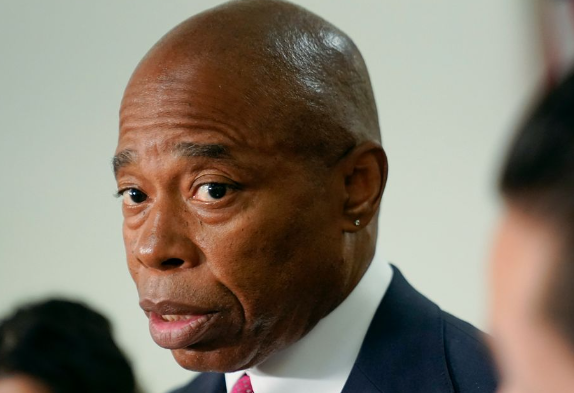
NYC Mayor Eric Adams "Shocked" To Find Out "Just How Bad" The City Is

How long has Eric Adams been mayor now? You'd think at some point he would have taken the time to have a tour of his own city, but it looks like that may not have ever been the case - until he rode the subways for 3 hours last week. 

That's because the Mayor was reportedly “shocked” to learn just “how bad [New York City] is," according to exclusive comments he made to the New York Post this week. 3 hours on the subway last week was apparently all it took. 

He said he was taken back by the poor “deployment of resources”. “Let me tell you something: When I started looking into this, I was shocked at how bad this place is,” he later commented to the Post. 

Adams started to get a glimpse at how poorly run the city was when reviewing plans his first week in office, the report says.

“It was probably the third — third or fourth week in January. I spent a lot of time in the office," he said. “And I started peeling back layers and what it started to unveil to me is how we just had this good shell, but underneath — it’s bad.”

Crime skyrocketed in the final years of deBlasio's tenure as NYC's Mayor. As the Post notes, grand larcenies and auto thefts have skyrocketed 50% and 48% and robberies are up about 40%.

Speaking about the NYPD, Adams commented: “We have not utilized this amazing agency and all our skills.”

“You know, they hold onto this one thing,” he said, criticizing his predecessors like Bill deBlasio, for focusing on a sole project instead of improving the city as a whole. “That’s why when people try to say, ‘OK, Eric, you know, what is your one or two things?,’ I’m saying: To fix this mess!”

Adams said his first initiative would be to crack down on rule breaking in the subways and stop homeless people from living in stations. 

You have to start somewhere, we guess...

Tyler Durden Tue, 06/28/2022 - 17:05
https://ift.tt/bcZruo4
from ZeroHedge News https://ift.tt/bcZruo4
via IFTTT

NYC Mayor Eric Adams "Shocked" To Find Out "Just How Bad" The City Is SocialTwist Tell-a-Friend
| 0 comments ]

Taibbi: Taking The Neither Pill

Authored by Matt Taibbi via TK News,

Last Thursday, I sat in a studio in Newark for the above interview with Ben Shapiro. It was a wide-ranging and oddly friendly discussion between a former Breitbart staffer and the author of Andrew Breitbart’s mostly infamously obscene obituary, in which the fact that the interview could even happen at all was among the most interesting things about it (more on this on a Callin discussion tomorrow).

Ben and I talked about how it was the political left that years ago was famous for being willing to engage anyone, while the business model of right-wing media was a heated conversation with itself about an always-expanding regimen of enemies, a catastrophic strategy that allowed the Jon Stewarts and not-yet-unfunny Stephen Colberts of the world to win huge audiences by default. Add the lack of a sense of humor, which made Frank Zappa, Larry Flynt, and Dee Snider automatic winners over crusading curmudgeons like Jerry Falwell and John Tower, and the culture war for decades was never a real battle. “There’s no question that the left had been in the ascendancy my entire lifetime,” is how Shapiro put it.

Now the script is flipped. The press mainstream has borrowed from the old Fox model and not only (as Shapiro notes) excludes dissent via the “laundering of expertise” but leads interminable crusades against an exploding list of deviationists within their own ranks. You may have thought you were solidly a progressive, but you can catch a permanent green-room ban for going against narrative on any issue, whether it’s Syria or Ukraine or Russiagate or trans issues or any of a hundred other things. This is the same losing strategy that hurt the old GOP, which logically should lead to the same losing outcome, except this is a political atmosphere where no one seems to be winning.

On Friday, the Supreme Court overturned Roe v. Wade, the 1973 decision granting women a constitutional right to abortion. This exact moment was supposedly why I owed my vote to the Democratic Party, and indeed the Supreme Court was on my mind when I pulled a lever for Hillary Clinton, a politician I couldn’t stand, in 2016.

Four years later, I voted neither. The Democrats between 2016 and 2020 not only lost my vote, but reveled in the idea that they didn’t need or want it, denouncing critics in all directions as traitors, white supremacists, and terrorists, no different from the “deplorables” who voted for Donald Trump. In that time they perfected an attitude of imperious condescension and entitlement so grating that at least half of America wouldn’t piss on someone like Adam Schiff if he were on fire. Then Friday happened and it was the same song everywhere: “See! We were right all along! You do owe us! And if you ever criticized us, this was your fault! ”

No, it wasn’t. Friday was the result of decades spent building a political project so incoherent, unsellable, and untrustworthy to ordinary people that in 2016 they chose Donald Trump over the person Barack Obama called the most qualified candidate in history. The justices who cast the critical votes Friday were picked by a man denounced by all of institutional America prior to election. All those voices were ignored. That total collapse in trust, not Jill Stein’s candidacy or Putin’s Facebook ads, led to Dobbs v. Jackson. Until Democrats reckon with that problem, which incidentally spread to every category of voter except white men in 2020 and looks poised to spread even more in the midterms, there will be more moments like this.

Subscribers to TK News can click here to read more...

Tyler Durden Tue, 06/28/2022 - 16:45
https://ift.tt/ifO32yE
from ZeroHedge News https://ift.tt/ifO32yE
via IFTTT

Taibbi: Taking The Neither Pill SocialTwist Tell-a-Friend