| 0 comments ]

One Dead, 35 Injured In Suspected Terror Truck-Ramming Near Mossad Headquarters

An area north of Tel Aviv was scene of a Sunday morning incident being dubbed in Israeli media a "terror truck-ramming attack" at a bus stop, which left one person dead and at least 32 wounded. Subsequent reports said that 35 were injured, with five in serious condition.

The perpetrator and only deceased has been identified as Rami Nasrallah, an Arab Israeli driver who lives in Qalansawe, in central Israel. However, there remains some ambiguity over whether it was an intentional 'terror attack' or possibly the result of a horrific accident.

Emergency responders at the scene after a driver apparently rammed his truck into a crowd of people at a bus stop in Ramat Hasharon, AFP.

The event is still under investigation, with the Times of Israel reporting of the deceased bus driver that "His body was sent to the Abu Kabir Forensic Institute for an autopsy to check if he suffered a medical condition that caused the accident."

Suspicion has widely fall on the intentional attack theory, given it happened just outside the well-known Glilot military base in central Israel, and in a location near the Mossad headquarters and several IDF intelligence units.

Additionally, police said that that the suspect was "shot and neutralized" at the scene, while still not saying necessarily that it was an attack.

A lot of the injured were senior citizens who had just stepped off a bus at the moment the bus was rammed. They were planning to attend a museum exhibit memorializing the fallen of the Oct.7 Hamas terror attack.

While not directly taking responsibility for the apparent terror incident, Hamas praised the "heroic ramming attack" that was carried out near "Mossad headquarters."

The group described that it was "a natural response to the crimes of the Zionist occupation against our Palestinian people in Gaza, the West Bank and Jerusalem, and its ongoing brutal massacres, especially in the northern Gaza Strip."

"Photos and videos on social media showed several people pinned down under the truck as medics and rescuers tried to help," Al Jazeera has described of the gruesome scene. Police cordoned off the area and a security helicopter hovered above.

A number of the injured were witnessed lying on a sidewalk near the truck. One source said that armed civilians may have shot the driver as it was clear he was about to ram people. Another eyewitness saw eight people "trapped under the truck."

Tyler Durden Sun, 10/27/2024 - 19:15
https://ift.tt/kNhcRnF
from ZeroHedge News https://ift.tt/kNhcRnF
via IFTTT

One Dead, 35 Injured In Suspected Terror Truck-Ramming Near Mossad Headquarters SocialTwist Tell-a-Friend
| 0 comments ]

The Vampire Fiat Money System: How It Works and What It Means for Your Wealth

Authored by Thorsten Polleit via The Epoch Times,

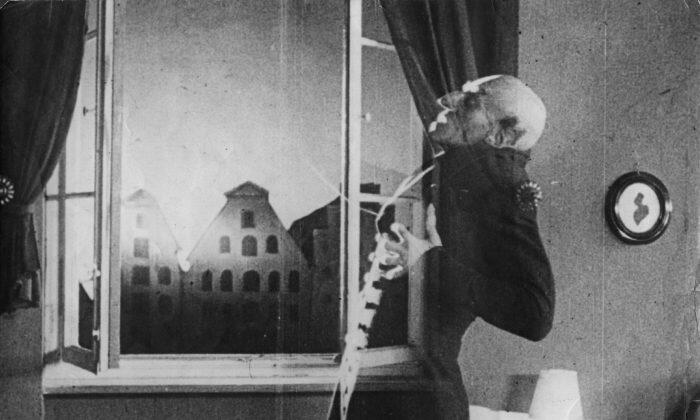
Who doesn’t know them: the blood-sucking vampires, the eerie undead, immortalized in countless films, and inspired primarily by Bram Stoker’s novel “Dracula” (1897). Just think of iconic movies like the silent film “Nosferatu—A Symphony of Horror” (1922), “Dracula” (1958) with Christopher Lee, Roman Polanski’s parody “The Fearless Vampire Killers” (1967), or “Nosferatu—Phantom of the Night” (1979), starring Klaus Kinski as Count Dracula.
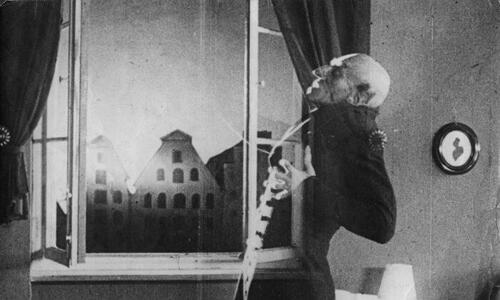
Vampires are demons who rise from their graves at night, seeking to drain the blood of innocent victims. Not only do they steal the life force that sustains them, but they also spread their curse. Many victims, bitten by vampires, are “turned,” becoming undead themselves, thus joining the vampire’s dark domain.

The enemies and hunters of vampires face a formidable challenge: vampires can disguise themselves, transforming into creatures like wolves or bats, and often display immense, superhuman strength. They can only be repelled by traditional defenses—garlic cloves, rosaries, holy water, or the Christian cross. But truly destroying a vampire requires decapitation, driving a wooden stake through its heart, or bright sunlight that turns them to dust.

The vampire is an ancient and widespread myth. The image of a blood-sucking undead creature, or similar concepts, has existed across many cultures. This demon embodies superstition—acting as a projection of primal fears, the inexplicable, and evil as the counterpart to good. The notion of a creature that emerges at night, drains its victims’ blood, and draws them from light into darkness is undoubtedly a profoundly threatening one.

When you reflect a little longer on the horror story of the vampire demon, you will inevitably begin to see parallels (or at least points of contact) with the fiat money system that exists worldwide today.

Under Cover of Darkness

It takes place under the cover of darkness: It is fair to say that the vast majority of people are unaware of how today’s fiat money system is structured, how it operates, or what its effects are. Students in schools and universities are, for the most part, left in the dark about it, and the consequences of the fiat money system, therefore, take most people by surprise—unprepared and relentless. Indeed, how many people know that our current fiat money system is a system in which the state’s central bank holds a coercive monopoly on the creation of fiat central bank money, while commercial banks issue their own fiat commercial bank money based on central bank fiat money.

Who knows that fiat money is literally created out of thin air, representing a form of money creation that has no connection whatsoever to “real savings”? And who explains to people that, from an economic perspective, expanding the fiat money supply is inflationary, leading to uneven higher prices for goods and services compared to a situation where the money supply had not been increased? It is also unknown to many that the issuance of fiat money via the credit market causes a misallocation of capital, initially triggering a boom, only to be followed by a bust; that it drives economies into excessive debt; and that it allows the state to grow ever larger at the expense of the freedoms of citizens and entrepreneurs.

In short, for most people, the damage caused by fiat money is unknown; it creeps upon them under the cover of darkness, like a vampire.

Vulnerable Victims and Life Sucked Away

The victims are often helpless and unaware, with the fruits of their labor effectively being siphoned away. Fiat money has something vampire-like about it, enabling one group (those allowed to create fiat money) to live at the expense of others (those forced to use the monopolized money). The first recipients of newly-created fiat money are the beneficiaries. They can use the new money to purchase goods and services whose prices have not yet risen, making them wealthier.

As the money changes hands, it increases demand, and prices of goods rise accordingly. As a result, the late recipients of the new money can only buy goods at higher prices, leaving them at a disadvantage. The first recipients improve their position at the expense of the late recipients. The most severely affected are those who receive nothing from the newly-created money supply—they are, in effect, the ones “sucked dry.”

The vampire-like redistributive effect of fiat money, which operates in the shadows, particularly benefits commercial banks that create fiat commercial bank money, as well as those in a position to take out new bank loans in fiat money.

First and foremost, it is the state and those who benefit from it who are among the biggest winners of the vampire fiat money system. The state finances a significant portion of its expenditure with newly-created fiat money, using it to pay its representatives, employees, and their pensions, as well as the companies from which it purchases goods and services. The state and its beneficiaries are among the early recipients of the newly-created fiat money, making them the primary beneficiaries at the expense of the many who are not closely connected to the state.

One might argue that a redistribution of income and wealth, brought about by the increase in fiat money, would also occur in a commodity or precious metal money system. This is true in principle, but the increase in, say, a gold money system, would be less pronounced than in a fiat money system. The fact is that the latter was deliberately chosen for its vampire-like nature. It benefits the state, banks, and big business at the expense of the general population, keeping them below their economic potential.

Creating Minions

Like a vampire, fiat money infects its victims, turning them into accomplices of the fiat money system. Fiat money quite literally enslaves its users, making them dependent. For instance, fiat money incentivises firms and private households to incur debt and live beyond their means, made possible through artificially low interest rates. People are also encouraged to invest in assets (such as houses and companies) because the chronic inflationary nature of fiat money ensures a continual rise in asset prices. Once people are lured into exposure to fiat money, their economic and financial well-being becomes dependent on the continuation of the inflationary fiat money system and on it being “rescued” by the state and its central bank during times of crisis—even at the expense of those who do not benefit from the system, or benefit much less.

Politicians, bureaucrats, bank employees, and companies that receive government contracts all develop a vested interest in ensuring that the fiat money system is maintained. In this sense, they become fiat money vampire thralls, feeding off the lifeblood of those engaged in productive work by claiming a share of their income.

Moreover, holders of fiat money are the ones who lose out, as fiat money continually loses its purchasing power. In a fiat money system, the central bank ensures that interest rates are kept artificially low—often negative after accounting for inflation—so that savings in time deposits, savings accounts, and bonds are effectively eroded.

Aversion to Light

The vampire and the fiat money system cannot withstand the bright light of day; both will crumble to dust when exposed to sunlight. If people truly understood the negative effects of fiat money and the damage it causes to the world, they would likely reject it—along with the production and employment structures it creates. This is likely why so little is taught about fiat money in schools and universities. Its darker aspects are concealed, with the statist education system as particeps criminis ensuring the bright light of knowledge does not shine on the fiat money system.

Remember that central bank councils are typically referred to as “the guardians of the currency,” and it is said that they “fight” inflation. Nothing could be further from the truth—much like a vampire who welcomes his guests and engages in witty conversation without revealing his true nature. Just as sunlight kills a vampire, sound economic knowledge would destroy the fiat money system, especially when coupled with a simple, well-understood ethic like “do unto others as you would have them do unto you.”

Until that day comes, investors should be aware of the serious economic and ethical flaws of fiat money. The uncomfortable truth is that long-term prosperity and peace cannot be sustained under a fiat money system. Therefore, it is in everyone’s best interest for the bright light of truth to expose and thus end the fiat money system. But how can this be achieved?

By proactively and honestly informing people about the evils of fiat money; by advising them to reduce their dependence on it, both in their lives and their savings; and by promoting a free market for money, while encouraging technological innovations in the monetary sphere that lie beyond the state’s control. Together, these efforts will act like a ray of sunlight striking the vampire-like fiat money system—ultimately causing it to crumble to dust.


Tyler Durden Sun, 10/27/2024 - 16:20
https://ift.tt/p8RD9ts
from ZeroHedge News https://ift.tt/p8RD9ts
via IFTTT

The Vampire Fiat Money System: How It Works and What It Means for Your Wealth SocialTwist Tell-a-Friend
| 0 comments ]

Appeals Court Says Mississippi Law Allowing Ballots After Election Day Is Illegal

Authored by Sam Dorman via The Epoch Times (emphasis ours),

The U.S. Court of Appeals for the Fifth Circuit released an opinion on Oct. 25 stating that federal law requires mail-in ballots be counted no later than election day.

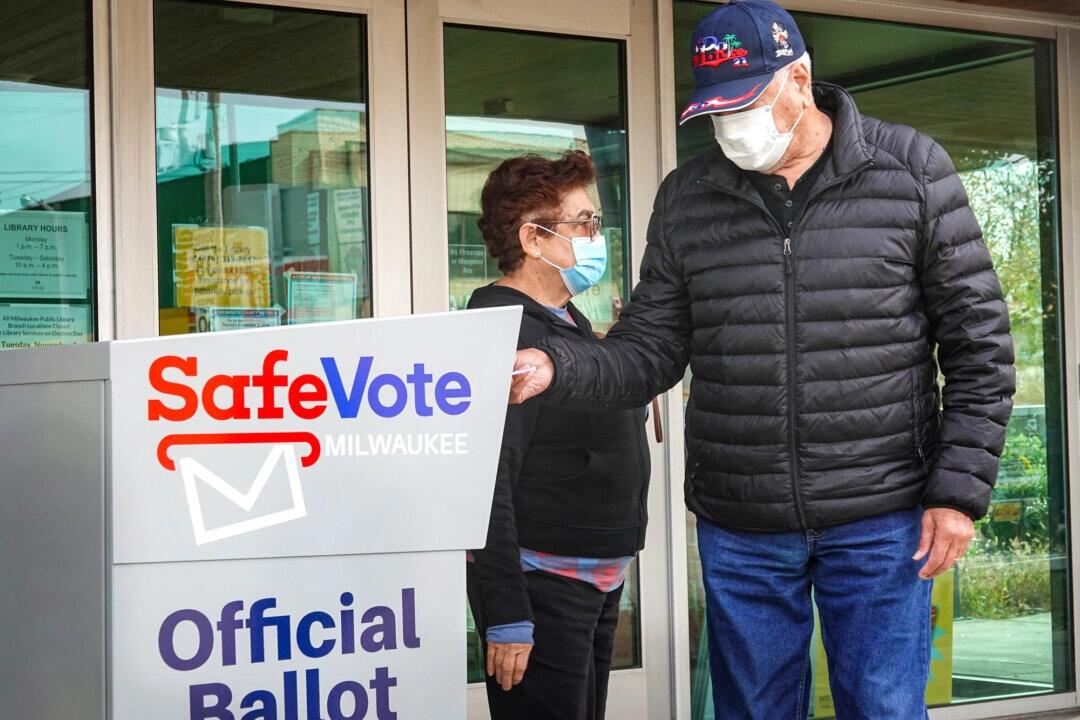
Residents drop mail-in ballots in an official ballot box outside a library in Milwaukee on Oct. 20, 2020. Scott Olson/Getty Images

In doing so, it ruled against a Mississippi law allowing ballots to be counted if they arrived no more than five days after the election and if they were postmarked on or before the date of the election.

The opinion, which came less than two weeks before the 2024 elections, redirected the case back to the lower court while refraining from issuing an injunction that would halt Mississippi’s law.

The policy was adopted during the COVID-19 pandemic, but the state kept it after the pandemic ended.

“Because Mississippi’s statute allows ballot receipt up to five days after the federal election day, it is preempted by federal law,” Judge Andrew Oldham, an appointee of former President Donald Trump, wrote in his opinion for the court.

RNC Chairman Michael Whatley called the decision on the social media platform X a “seismic win for fair, accurate, secure, and transparent elections.”

Justifying the decision to throw the decision back to the lower court, rather than block Mississippi’s law, Oldham referenced a Supreme Court precedent that cautions against last-minute changes to election procedures.

“Today’s decision says nothing about remedies,” he said. “We decline to grant plaintiffs’ initial request for a permanent injunction. ... Instead, we remand to the district court for further proceedings to fashion appropriate relief, giving due consideration to ’the value of preserving the status quo in a voting case on the eve of an election.'”

He was quoting another fifth circuit case but also referenced the Supreme Court’s 2006 decision in Purcell v. Gonzalez.

Mississippi Secretary of State Michael Watson had told the Fifth Circuit that an election was voters’ “conclusive choice of an officeholder,” which took place on election day.

“That is so even if election officials do not receive those ballots until after election day,” his brief to the court read. “An election does not itself require ballot receipt.”

Oldham and two other Trump appointees, Judge James Ho and Judge Kyle Duncan, heard oral arguments over the issue in September. The Republican National Committee (RNC) had appealed the decision of a lower court that ruled in favor of Mississippi.

Oldham reasoned that the Constitution granted Congress authority over elections through two provisions, including one that allows Congress to alter the timing of federal elections hosted by states.

Oldham drew a distinction between the timing of ballot counting and ballot casting.

“Even if the ballots have not been counted, the result is fixed when all of the ballots are received and the proverbial ballot box is closed,” he wrote. “The selections are done and final.”

Mississippi’s “problem,” he said, “is that it thinks a ballot can be ‘cast’ before it is received.” He added that “[a] voter’s selection of a candidate differs from the public’s election of the candidate.”

Mississippi is one of several states with laws allowing mailed ballots to be counted if they are postmarked by Election Day, according to the National Conference of State Legislatures. The list includes swing states such as Nevada and states such as Colorado, Oregon, and Utah that rely heavily on mail voting.

In July, a federal judge dismissed a similar lawsuit in Nevada. The Republican National Committee is asking the 9th Circuit Court of Appeals to revive that case.

The RNC previously told The Epoch Times that it was involved in more than 130 lawsuits across 26 states. States have also pursued their own efforts while coming up against challenges from outside parties, including the Justice Department (DOJ).

Oldham’s opinion came on the same day that a federal judge granted the DOJ’s request to halt Virginia’s program for purging non-citizens from voter rolls.

Federal Judge Patricia Giles held that the program was within a prohibited 90-day timeframe set up by the National Voter Registration Act, a federal law passed by Congress in 1993. Another federal judge in Alabama similarly blocked the state’s program to purge non-citizens from its rolls.

The Associated Press contributed to this report.

Tyler Durden Sat, 10/26/2024 - 18:40
https://ift.tt/RWKTEXg
from ZeroHedge News https://ift.tt/RWKTEXg
via IFTTT

Appeals Court Says Mississippi Law Allowing Ballots After Election Day Is Illegal SocialTwist Tell-a-Friend
| 0 comments ]

Army Releases Redacted Report On Incident During Trump Visit To Arlington Cemetery

Authored by Caden Pearson via The Epoch Times (emphasis ours),

The U.S. Army on Friday released a heavily redacted report related to an alleged altercation during former President Donald Trump’s visit to Arlington National Cemetery in August.

According to multiple reports, on Aug. 26 a cemetery staffer attempted to block the Trump campaign from taking photos and videos in Section 60, where soldiers recently killed in Afghanistan and Iraq are buried. A U.S. Army statement at the time said the employee was “abruptly pushed aside.”

Former President Donald Trump lays a wreath alongside Marine Cpl. Kelsee Lainhart (Ret.) and U.S. Marine Corps Sgt. Tyler Vargas-Andrews (Ret.), who were injured at the Abbey Gate Bombing in Afghanistan, during a ceremony at the Tomb of the Unknown Soldier in Arlington, Va., on Aug. 26. Anna Moneymaker/Getty Images

Trump was there to mark the anniversary of the Kabul airport attack that killed 13 U.S. service members.

Seven pages of redacted material were released in response to a Freedom of Information Act request filed by the Washington-based nonprofit group American Oversight as part of an ongoing lawsuit.

The redacted incident report classifies the alleged offense as “simple assault.” It outlines an alleged physical altercation between a cemetery employee and Trump aides.

A brief description says that an individual engaged “with both of [redacted] hands while attempting to move past [redacted] did not require medical attention on scene and later refused when offered. [Redacted] rendered a sworn statement on a DA Form 2823 and stated [redacted] did not want to press charges. Investigation continues by JBMHH PD Investigations Branch.”

The sworn statement of the incident, made at 1:45 p.m. on Aug. 26, is fully redacted.

In response to reports detailing the incident that cited anonymous sources, the Trump campaign issued a statement accusing the cemetery employee of experiencing a “mental health episode” and attempting to “physically block members of President Trump’s team during a very solemn ceremony.”

The Army defended the employee, noting they acted “with professionalism” in enforcing regulations that prohibit political activities on cemetery grounds. Officials stated that while the incident was reported to law enforcement, the employee ultimately chose not to pursue charges.

The Army confirmed that it “considers this matter closed,” concluding that the staff member’s actions were appropriate and consistent with cemetery decorum.

U.S. District Court of the District of Columbia Senior Judge Paul Friedman signed an order on Oct. 22 for the report to be released. In September, American Oversight, arguing that there was a compelling public interest in sharing information with the public as soon as possible, requested that Arlington expedite the processing of its request, noting the presidential election is drawing closer.

American Oversight was founded in 2017 in response to what it says were the “unprecedented challenges that the Trump administration posed to our nation’s democratic ideals and institutions.”

Friedman ruled on Oct. 22 that the Army must release nonexempt portions of records about the requested incident on or before Oct. 25.

“With the election just two weeks away, the American people have a clear and compelling interest in knowing how the government responded to an alleged incident involving a major presidential candidate who has a history of politicizing the military,” Chioma Chukwu, American Oversight’s interim executive director, said in a statement following Friedman’s order.

After the initial incident, an Arlington National Cemetery spokesperson told The Epoch Times that a report had been filed but provided no further details, citing laws against political campaign or election-related activities in military cemeteries.

The Trump campaign disputed reports of a “physical altercation,” asserting they were prepared to release footage to counter any “defamatory claims.” Spokesperson Steven Cheung stated that a private photographer was permitted on the grounds and that an individual, allegedly experiencing a mental health episode, tried to block Trump’s team during the ceremony.

Family members of fallen soldiers in Afghanistan also denied claims of an assault, stating no altercation took place.

The U.S. Army oversees the management of Arlington National Cemetery.

Katabella Roberts contributed to this report.

Tyler Durden Sat, 10/26/2024 - 17:30
https://ift.tt/JNhODPk
from ZeroHedge News https://ift.tt/JNhODPk
via IFTTT

Army Releases Redacted Report On Incident During Trump Visit To Arlington Cemetery SocialTwist Tell-a-Friend
| 0 comments ]

Peter Schiff: Gold Is Exposing The Phony Economy

Via SchiffGold.com,

On this week’s episode, Peter covered a record setting week for gold and a stellar week for silver. With the metals nearly cresting $2800 and $35, respectively, Peter sees this price action as confirmation that the Fed’s recent rate cuts are a mistake. Politicians may love inflation, and the media is oblivious, but the metals markets know that America’s economic trajectory is unsustainable.

As Peter predicted, long-term interest rates are rising. Even though rate cuts are traditionally considered bearish for gold, gold is consistently reaching new highs and perplexing the media class:

“I said that when the Fed cuts short-term rates, that’s going to be the bottom for long-term rates, and they’re going to go up. And that’s exactly what’s happening. Long-term rates and gold prices are rising in tandem, which is the opposite of what most people think. They believe higher interest rates are bearish for gold, but gold is going up anyway. The mainstream financial media didn’t expect this. They thought when the Fed cut short-term rates, long-term rates would follow instead of going in the opposite direction.”

Why is this? The dollar is condemned to a future of continuous devaluation, and gold is the best hedge against de-dollarization. 

“We still have a weak economy. That’s not why rates are rising. Rates are rising for the same reason the gold price is rising. It’s because the Fed’s rate cuts are a mistake. The inflation genie is not back in the bottle. We’re going to have rising inflation. We’re going to have skyrocketing fiscal deficits, so bigger budget deficits. We’re going to have more supply of treasuries hitting the market, which, as I’ve said, are going to be monetized.”

Peter likens gold’s moves to the pre-2008 era, when the media and financial pundits were unaware of future inflation:

“They didn’t care about gold when it was $495 an ounce. And now that it’s $2,750 an ounce, they still don’t care about it because they have no idea what it means, or if they do, they certainly don’t want their audience to figure it out. … But when the Fed showed its hand and announced QE, gold took off. Initially, people— not just me— there was a chorus of people saying, ‘This is terrible, this is going to be massive inflation. You’ve got to buy gold.”

He reminds us that inflation is an intentional policy choice that benefits the political class at the expense of consumers:

“It’s a meltdown that’s being disguised by inflation. Again, that’s one of the reasons politicians like inflation because people feel like they’re richer. Their stock portfolios are going up. They’re getting a raise. And so they think things are good because the numbers are bigger, but it’s all an illusion. They’re actually getting poorer while they think they’re getting richer. That is what the politicians want.”

The problem with inflationary policy is that it can’t last forever, and when it fails, the government will be forced to either default or fire up the money printers. So far, politicians are opting to print away their problems:

“There’s two ways our creditors are going to lose. One is through an honest default where they get fewer dollars. The other is through inflation where they get all their dollars, but they have less purchasing power.”

Turning to the approaching election, Peter is cautiously optimistic about a Trump presidency. At best, Trump will attempt to reign in government spending, and even at his worst, he’ll be better than Kamala Harris:

“We’re going to have a crisis regardless of the outcome of this election. I would just rather have Trump’s team in office when it happens than the Harris team. Not that I’m 100% confident that the Trump team is going to do the right thing; I’m just 100% confident that the Harris team is going to do the wrong thing. So that’s basically where we are, right? And so we have to take the lesser of the evils and hope for the best with Trump.”

Tyler Durden Sat, 10/26/2024 - 16:20
https://ift.tt/ENVAT2w
from ZeroHedge News https://ift.tt/ENVAT2w
via IFTTT

Peter Schiff: Gold Is Exposing The Phony Economy SocialTwist Tell-a-Friend