| 0 comments ]

Iran Says US B-52 Flyover Part Of Trump's "Plot To Fabricate Pretext For War"

Authored by Jake Johnson via CommonDreams.org,

Hours after the U.S. flew two nuclear-capable B-52 bombers over the Persian Gulf for the second time this month, Iranian Foreign Minister Mohammad Javad Zarif claimed Thursday that he is aware of intelligence suggesting that President Donald Trump's administration is engaged in a "plot to fabricate a pretext for war"during its final days in power.

"Instead of fighting Covid in the U.S., Donald Trump and cohorts waste billions to fly B-52s and send armadas to our region," Zarif tweeted, referring to a Wednesday maneuver by the U.S. that American officials predictably characterized as defensive. The flight came just over a week after the U.S. sailed a nuclear submarine through the Persian Gulf and touted the vessel's "ability to carry up to 154 Tomahawk land-attack cruise missiles."
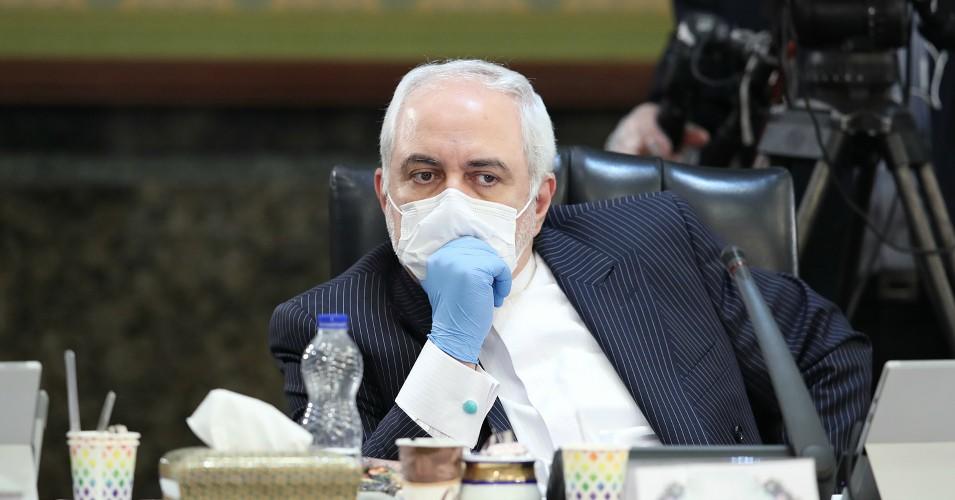
Foreign Minister of Iran, Javad Zarif, Anadolu Agency via Getty Images

"Intelligence from Iraq indicates a plot to fabricate a pretext for war," Zarif said Thursday. "Iran doesn't seek war but will openly and directly defend its people, security, and vital interests."

The warning from Iran's top diplomat, a key negotiator of the nuclear agreement that Trump violated in 2018, came after U.S. officials blamed Iran for a recent missile attack on the American embassy in Baghdad and claimed without evidence that Tehran is preparing a "possibly imminent attack" on U.S. forces in the Middle East.

"Our embassy in Baghdad got hit Sunday by several rockets. Three rockets failed to launch," Trump tweeted last week. "Guess where they were from: IRAN. Now we hear chatter of additional attacks against Americans in Iraq."

Iran denied responsibility for the embassy attack—which injured one Iraqi and damaged two buildings—and accused the Trump administration of "seeking to increase tensions" in the region with baseless allegations.

One unnamed senior U.S. defense official expressed concern to CNN Wednesday that "some within the government are painting the situation with Iran as more dire than it actually is and are preoccupied with the potential for retaliatory attacks by Iran to mark the anniversary of [Gen. Qasem] Soleimani's assassination," which Trump ordered nearly a year ago. Denounced as a violation of international law, the killing nearly provoked an all-out war between the U.S. and Iran.

"When you need a show of force to deter attacks around the anniversary of an assassination that you originally justified as 'reestablishing deterrence,' you haven't reestablished deterrence," tweeted Matt Duss, foreign policy adviser for Sen. Bernie Sanders (I-Vt.), in response to the B-52 flight Wednesday. "And yes, obviously the whole 'reestablishing deterrence' claim was dishonest nonsense from the beginning, but it's worth pointing out that it's been disproven even according to its own dishonest, nonsensical terms."

The latest B-52 maneuver took place amid simmering fears that Trump and the warhawks in his administration could be angling to attack Iran in a last-ditch effort to undermine President-elect Joe Biden's push to reestablish diplomatic relations with Tehran and return the U.S. to compliance with the nuclear accord. Just last month, Trump reportedly asked his advisers for a strike on Iran's primary nuclear energy site.

In an op-ed for Responsible Statecraft over the weekend, former CIA analyst Paul Pillar wrote that the "the objective of sabotaging the next administration points to one of the most likely and dangerous things that the unhinged lame duck president might do in his final days in office, which is to initiate a military clash with Iran."

Sina Toossi, senior research analyst with the National Iranian American Council, echoed Pillar's warning in a tweet on Wednesday. "War with Iran," wrote Toossi, "could be Trump's final punishment on the American people for rejecting him and a massive act of sabotage against Biden for defeating him."

Tyler Durden Thu, 12/31/2020 - 18:55
https://ift.tt/2L6042u
from ZeroHedge News https://ift.tt/2L6042u
via IFTTT

Iran Says US B-52 Flyover Part Of Trump's "Plot To Fabricate Pretext For War" SocialTwist Tell-a-Friend
| 0 comments ]

Pfizer, GSK & Others Quietly Hike Prices On 100s Of Drugs

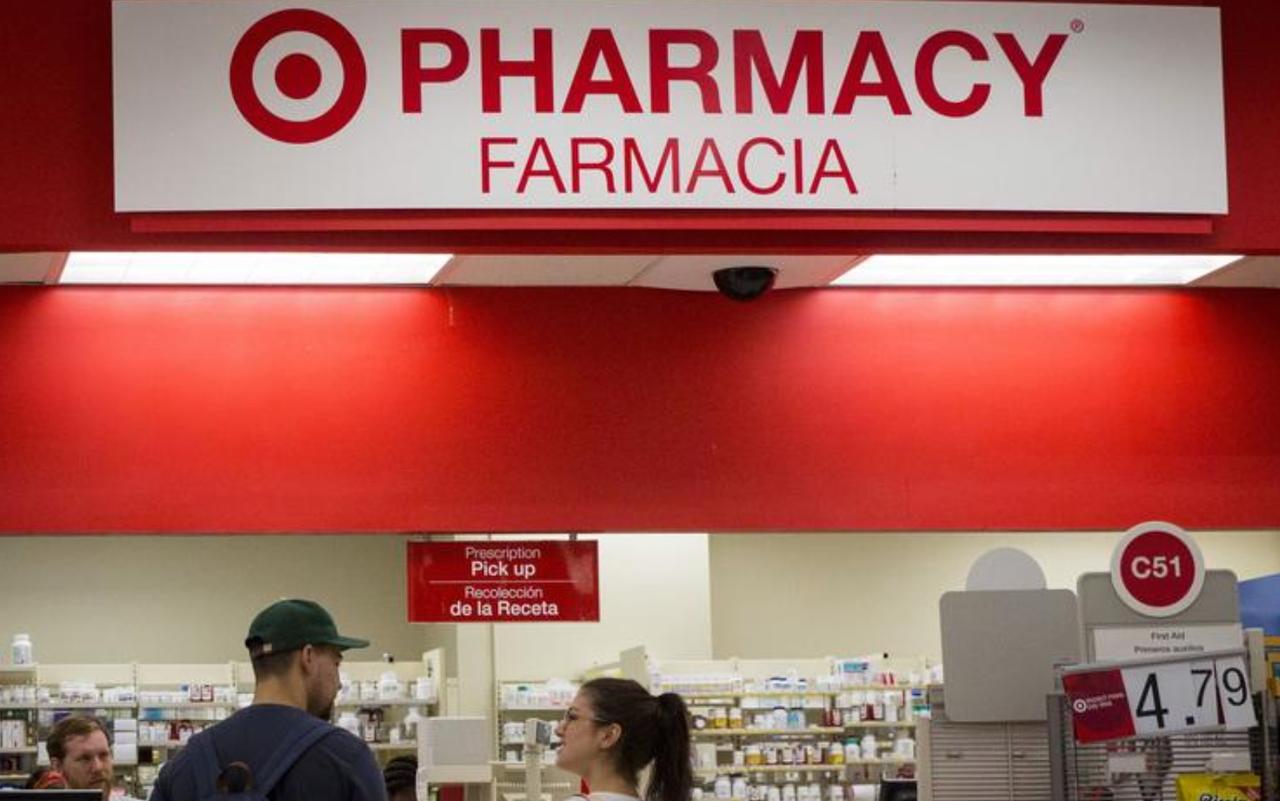
With just hours to go until the new year, Reuters reports that a group of the world's largest drug companies is preparing to hike drug prices, defying President Trump to issue a last-minute rebuke, as he has done in the past.

Drugmakers including Pfizer Inc, Sanofi SA, and GlaxoSmithKline Plc plan to raise U.S. prices on more than 300 drugs in the United States on Jan. 1, according to drugmakers and data analyzed by healthcare research firm 3 Axis Advisors.

The hikes come as drugmakers are reeling from effects of the COVID-19 pandemic, which has reduced doctor visits and demand for some drugs. They are also fighting new drug price cutting rules from the Trump administration, which would reduce the industry’s profitability.

The companies kept their price increases at 10% or below, and the largest drug companies to raise prices so far, Pfizer and Sanofi, kept nearly all of their increases 5% or less, 3 Axis said. 3 Axis is a consulting firm that works with pharmacists groups, health plans and foundation on drug pricing and supply chain issues.

During the early days of the Trump presidency, reports of price hikes elicited angry tweets from the president. This dynamic was credited with staving off a hike or two, but that doesn't change the fact that drug companies tend to raise prices on their inventory at least once, usually twice, per year. Still, even Reuters pointed out that the pace of drug price increases has "slowed substantially" since 2015, per Reuters.

And the Trump Administration is pushing legislation that would constrain drugmakers' ability to raise prices.

Nevertheless, with drugmakers' dedicating themselves to defeating COVID-19 (of course, the state has doled out billions of dollars in subsidies, which sort of diminishes the selflessness narrative), the industry is insisting that profits must be made up elsewhere. So prices on some 300 drugs will rise, with more formal announcements expected on Friday, and over the weekend.

GSK did raise prices on two vaccines - shingles vaccine Shingrix and diphtheria, tetanus and pertussis vaccine Pediarix - by 7% and 8.6%, respectively, 3 Axis said.

Teva Pharmaceuticals Inc hiked prices on 15 drugs, including Austedo, which treats rare neurological disorders, and asthma steroid Qvar, which together grossed more than $650 million in sales in 2019 and saw price hikes of between 5% and 6%. Teva hiked prices for some drugs, including muscle relaxant Amrix and narcolepsy treatment Nuvigil, as much as 9.4%. More price hikes are expected to be announced on Friday and in early January.

[...]

In 2020, drugmakers raised prices on more than 860 drugs by around 5 percent, on average, according to 3 Axis. Drug price increases have slowed substantially since 2015, both in terms of the size of the hikes and the number of drugs affected.

Pfizer, which threw money at its "partner", BioNTech, to help develop and distribute a vaccine using the latter's revolutionary mRNA technology, is one of the biggest offenders, hiking prices on cancer drugs, and the ubiquitous rheumatoid arthritis treatment Xeljanz, famous for commercials that have spawned satirical takes on social media.

Pfizer plans to raise prices on more than 60 drugs by between 0.5 % and 5%. Those include roughly 5% increases on some of its top sellers like rheumatoid arthritis treatment Xeljanz and cancer drugs Ibrance and Inlyta.

Pfizer said it had adjusted the list prices of its drugs by around 1.3% across all products in its portfolio, in line with inflation.

"This modest increase is necessary to support investments that allow us to continue to discover new medicines and deliver those breakthroughs to the patients who need them," spokeswoman Amy Rose said in a statement, pointing in particular to the COVID-19 vaccine the company developed with Germany’s BioNTech SE.

It said that its net prices, which back out rebates to pharmacy benefit managers and other discounts, have actually fallen for the last 3 years.

By contrast, China is cracking heads to ensure that drugmakers are responding to the public's need with massive price cuts. According to state-run media, some drugmakers are cutting prices by as much as 51%. Chinese patients can now get reimbursement for 2.8K medicines, including 1.4K Western drugs and 1,374 traditional Chinese medicines.

With holiday parties about to start, we wonder, will President Trump take another stand on twitter?

Though, at this point, even if he does, it would only serve to further complicate the relationship with these companies as 'Operation Warp Speed' lags further behind its target.

Tyler Durden Thu, 12/31/2020 - 18:30
https://ift.tt/3rCKiNg
from ZeroHedge News https://ift.tt/3rCKiNg
via IFTTT

Pfizer, GSK & Others Quietly Hike Prices On 100s Of Drugs SocialTwist Tell-a-Friend
| 0 comments ]

Swiss Patient Dies Shortly After Receiving Pfizer COVID Vaccine

After an Israeli man reportedly died just 2 hours after receiving his first dose of the COVID-19 vaccine, authorities in the Swiss Canton of Lucerne said on Wednesday that one of the first people in the country to receive the vaccine has died, though whether his death had anything to do with the inoculation hasn't yet been determined.

The canton has yet to release any additional details about the exact amount of time that passed between the inoculation and the man's death.

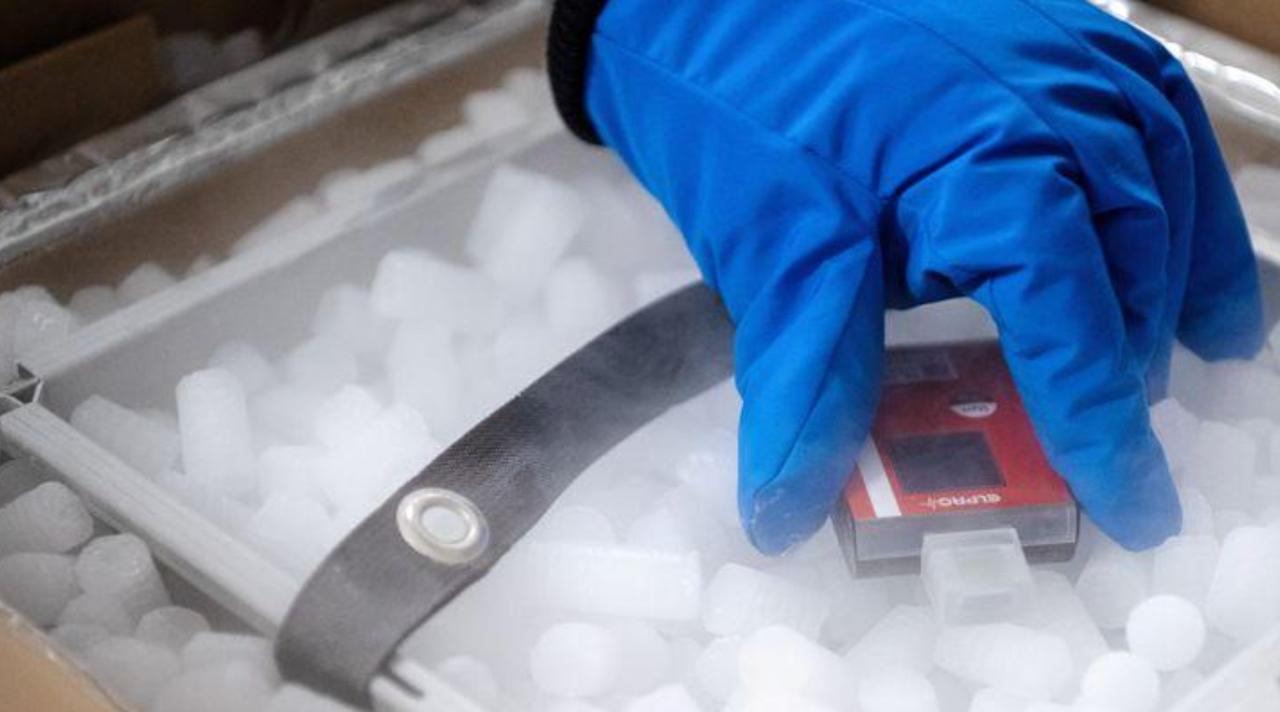
Lucerne was the site of the first vaccinations in Switzerland beginning last week, with a shot from Pfizer and its German partner BioNTech given primarily to elderly people. Switzerland has received 107K vaccine doses, so far, and expects to get 250K per month starting next year.

"We are aware of the case," a spokesperson said, before adding that the death had been referred to Swiss drugs regulator Swissmedic. Swissmedic didn't comment further.

Pfizer and BioNTech’s vaccine is the only vaccine approved, so far, in Switzerland. The EU has just started approving the jabs on an emergency-use basis, with the first injections starting earlier this week.

Tyler Durden Thu, 12/31/2020 - 03:45
https://ift.tt/3nZlDAs
from ZeroHedge News https://ift.tt/3nZlDAs
via IFTTT

Swiss Patient Dies Shortly After Receiving Pfizer COVID Vaccine SocialTwist Tell-a-Friend
| 0 comments ]

UK Woman Arrested For Filming Inside Empty Hospital

Authored by Paul Joseph Watson via Summit News,

A woman in the UK was arrested by police after she filmed a video inside an almost completely empty hospital and posted it online.

The clip shows the woman walking through virtually empty corridors and filming empty wards at Gloucestershire Royal Hospital.

“This is a disgrace…it is so dead…all the people in our country desperately waiting for treatment, cancer treatment heart disease, honestly this is making me so angry,” she states as she films a row of empty waiting chairs.

The woman expressed shock at how quiet the hospital was, saying she expected there to be “a few more people around, there’s absolutely nobody.”

According to reports, a 46-year-old woman was subsequently arrested by police for filming the video and has been charged on suspicion of a public order offence.

“The woman has been bailed to return to police on 21 January, with conditions that she cannot enter any NHS premises or the grounds of any such premises, unless in the case of an emergency or to attend a pre-arranged NHS appointment,” said a statement by Gloucestershire Police.

While the footage shows the inside of the hospital to be virtually empty, UK health authorities have continually asserted that the NHS is at risk of being “overwhelmed” as a result of rising COVID-19 infections.

NHS England says that there are now more COVID-19 patients in hospitals than there were during the April peak of the first wave.

However, public data shows that hospitals are indeed emptier than at this time last year, with beds being at 89% occupancy compared to 95% occupancy in December 2019.

In regions across the country, critical care occupancy rates are also lower than the 3 year average.

Almost all of the emergency Nightingale hospitals that were built at a cost of £220million to handle overflow COVID patients were never used and are now being dismantled.

Many have also questioned why nurses have had time to perform carefully rehearsed and choreographed dances for social media clout, with family members of cancer victims who have been denied treatment complaining about their insensitivity.

*  *  *

New limited edition merch now available! Click here. In the age of mass Silicon Valley censorship It is crucial that we stay in touch. I need you to sign up for my free newsletter here. Support my sponsor – Turbo Force – a supercharged boost of clean energy without the comedown. Also, I urgently need your financial support here.

Tyler Durden Thu, 12/31/2020 - 05:00
https://ift.tt/381Q9E7
from ZeroHedge News https://ift.tt/381Q9E7
via IFTTT

UK Woman Arrested For Filming Inside Empty Hospital SocialTwist Tell-a-Friend
| 0 comments ]

EV Battery Price Has Plunged 89% In Ten Years 

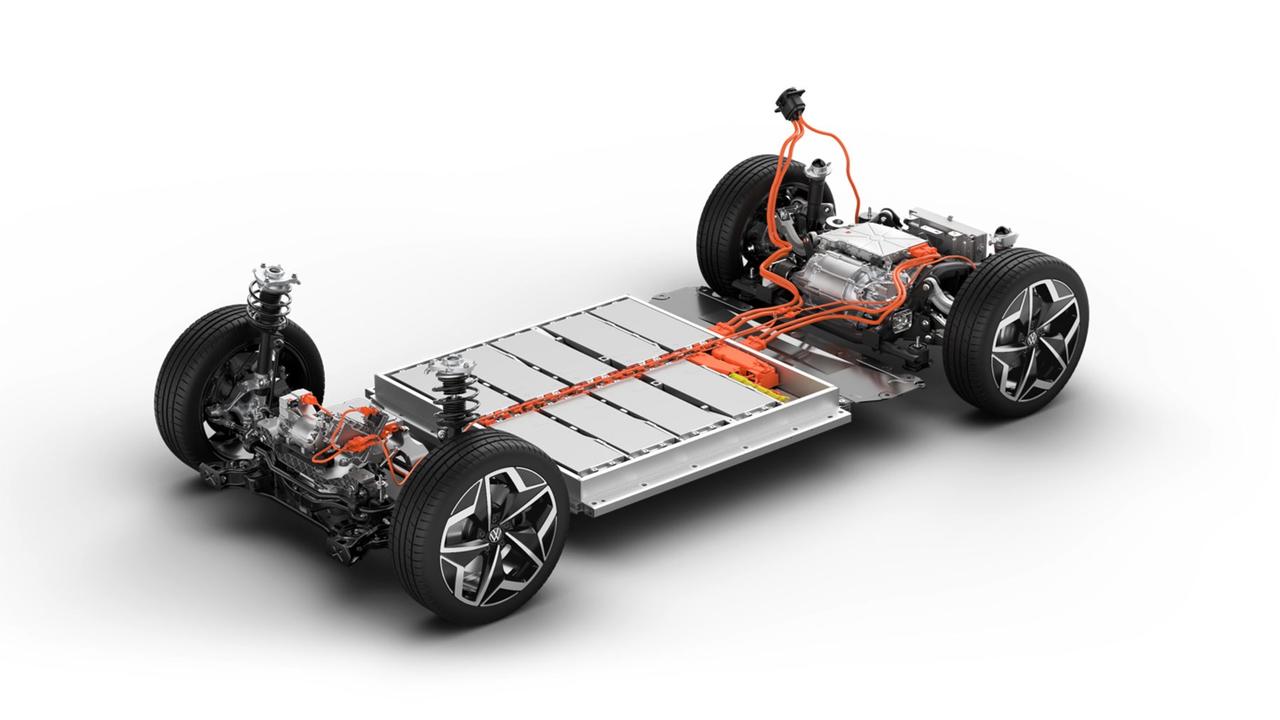
The price of a lithium-ion battery pack used to power an electric vehicle has plunged 89% in the last decade. It could drop even further in the next couple of years, allowing automakers to manufacture mass-market electric vehicles for the same cost as ones that run on petrol. 

About a decade ago, the cost of a lithium-ion battery pack was around $1,110 per kilowatt-hour. That figure now stands at roughly $137 per kilowatt-hour, and likely to plunge to about $100 per kilowatt-hour in the next couple of years, said Fast Company, citing a new clean energy report from Bloomberg. 

"If you look at the remarkable cost reduction over the last decade, and what's expected over the next few years, and pair that with escalating policy measures in Europe and expected in the U.S. and China, then you have this very powerful combination of factors to underpin EV uptake, starting now," said the head of clean power at Bloomberg New Energy Finance, Logan Goldie-Scot.

The report cited some Chinese battery packs already cost around the $100 per kilowatt-hour mark - the line in the sand that will allow automakers to make mass-market electric vehicles while turning a profit. 

"They will continue and accelerate over the next few years. Within four years, major automakers should be able to produce and sell mass-market electric vehicles at the same price and with the same margin as internal combustion engine equivalents," said Goldie-Scot. 

UBS's Swiss investment bank published a note earlier this year that said Volkswagen could be the first global automaker to make money selling electric vehicles with profits materializing as early as 2022. 

Even though Tesla is the most desired electric vehicle at the moment, it could come under pressure from strong German competition.

"In a head-to-head comparison, consumers would still prefer an electric Audi, BMW or Mercedes over a Tesla. The key issue is that these brands still lack competitive products, which could change in 2021," UBS said. 

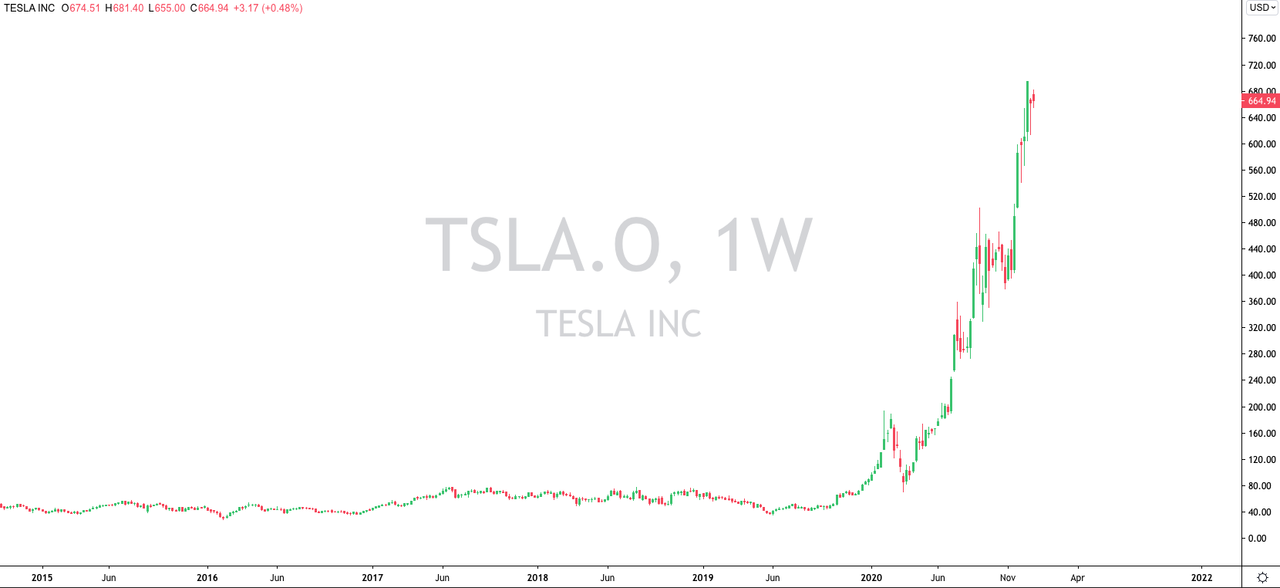
While gamma squeezes have pushed the market cap of Tesla to $629 billion, the prospects of cheaper batteries and mass-market electric vehicles by mainstream automakers may be a headwind for the company. 

In reference to Tesla's stock, Isaac Newton once said: "What goes up must come down."

Tyler Durden Thu, 12/31/2020 - 04:15
https://ift.tt/2X1q0yM
from ZeroHedge News https://ift.tt/2X1q0yM
via IFTTT

EV Battery Price Has Plunged 89% In Ten Years  SocialTwist Tell-a-Friend